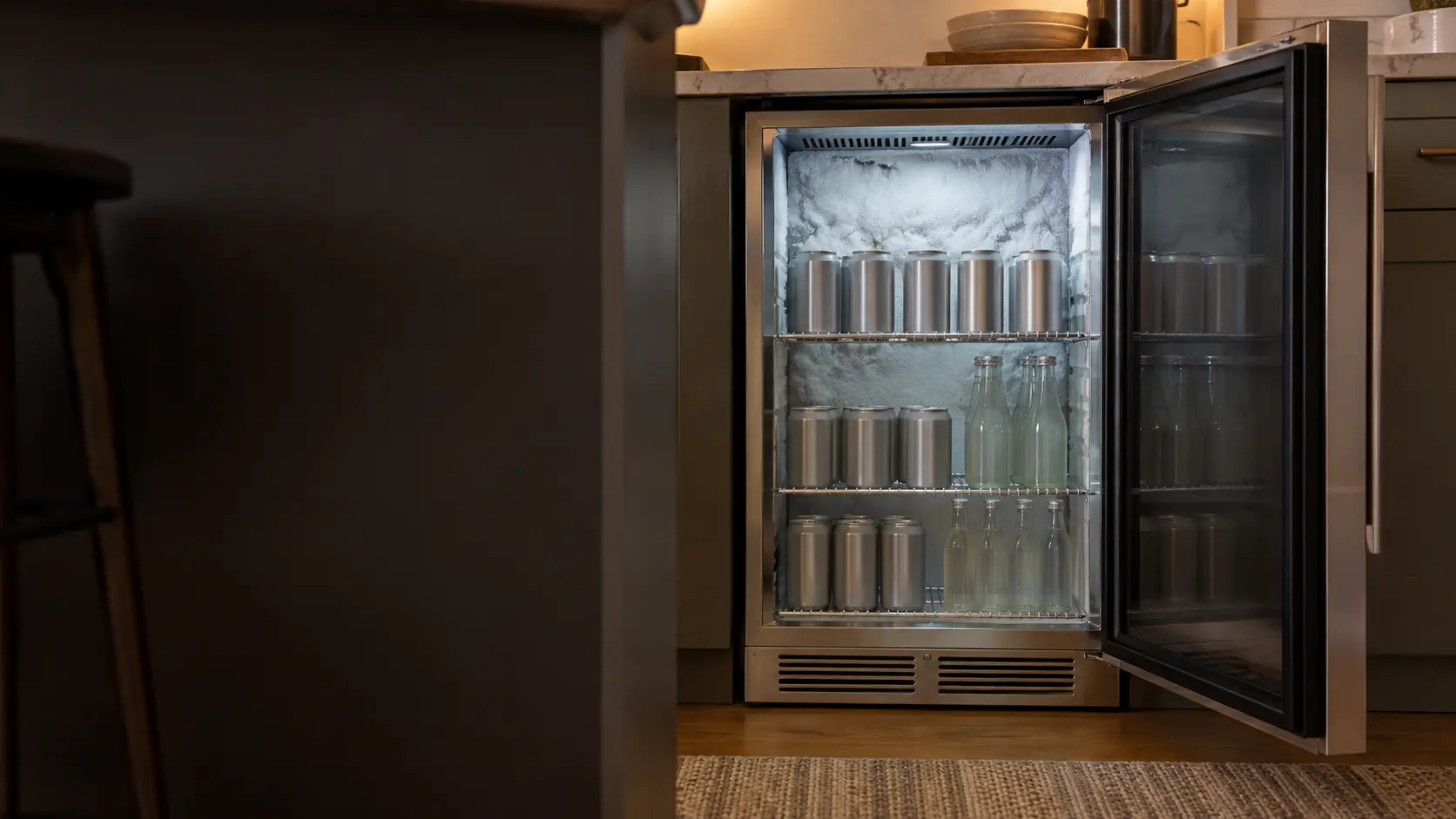

Beverage Center Frosting Over Behind the Cans
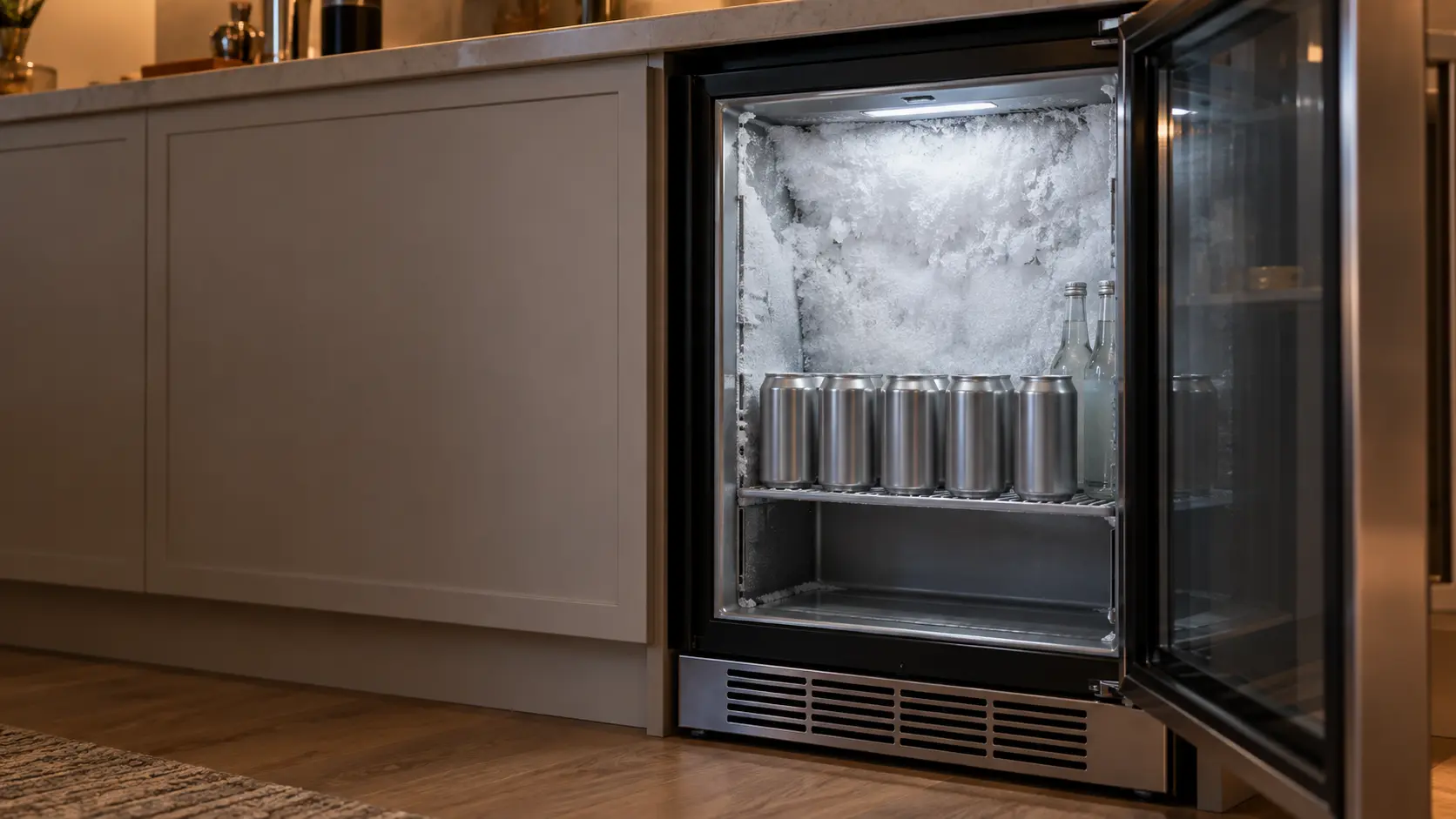
A beverage center frost buildup starts as a white film on the back wall, grows into a thick layer that swallows the cans in the back row, and can end with a fan scraping ice or water in the bottom of the cabinet.
Mon–Sat, 8am–8pm
- 5 checks before you book
- 5 questions that narrow it
- 5 causes, cheapest first
Book a visit
Three short steps, about a minute.
or call (844) 456-5057
Loading appointment form…
The appointment form couldn’t load. Please try again.
What it
usually means.
The back wall of a beverage center collects frost from the moisture that comes in each time the door opens. In most units that frost melts during each rest of the compressor and drains away. When too much moist air gets in, through a seal that leaks, a door left ajar by a can or a hinge that sags, or a long party night in humid air, the frost grows faster than it can melt. When the compressor never rests, because of a sensor or a stuck relay, the frost never gets the chance to melt at all. Thick frost insulates the cold plate, so the unit cools less and runs more, and when it finally melts it can overflow the drain.
 The 5 causes, cheapest first
Answer these first
Is the frost a thin film or a thick layer, and is it on the back wall only or on the shelves and cans too?
Does the door close by itself and seal all the way around?
Does the compressor ever rest, or does it run nonstop?
Is the frost heavier after parties or on humid days?
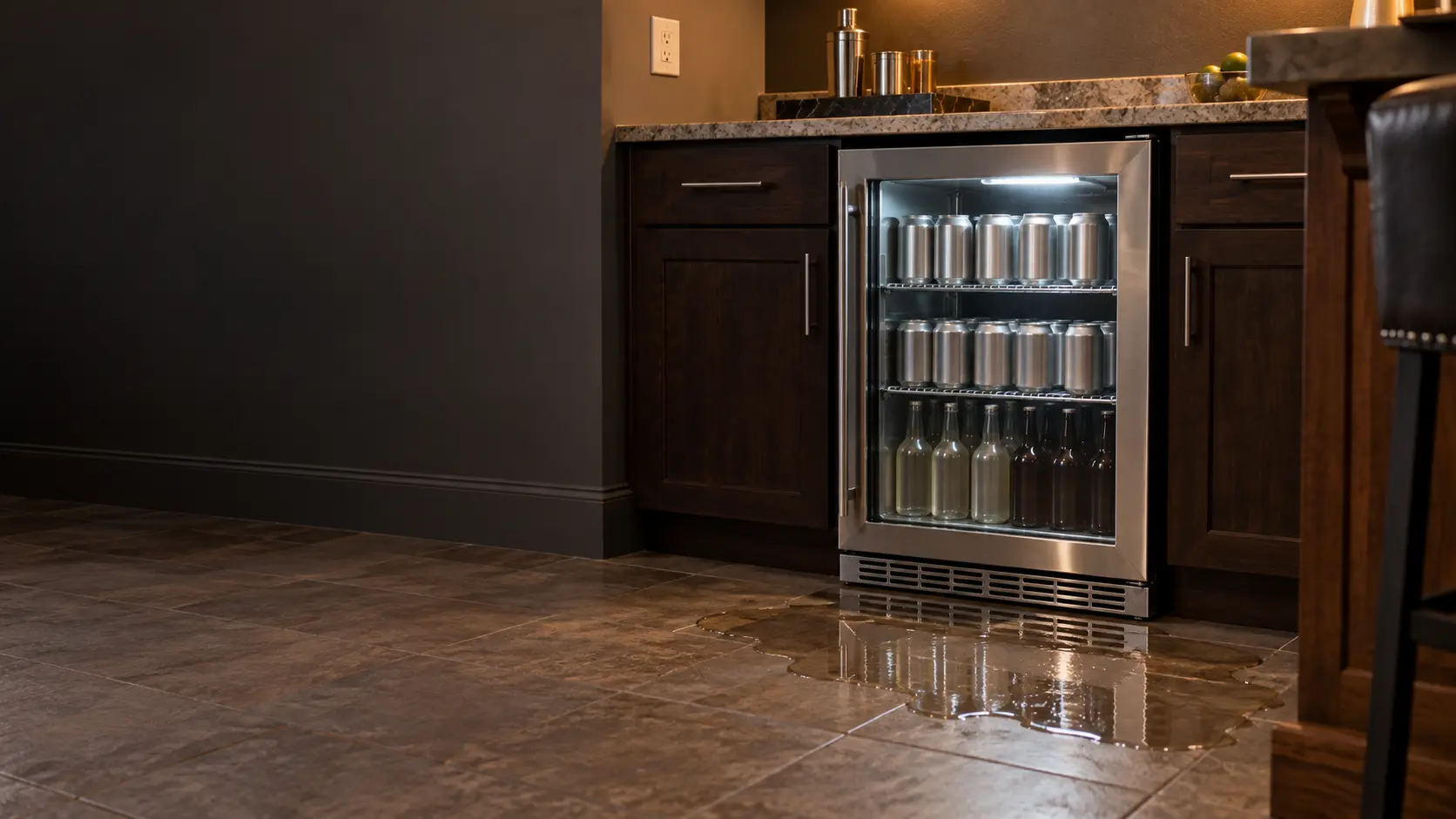
Has melt started pooling under the lowest shelf or seeping out onto the floor?
Check these
before you book.
Beverage center frost buildup: 5 checks, and none of them costs anything.
Check that the door closes by itself and that nothing inside touches the glass.
Test the seal with a strip of paper closed in the door at several points.
If the frost is thick, empty the unit, switch it off and leave the door open with towels on the floor until it melts; do not chip at it.
Also worth checking
- After the frost is gone, keep the door openings short and watch how quickly it comes back.
- Tell us how quickly the frost returns, whether the unit runs nonstop, and the model number.
How soon does it need a visit?
Frost is not urgent, but thick frost cuts cooling and can flood the cabinet when it melts. Melt it out, check the door, and book if it comes back within a week.
The causes,
cheapest first.
5 things beverage center frosting over behind the cans turns out to be, from door traffic in humid air to drain opening frozen shut.
The cost guide-
01 no repair
Door traffic in humid air
A long evening of guests choosing drinks with the door open lets in far more moisture than the unit can clear. A quiet day or two, or a manual defrost, usually settles it.
-
02 no repair
A garage that turns cold at night
In a cold garage the compressor rests for long periods, which can confuse the melt timing on some units. Check the maker's guidance for the lowest room temperature the unit can live with.
-
03 low
Door not sealing
A flattened gasket, a sagging hinge or a can pushed against the glass lets humid air in all day. The frost forms fastest near the leak.
-
04 low to moderate
Compressor never resting
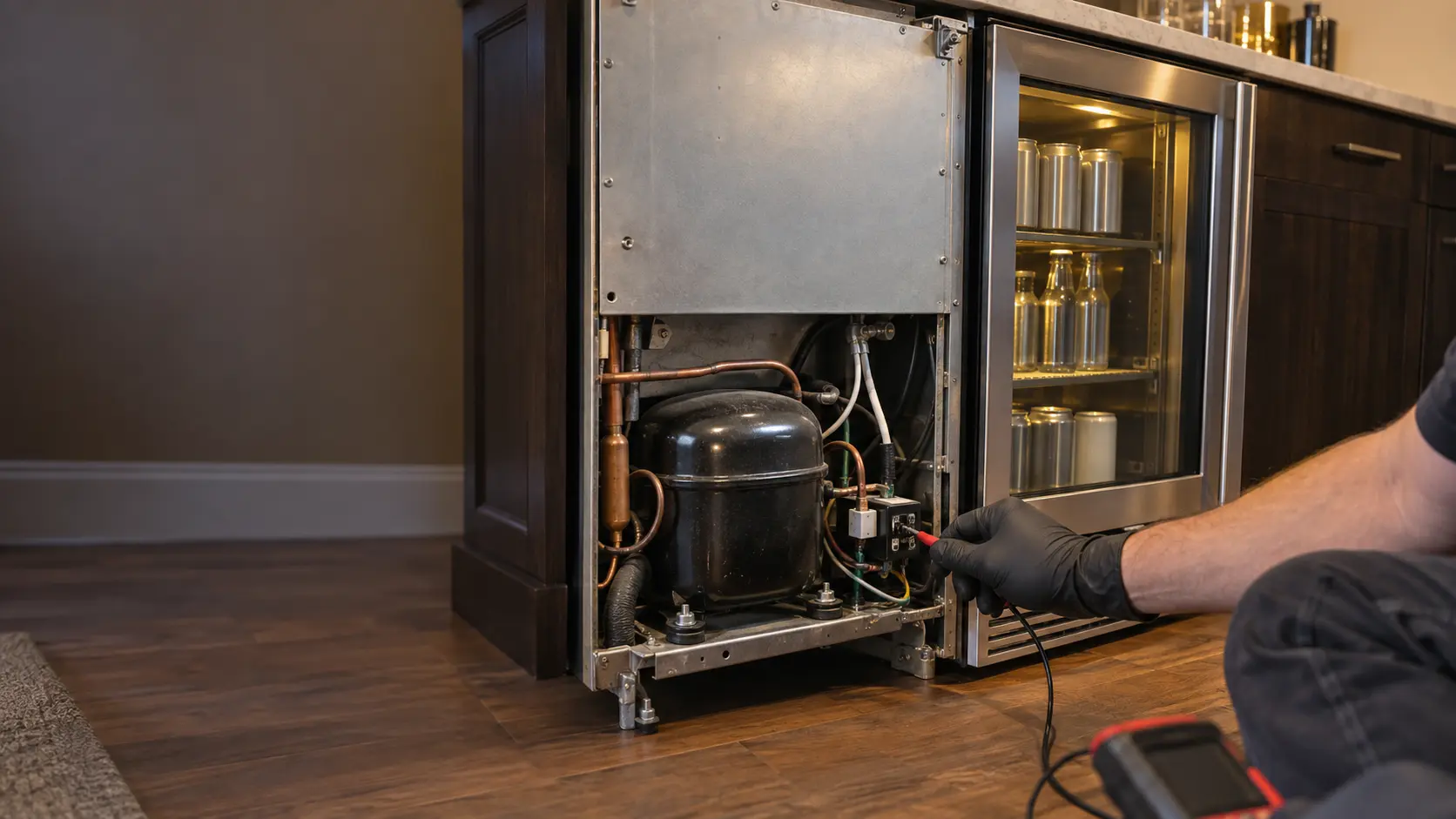
Frost on most units melts while the compressor rests. A sensor that reads warm or a relay that sticks keeps it running, and the frost never clears.
-
05 low
Drain opening frozen shut
When the drain opening at the foot of the back wall freezes, melt has nowhere to go and refreezes into a sheet of ice across the bottom of the cabinet.
-
What it costs
Every repair on the site's cost scale, side by side
Open the cost guide
What else
it could be.
Most often confused with beverage center door won't stay shut, then water pooling under a beverage center.
All problems
The makes
it happens on.
21 makes on this site; beverage center frosting over behind the cans can show up on any of them. Each mark opens that make's own page.
All 21 brandsBeverage Center Frosting Over Behind the Cans,
where we come out.
9 metros, each with its own page.
All service areasTampa BayFL · 31 areas
Miami / South FloridaFL · 47 areas
New York MetroNY · 75 areas
HoustonTX · 36 areas
ChicagoIL · 50 areas
Los AngelesCA · 95 areas
San DiegoCA · 31 areas

Questions about
beverage center frosting over behind the cans.
How much frost behind the cans is fine?
Could a knife or scraper speed up the thaw?
Why does frost come back so fast after I melt it?
Will frost make the drinks warmer?
Back to your everyday
Still seeing beverage center frosting over behind the cans?
Book with what you checked above — 5 answers save the technician the first part of the visit.