
Beverage Center Diagnostic Visit
A visit that reads what the cans actually feel, looks at how the unit breathes and seals, then tests fans, sensors, controls and cooling one by one until a single part is named.
Mon–Sat, 8am–8pm
- Price before any work
- 5 steps on the visit
- 6 problems it answers
Book a visit
Three short steps, about a minute.
or call (844) 456-5057
Loading appointment form…
The appointment form couldn’t load. Please try again.
What the beverage center diagnostic visit
involves.
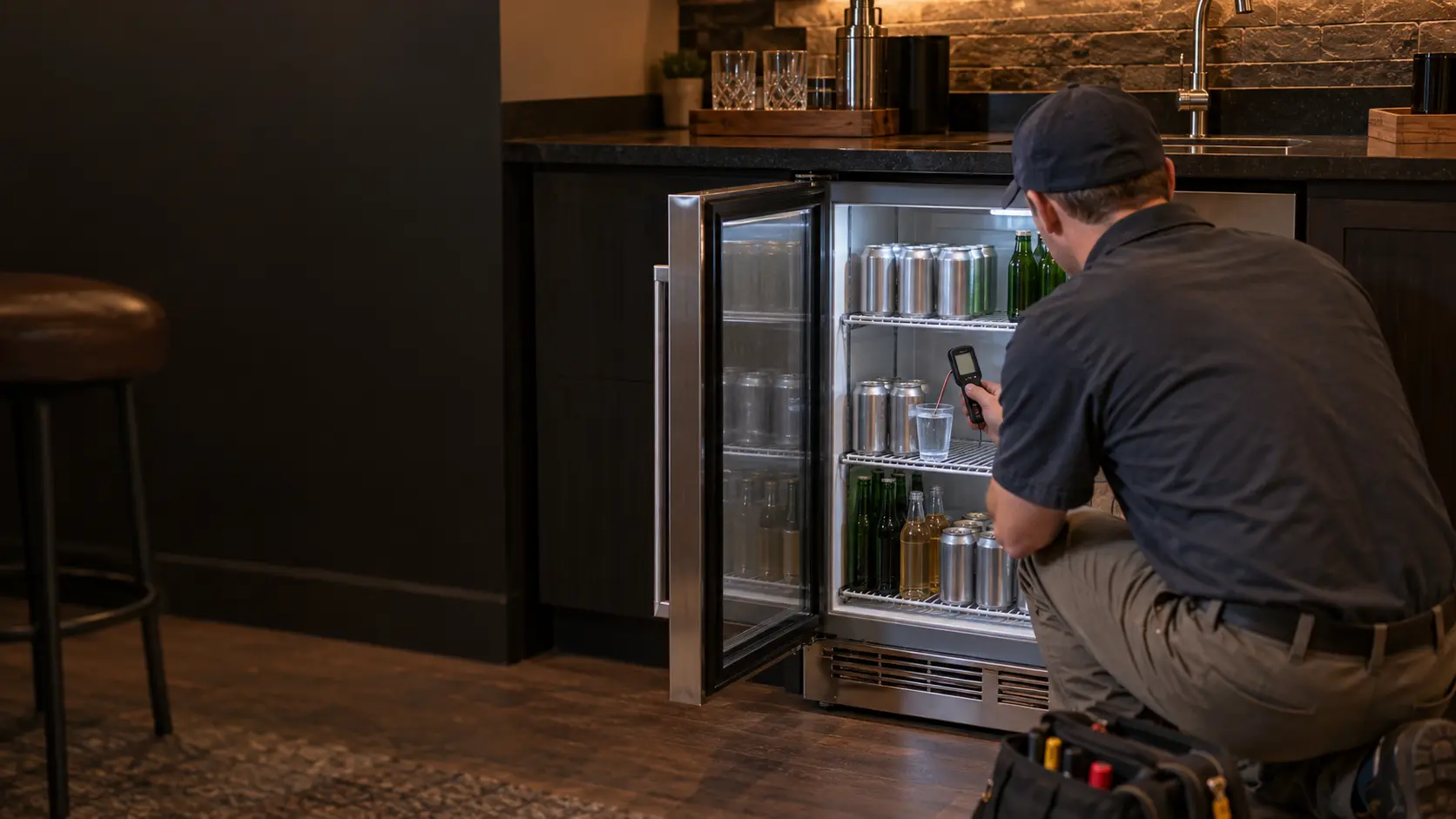
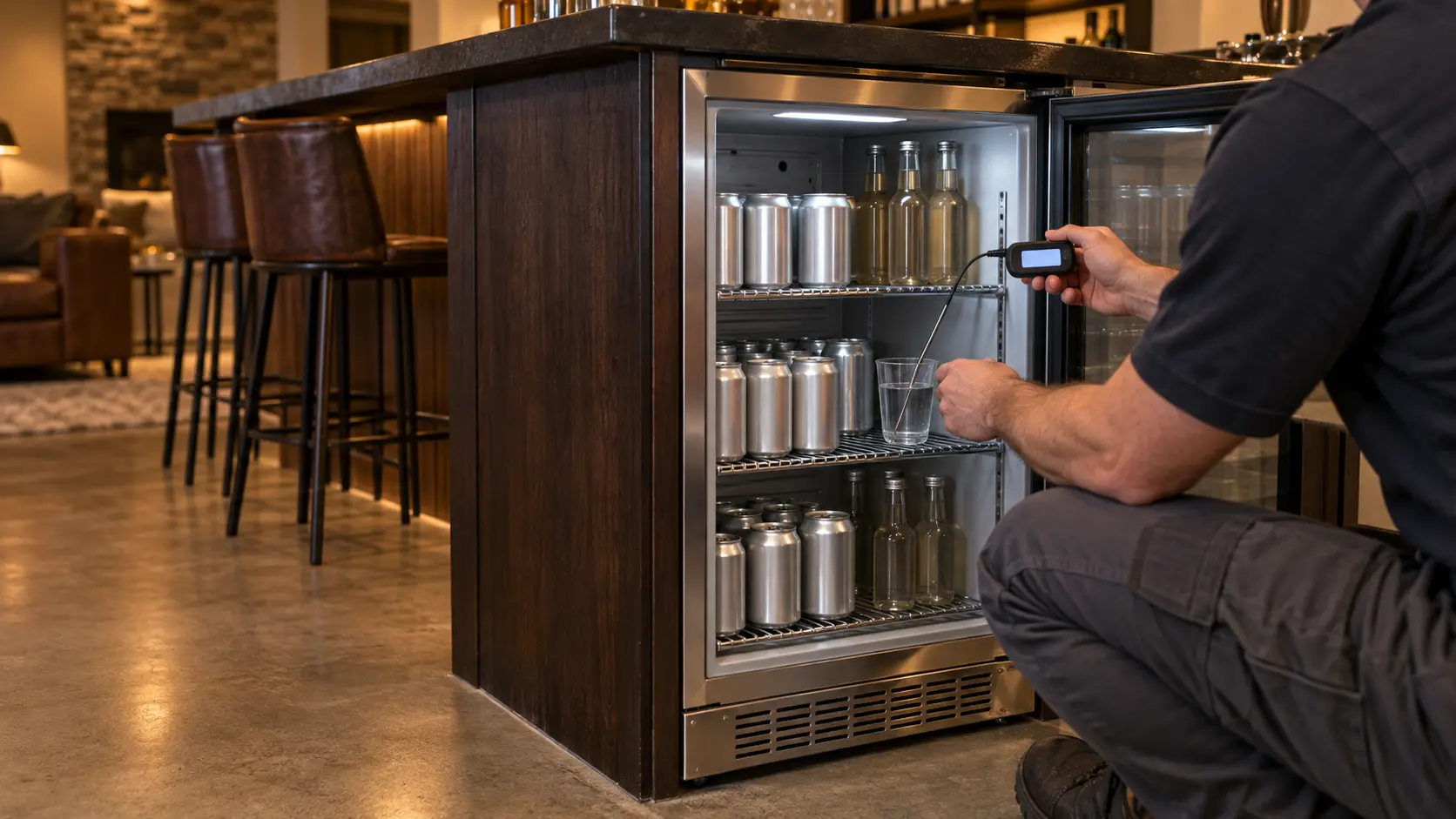
A beverage center diagnostic visit starts with a number the display does not give you: the temperature of a cup of water that has stood on the middle shelf, compared with a reading at the back shelf and one of the room or the patio. Those three numbers show whether the unit is too warm, too cold at the rear where cans split, or simply losing to a hot space. Next comes the way it breathes and closes: the toe grille or the back of a freestanding cooler, the glass door or the drawer fronts against their seals, the hinges and slides that hold them square, and, outdoors, the GFCI that protects the circuit. Only then do the working parts come out on a meter: the evaporator and condenser fans, the sensor, the control and display board, the defrost path and drain, and the compressor with its start relay and overload, or the module and power supply on a thermoelectric cooler. Any code or alarm on the display is read early. You end the visit with a named part, the work and price to put it right, and a way to keep the drinks cold until it is done.
How the visit goesWhat it costsA beverage center is priced once the cold has been measured
Read these steps as a comparison between beverage center jobs, not as a quote for the one in your bar.
Answers 6 problemsBeverage Center Not Cooling the Cans
Beverage Center Freezing Drinks and Bursting Cans · Beverage Center Won't Power Up · Beverage Center Never Stops Running · Beverage Center Humming, Rattling or Buzzing · Reading a Beverage Center Error Code
Comes up most onUndercounter beverage center
Freestanding beverage cooler · Outdoor beverage center · Beverage drawers
Codes that lead herePower Failure · PWR
Marvel Power Failure: the indicator flashes after an outage.
Beverage center diagnostic visit,
step by step.
Name the failed part, the work and its price, say honestly whether the unit is worth it, and suggest how to keep the drinks cold until the repair.
Hear what changed and when, then read a cup of water on the middle shelf, the back shelf and the room before any can is moved.
Look at how the unit breathes and closes: the toe grille or rear vent, the glass door or drawer fronts against their seals, the hinges and slides.
Read the display, any code and the alarm history, and check the GFCI or outlet, the fans and the sensor with a meter.
Test the cooling: the compressor with its start relay and overload, or the thermoelectric module and power supply, and the defrost and drain path.
Name the failed part, the work and its price, say honestly whether the unit is worth it, and suggest how to keep the drinks cold until the repair.
The problems
it answers.
6 of them, from beverage center not cooling the cans to reading a beverage center error code.
All problems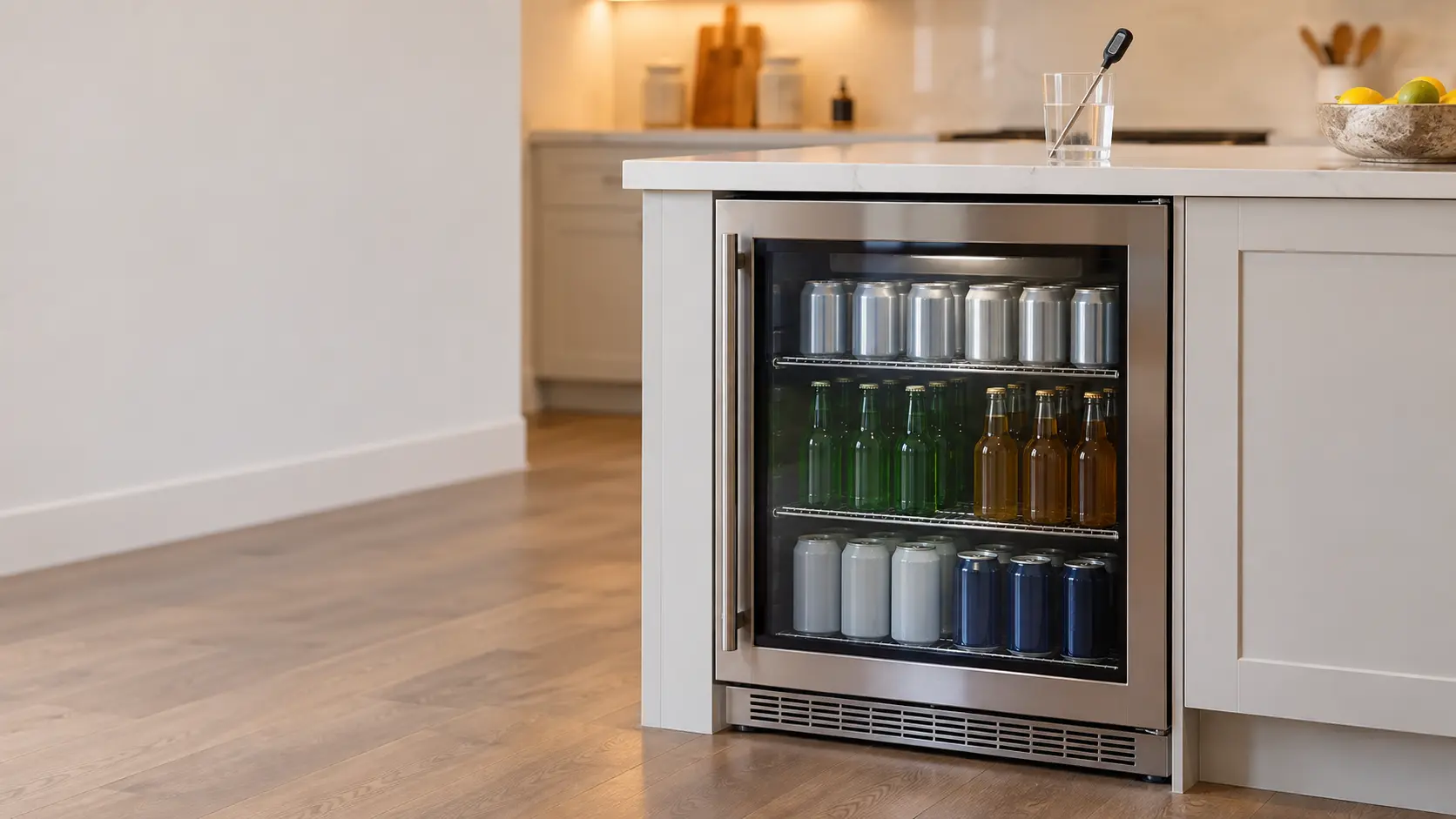
Beverage Center Not Cooling the Cans
6 causes, cheapest first
Before you call
Tell us this when you book
- Whether it is built in under a counter, freestanding, outdoors on a patio or a set of drawers, and where it stands
- What the display shows against what a can actually feels like, and whether cans have frozen or split
- Any noise, smell, water on the floor, fog inside the glass, frost on the back wall, tripped GFCI or code on the display
- The model and serial number from the plate inside the cabinet, on a drawer wall or on the back
It also answers
A price before
any work.
Read these steps as a comparison between beverage center jobs, not as a quote for the one in your bar. Cans that are warm by late afternoon could come from a toe grille full of lint, a condenser fan with a dry bearing, a sensor two degrees off, a door that stops a few millimeters short or a start relay near its end, and a phone call cannot tell them apart. So no figure is given until the shelves have had a thermometer on them and the likely part has been put on a meter. The number comes to you before any repair starts, and saying yes or no is entirely up to you.
Read the full cost guideWhere it
comes up most.
Most bookings: Undercounter beverage center, Freestanding beverage cooler, Outdoor beverage center, Beverage drawers.
All beverage center types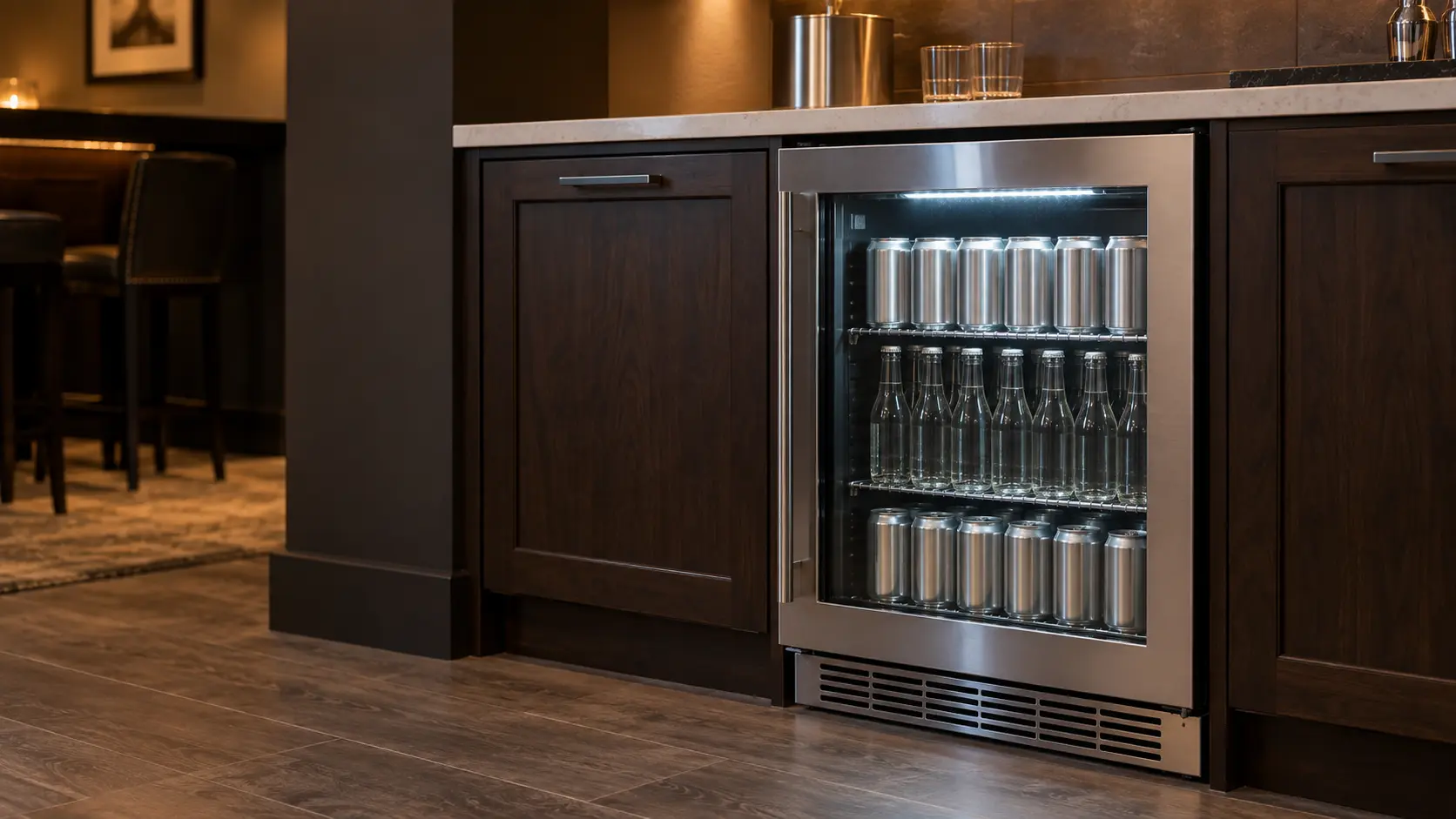
The makes
we see it on.
21 makes on this site, and the beverage center diagnostic visit on any of them. Each mark opens that make's own page.
All 21 brandsBeverage center diagnostic visit,
where we come out.
The home, the climate and the building all change how the beverage center diagnostic visit goes. These notes are about that, metro by metro.
All service areasTampa BayFL · 31 areas
A diagnostic visit to a Tampa Bay beverage center often begins on the lanai, where a unit under a covered counter can sit in 90-degree air and look broken when it is only outmatched, so the technician measures the air at the grille before judging the sealed system.
OrlandoFL · 30 areas
In Orlando vacation rentals a beverage center passes through many hands in a week, and the first half of a diagnosis is often undoing a guest's setting, a showroom mode or a panel lock left on, before anything that could really have failed is tested.
Miami / South FloridaFL · 47 areas
A South Florida diagnosis on a tower wet bar or a pool-deck unit starts with salt and damp: the condenser is checked for corrosion and the door gasket for mildew before the controls are read, because the coast wears those out first.
New York MetroNY · 75 areas
Most New York beverage centers live in a run of apartment cabinets or a brownstone basement bar, and a diagnostic visit there works from the front, reading the top and bottom shelves and the air leaving the toe-kick grille without pulling the unit from its slot.
HoustonTX · 36 areas
Houston heat and humidity push a game-room or patio beverage center hard from May to October, so the diagnostic visit records how long the compressor runs each hour and what the cans read, which separates a failing unit from one placed where it cannot keep up.
ChicagoIL · 50 areas
A Chicagoland basement bar can sit near 55 degrees in January, cold enough that some beverage centers stop regulating properly, so a diagnosis there accounts for the room as well as the unit before a part is named.
Los AngelesCA · 95 areas
Across Los Angeles a beverage center may stand in a mild beach kitchen or on a Valley patio past 100 degrees, and the diagnostic visit starts by matching the unit's rating, indoor or outdoor, to where it actually stands.
San DiegoCA · 31 areas
San Diego diagnoses split by distance from the ocean: near the shore the technician looks for salt pitting on the condenser and hinges, inland for a patio unit baking in fall heat, and both begin with a thermometer among the cans.
San Francisco Bay AreaCA · 74 areas
Many Bay Area homes run without air conditioning, and a beverage center in a sunny kitchen or a remodeled bar may struggle only during a September heat spell, so the diagnostic visit asks when the cans turned warm before testing the compressor and fans.

Questions about
the beverage center diagnostic visit.
Should I unload the beverage center before the technician comes?
How long do cans stay cold in a beverage center that stopped?
My beverage center worked again after I unplugged it. Is that the end of it?
Is the diagnostic charge put toward the repair?
Back to your everyday
Ready to book the beverage center diagnostic visit?
Have these to hand: whether it is built in under a counter, freestanding, outdoors on a patio or a set of drawers, and where it stands, what the display shows against what a can actually feels like, and whether cans have frozen or split, any noise, smell, water on the floor, fog inside the glass, frost on the back wall, tripped gfci or code on the display, the model and serial number from the plate inside the cabinet, on a drawer wall or on the back.