
Freestanding Beverage Cooler Repair
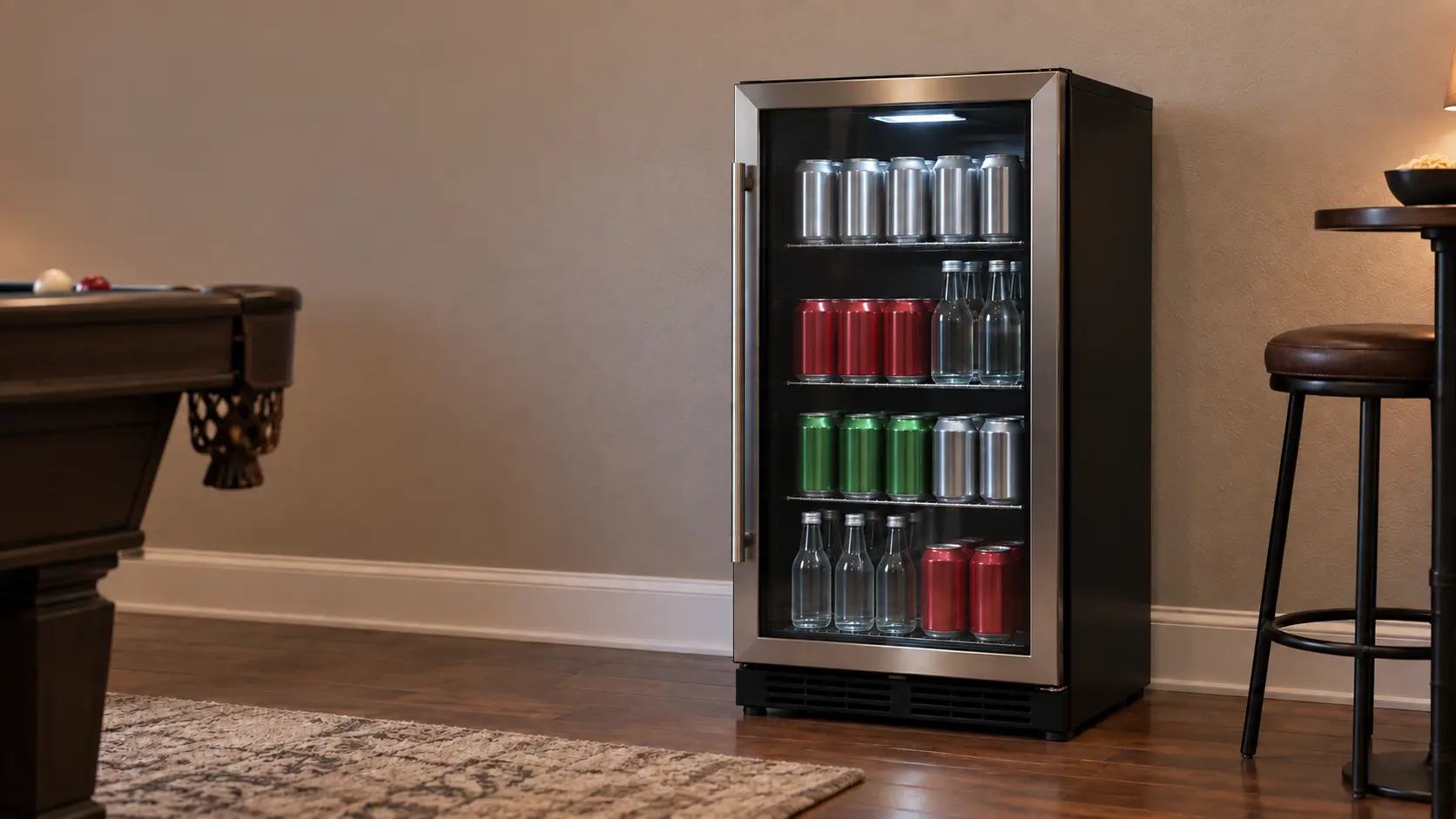
A glass-door beverage cooler that stands on its own against a wall, in a game room, a home office, a garage or on a counter, and sheds heat through its back or sides rather than a front grille.
Mon–Sat, 8am–8pm
- 4 things that fail on it
- 8 makes build it
- 6 problems it shows
Book a visit
Three short steps, about a minute.
or call (844) 456-5057
Loading appointment form…
The appointment form couldn’t load. Please try again.
Is yours
a freestanding?
A freestanding beverage cooler is the one you can pick up and move: a cabinet from countertop size to about waist height, with finished sides, a glass door and a condenser on the back or folded into the side walls. Because it breathes from behind, it needs a few inches of open air at the rear and above, and it cools badly when it is shoved flush against drywall or tucked into a closet. Larger models run a small compressor like a built-in unit; many compact and countertop coolers use a thermoelectric module with a fan on each side instead, which is quiet but can only pull the cabinet a certain number of degrees below the room. That difference matters in a hot garage or a sunny office, where a thermoelectric cooler may never reach the setting printed in its manual. Shelves are usually wire, the door often reverses, and a simple dial or a one-button display sets the temperature. Casters, a bumped plug and a floor that slopes toward the door cause more trouble here than on any cabinet that is built in.
 What fails on a freestanding beverage cooler
How to tell
It has finished side panels and a solid top, and nothing holds it in place: you could slide it out from the wall without removing a screw.
There is no vented strip at the bottom front; instead a coil, a grille or a fan opening sits on the back, and some models have warm side walls.
It may sit on a counter or a stand rather than on the floor, and compact models are light enough for one person to lift.
A quiet hum with no click of a compressor, and a fan heard at the back, usually mark a thermoelectric model rather than a compressor one.
Not yours?Undercounter beverage centerOutdoor beverage centerBeverage drawers
What fails
on this design.
On a freestanding beverage cooler: too little air behind it, a hot room it cannot beat, a door knocked out of line, fans and power supplies.
The problems it showsToo little air behind it
A cooler that vents from the back needs open space to shed its heat. Pushed tight to a wall, boxed in by shelving or crowded by stacked cases, it runs without pause, the back wall of the room warms and the drinks inside stay merely cool.
A hot room it cannot beat
A thermoelectric cooler holds the cabinet only so far below the air around it. In a garage at 90°F or beside a sunny window, it may be working perfectly and still sit in the 50s, which looks like a failure but is a limit of the design.
A door knocked out of line
A reversible door is held by a hinge at the top and the bottom, and a cooler that gets rolled, bumped or moved often knocks those out of square. The door then rests a few millimeters open, and the cold slips out along the latch side.
Fans and power supplies
On a thermoelectric model the inner and outer fans do most of the moving parts' work, and a low-voltage power supply feeds the module. One fan stopping, or a supply that has quit, turns a working cooler into a dark, warm box with a lit display.
Getting at it,
and whether to.
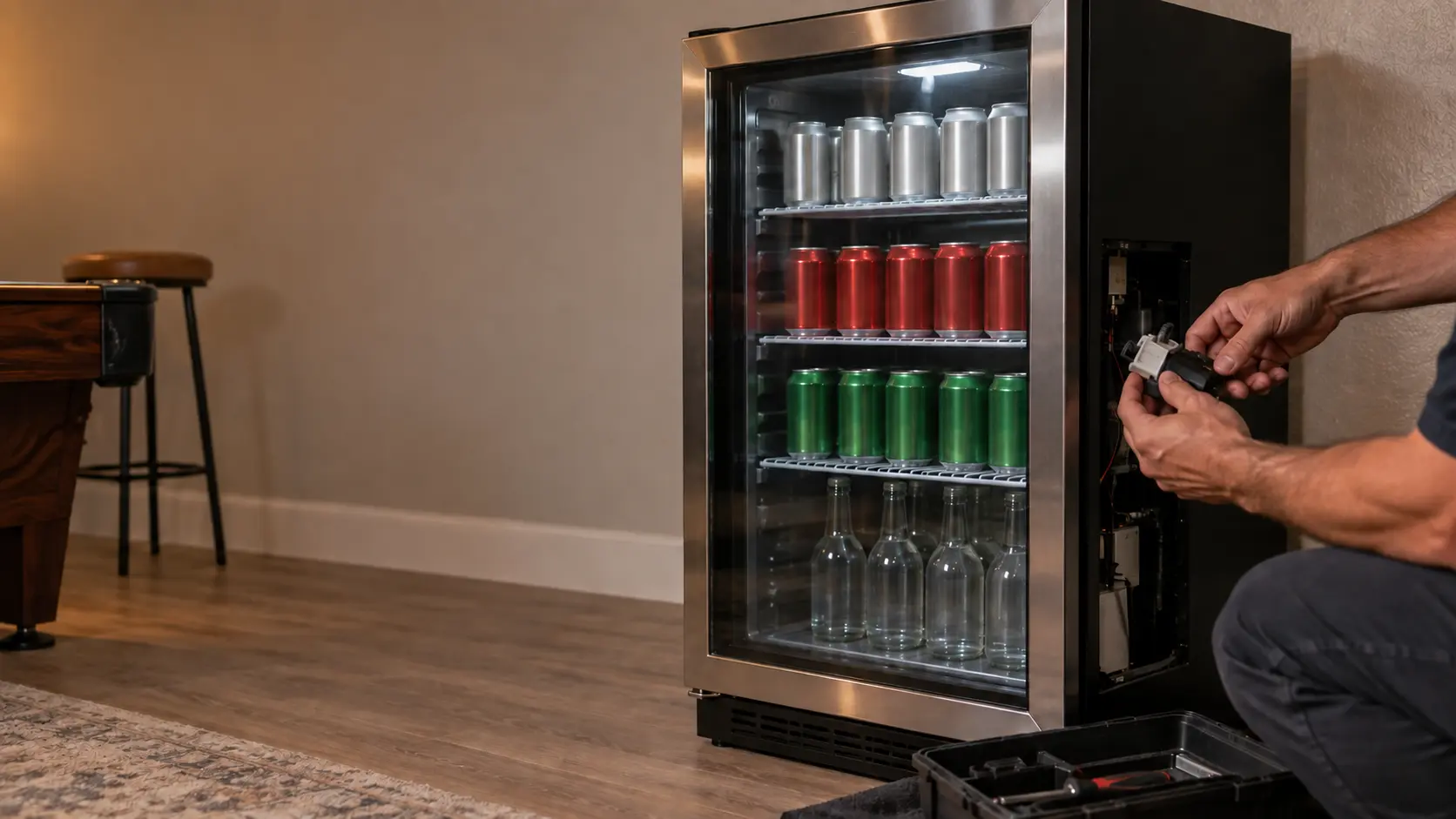
Almost everything is reached from the back: the rear panel comes off to show the compressor or the thermoelectric module, its fans and its power supply.
What repairs costOn the visit
- Clear enough floor behind the cooler, or a table beside it for a countertop model, so it can be turned around without unloading it onto the carpet.
- Tell us whether it plugs into a wall outlet or an extension cord or power strip; a thin cord under a heavy load is a common reason a small cooler acts dead.
- Keep the door shut until the visit; a cabinet full of cold cans stays cool for hours even with no power.
Repair or replace
A freestanding beverage cooler is where a repair most often has to justify itself, because a new one needs no carpentry and can arrive in days. A door hinge, a fan, a thermostat or a power supply is still a sensible repair on a well-made cabinet. A failed compressor, a refrigerant leak or a second thermoelectric module on a small, older cooler often tips the other way, and the technician says so plainly with both numbers in hand.
Book a visit for a freestanding beverage coolerThe problems
it shows.
On a freestanding beverage cooler, most often beverage center not cooling the cans.
All problems
Beverage Center Not Cooling the Cans
6 causes, cheapest first
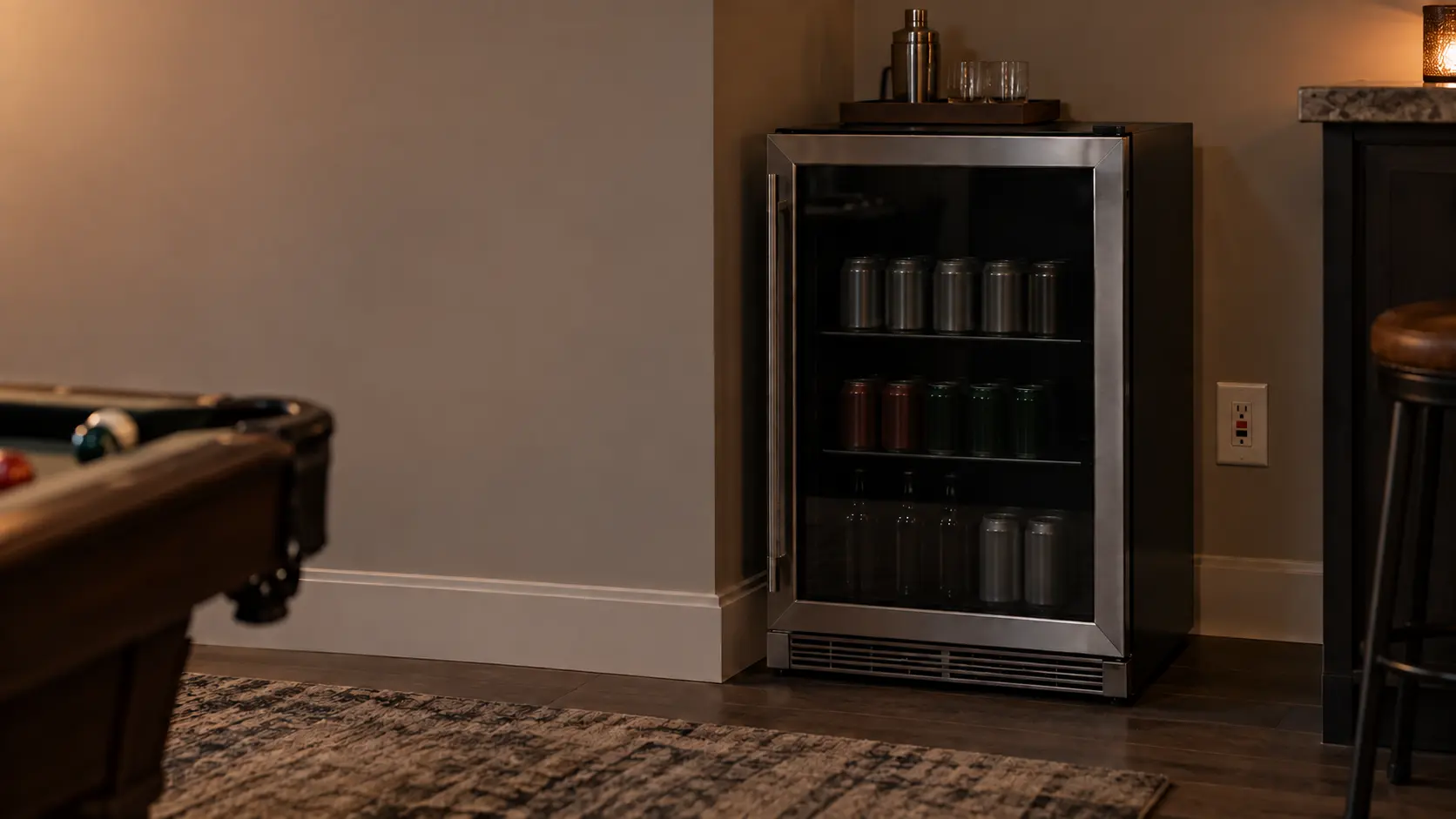
Beverage Center Won't Power Up
5 causes, cheapest first
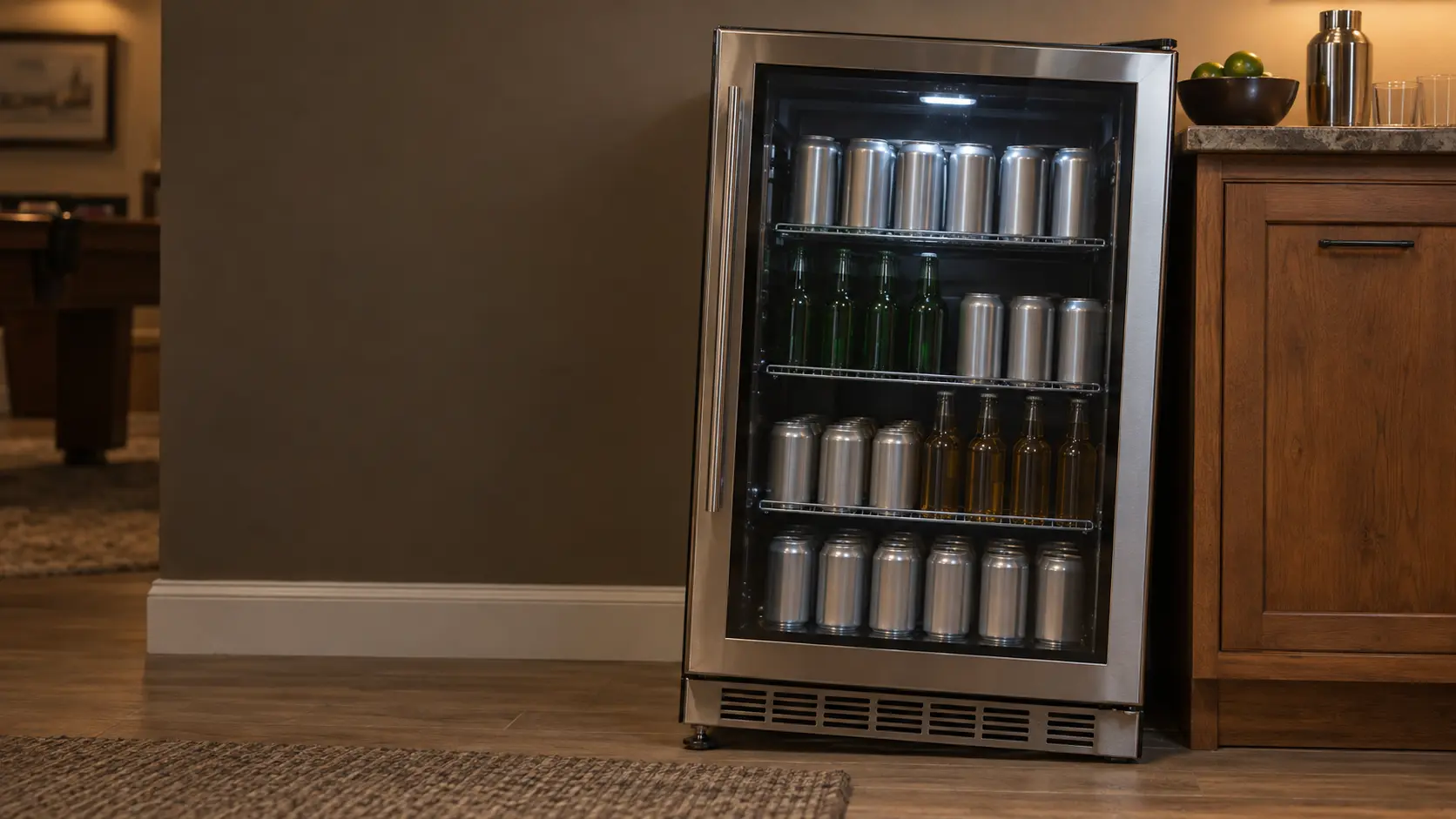
Beverage Center Humming, Rattling or Buzzing
5 causes, cheapest first
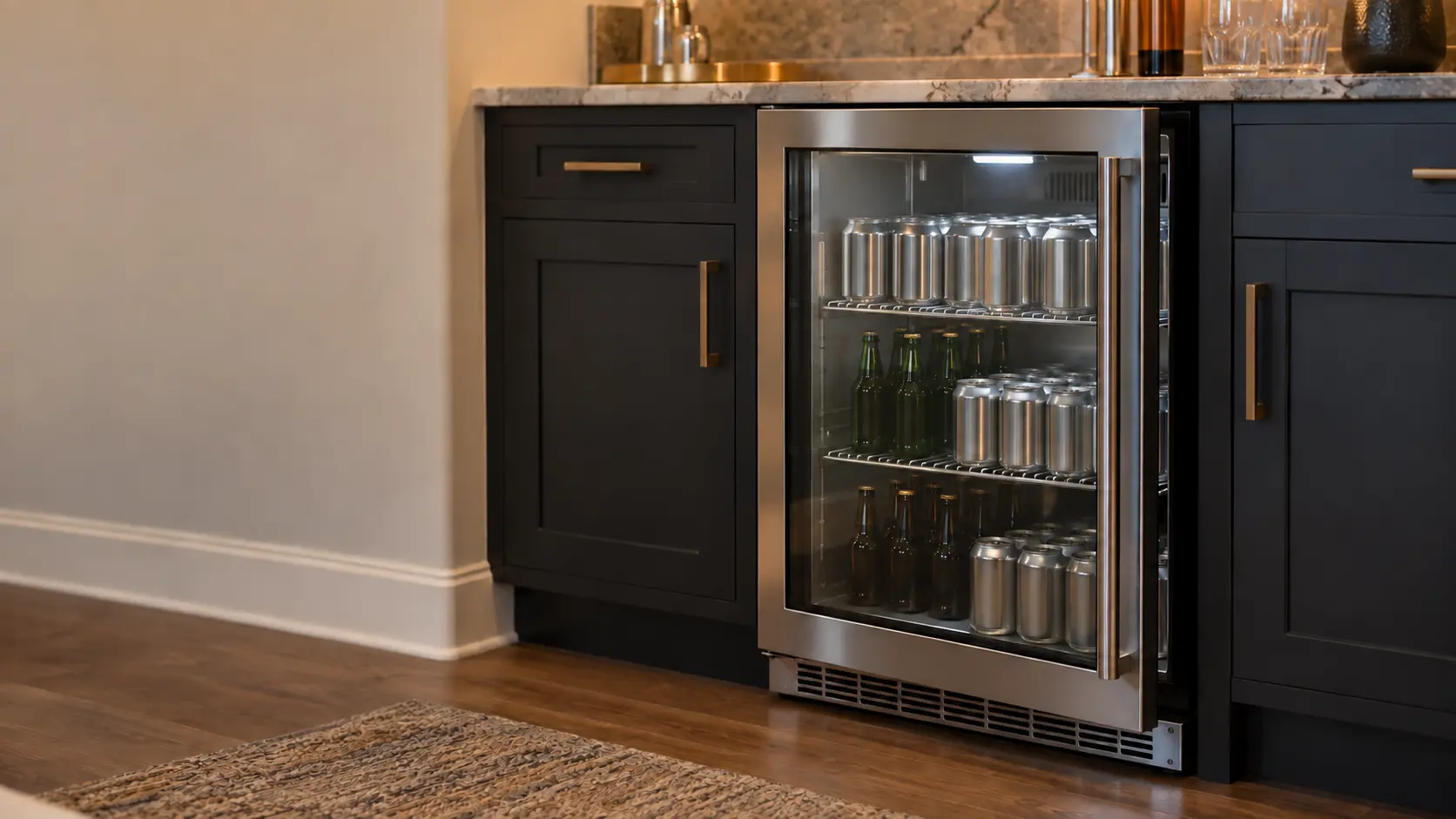
Beverage Center Door Won't Stay Shut
5 causes, cheapest first
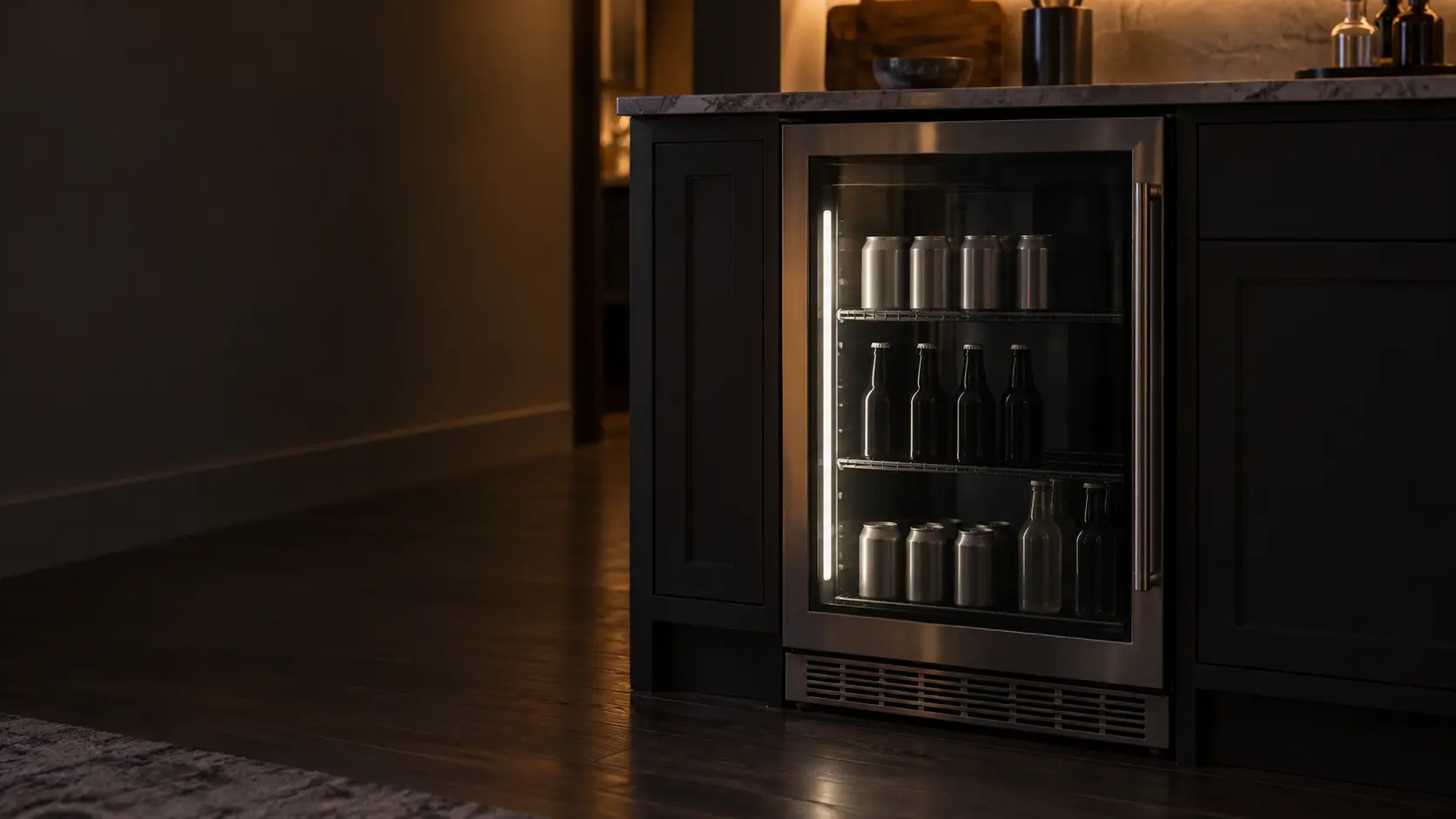
Beverage Center LED Light Not Working
4 causes, cheapest first
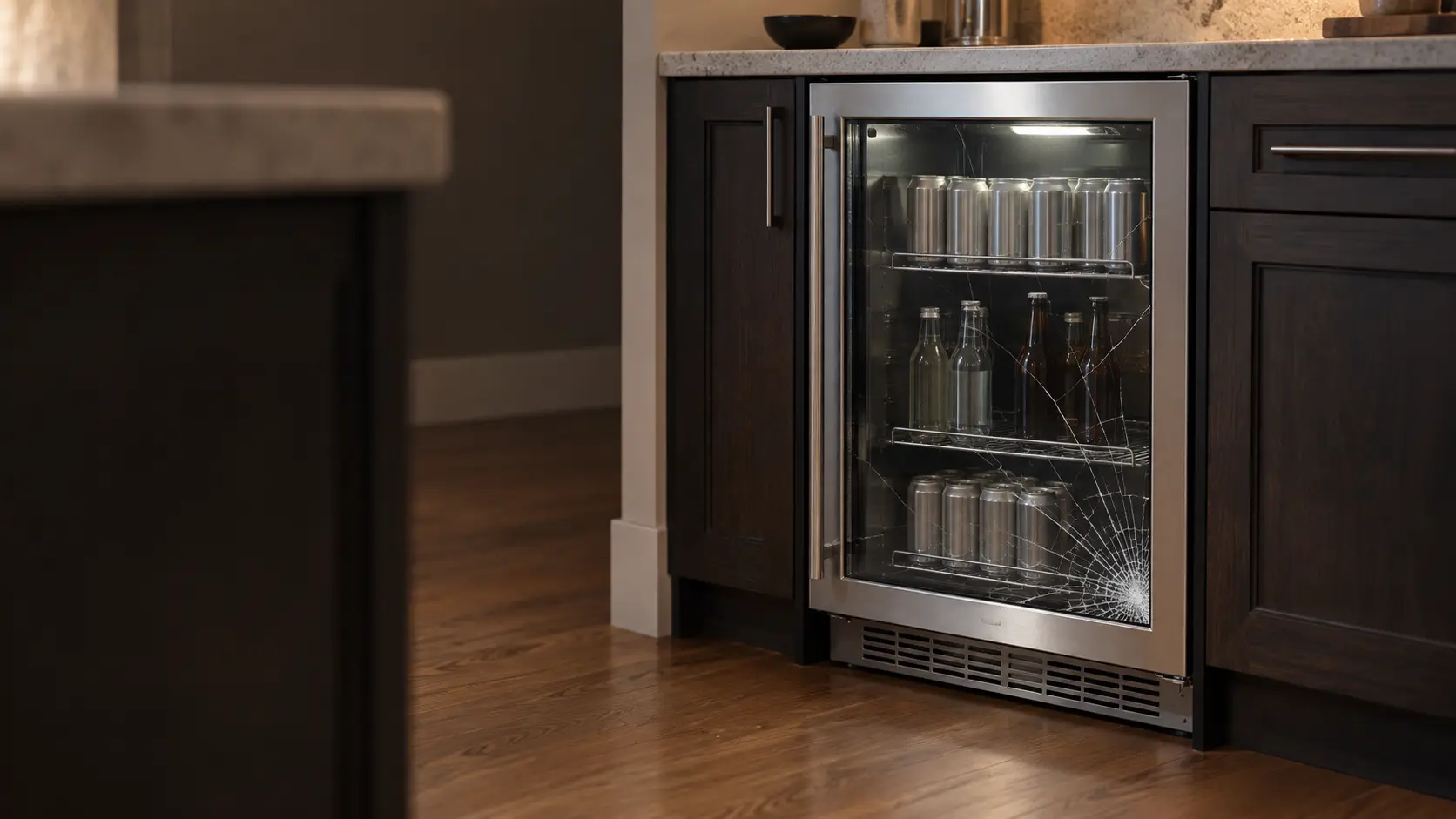
Cracked or Shattered Beverage Center Glass Door
5 causes, cheapest first
Who builds
a freestanding.
8 of the makes on this site build a freestanding beverage cooler. Each mark opens that make's own page.
All 21 brandsFreestanding beverage cooler repair,
where we come out.
9 metros, each with its own page.
All service areasTampa BayFL · 31 areas
Miami / South FloridaFL · 47 areas
New York MetroNY · 75 areas
HoustonTX · 36 areas
ChicagoIL · 50 areas
Los AngelesCA · 95 areas
San DiegoCA · 31 areas

Questions about
freestanding beverage coolers.
How much space does a freestanding beverage cooler need around it?
My countertop beverage cooler never gets below the 50s. Is it broken?
Can I keep a freestanding beverage cooler in the garage?
Why does my beverage cooler door swing open by itself?
Back to your everyday
Is it a freestanding beverage cooler?
Say so when you book — it changes what the technician brings and how the visit is planned.