
Beverage Center Fan Repair
Replacing the fan that stirs cold air past the cans or the fan that cools the condenser, the two small motors a beverage center cannot hold its setting without.
Mon–Sat, 8am–8pm
- Low to moderate cost band
- 5 steps on the visit
- 5 problems it answers
Book a visit
Three short steps, about a minute.
or call (844) 456-5057
Loading appointment form…
The appointment form couldn’t load. Please try again.
What the beverage center fan repair
involves.
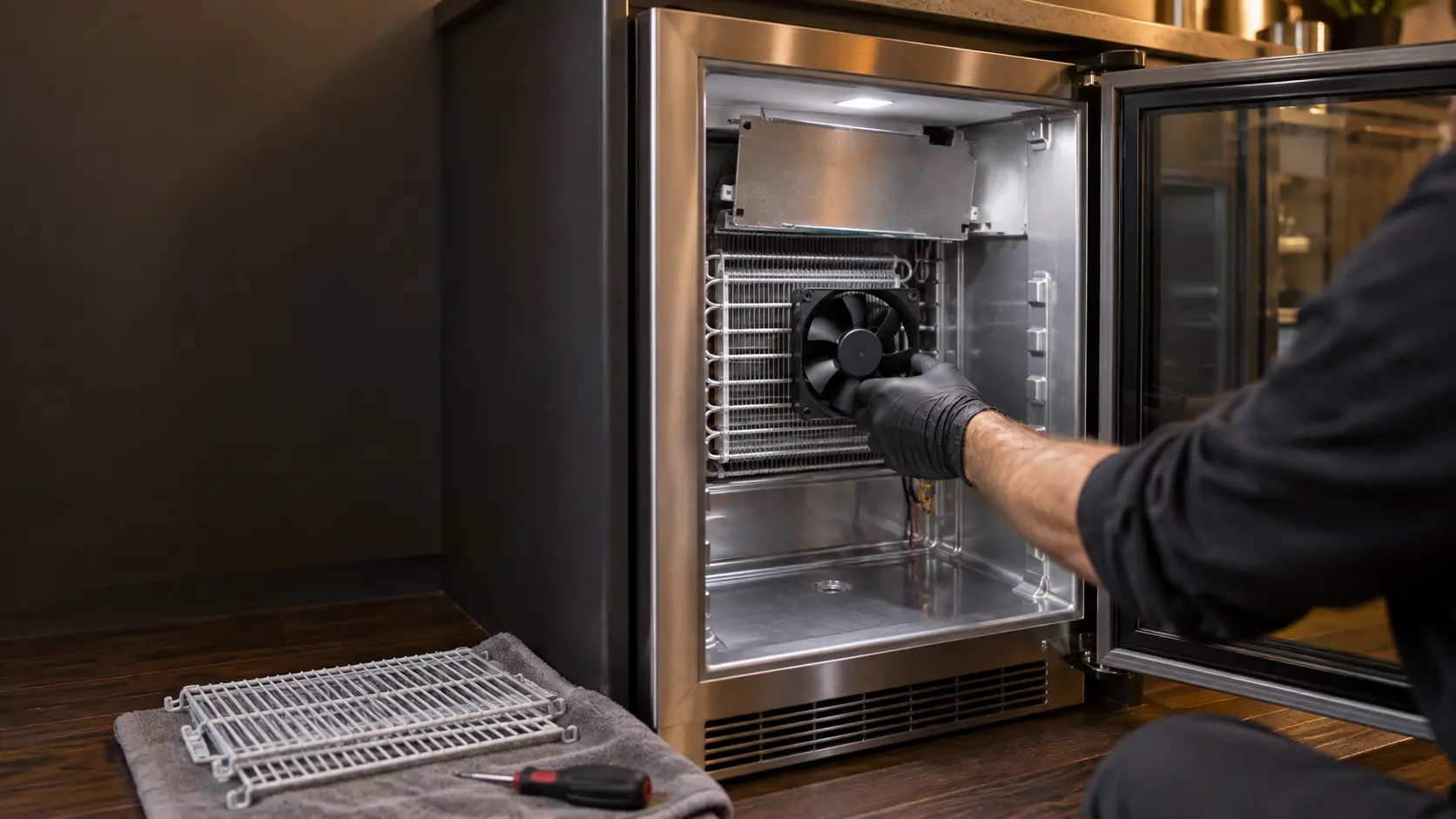
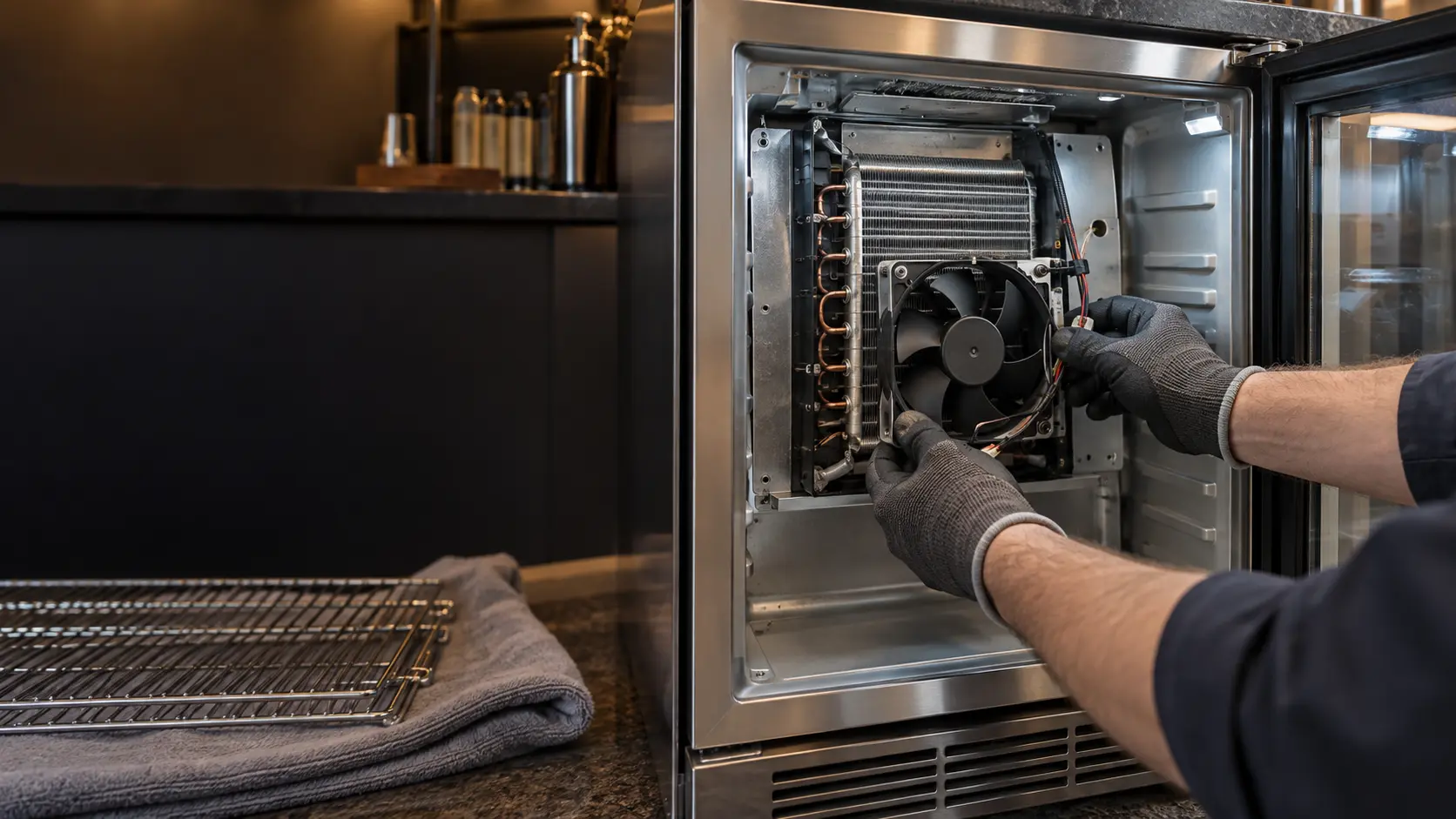
Most beverage centers run two fans. One sits behind the back wall of the cabinet and pushes air off the cold coil across the shelves, so cans at the front and top chill as fast as the ones at the rear. The other sits under the cabinet behind the toe grille, or at the back of a freestanding unit, and pulls room air across the condenser so the compressor can drop its heat. When the inside fan slows, the back row turns icy while the front row stays cool and the display may still read the setting. When the condenser fan stops, the compressor runs hot and long, the cabinet warms through the afternoon and, on an outdoor unit, falls far behind on a hot day. A dry bearing announces itself first with a buzz or a chirp that comes and goes with the door, and a blade can also catch on frost or on a piece of packaging. The technician checks both fans' speed and power, looks for ice or debris around the blades, and replaces a motor with the part made for your model.
How the visit goesWhat it usually costsLow to moderate · Evaporator or condenser fan motor
Either fan is an affordable motor, reached through the back wall of the cabinet or behind the grille. Thawing a coil that iced over around a stopped fan, or cleaning a condenser packed with patio debris, adds a little time.
Answers 5 problemsBeverage Center Not Cooling the Cans
Beverage Center Humming, Rattling or Buzzing · Beverage Center Never Stops Running · Beverage Center Frosting Over Behind the Cans · Outdoor Beverage Center Losing the Fight With the Heat
Comes up most onUndercounter beverage center
Freestanding beverage cooler · Outdoor beverage center · Beverage drawers
Codes that lead hereTEL · TEY · FEF
Perlick TEL: frost or blocked air has chilled the coil.
Beverage center fan repair,
step by step.
Close it up and confirm that air moves across the shelves and out of the grille, then check the cans' temperature at the back and front.
Listen at the back wall and at the grille with the door closed and open, and note which fan is quiet, noisy or stopped.
Take off the grille or the rear cover and the inner panel, and look for ice, lint or something caught in the blades.
Check that each fan is receiving power, and measure the motor itself so a failed board is not mistaken for a failed fan.
Fit the fan motor or blade made for the model, clear any frost from the coil, and clean the condenser while it is open.
Close it up and confirm that air moves across the shelves and out of the grille, then check the cans' temperature at the back and front.
The problems
it answers.
5 of them, from beverage center not cooling the cans to outdoor beverage center losing the fight with the heat.
All problems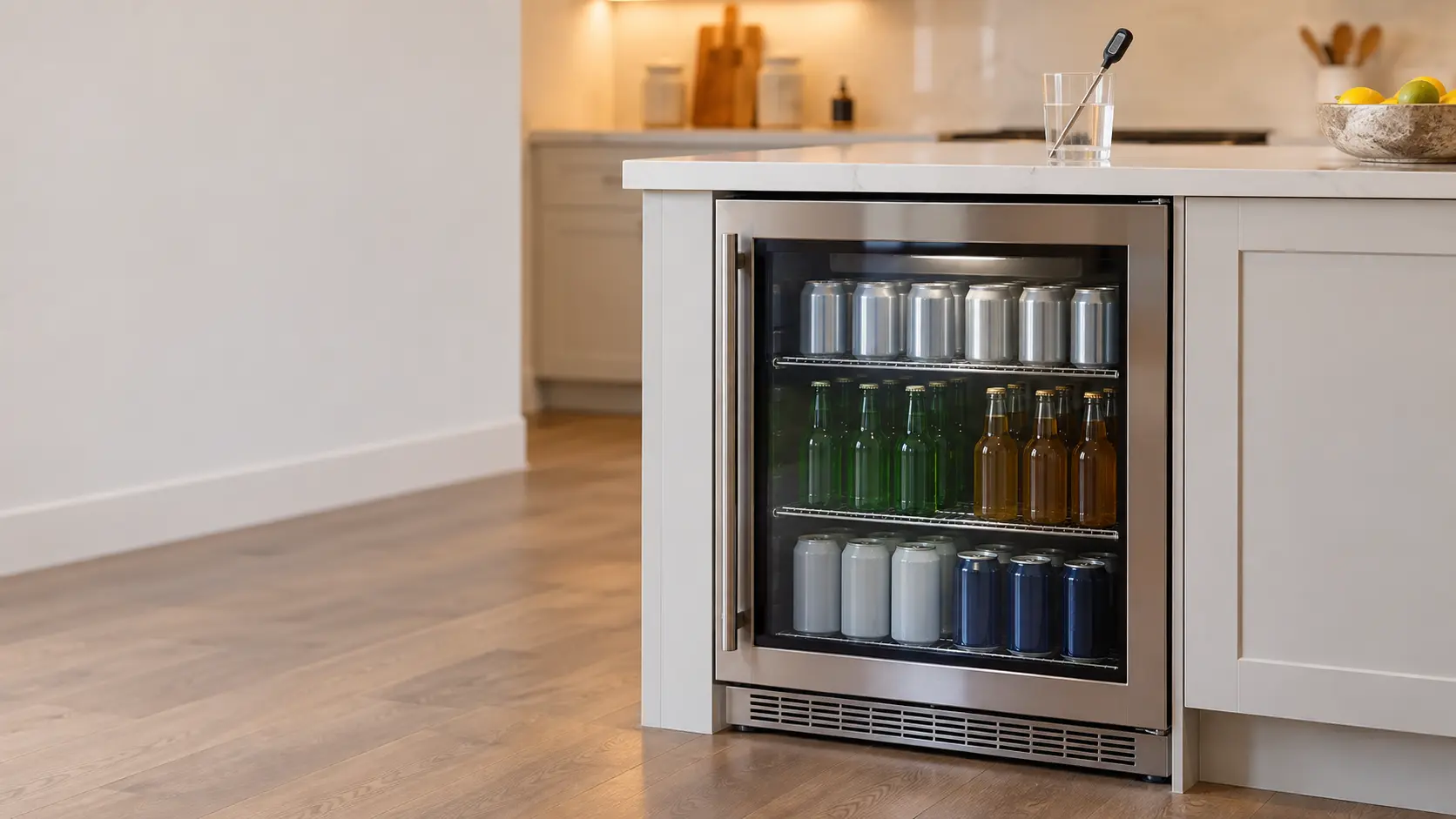
Beverage Center Not Cooling the Cans
6 causes, cheapest first
Before you call
Tell us this when you book
- Whether the noise is a buzz, a chirp or a rattle, and whether it stops when you open the door
- Whether the back shelf is colder than the front, or the whole cabinet is warm
- Whether the air at the toe grille or the back of the unit still feels warm while it runs
- Whether the unit is indoors, in a garage or outside on a patio
It also answers
Low to moderate,
on the site's scale.
Either fan is an affordable motor, reached through the back wall of the cabinet or behind the grille. Thawing a coil that iced over around a stopped fan, or cleaning a condenser packed with patio debris, adds a little time.
Read the full cost guideWhere it
comes up most.
Most bookings: Undercounter beverage center, Freestanding beverage cooler, Outdoor beverage center, Beverage drawers.
All beverage center types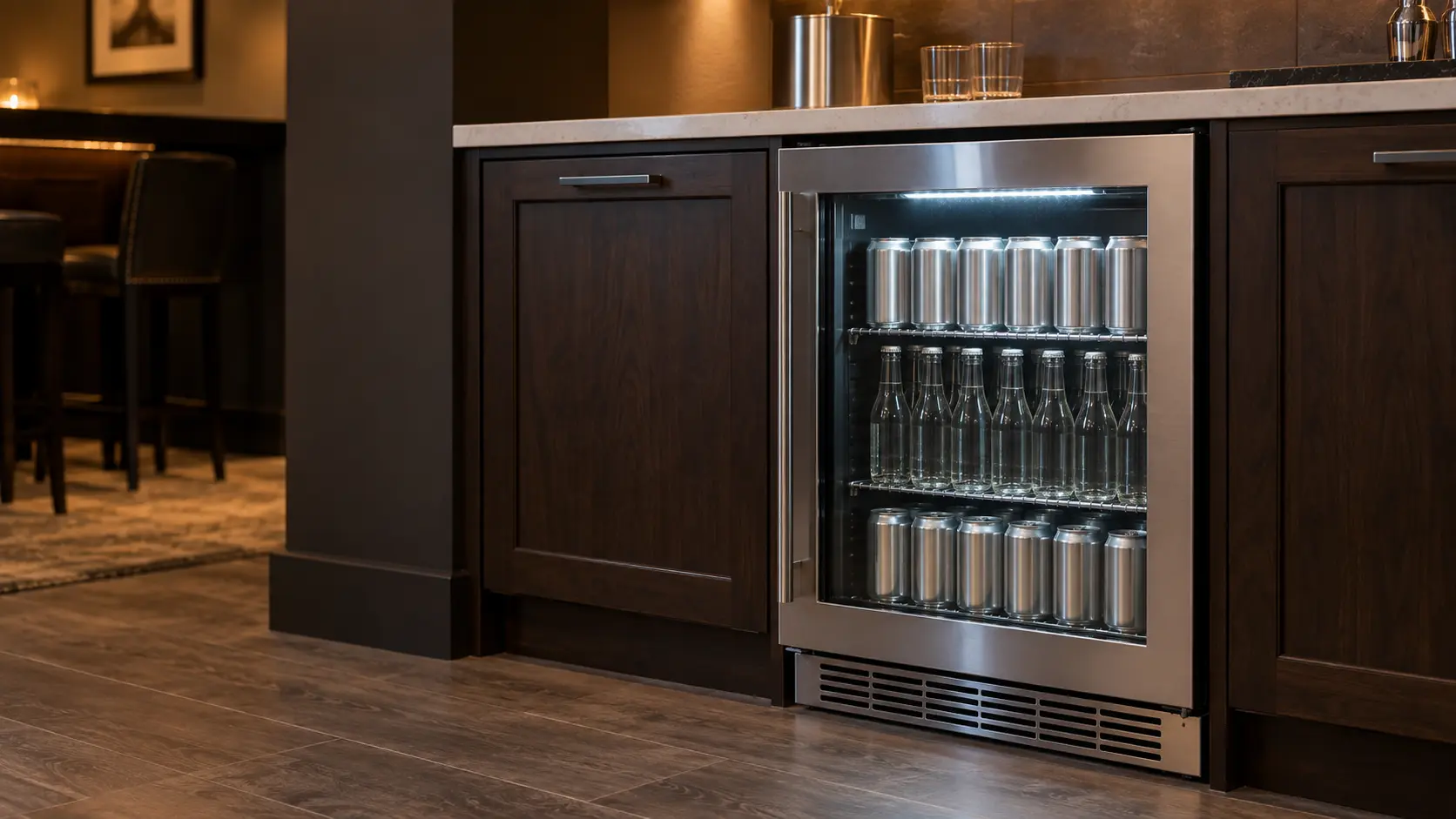
The makes
we see it on.
21 makes on this site, and the beverage center fan repair on any of them. Each mark opens that make's own page.
All 21 brandsBeverage center fan repair,
where we come out.
The home, the climate and the building all change how the beverage center fan repair goes. These notes are about that, metro by metro.
All service areasTampa BayFL · 31 areas
An undercounter beverage center in a Tampa Bay lanai bar pulls air in and out through its toe-kick grille, where sand, leaves and pool-deck grit pack against the condenser fan, and the repair clears that path and replaces a motor that has begun to drag.
OrlandoFL · 30 areas
Party nights in Orlando game rooms mean a beverage center door opened every minute, and the inside fan that spreads cold air around the cans runs nonstop to keep up, so a squeal or a stalled blade after a busy weekend is a familiar call.
Miami / South FloridaFL · 47 areas
In South Florida humidity a beverage center's evaporator fan can ice over when the door gasket lets damp air in, and a fan ticking against ice is repaired by fixing the seal and the defrost as well as the motor.
New York MetroNY · 75 areas
Tight New York cabinet runs leave a built-in beverage center only its front grille to breathe through, and when the condenser fan behind it slows the whole kitchen corner warms, so the repair restores the fan and makes sure no kick-plate trim blocks the vents.
HoustonTX · 36 areas
Houston dust, pet hair from a busy house and spring pollen clog a beverage center's condenser fan and coil, and a hot, humming toe kick in July is the sign; the repair cleans the coil and swaps a fan that no longer spins up to full speed.
ChicagoIL · 50 areas
In a Chicagoland basement bar the beverage center fan pulls in lint from the laundry next door and dust from a winter of forced-air heat, and the repair clears the fan shroud and checks the rubber mounts that start to buzz as they age.
Los AngelesCA · 95 areas
A Los Angeles beverage center built into a patio island or a Valley family room sees air above 100 degrees at its grille, and a condenser fan that stops there overheats the compressor within hours, so a rattle or silence at the toe kick deserves a same-week repair.
San DiegoCA · 31 areas
Damp coastal mornings in San Diego rust the shaft of a beverage center's fan motor, which then starts slowly and whines until it warms up, and the repair replaces the motor before it seizes and leaves the compressor without air.
San Francisco Bay AreaCA · 74 areas
In a Bay Area beverage center the inside fan behind the rear panel keeps the top shelf as cold as the bottom, and when it stops the unit shows a cold floor and a warm top; the repair replaces it after emptying only the shelves in the way.

Questions about
the beverage center fan repair.
Why does the chirping in my beverage center stop when I open the door?
Can I keep using a beverage center with a noisy fan?
Why is the back shelf freezing while the front shelf stays cool?
Back to your everyday
Ready to book the beverage center fan repair?
Have these to hand: whether the noise is a buzz, a chirp or a rattle, and whether it stops when you open the door, whether the back shelf is colder than the front, or the whole cabinet is warm, whether the air at the toe grille or the back of the unit still feels warm while it runs, whether the unit is indoors, in a garage or outside on a patio.