
Undercounter Beverage Center Repair
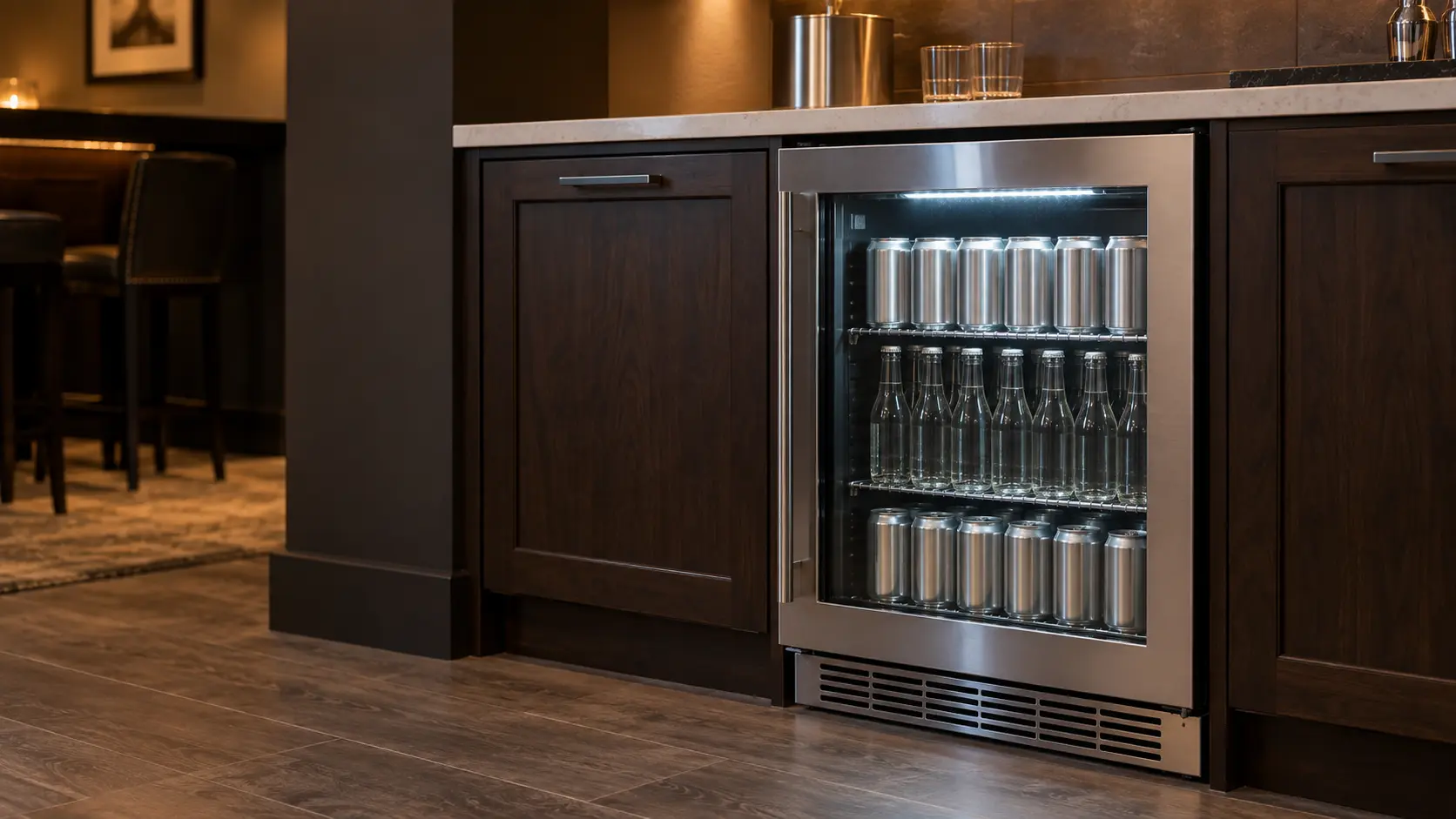
A glass-door cabinet for cans and bottles, set in under a counter in a wet bar, a basement bar, a game room or at the end of a kitchen island, and breathing only through the grille at its toe kick.
Mon–Sat, 8am–8pm
- 4 things that fail on it
- 18 makes build it
- 6 problems it shows
Book a visit
Three short steps, about a minute.
or call (844) 456-5057
Loading appointment form…
The appointment form couldn’t load. Please try again.
Is yours
an undercounter?
An undercounter beverage center fills a 15- or 24-inch gap in a run of base cabinets, with a countertop resting inches above its top and side panels touching it on both flanks. It holds soda, seltzer and beer in the upper 30s, colder than any wine cabinet asks for, and that cold has to leave somewhere: a fan behind the lower grille pulls room air across the condenser and blows it straight back out at floor level. When the grille is packed with lint or a new toe kick is screwed on over it, the unit keeps running and the cans lose their chill by mid-afternoon. Inside, wire or glass shelves slide or snap into ladder rails, a fan on the back wall stirs the air past a sensor, and a glass door with its own magnetic seal and often a keyed lock closes the front. Because the door is opened dozens of times on a busy evening, a seal that has taken a set or a hinge that has dropped a few millimeters shows up here sooner than on any other cold appliance in the house. A visit starts at the grille and the door before any panel is unscrewed.
 What fails on an undercounter beverage center
How to tell
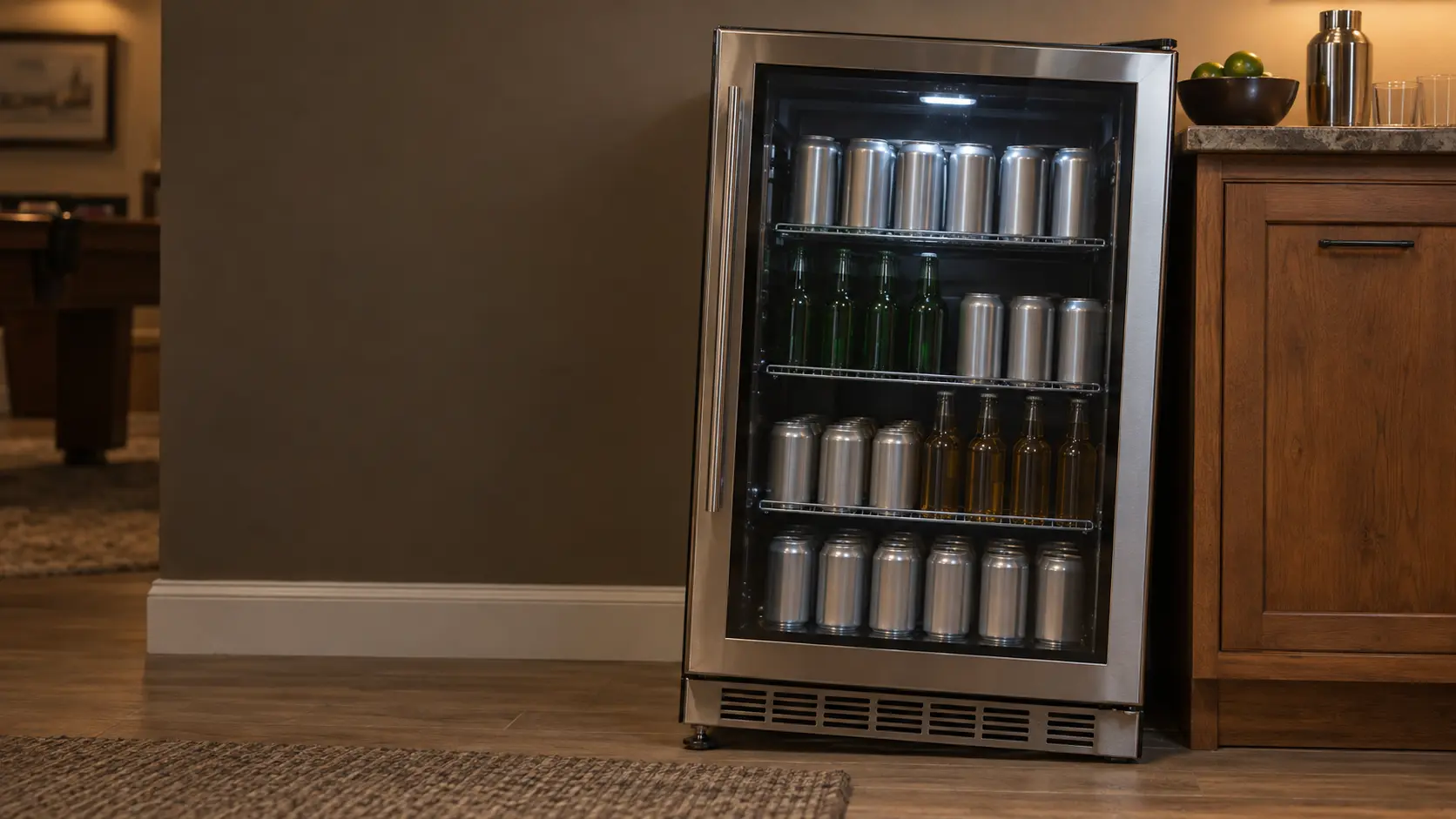
It sits flush with the neighboring cabinet doors under a countertop and stands close to 34 inches tall, with leveling legs hidden behind a grille.
Its door is clear or lightly tinted glass in a stainless or black frame, and through it you see cans and bottles standing upright on wire or glass shelves.
A vented strip across the bottom front is the only opening in its cabinet; the sides and back are meant to be closed in by cabinetry.
Controls are a row of touch keys along the top edge or a small panel inside, usually with a light key and a single temperature readout.
Not yours?Freestanding beverage coolerOutdoor beverage centerBeverage drawers
What fails
on this design.
On an undercounter beverage center: a toe grille that cannot breathe, a glass door that sags, cans that freeze on the back shelf, the compressor and its start parts.
The problems it showsA toe grille that cannot breathe
Everything the compressor removes from the cans leaves through a few square inches of slots at floor level. A rug, a pet bed, a trim board or a gray felt of dust across those slots, and the cabinet that held 36°F in winter warms up in July.
A glass door that sags
Every opening swings a heavy pane on a pair of small hinge pins, and a loaded door rack adds weight. Once the door drops out of square, one corner of the seal stops touching, the glass fogs along that edge and the compressor seldom gets a rest.
Cans that freeze on the back shelf
The coldest air leaves the evaporator at the rear wall. When the sensor drifts or the air fan slows, cans nearest the back can drop below freezing and split, while the front row still feels merely cool.
The compressor and its start parts
Closed into cabinetry, the compressor works in the warmest corner of the room. A click from the lower back every few minutes with the cans warming usually means the start relay or overload has quit before the compressor has.
Getting at it,
and whether to.
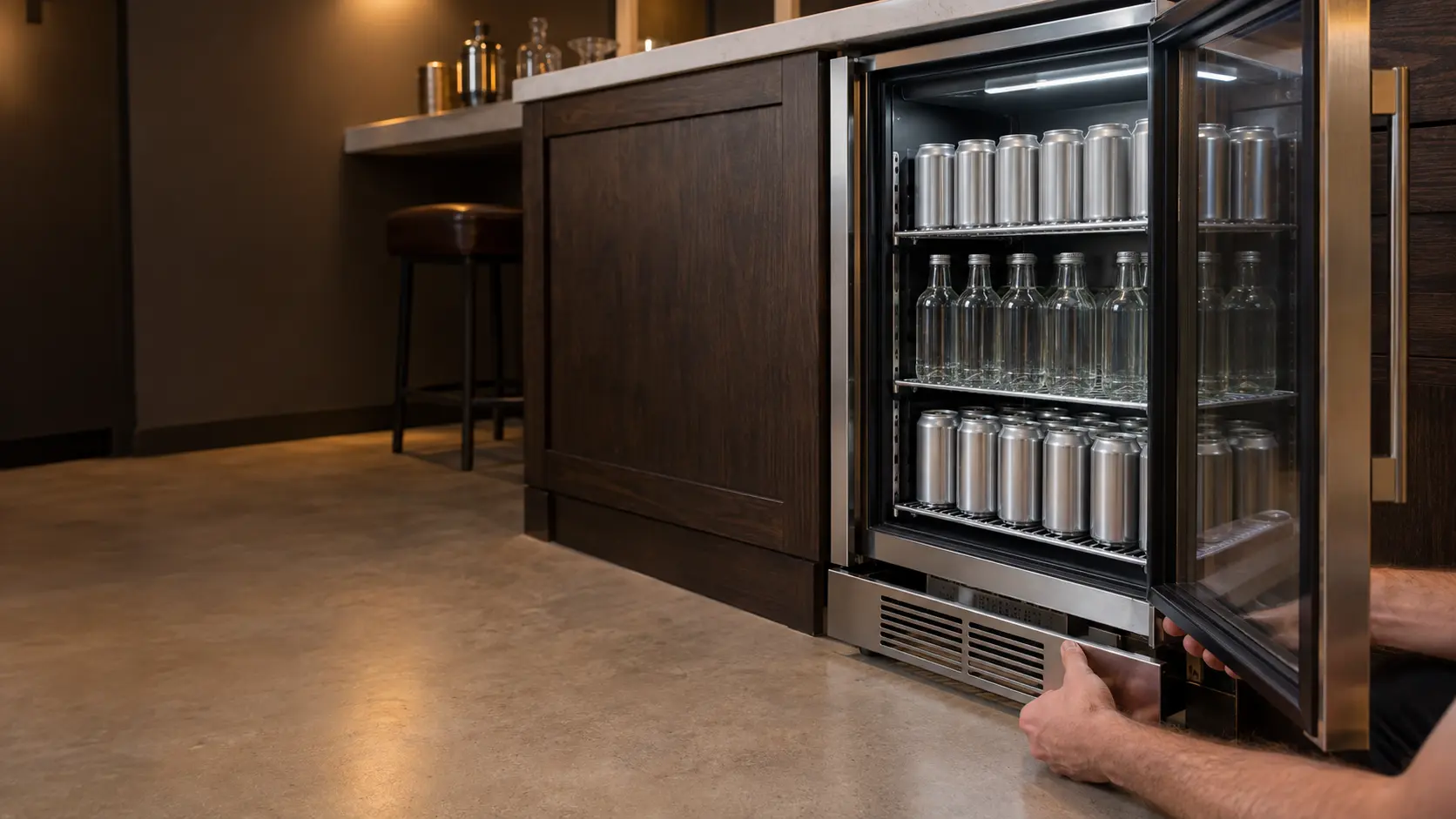
Most work begins at the front: the toe grille unclips to reach the condenser, its fan, the drain pan and the compressor's start parts.
What repairs costOn the visit
- Work on the rear wiring or the sealed tubing means sliding the cabinet out, so the counter overhang, the floor lip and any bracket holding it in the opening are checked first.
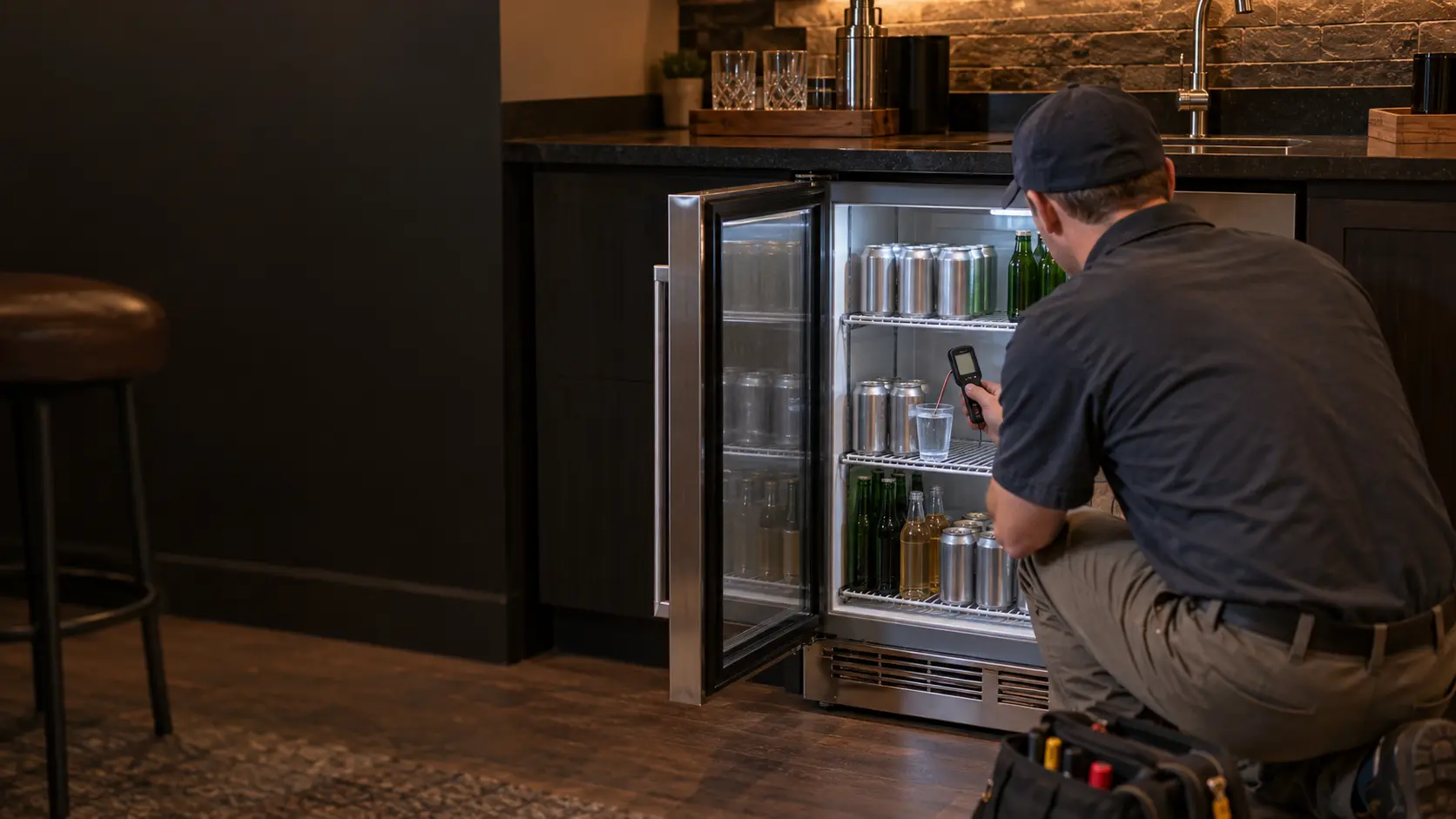
- Pull the cans off the lowest shelf and set them in a cooler before the visit, so the back wall and the shelf rails can be reached without unloading everything on the spot.
- If a can has already burst inside, wipe the sticky spill from the seal and the floor of the cabinet; sugar left on a gasket glues it and tears it on the next opening.
Repair or replace
An undercounter beverage center is sized to a cutout and often matched to the cabinetry around it, so a repair usually wins: a door seal, a hinge, a fan motor, a sensor or a start relay costs a small share of a new unit plus the carpentry and trim to set it in. The balance shifts on an older entry-level model that has lost refrigerant or whose control board is no longer made. In that case both figures are written down side by side and the decision is yours.
Book a visit for an undercounter beverage centerThe problems
it shows.
On an undercounter beverage center, most often beverage center not cooling the cans.
All problems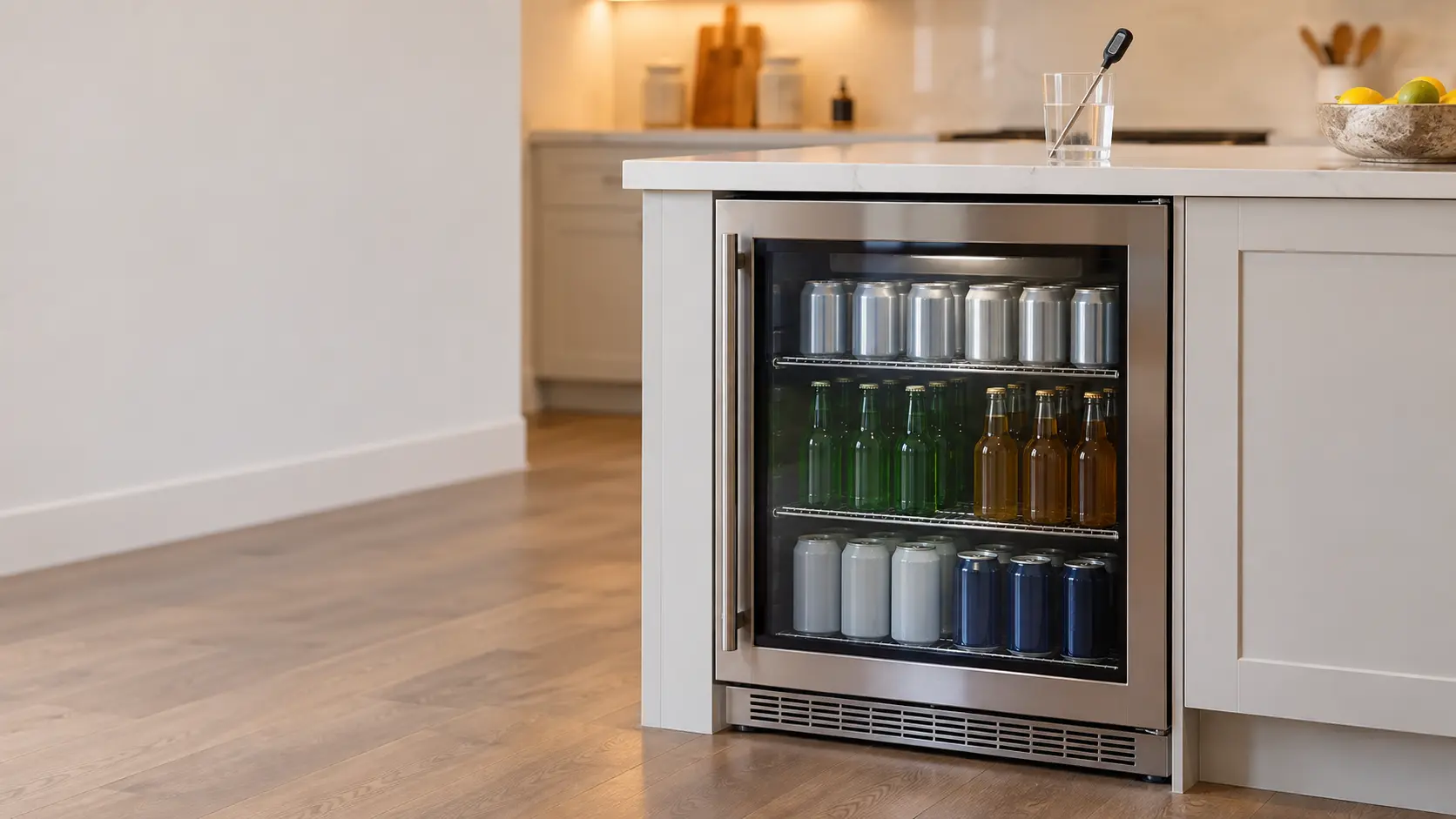
Beverage Center Not Cooling the Cans
6 causes, cheapest first
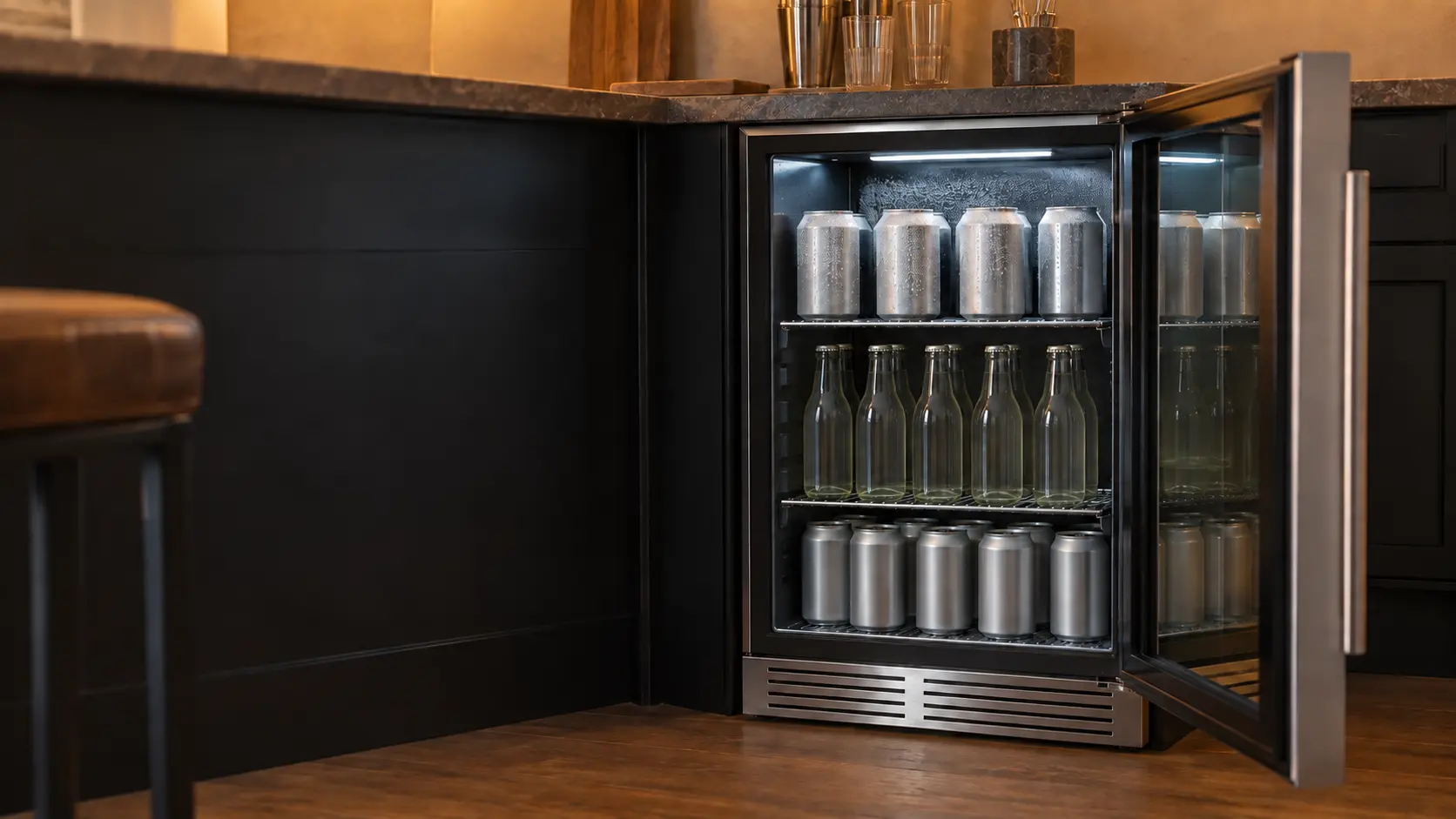
Beverage Center Freezing Drinks and Bursting Cans
6 causes, cheapest first
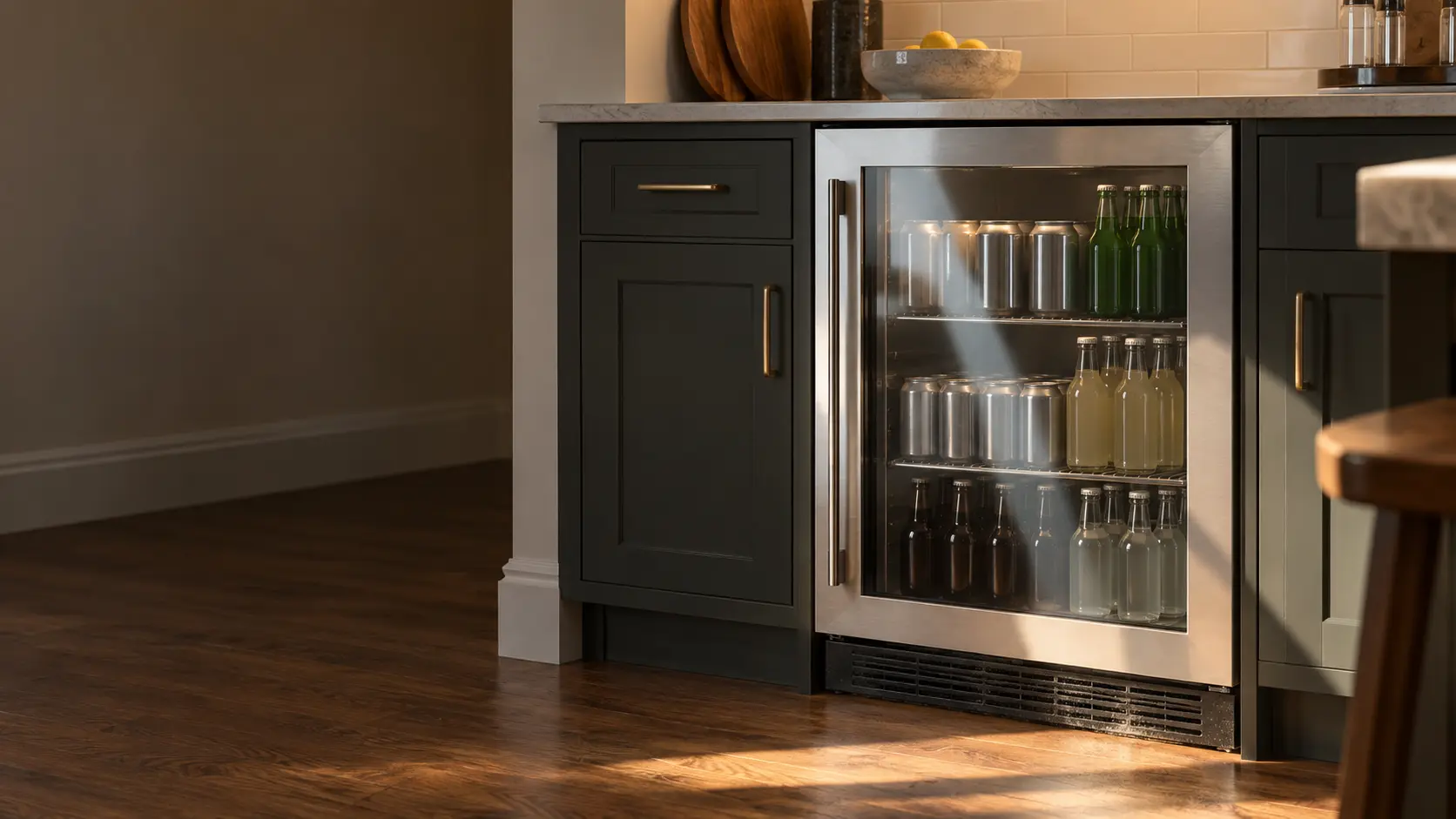
Beverage Center Never Stops Running
6 causes, cheapest first
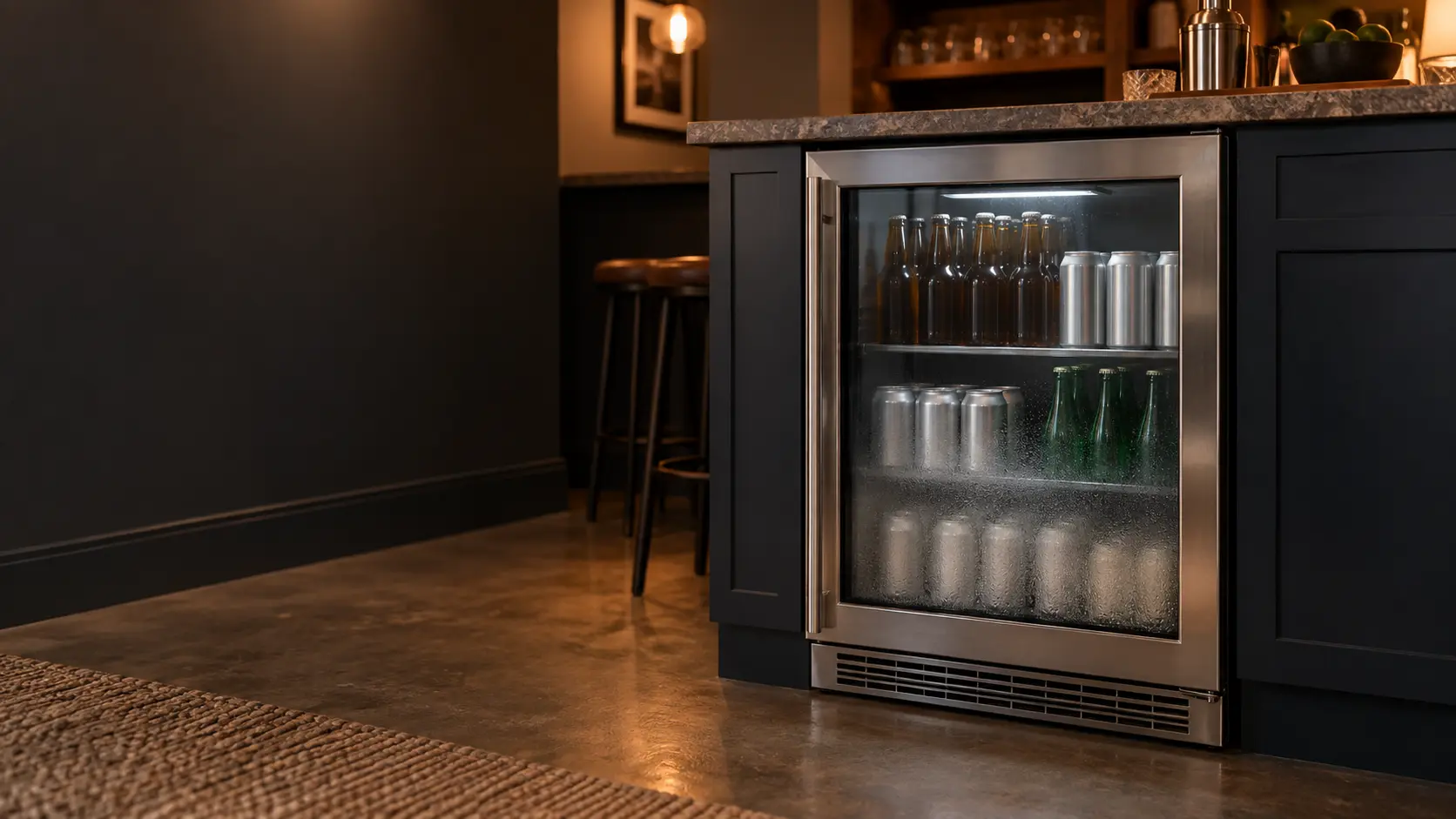
Fog on the Beverage Center Glass Door
5 causes, cheapest first
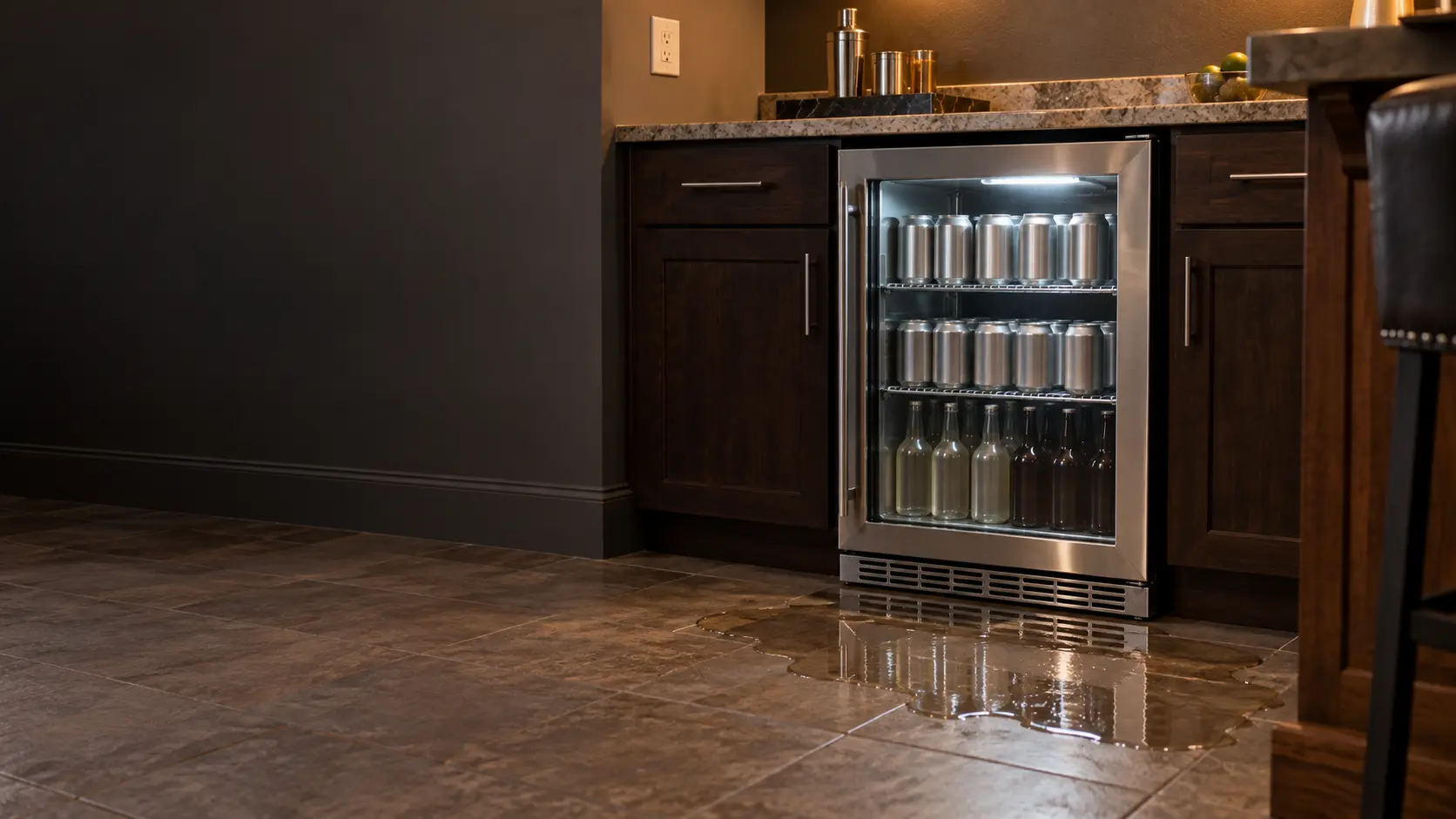
Water Pooling Under a Beverage Center
6 causes, cheapest first
Beverage Center Humming, Rattling or Buzzing
5 causes, cheapest first
Who builds
an undercounter.
18 of the makes on this site build an undercounter beverage center. Each mark opens that make's own page.
All 21 brandsUndercounter beverage center repair,
where we come out.
9 metros, each with its own page.
All service areasTampa BayFL · 31 areas
Miami / South FloridaFL · 47 areas
New York MetroNY · 75 areas
HoustonTX · 36 areas
ChicagoIL · 50 areas
Los AngelesCA · 95 areas
San DiegoCA · 31 areas

Questions about
undercounter beverage centers.
Why did a can burst in my undercounter beverage center?
Can a cabinet installer cover the grille at the bottom of my beverage center?
What setting keeps cans cold without freezing them?
The glass on my undercounter unit drips on muggy days. Should I worry?
Back to your everyday
Is it an undercounter beverage center?
Say so when you book — it changes what the technician brings and how the visit is planned.