
Outdoor Beverage Center Repair
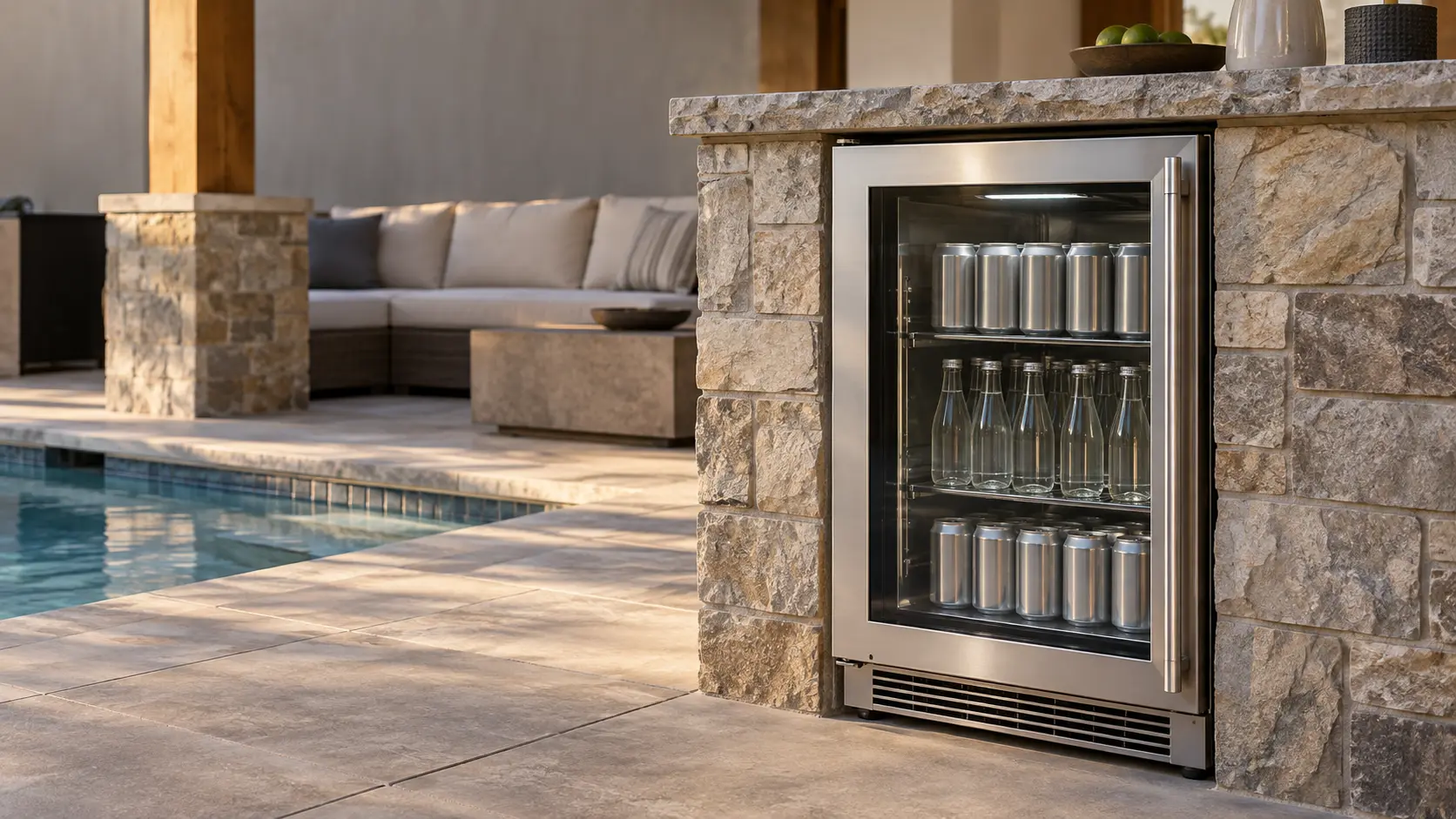
A beverage center rated by its maker for outdoor use, built under a covered patio counter or a poolside bar, sealed against weather and plugged into a GFCI-protected outlet.
Mon–Sat, 8am–8pm
- 4 things that fail on it
- 7 makes build it
- 6 problems it shows
Book a visit
Three short steps, about a minute.
or call (844) 456-5057
Loading appointment form…
The appointment form couldn’t load. Please try again.
Is yours
an outdoor?
An outdoor beverage center looks like its indoor cousin but is built for a harder life: a heavier stainless cabinet, a door and seal made to hold cold on a 95°F afternoon, wiring and components sealed against rain and humidity, and a condenser sized to reject heat into air that is already hot. It still breathes through a grille at the front, now facing a patio that fills it with pollen, leaves, sand and salt spray from the pool or the ocean. It is almost always on a GFCI outlet or breaker, as outdoor circuits must be, which adds its own kind of trouble: moisture in a cord connection or a worn part can trip the protection and leave the cabinet dark with nobody noticing until the cans are warm. Sun on the glass, a counter that bakes all afternoon and a party that keeps the door swinging add up to the heaviest load any beverage center carries. An indoor model moved outside will usually fail within a season, so the first question on a visit is whether the unit is rated for where it stands.
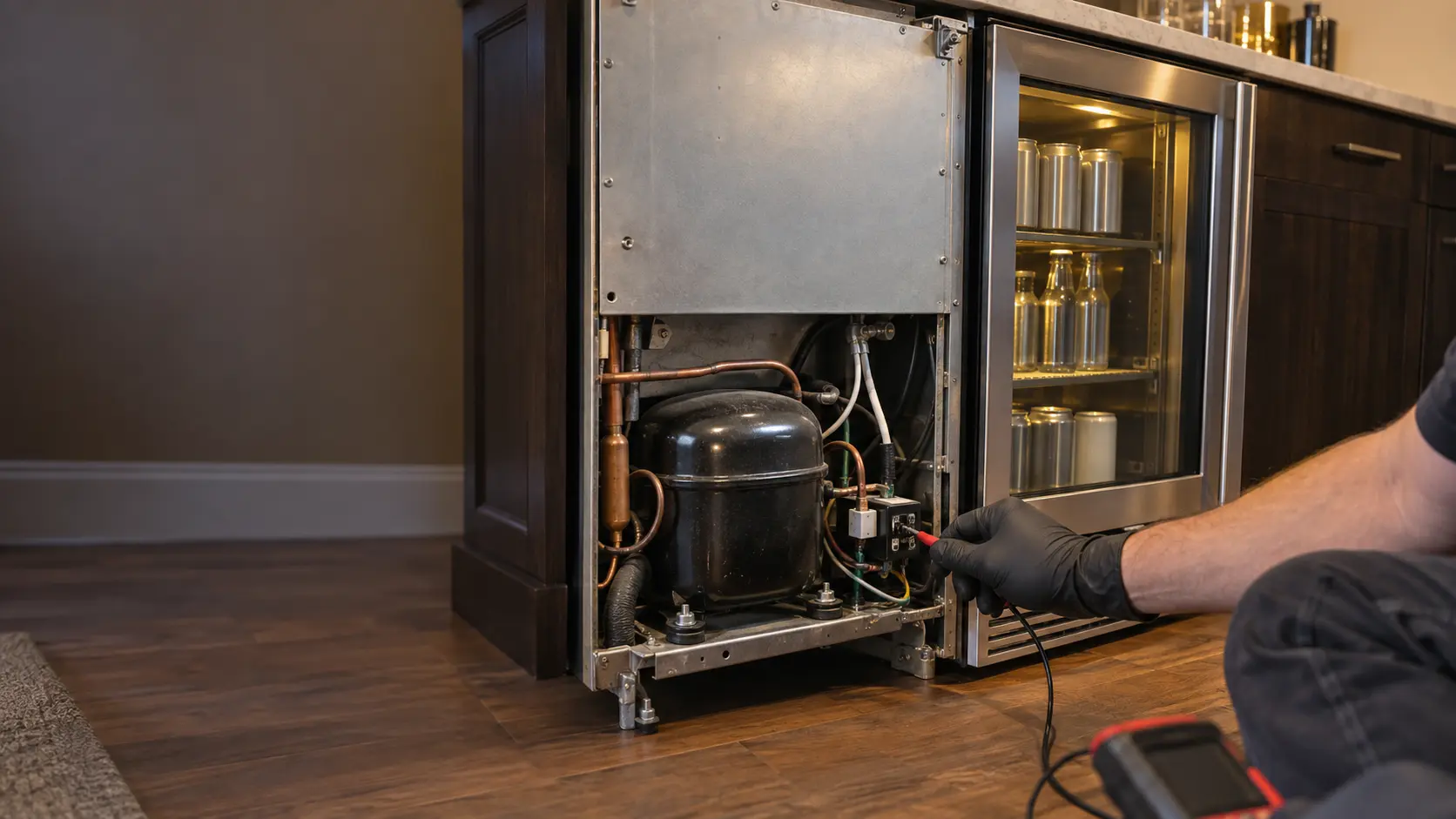 What fails on an outdoor beverage center
How to tell
It stands under a covered outdoor counter or bar, and the maker's literature or the rating plate inside calls it suitable for outdoor use.
The cabinet and door frame are heavy stainless, sometimes marine-grade, and the door usually closes with a lock and a firm, deep seal.
It plugs into an outlet with test and reset buttons, or into a circuit protected by a GFCI breaker in the panel.
The front grille and the hinges show the patio's life: pollen, grit, salt bloom or rust spots where an indoor unit would stay clean.
Not yours?Undercounter beverage centerFreestanding beverage coolerBeverage drawers
What fails
on this design.
On an outdoor beverage center: a grille full of the yard, a gfci that keeps tripping, heat and sun on the glass, salt, rust and tired seals.
The problems it showsA grille full of the yard
Leaves, grass clippings, sand and pollen collect in the toe grille faster than dust does indoors. With the condenser choked on a hot afternoon, the cabinet climbs toward the 50s while the compressor never stops.
A GFCI that keeps tripping
Rain driven into a cord connection, a cracked plug, or moisture in a fan motor or heater can leak a little current to ground. The outlet then trips, sometimes only after a storm, and the unit goes dark until someone presses reset.
Heat and sun on the glass
Afternoon sun on the door warms the front row and heats the seal, and a hot counter warms the top. A unit that is fine in May can fall behind in August simply because of where the sun now lands.
Salt, rust and tired seals
Near a pool or the coast, salt air pits hinges, loosens screws and stiffens the door seal. Once the seal hardens and stops sealing, the humid outdoor air brings frost on the back wall and water in the cabinet.
Getting at it,
and whether to.
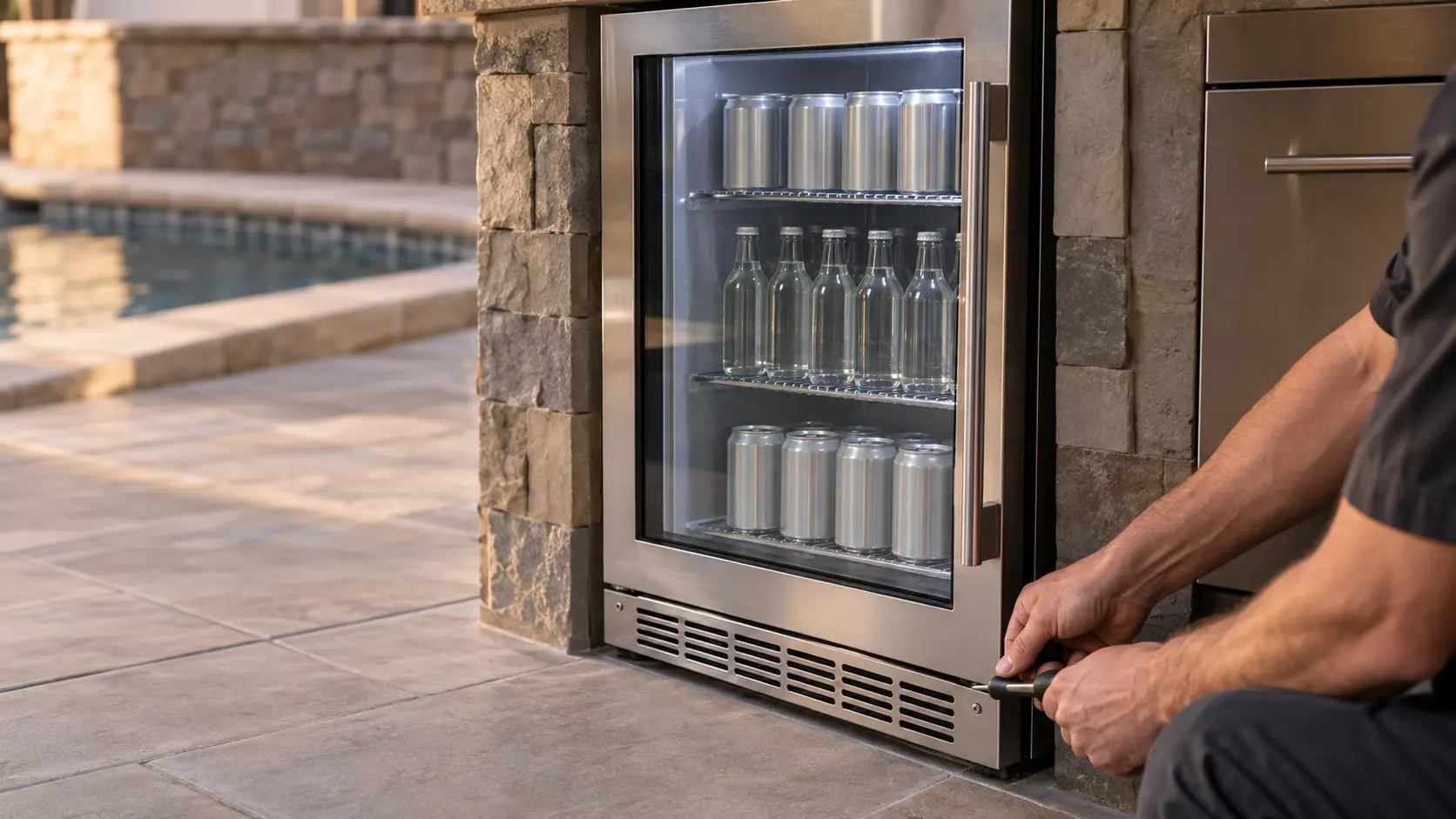
Grille, condenser, fan and start parts come out from the front, so a clear path in front of the counter is all most visits need.
What repairs costOn the visit
- Rear work means drawing the unit out of the outdoor counter; masonry lips, stone overhangs and tight openings are checked before it moves.
- Tell us where the GFCI protecting the unit is, whether an outlet by the counter, one inside the house or a breaker in the panel, and whether it has tripped before.
- Pick a time out of the rain if you can; the outlet and the cord connection are opened and tested dry.
Repair or replace
An outdoor-rated beverage center costs far more than an indoor one and is usually built into masonry or a finished island, so repairing it is nearly always the better path: a seal, a fan, a condenser cleaning, a GFCI or cord repair, a sensor or even a start relay costs a fraction of a new outdoor unit and the stonework around it. The case for replacing starts only with heavy corrosion of the cabinet or a sealed-system failure on an older unit, and both numbers are laid out before you choose. An indoor unit that has failed outdoors is better replaced with one rated for the spot.
Book a visit for an outdoor beverage centerThe problems
it shows.
On an outdoor beverage center, most often outdoor beverage center losing the fight with the heat.
All problems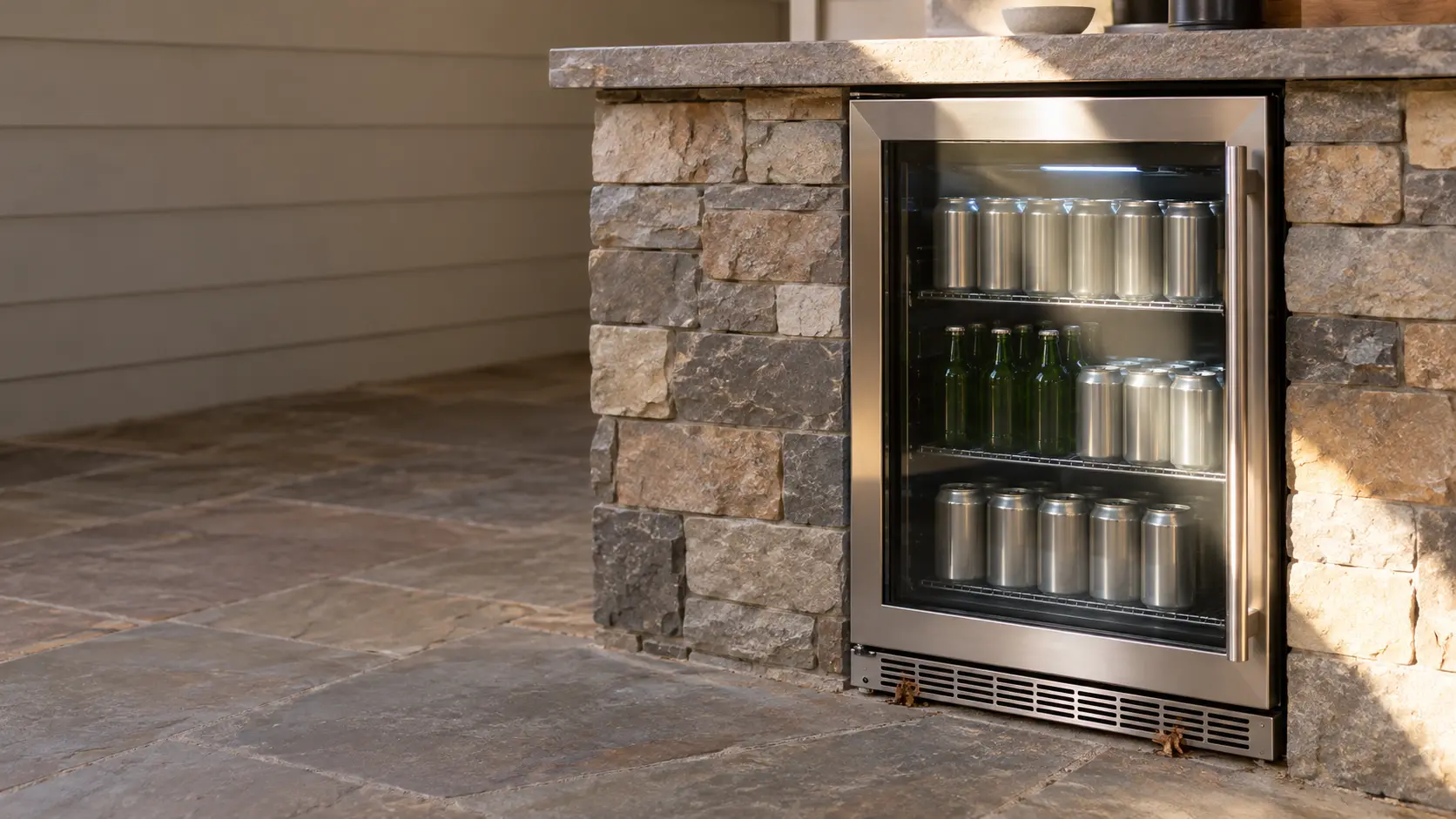
Outdoor Beverage Center Losing the Fight With the Heat
6 causes, cheapest first
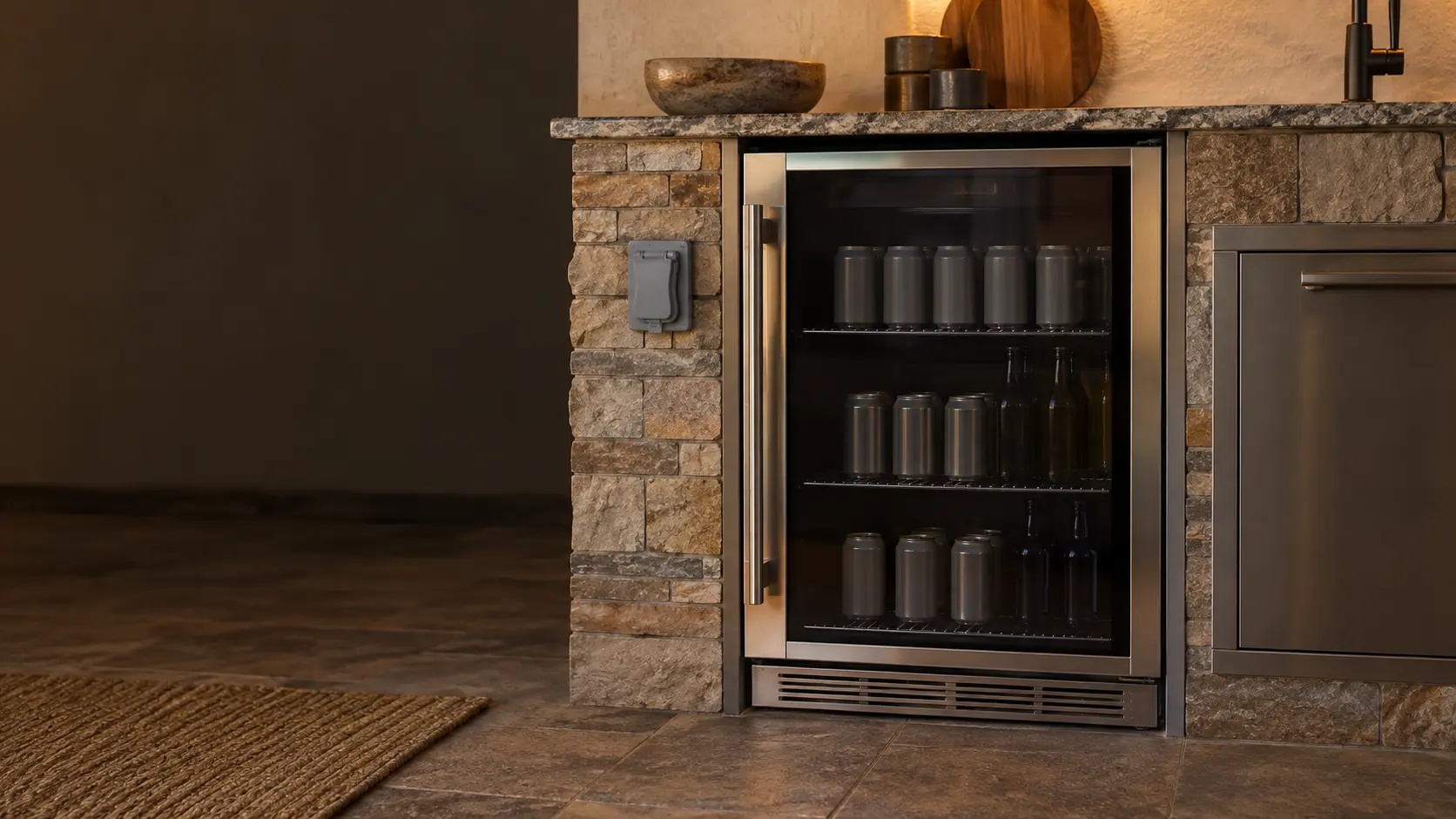
Breaker or GFCI Cuts Power to the Beverage Center
6 causes, cheapest first
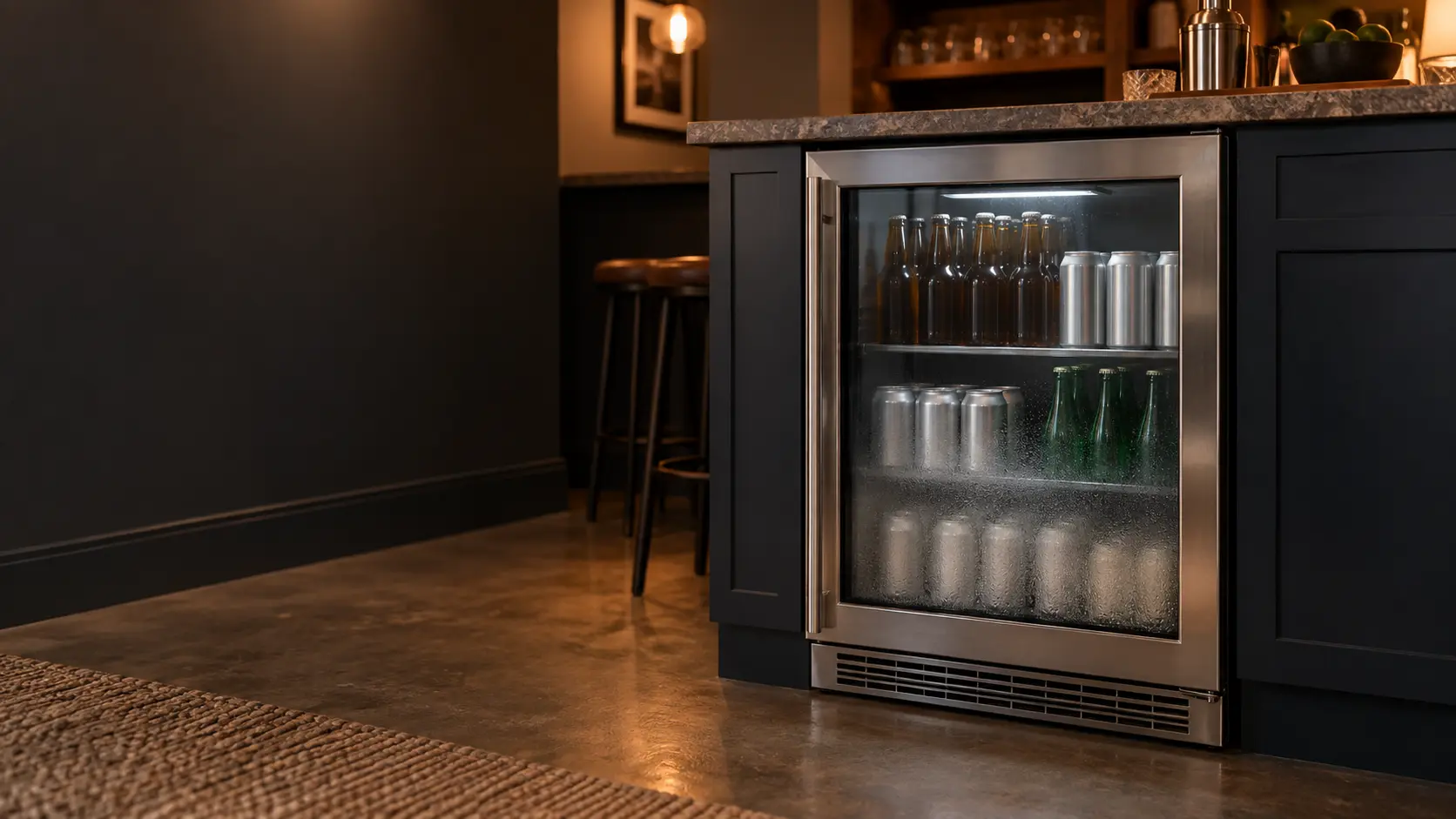
Fog on the Beverage Center Glass Door
5 causes, cheapest first
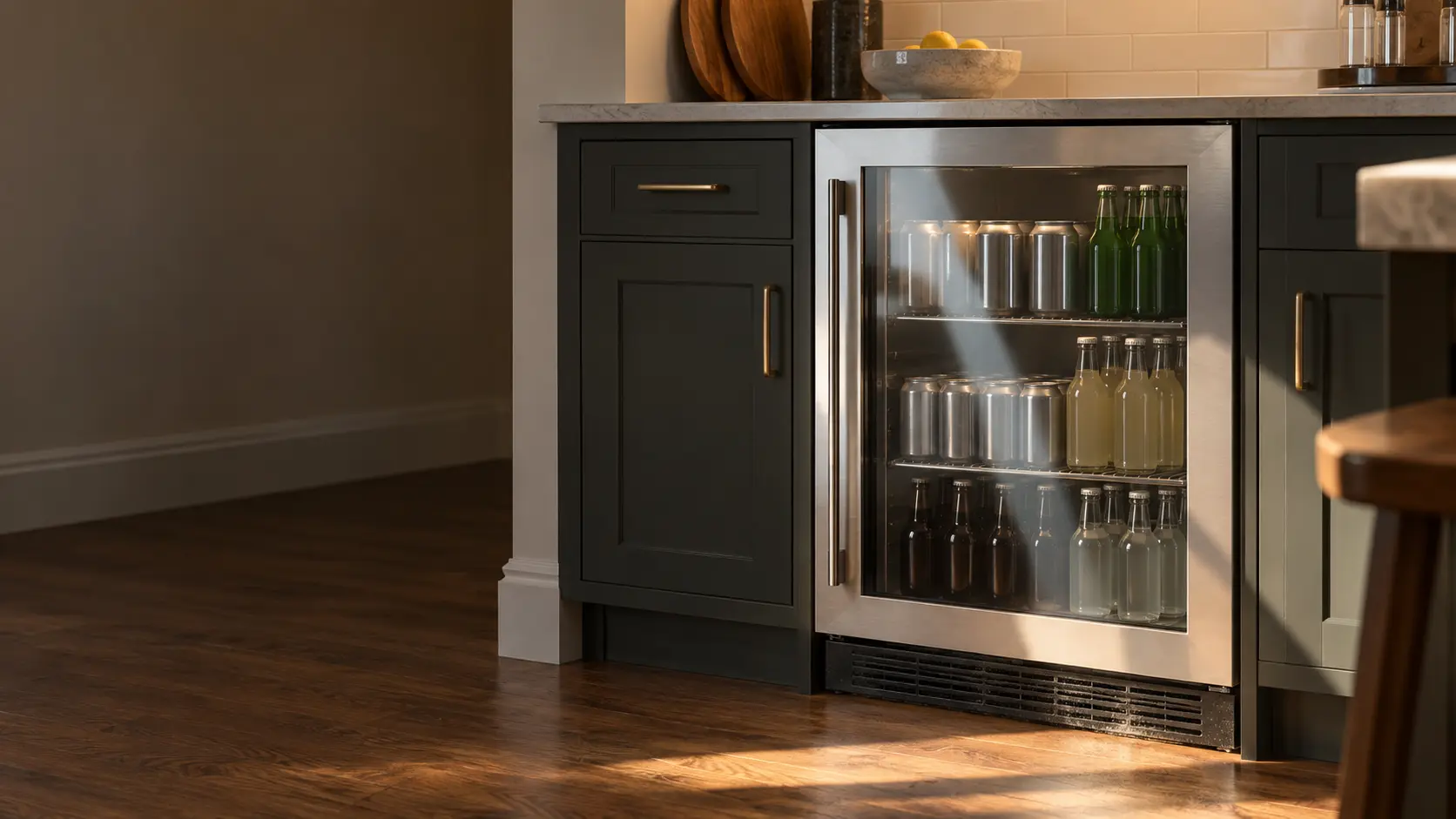
Beverage Center Never Stops Running
6 causes, cheapest first
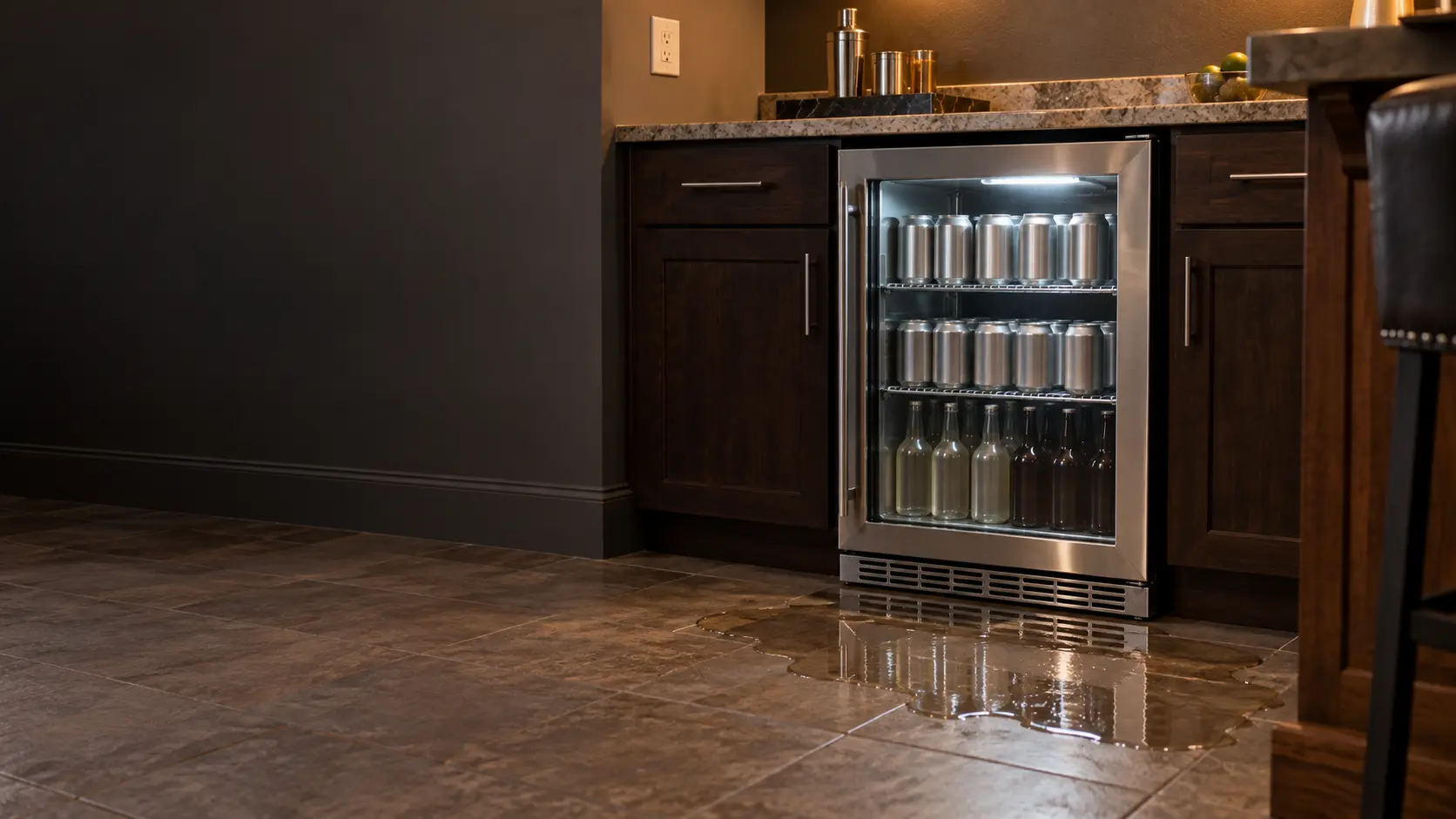
Water Pooling Under a Beverage Center
6 causes, cheapest first
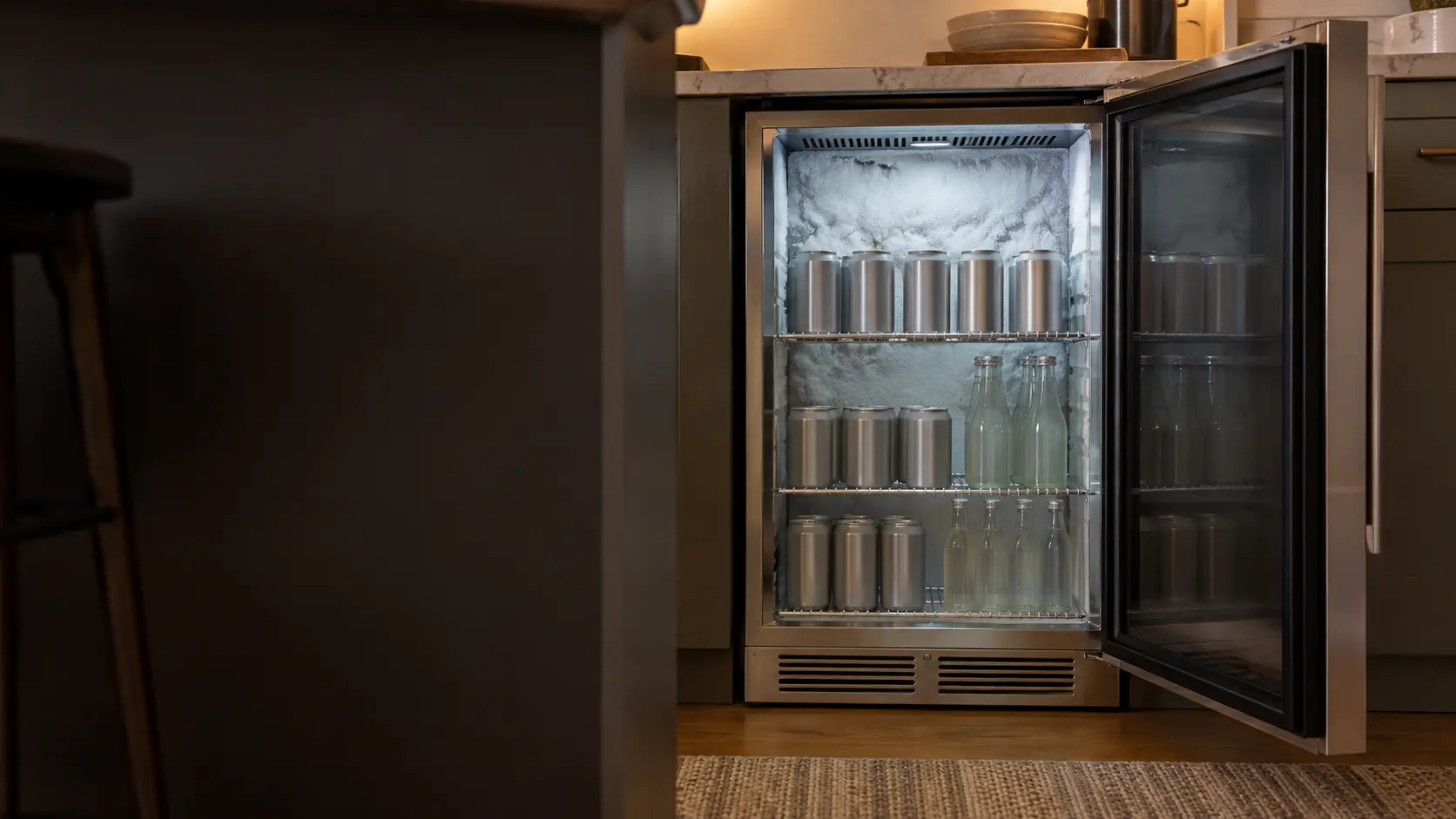
Beverage Center Frosting Over Behind the Cans
5 causes, cheapest first
Who builds
an outdoor.
7 of the makes on this site build an outdoor beverage center. Each mark opens that make's own page.
All 21 brandsOutdoor beverage center repair,
where we come out.
9 metros, each with its own page.
All service areasTampa BayFL · 31 areas
Miami / South FloridaFL · 47 areas
New York MetroNY · 75 areas
HoustonTX · 36 areas
ChicagoIL · 50 areas
Los AngelesCA · 95 areas
San DiegoCA · 31 areas

Questions about
outdoor beverage centers.
Can an indoor beverage center go under a covered patio counter?
My outdoor beverage center goes dead after storms. What is happening?
How do I get an outdoor beverage center ready for winter?
Why is my outdoor unit cold in the morning and warm by late afternoon?
Back to your everyday
Is it an outdoor beverage center?
Say so when you book — it changes what the technician brings and how the visit is planned.