
Beverage Center Thermostat and Sensor Repair
Finding and replacing the dial thermostat or electronic sensor that tells a beverage center when to cool, so cans stay cold without freezing and splitting.
Mon–Sat, 8am–8pm
- Low to moderate cost band
- 5 steps on the visit
- 5 problems it answers
Book a visit
Three short steps, about a minute.
or call (844) 456-5057
Loading appointment form…
The appointment form couldn’t load. Please try again.
What the beverage center thermostat and sensor repair
involves.
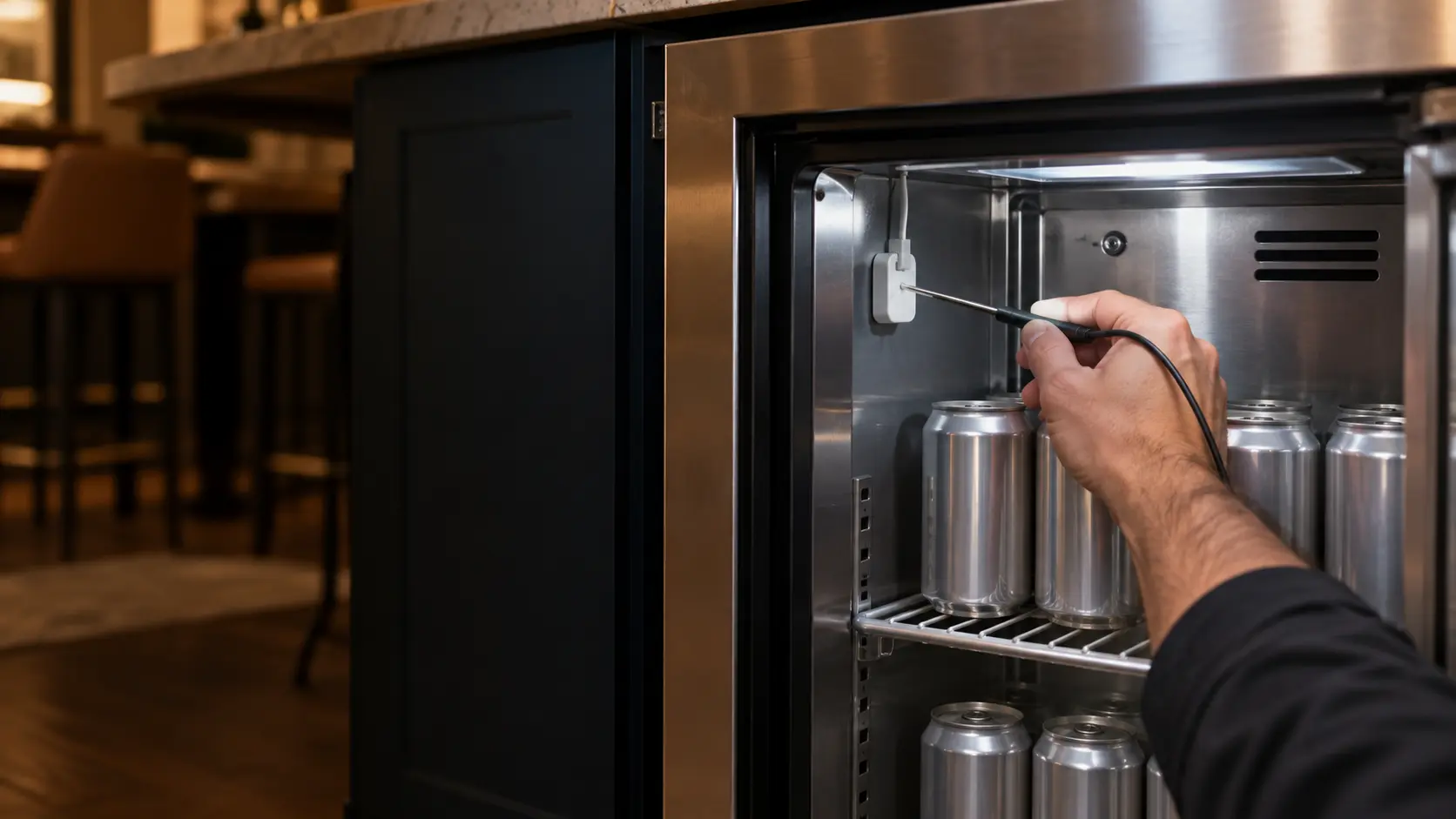
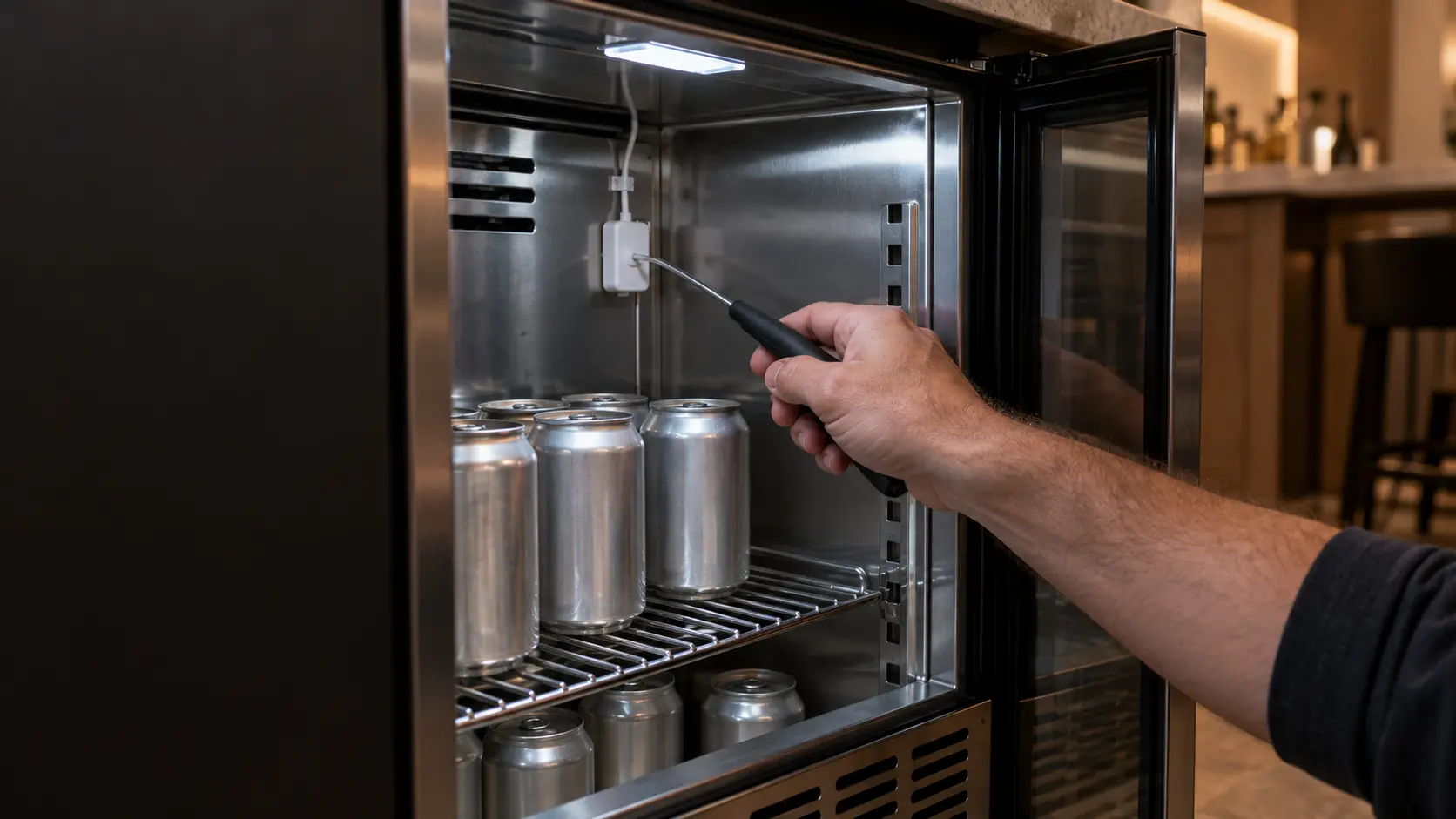
A beverage center decides when to cool from one small part: a dial thermostat with a sensing bulb on older and simpler models, or an electronic sensor clipped to the back wall and read by the control board on the rest. Held this close to freezing, a drifting part shows fast. A sensor that reads warmer than the air keeps the compressor running until the rear cans freeze and burst; one that reads colder lets the whole cabinet sit in the 40s. A drawer unit may have a sensor per drawer, and some models use a second one on the coil to end the defrost. The technician compares the thermometer reading with what the display claims, measures the sensor's resistance against the maker's chart at a known temperature, and checks the thermostat's cut-in and cut-out. A sensor that has moved from its clip, or a bulb that was pushed against the coil, is often the whole story. A new part is fitted in the right place, and the unit is watched through a cycle so the cans and the display agree. Beverage center thermostat repair is usually a short visit once the right part has been proven guilty.
How the visit goesWhat it usually costsLow to moderate · Thermostat or temperature sensor
A dial thermostat or a clip-on sensor is an inexpensive part. A drawer unit with a sensor in each drawer, where more than one has drifted, or a separate defrost sensor, moves the job up a step.
Answers 5 problemsBeverage Center Freezing Drinks and Bursting Cans
Beverage Center Not Cooling the Cans · Beverage Center Never Stops Running · Reading a Beverage Center Error Code · Beverage Center Frosting Over Behind the Cans
Comes up most onUndercounter beverage center
Freestanding beverage cooler · Outdoor beverage center · Beverage drawers
Codes that lead hereHigh Temperature Alert · H° · L° · CL or LO
Café High Temperature Alert: the cabinet left its normal limits.
Beverage center thermostat and sensor repair,
step by step.
Watch a full cycle until the cup of water and the display agree, and explain which setting keeps cans cold without the back row freezing.
Place a thermometer in a cup of water on the middle shelf and compare it over time with the display or the dial.
Find the sensor or the thermostat bulb, and check that it sits in its clip where the maker placed it, not against the coil.
Measure the sensor's resistance against the maker's chart, or test the thermostat's cut-in and cut-out with a meter.
Replace the sensor or thermostat, route it the same way as the original, and reset or recalibrate the control where the model allows.
Watch a full cycle until the cup of water and the display agree, and explain which setting keeps cans cold without the back row freezing.
The problems
it answers.
5 of them, from beverage center freezing drinks and bursting cans to beverage center frosting over behind the cans.
All problems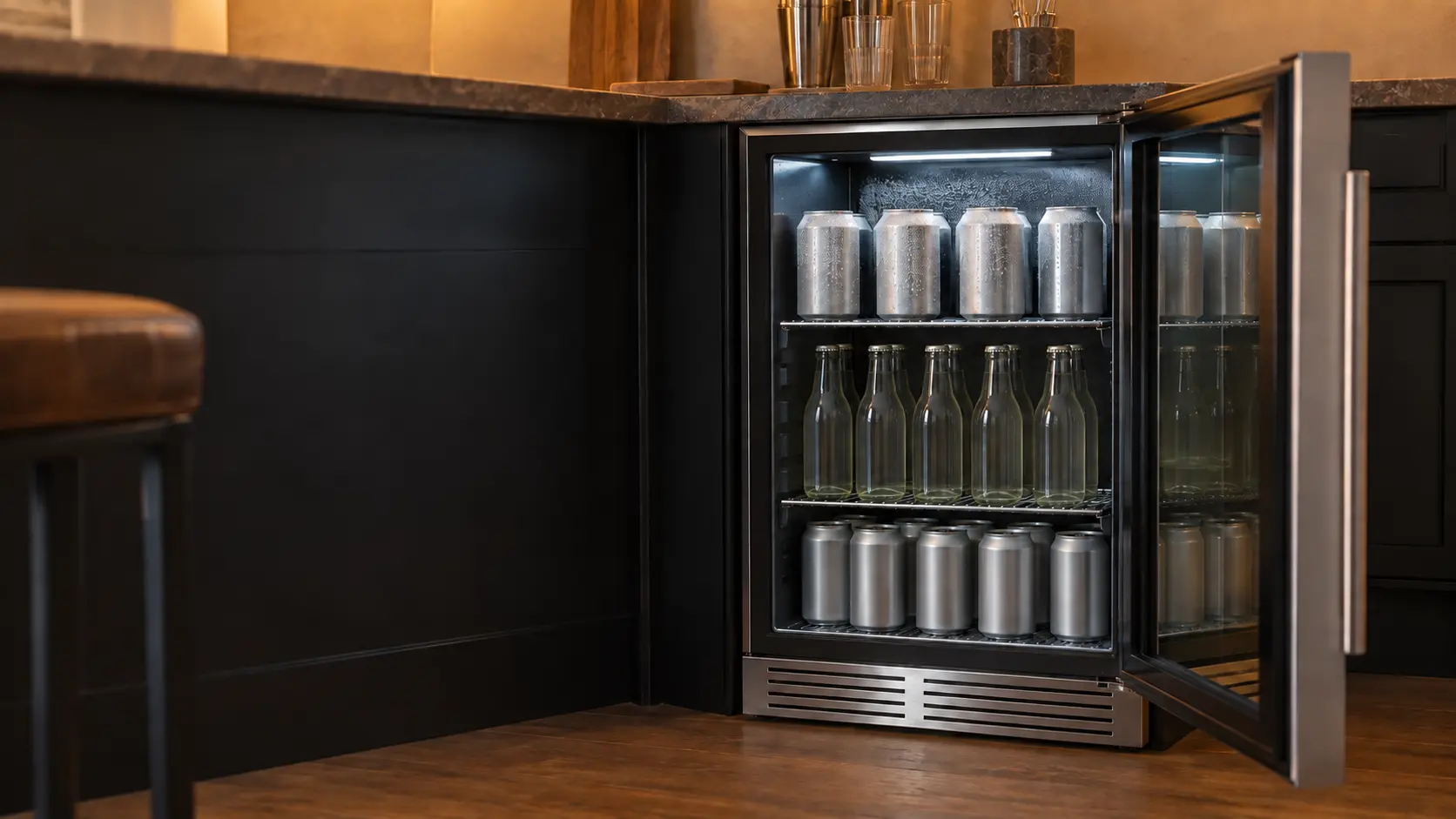
Beverage Center Freezing Drinks and Bursting Cans
6 causes, cheapest first
Before you call
Tell us this when you book
- Whether cans have frozen or split, and on which shelf or in which drawer
- What the display or the dial says against what a thermometer inside says
- Whether the compressor seems to run all the time or hardly at all
- Whether anyone has changed the setting or moved things inside recently
It also answers
Low to moderate,
on the site's scale.
A dial thermostat or a clip-on sensor is an inexpensive part. A drawer unit with a sensor in each drawer, where more than one has drifted, or a separate defrost sensor, moves the job up a step.
Read the full cost guideWhere it
comes up most.
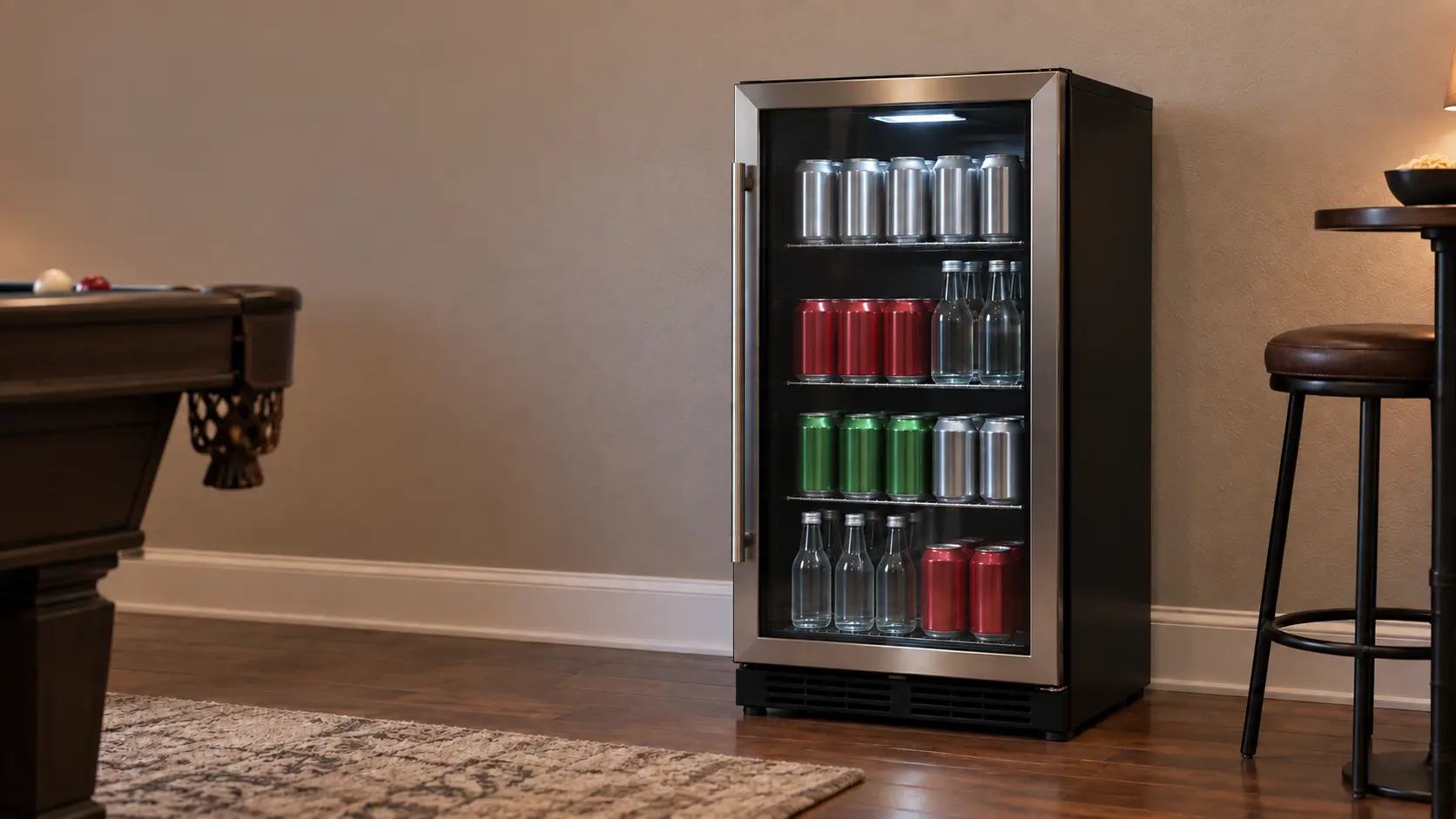
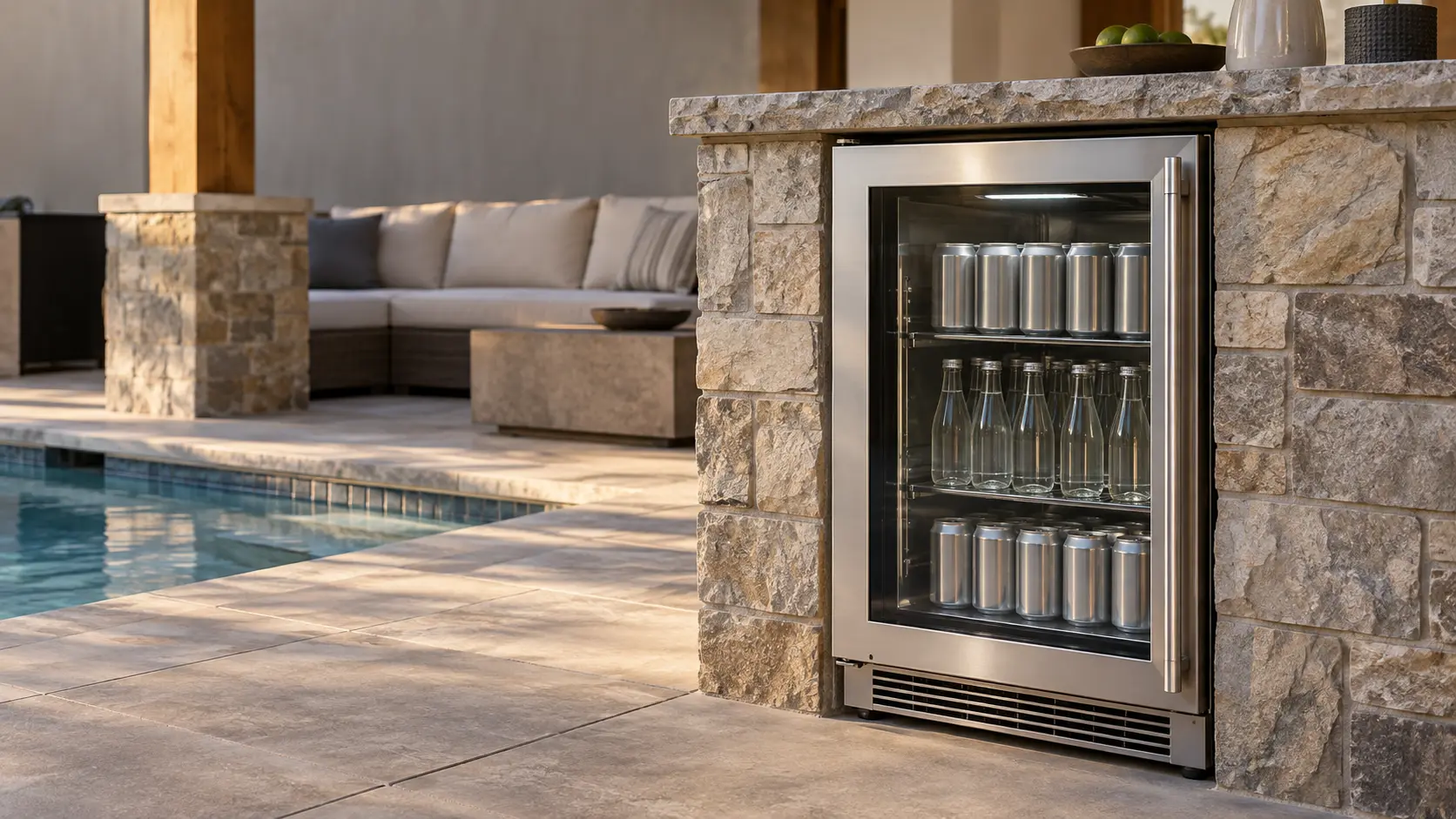
Most bookings: Undercounter beverage center, Freestanding beverage cooler, Outdoor beverage center, Beverage drawers.
All beverage center types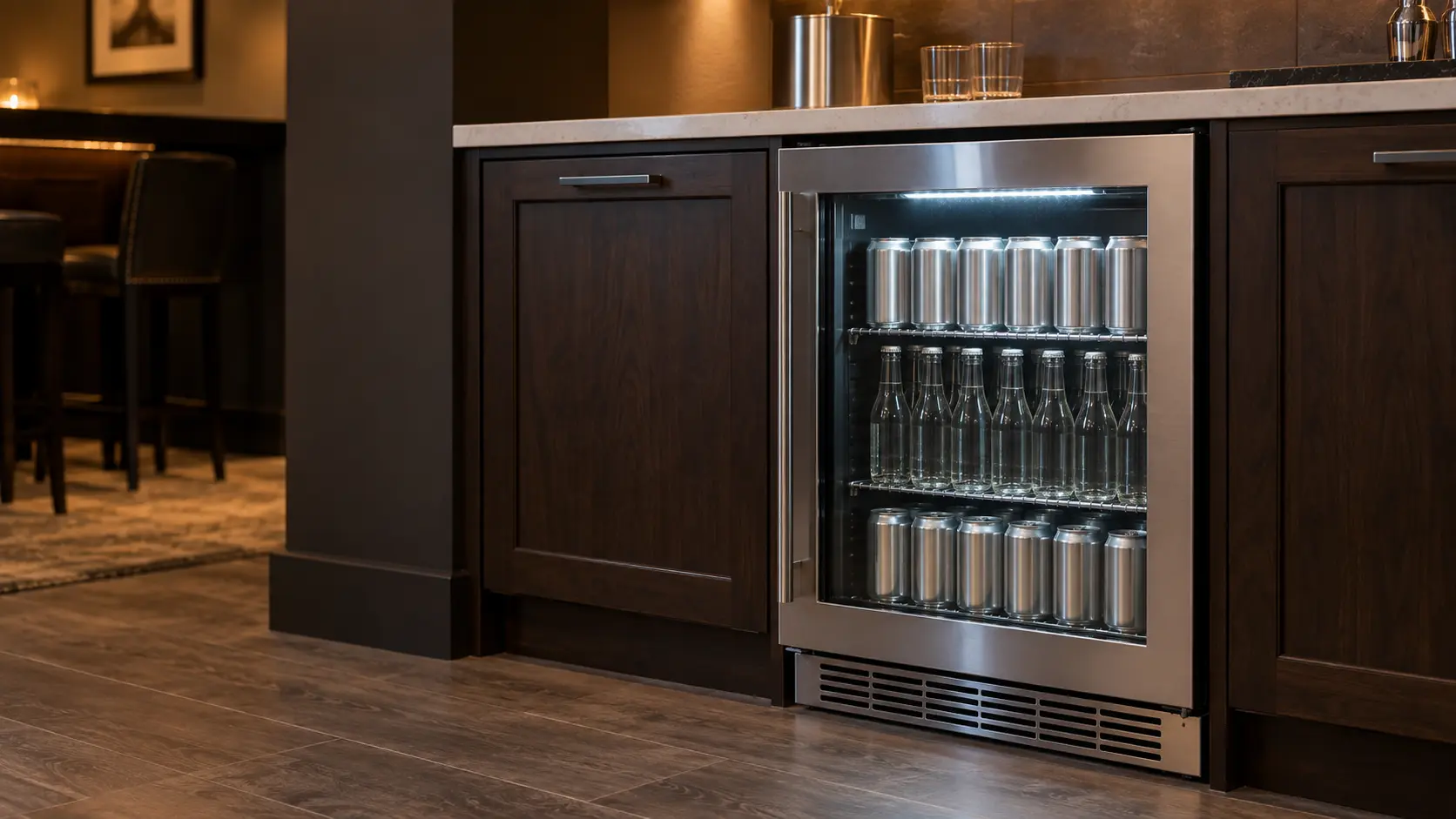
The makes
we see it on.
21 makes on this site, and the beverage center thermostat and sensor repair on any of them. Each mark opens that make's own page.
All 21 brandsBeverage center thermostat and sensor repair,
where we come out.
The home, the climate and the building all change how the beverage center thermostat and sensor repair goes. These notes are about that, metro by metro.
All service areasTampa BayFL · 31 areas
A Tampa Bay beverage center whose sensor drifts reads the cans as warmer than they are and keeps cooling until the bottom shelf freezes, and a burst can after a stormy week of flickering power is often the first clue the repair follows.
OrlandoFL · 30 areas
Orlando guests who find a soda slushy or split often turn the control all the way up, which hides the real cause, so the thermostat repair measures the cans against the setting and replaces a sensor that no longer agrees with them.
Miami / South FloridaFL · 47 areas
Humidity in a South Florida condo can seep into a beverage center's sensor connector and corrode its pins, so the display wanders by several degrees without warning, and the repair cleans or replaces the plug along with the sensor itself.
New York MetroNY · 75 areas
In a New York apartment a radiator beside a beverage center can warm the side where its air sensor sits, and the cabinet then runs colder than set, so the repair checks where the sensor is mounted as well as what it reads before cans freeze in winter.
HoustonTX · 36 areas
Houston summers keep a beverage center near the top of its effort, and a sensor reading a few degrees low lets the cans sit near 45 while the display promises 36, a gap the repair confirms with a probe in a can of water.
ChicagoIL · 50 areas
A beverage center in a cold Chicagoland basement may barely run in winter, and a failed sensor there can let cans freeze overnight after a cold snap, so the repair tests the sensor against the low temperatures that room really reaches.
Los AngelesCA · 95 areas
In Los Angeles kitchens with west windows the afternoon sun can warm a beverage center's glass and its upper sensor, and a unit that overcools the bottom shelf only on sunny afternoons is traced to that sensor and its placement.
San DiegoCA · 31 areas
A San Diego beverage center that holds 38 degrees near the coast may hold only 44 in an inland valley house in October, and the sensor repair separates a sensor reading wrong from a unit that simply works harder away from the water.
San Francisco Bay AreaCA · 74 areas
Bay Area owners who watch their beverage center through an app notice a sensor drifting sooner than most, and the repair checks both the cabinet sensor and the evaporator sensor, since a bad one of either brings frost or warm cans.

Questions about
the beverage center thermostat and sensor repair.
Why do cans freeze in my beverage center when it is set in the upper 30s?
How accurate should the display on a beverage center be?
Is a sensor repair on a beverage center expensive?
Back to your everyday
Ready to book the beverage center thermostat and sensor repair?
Have these to hand: whether cans have frozen or split, and on which shelf or in which drawer, what the display or the dial says against what a thermometer inside says, whether the compressor seems to run all the time or hardly at all, whether anyone has changed the setting or moved things inside recently.