
Start with what you own
Beverage center
types,
told apart.
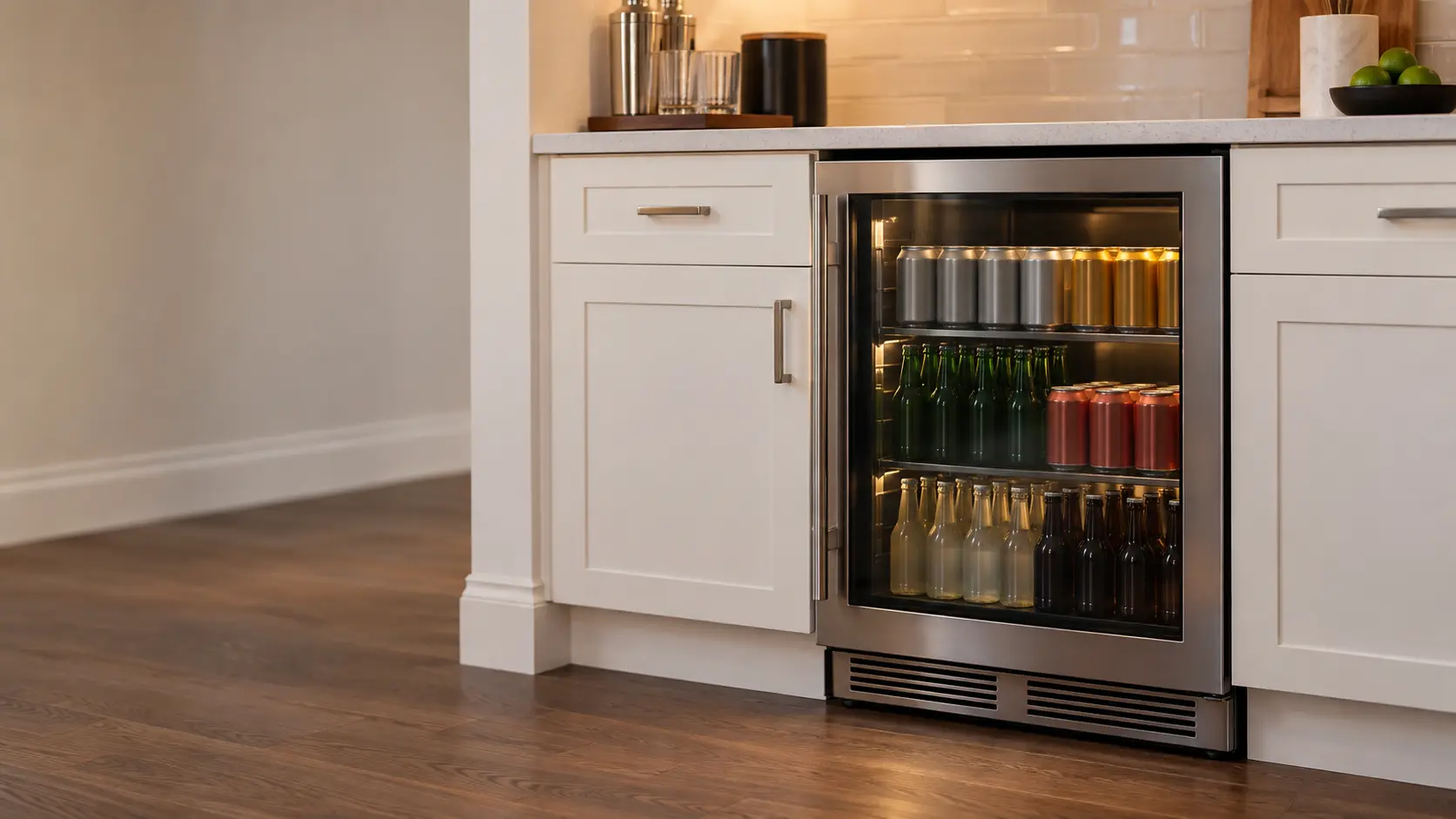
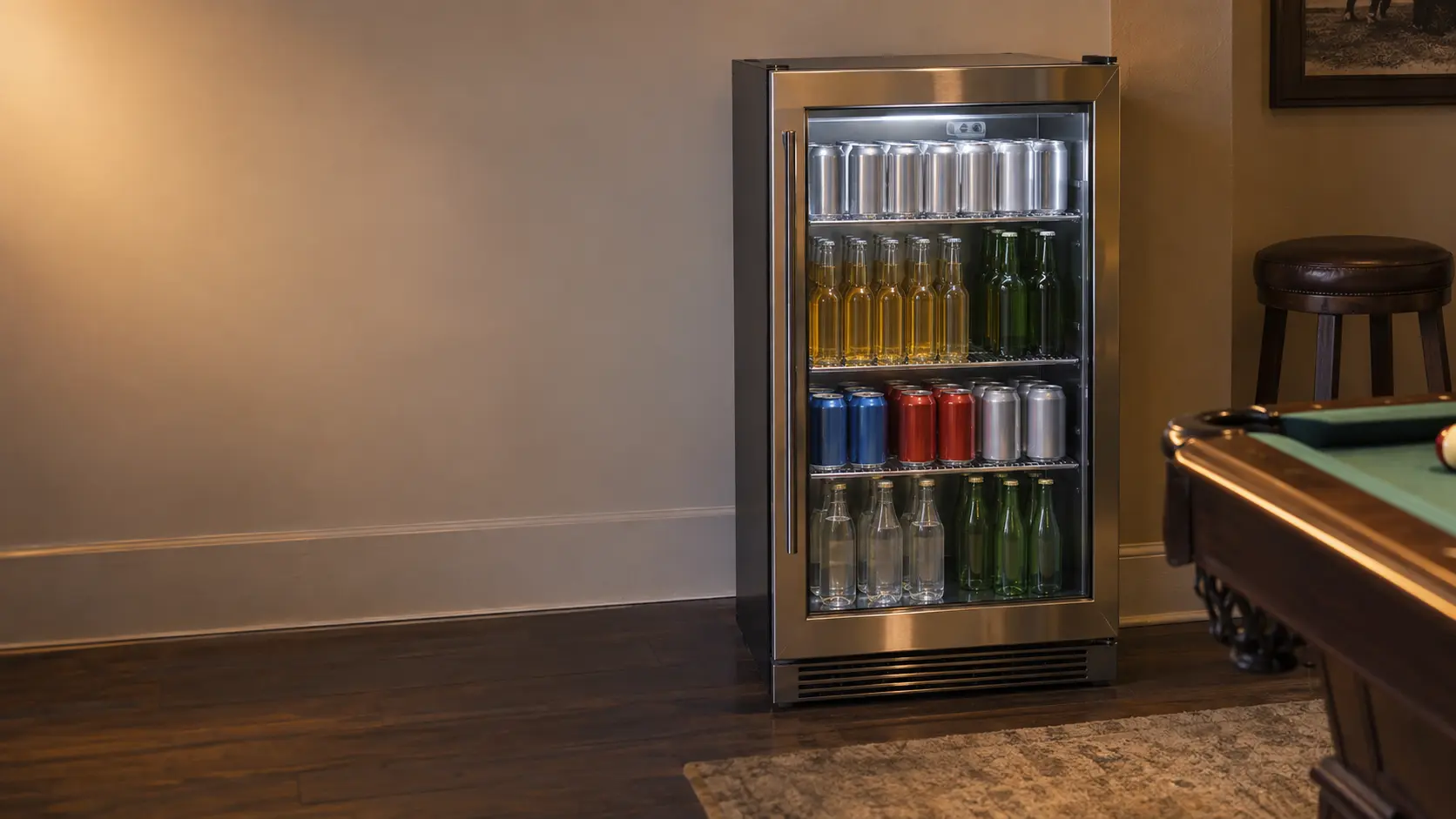
The same case of soda can sit in four very different machines. An undercounter unit exhales only through the grille at its feet, a freestanding cooler needs air on its sides and back, an outdoor-rated unit has to hold its cold through a hot afternoon in damp or salty air, and a beverage drawer rides on slides with a seal on every drawer front. Knowing which of these sits in your home narrows the search before the technician parks.
Mon–Sat, 8am–8pm
- 4 types
- Serviced in place
- What each one costs
Book a visit
Three short steps, about a minute.
or call (844) 456-5057
Loading appointment form…
The appointment form couldn’t load. Please try again.
Four types,
each its own job.
Each one is built, reached and repaired differently. Open yours for what fails on it and what the work involves.
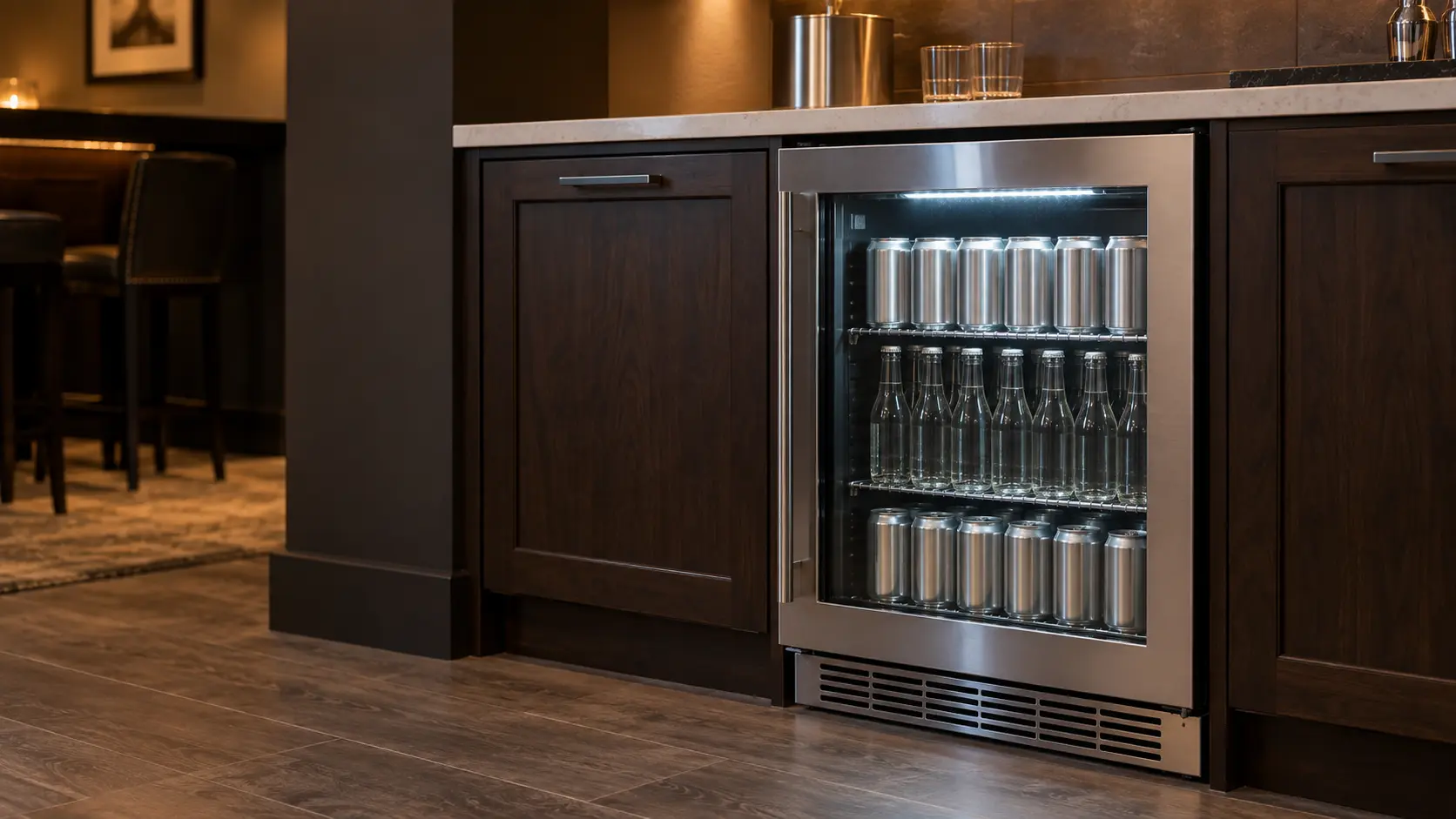
Undercounter beverage center
A glass-door cabinet for cans and bottles, set in under a counter in a wet bar, a basement bar, a game room or at the end of a kitchen island, and breathing only through the grille at its toe kick.
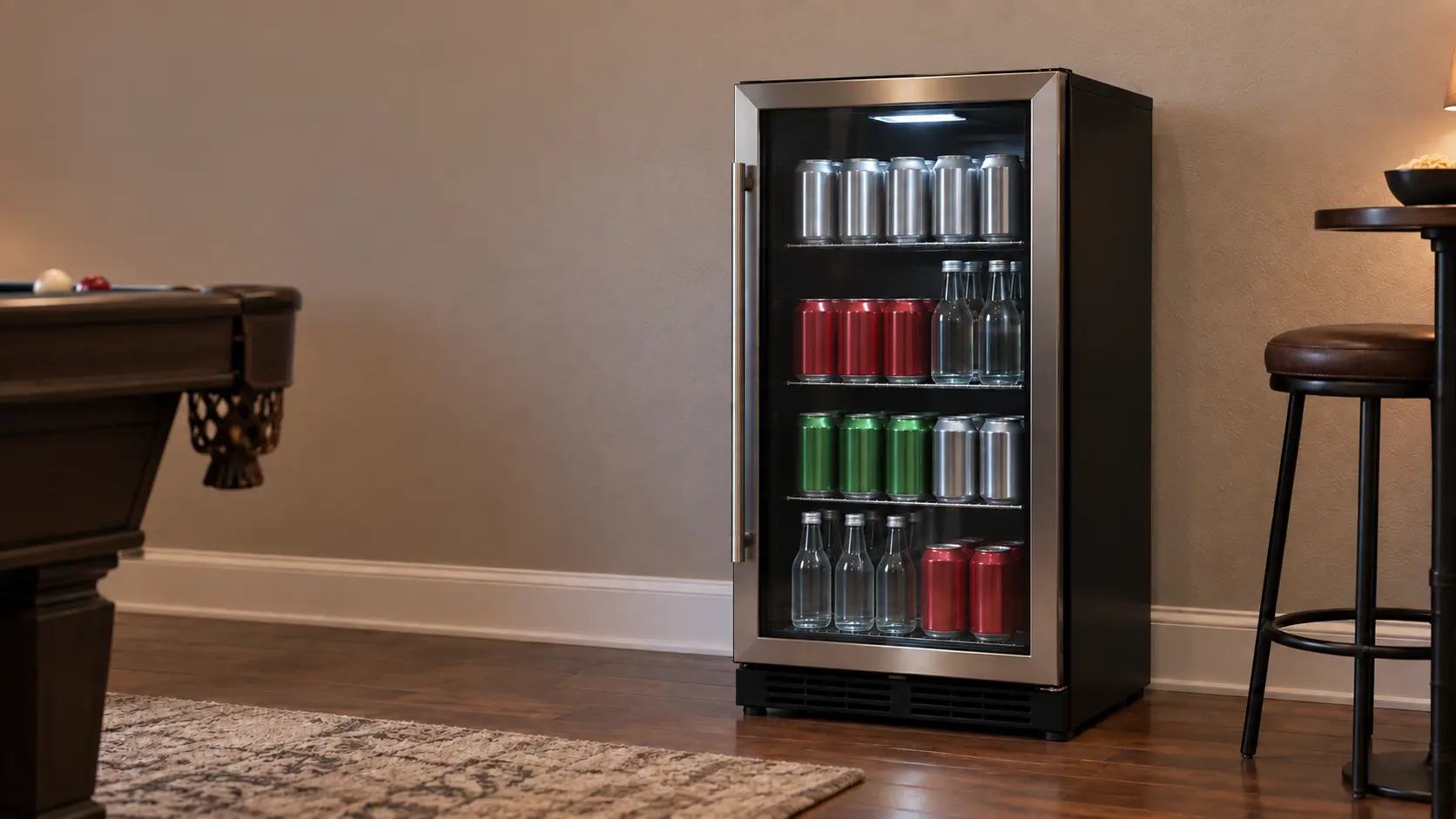
Freestanding beverage cooler
A glass-door beverage cooler that stands on its own against a wall, in a game room, a home office, a garage or on a counter, and sheds heat through its back or sides rather than a front grille.
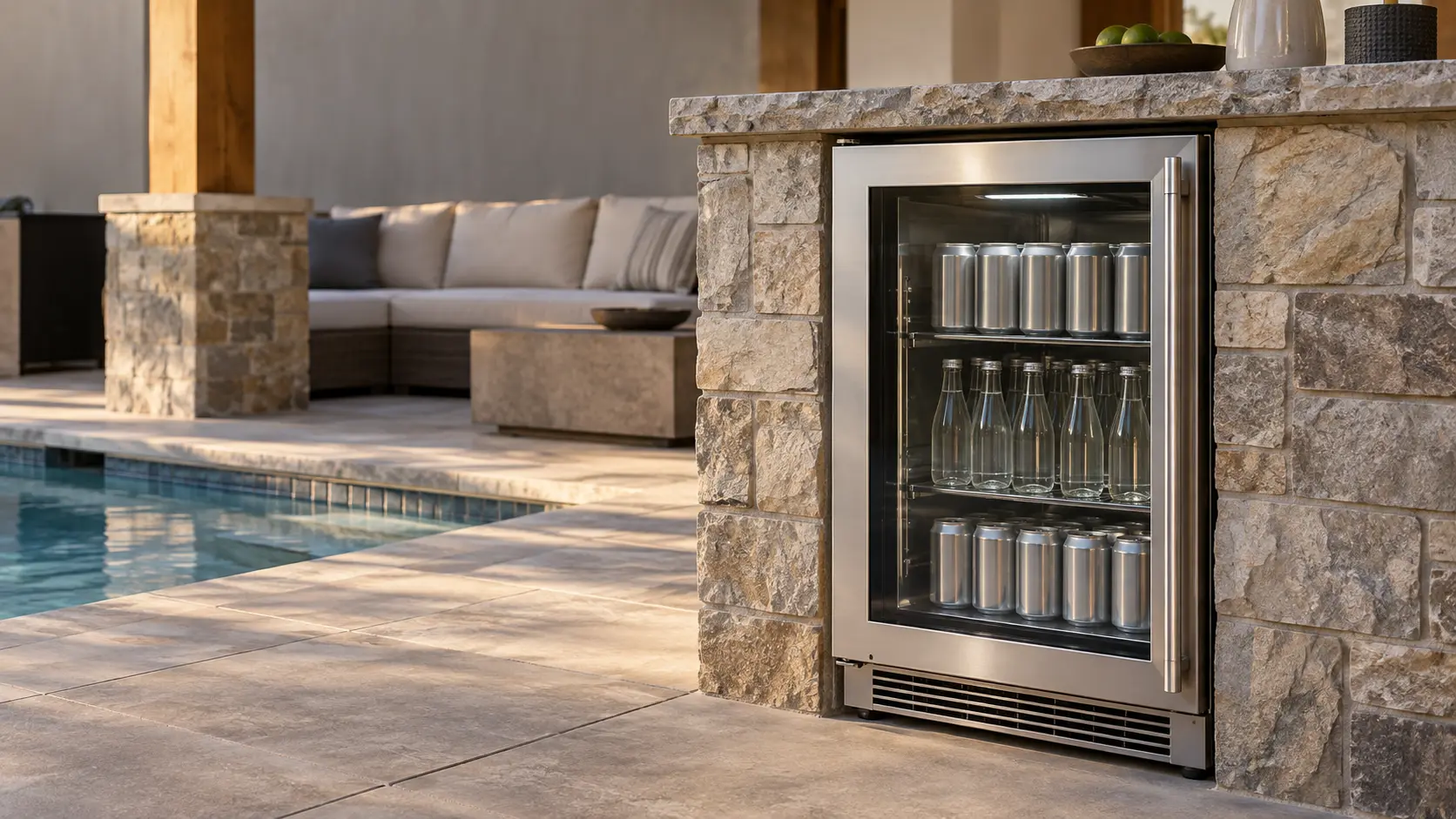
Outdoor beverage center
A beverage center rated by its maker for outdoor use, built under a covered patio counter or a poolside bar, sealed against weather and plugged into a GFCI-protected outlet.
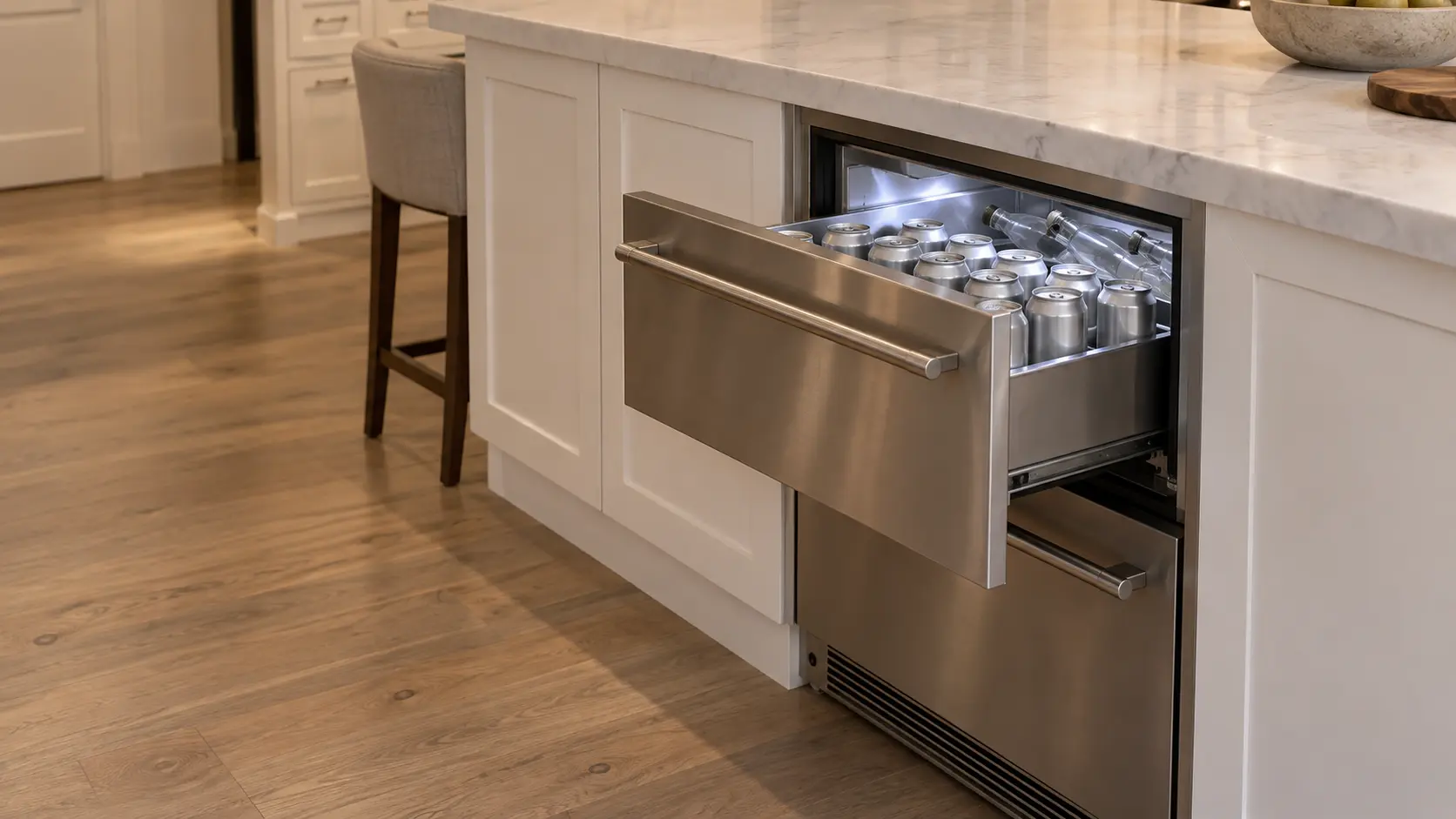
Beverage drawers
Refrigerated drawers that pull straight out of a kitchen island, a bar or a pantry cabinet, loaded from above with cans and bottles, each riding on full-extension slides behind its own seal.
Not sure which you have?Start from what it is doing
If the beverage center in your home does not obviously match one of these, work from the symptom instead. It reaches the same answer from the other end.
17 problemsIn order of costWhat to check first Go to the problemsWhich one
is yours?
One look at the beverage center usually settles it. The first sign of each type is on the right; its page has the rest, and what that type means for a repair.
Undercounter, freestanding or drawersUndercounterUndercounter beverage center
It sits flush with the neighboring cabinet doors under a countertop and stands close to 34 inches tall, with leveling legs hidden behind a grille.
FreestandingFreestanding beverage cooler
It has finished side panels and a solid top, and nothing holds it in place: you could slide it out from the wall without removing a screw.
OutdoorOutdoor beverage center
It stands under a covered outdoor counter or bar, and the maker's literature or the rating plate inside calls it suitable for outdoor use.
DrawersBeverage drawers
It has one or two drawer fronts and no door: the fronts pull straight out on slides, and there is no glass to see through when they are closed.
What a repair
usually costs.
Weigh a repair against a new unit for the same opening, including the carpentry, the panels or the stonework that holds it. Seals, hinges, drains, lights, fans and sensors are small against that figure, and so are most outdoor weather repairs. Built-in, drawer and outdoor units nearly always earn their repair, sealed-system work included, since a replacement has to fit the cutout and match its surroundings. On a small, older freestanding cooler the line is a failed compressor, a leak or a dead thermoelectric module, and there the technician puts both numbers in front of you.
| Repair | Relative cost | Notes |
|---|---|---|
| Start relay, compressor or refrigerant leak | moderate to highest | A start relay or overload clipped to the compressor is a small part reached behind the toe grille or the back cover. Opening the loop to braze a leak, then a fresh drier, evacuation and a charge by weight, or a replacement compressor, lands near the top of the scale. |
| Evaporator or condenser fan motor | low to moderate | Either fan is an affordable motor, reached through the back wall of the cabinet or behind the grille. Thawing a coil that iced over around a stopped fan, or cleaning a condenser packed with patio debris, adds a little time. |
| Thermostat or temperature sensor | low to moderate | A dial thermostat or a clip-on sensor is an inexpensive part. A drawer unit with a sensor in each drawer, where more than one has drifted, or a separate defrost sensor, moves the job up a step. |
| Control board, touch display or keypad | moderate to highest | A connector, a door switch or a fuse on the board is a small repair. A main board or a touch display for a built-in or outdoor model is one of the dearest parts the unit takes, and some are ordered in from the maker. |
| Door seal, hinge or full glass door | low to moderate | A seal made for the model and a squared or new hinge sit low on the scale. A full glass door, needed when the pane fogs between its layers or cracks, costs a clear step more than a seal alone. |
| Interior light, LED driver, door switch or lock | low | LED strips, door switches and cam locks are inexpensive, and each goes in with a screwdriver and the part matched to the model. A driver board, or a lock that needs a new strike on the cabinet as well, sits a little higher. |
| Drain hole, drain tube or drain pan | lowest | Clearing a drain clogged with sugar or a cap and flushing it through to the pan is among the least costly work on a beverage center. A cracked pan that has to be reached by drawing a built-in unit out of its opening adds some. |
| Outdoor weather damage, GFCI trips and corrosion | moderate | Cleaning a choked condenser and tracing a damp cord connection sit toward the low end. Replacing weathered seals, rusted hinge hardware or a part that has taken on water, on a unit built into stonework, brings the job to the middle of the scale. |
| Drawer slides, drawer seal or drawer front | low to moderate | A slide, a seal or new mounting hardware for one drawer is a modest set of parts fitted with hand tools. Both drawers needing slides, or paneled fronts that have to come off and go back on, add time. |

Questions about
the types.
Which units does this site cover?
Is an undercounter unit repaired differently from a freestanding or an outdoor one?
Do beverage drawers fail differently from a glass-door unit?
What about my unit helps the technician most?
Back to your everyday
Let’s get your beverage center working again.
Three short steps online, or one call. Tell us what you are seeing and pick a window that works.