
Outdoor Beverage Center Losing the Fight With the Heat
An outdoor beverage center not cold enough on hot days keeps up in the morning and loses ground by afternoon: the cans feel cool rather than cold, the compressor runs without rest, and the glass is warm to the touch.
Mon–Sat, 8am–8pm
- 5 checks before you book
- 5 questions that narrow it
- 6 causes, cheapest first
Book a visit
Three short steps, about a minute.
or call (844) 456-5057
Loading appointment form…
The appointment form couldn’t load. Please try again.
What it
usually means.
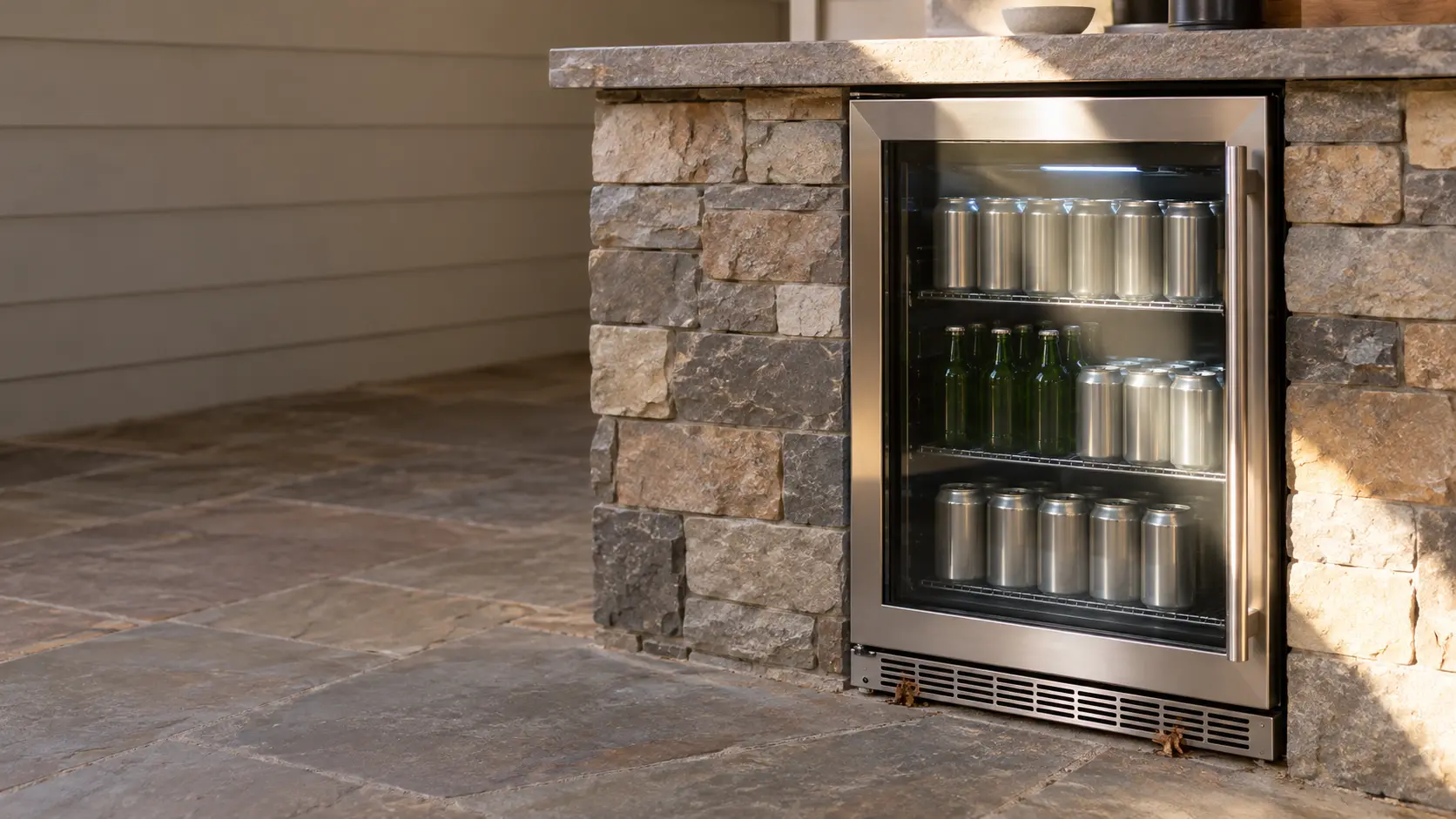
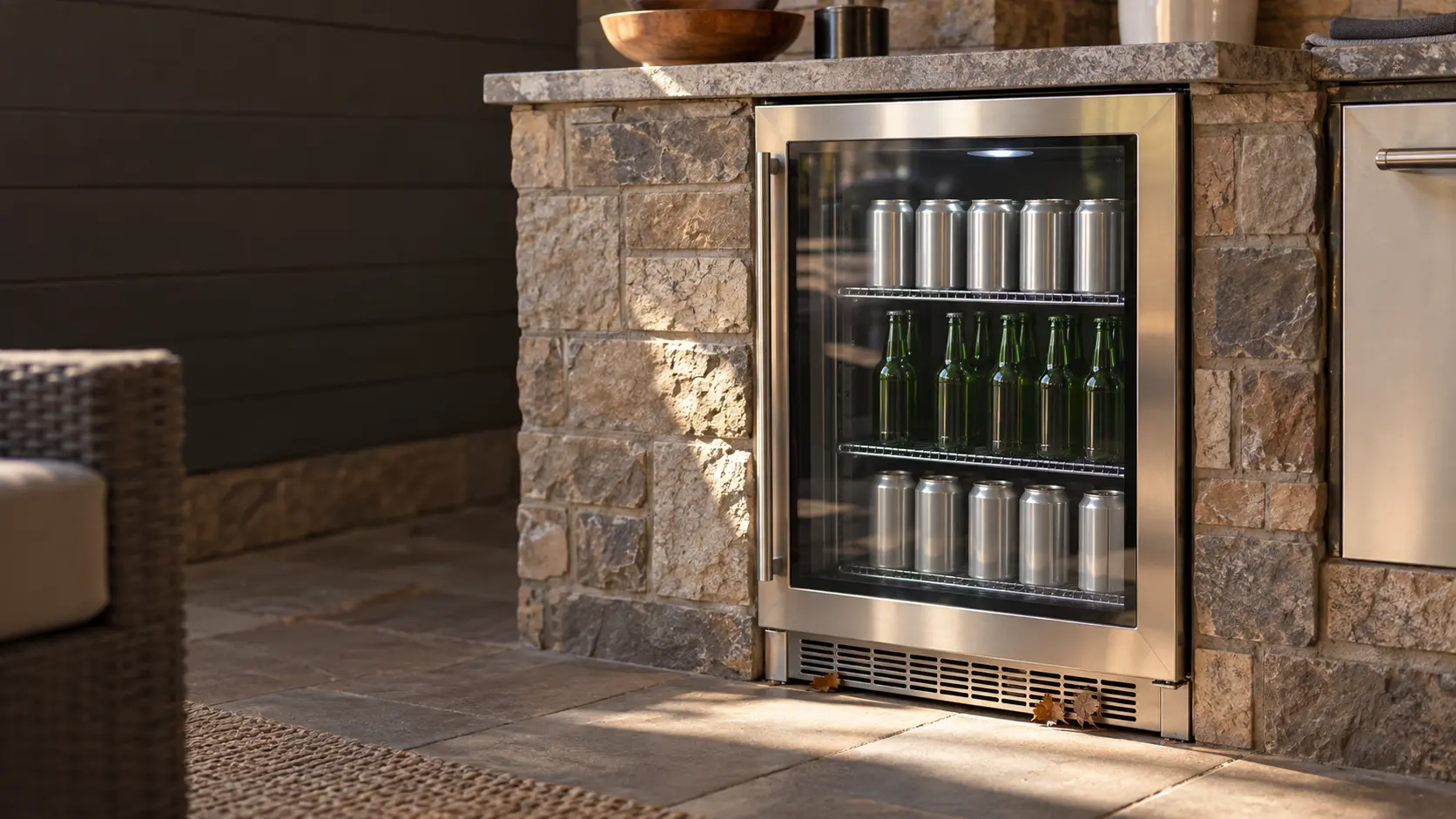
An outdoor-rated beverage center is built to work in heat, sun and damp air: a larger condenser, corrosion-resistant finishes, insulated or heated glass and sealed components. Even so, each model has a limit on how hot the air around it can be, and a summer afternoon on a patio can reach it. The setting matters more outdoors than anywhere else: sun on the glass door, heat radiating from a nearby cooking station, a counter enclosure that blocks the front vent, leaves and pollen in the grille, and salt air that corrodes the condenser fins near the coast. An indoor unit carried outside faces all of that without any of the protection, and usually fails within a season.
 The 6 causes, cheapest first
Answer these first
Is the unit outdoor-rated, and what does the manual say about the hottest air it can work in?
Does sun reach the glass door, and at what time of day?
Is there a heat source nearby, such as a cooking station or a heater?
Is the front grille clear of leaves, pollen, cobwebs and salt crust?
Does the unit keep up in the morning and fall behind in the afternoon?
Check these
before you book.
Outdoor beverage center not cold enough: 5 checks, and none of them costs anything.
Check the manual for whether the unit is outdoor-rated and the hottest air it is built for.
Clear the front grille of leaves, pollen and cobwebs, and check that the enclosure leaves the vent open.
Shade the glass door from afternoon sun if you can.
Also worth checking
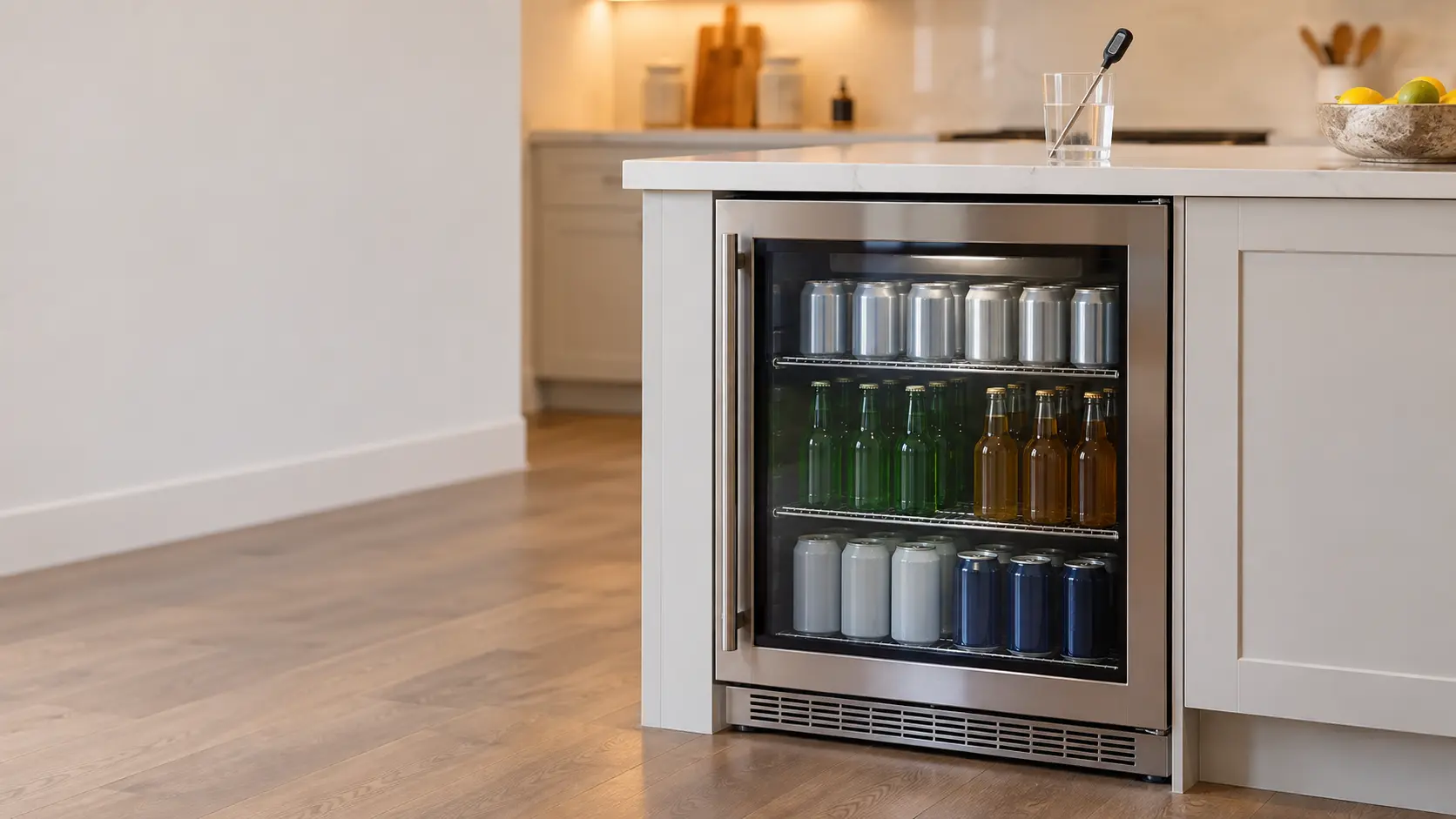
- Stand a thermometer in water on a middle shelf and read it in the morning and again in the afternoon.
- Tell us whether it is outdoor-rated, how the sun and heat reach it, and the model number.
How soon does it need a visit?
Warm drinks on a hot afternoon are not urgent, but a unit that runs nonstop in the heat is wearing itself out. Clear the grille, shade the glass and book if it still loses ground on an ordinary summer day.
The causes,
cheapest first.
6 things outdoor beverage center losing the fight with the heat turns out to be, from indoor unit installed outdoors to refrigerant charge low.
The cost guide-
01 no repair
Indoor unit installed outdoors
A unit built for inside a house has no protection against heat, sun, damp air or salt. It struggles, sweats and corrodes, and the answer is an outdoor-rated unit rather than a repair.
-
02 no repair
Patio sun striking the door glass
Direct sun heats the front shelves through the glass. A covered spot, a shade or a north-facing position helps more than any setting.
-
03 low
Grille blocked by leaves, pollen or the enclosure
Outdoor grilles collect leaves, pollen and cobwebs quickly, and a counter enclosure built too tight can block the vent. With its air cut off, the coil holds on to the heat it should be throwing out.
-
04 low to moderate
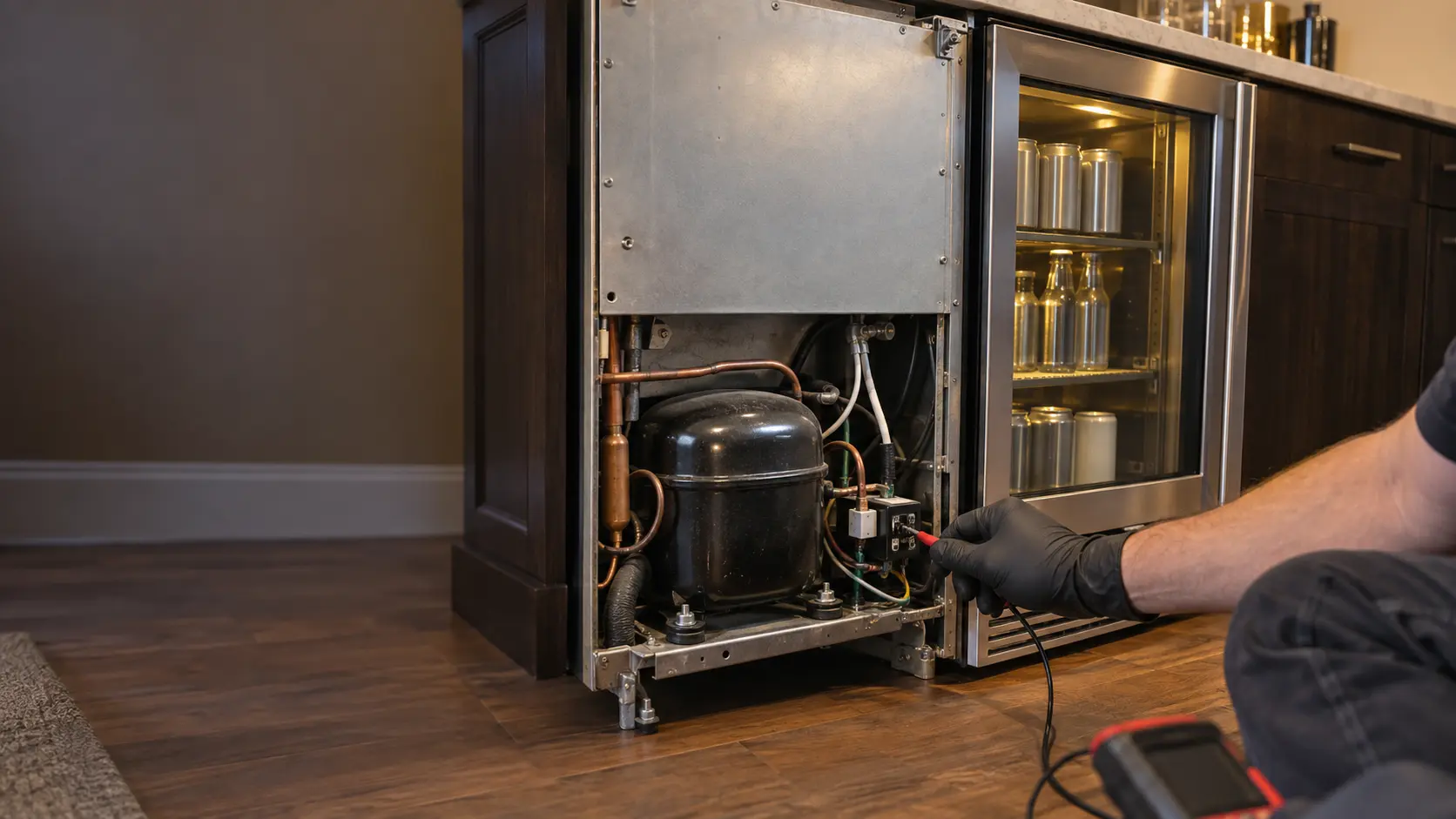
Condenser fan failing in the heat
A fan motor that is weakening may keep up in the cool morning and stall on a hot afternoon.
-
05 moderate
Condenser fins corroded by salt air
Near the coast, salt air corrodes the thin fins of the condenser until they crumble and stop passing air. Cleaning helps early; later the coil or the unit is the question.
-
06 highest
Refrigerant charge low
A slow leak shows first in the heat, when the unit needs its full capacity. It is confirmed with gauges before any work is quoted.
What else
it could be.
Most often confused with beverage center not cooling the cans, then beverage center never stops running.
All problemsCodes that come with it
T1HPerlick · Temperature and alarmsTCHPerlick · Compressor and coolingREFTrue Residential · Temperature and alarmsHigh temperature alarmTrue Residential · Temperature and alarmsTemp Hi 6H+U-Line · Temperature and alarmsHHViking · Temperature and alarms
Also related
The makes
it happens on.
21 makes on this site; outdoor beverage center losing the fight with the heat can show up on any of them. Each mark opens that make's own page.
All 21 brandsOutdoor Beverage Center Losing the Fight With the Heat,
where we come out.
9 metros, each with its own page.
All service areasTampa BayFL · 31 areas
Miami / South FloridaFL · 47 areas
New York MetroNY · 75 areas
HoustonTX · 36 areas
ChicagoIL · 50 areas
Los AngelesCA · 95 areas
San DiegoCA · 31 areas

Questions about
outdoor beverage center losing the fight with the heat.
Can I use an indoor beverage center on my patio?
How hot can it get before an outdoor unit falls behind?
Does salt air damage outdoor beverage centers?
What should I do with an outdoor unit in winter?
Back to your everyday
Still seeing outdoor beverage center losing the fight with the heat?
Book with what you checked above — 5 answers save the technician the first part of the visit.