Where each kind pushes its heat
Every beverage center moves warmth out of the cabinet and into the room, and the whole difference between the designs starts there. The coil and the fan that dump that heat have to sit somewhere, and whether the manufacturer put them behind a grille at floor level or on the back panel decides where the unit may live.
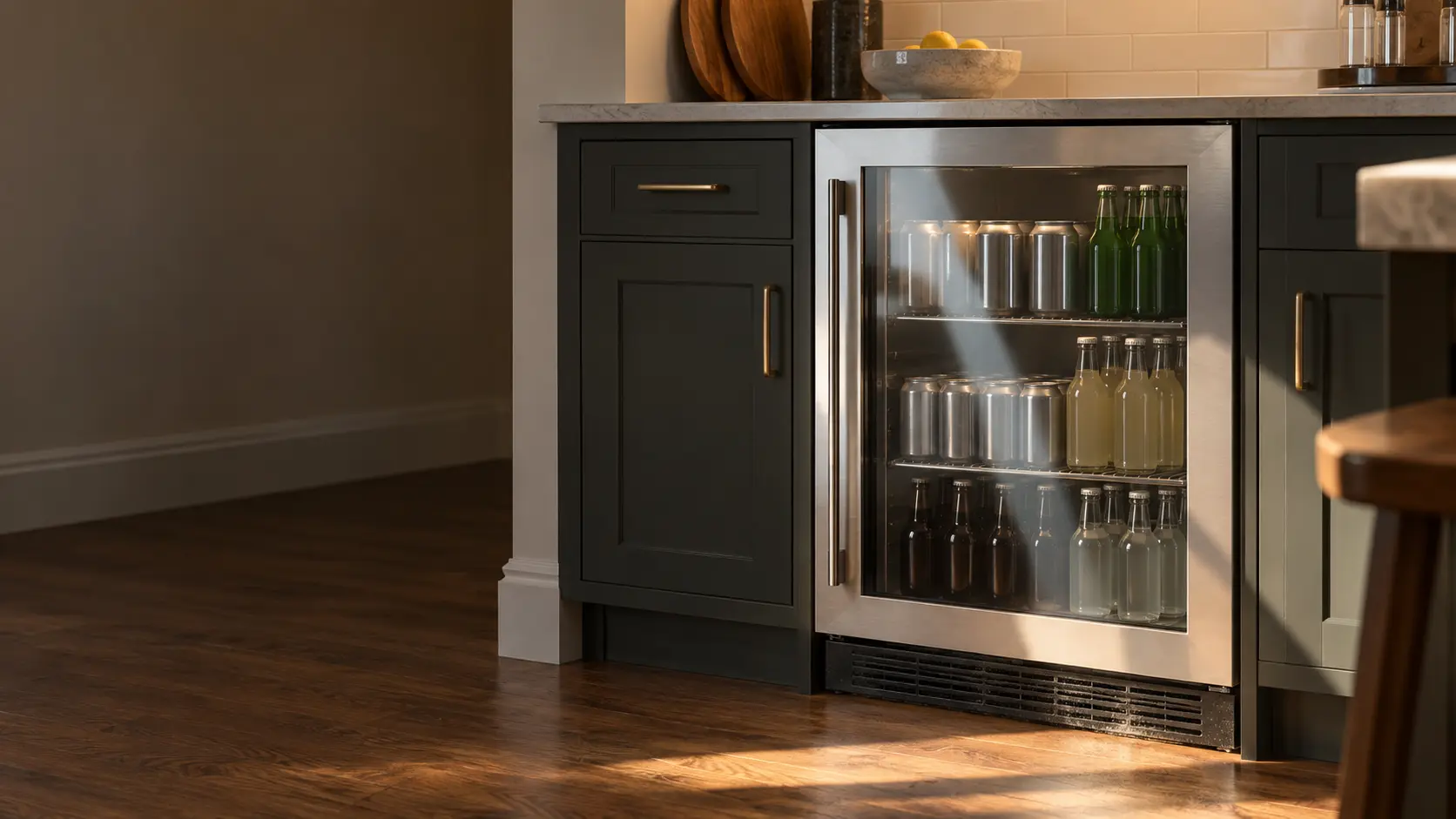
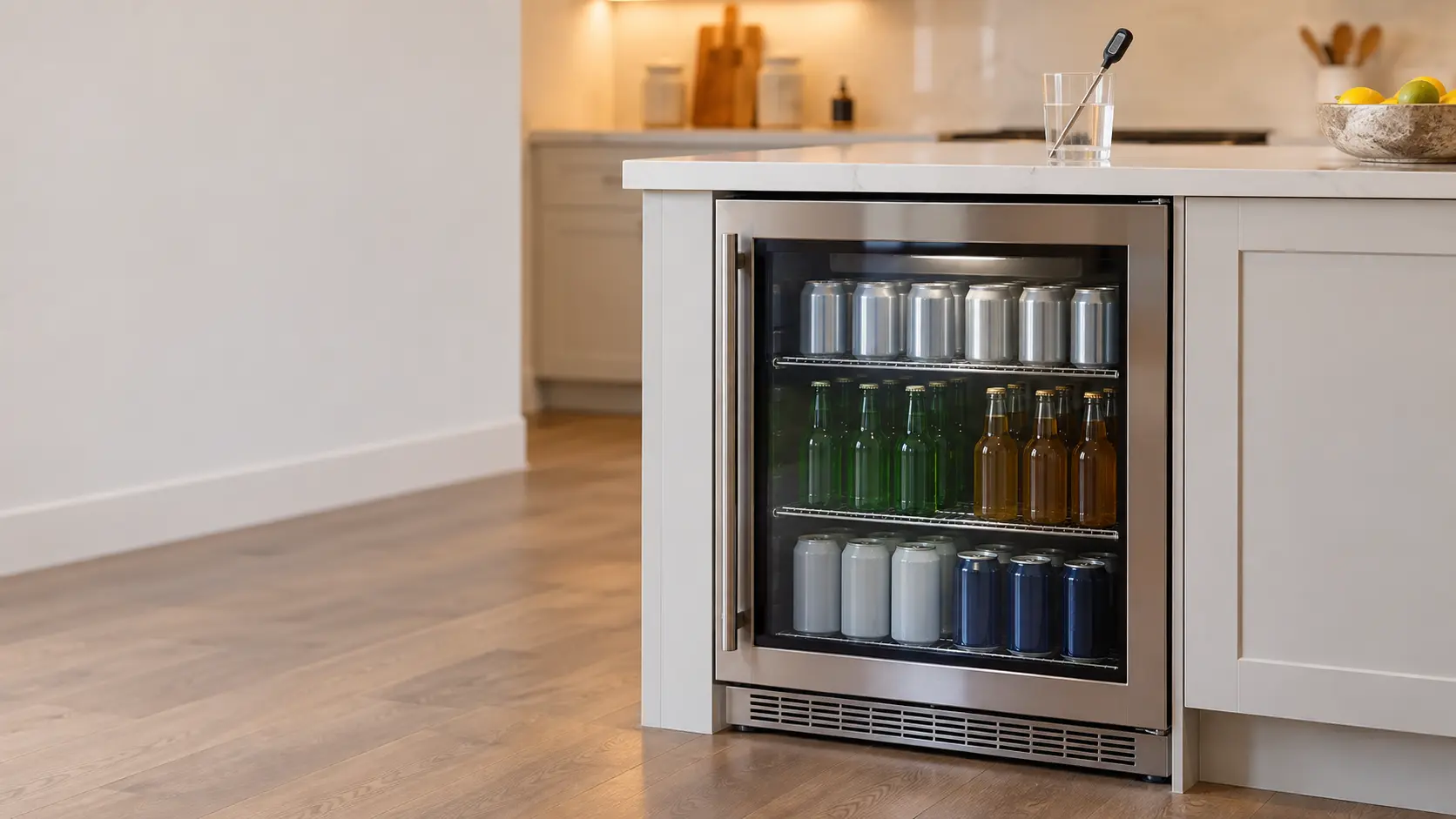
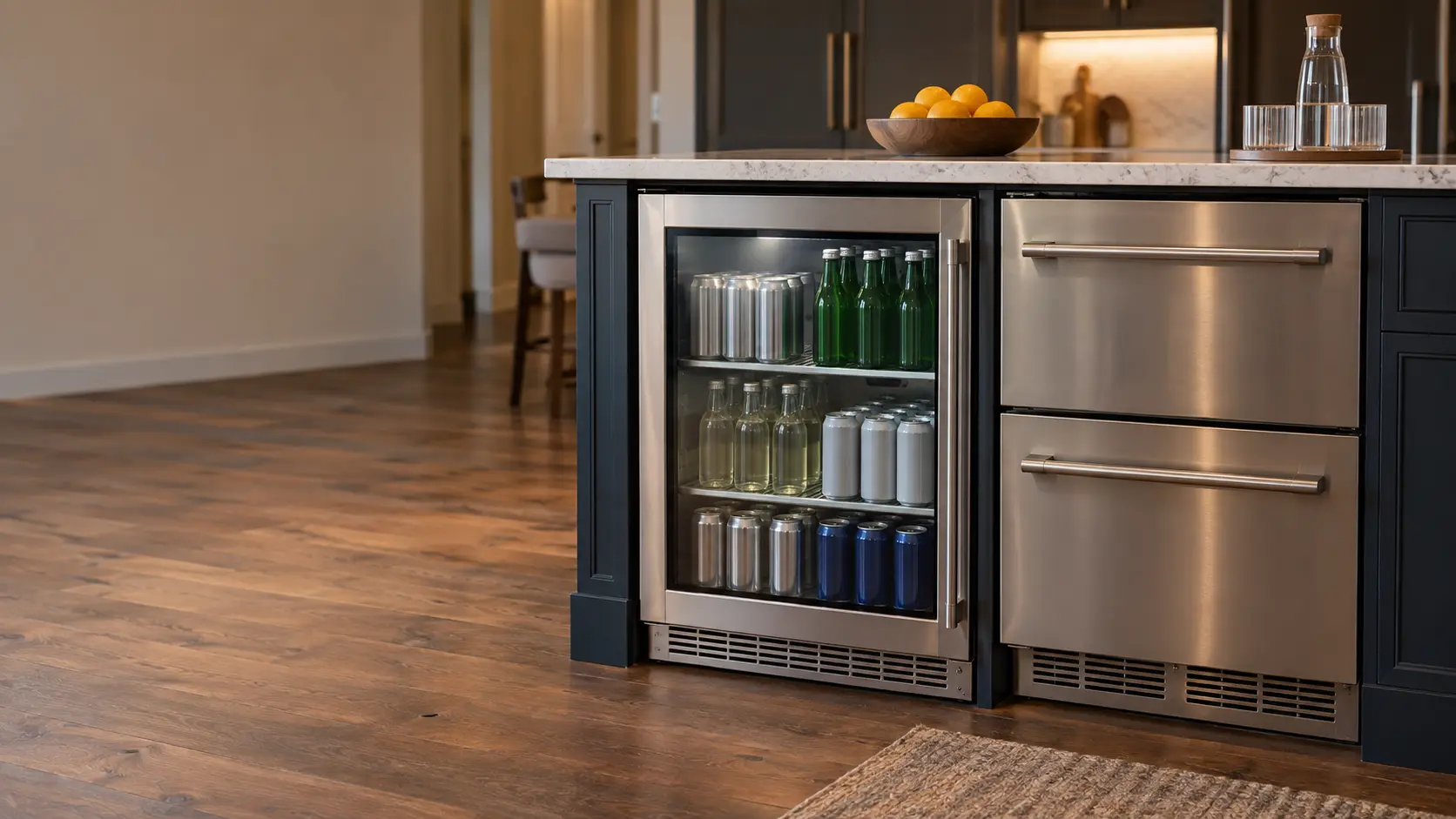
A cabinet designed for the counter run pulls room air in through one half of the toe-kick grille and blows it back out through the other half. Nothing around it needs a gap, which is why it can sit tight between two base cabinets. A freestanding cooler usually sheds heat from the back or the sides, so the air around it is part of the machine.
- A slotted grille across the full width at floor level usually means a front-venting design.
- A black coil or a louvered panel on the back points to a freestanding cooler.
- The installation guide settles it: it either shows a flush cutout or lists inches of open space.
Front-venting cabinets under a counter
U-Line's guide for its 24-inch indoor unit says plainly that the front grille must stay clear, that no extra clearance is needed at the sides, top or back, and that the unit should not be installed behind a closed door. Zephyr says the same of its front vent: never covered, never blocked. A kick plate, a rug edge or a row of cases stacked against the grille undoes that design.
Rear-venting coolers that stand in the open
A cooler meant to stand alone often has a bare coil on its back or a vent in the side panel. Pushed into a niche built for a front-venting cabinet, it breathes its own exhaust, the compressor runs longer and longer, and the top shelf is the first to feel it on a warm day.
Source: U-Line — 24" beverage center user guide (UHBV124) — The front grille must not be obstructed; no additional clearance at the sides, top or rear is needed; do not install behind a closed door; Zephyr — Presrv beverage cooler use, care and installation guide (PRB24C01BG) — Built-in or freestanding installation, front vent never blocked, ambient above 50°F and below 90°F, two or more people to move it, 1 inch behind for the plug and 2-1/4 inches door clearance next to a wall
Beverage drawers for cans and bottles
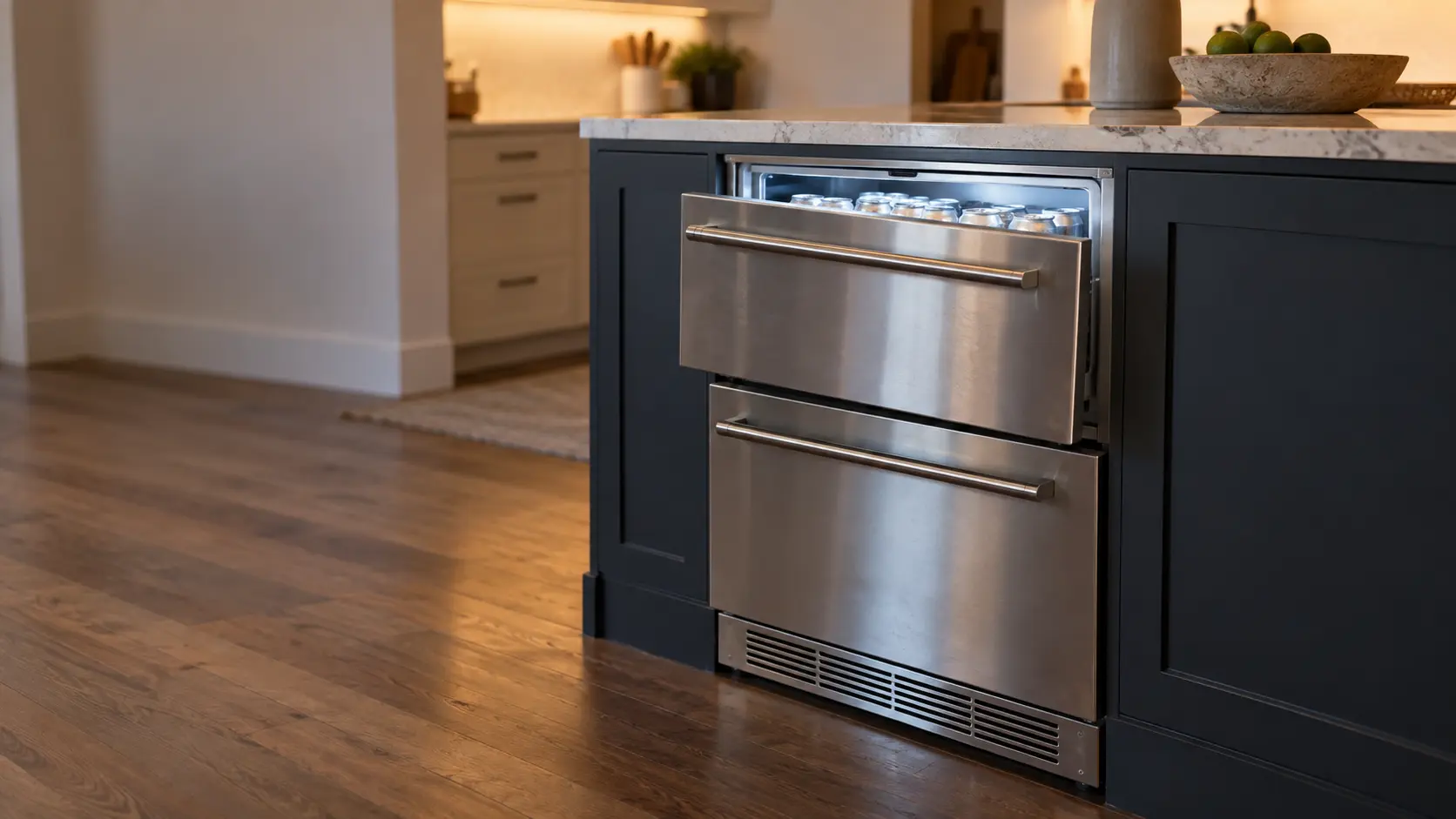
Drawers put cans at hip height and let someone grab a soda from the other side of an island without swinging a door into the walkway. They are built into the counter run the same way as a front-venting cabinet, and they breathe through the same kind of grille at the floor.
What they give up is a single sealing face. Each drawer has its own gasket and its own pair of slides, and every time it is pulled out full of cans the slides take the weight. A drawer that is overloaded or closed with a knee drifts out of square, and a drawer that is out of square no longer seals on one corner.
What a drawer asks of the cabinetry
Panel-ready drawers carry a wood front on the slides, which adds weight the hardware has to hold. Check the maker's panel weight limit before the cabinetmaker picks a thick hardwood, and make sure the countertop overhang lets the top drawer clear it with the handle on.

What each kind is like on a busy evening
A door opened fifty times in an hour lets in far more warm air than a drawer opened the same number of times, because cold air spills out of the bottom of an open door and stays put in an open drawer. On the other hand, a door shows the whole stock at once, so guests find what they want and close it again.
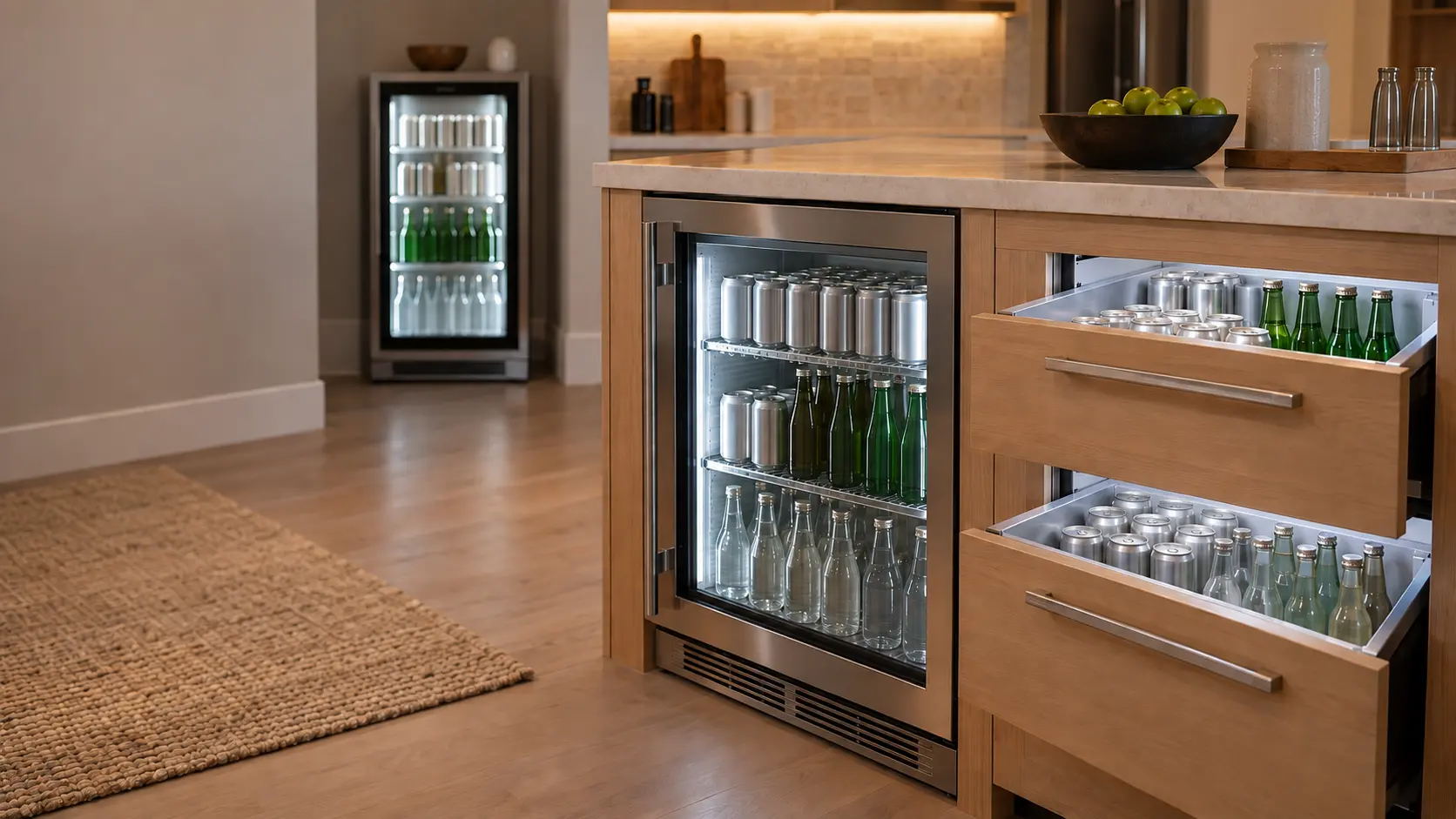
Freestanding coolers win on flexibility. They can move from a game room to a basement bar, and they can be replaced in an afternoon without a carpenter. Built-in cabinets and drawers win on looks and on a steady temperature, as long as their grille is kept open.
- Built-in cabinet: most shelf space for the footprint, one gasket, sits flush with the cabinets.
- Freestanding cooler: portable and simple to swap, but needs open air and floor space around it.
- Drawers: the easiest reach from a seat, holds its cold when opened, has more seals and slides to wear.
What service looks like for each kind
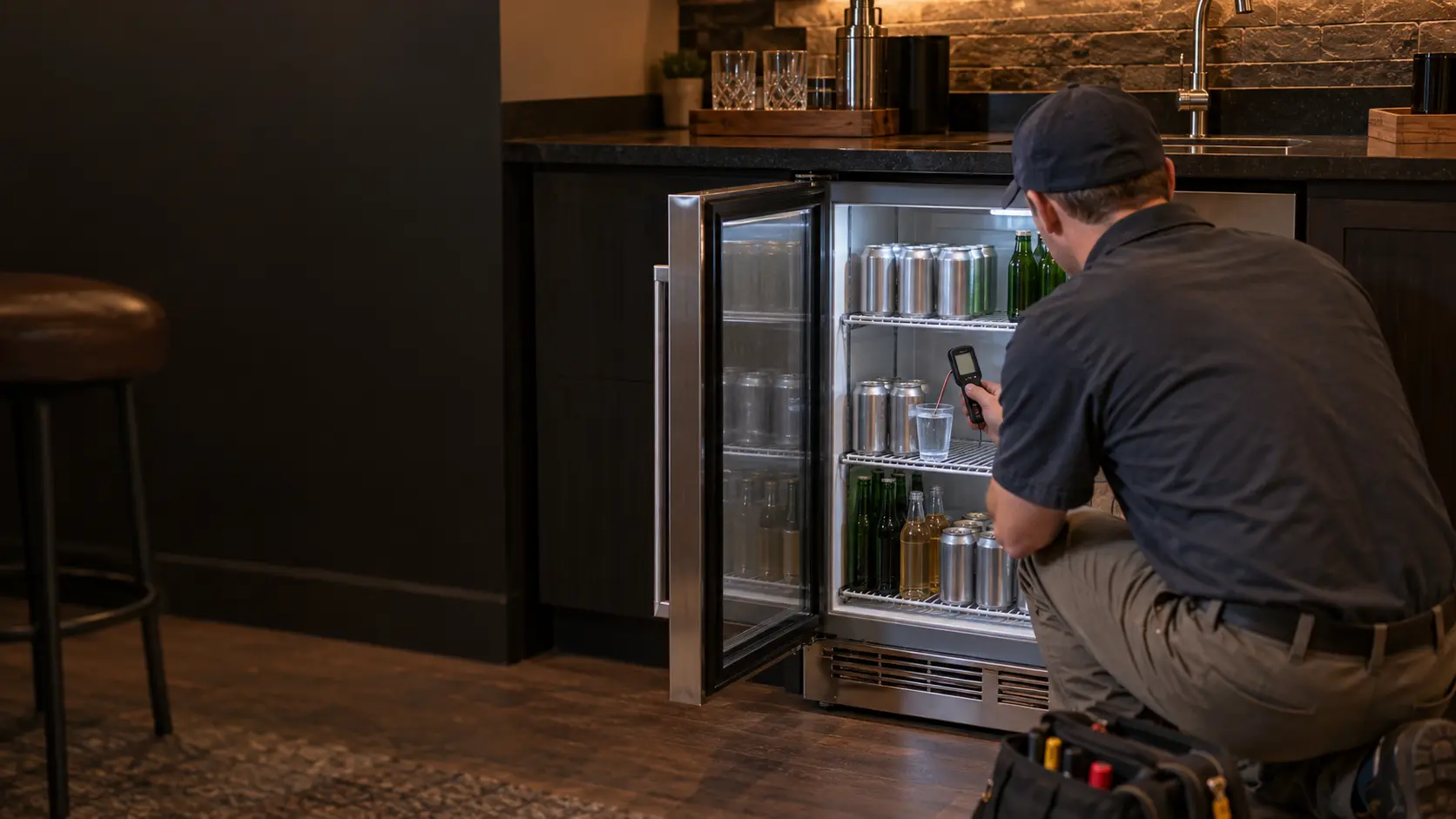
A front-venting cabinet has most of its serviceable parts reachable from the front once the grille is off, but anything behind it means sliding the whole unit out of its opening, which is a two-person job. Zephyr asks for two or more people to move its cooler, and a built-in unit also has to come out past the countertop lip.
A freestanding cooler is simpler to reach and simpler to judge. Drawers bring their own list: slides, rollers, drawer gaskets and sometimes a separate sensor for each drawer. They are not harder to repair than a door, but they give a technician more parts to inspect.
Why a boxed-in freestanding cooler wears out early
The most common mismatch we see is a freestanding cooler slid into a cabinet gap to look built in. It usually works through the first winter and then struggles each summer, with a compressor that barely rests. Moving it into open air or replacing it with a front-venting model fixes the cause; replacing parts on it where it stands does not.
Source: Zephyr — Presrv beverage cooler use, care and installation guide (PRB24C01BG) — Built-in or freestanding installation, front vent never blocked, ambient above 50°F and below 90°F, two or more people to move it, 1 inch behind for the plug and 2-1/4 inches door clearance next to a wall
Choosing by the spot you have
Start from the place rather than the product. Whether an undercounter or freestanding beverage center is right has less to do with capacity than with the air around it. A gap in a cabinet run calls for a front-venting cabinet or drawers sized to that opening. A corner of a game room or a finished basement with a free wall suits a freestanding cooler, provided the room stays within the temperatures its guide lists.
Zephyr's guide for its 24-inch beverage cooler asks for at least 1 inch behind the cabinet for the plug and about 2-1/4 inches beside the door when it sits against a wall, so the handle clears. Measure for the door swing as well as the box, and plan the outlet before the counter goes in. A patio is a separate question with its own guide in this section.
Source: Zephyr — Presrv beverage cooler use, care and installation guide (PRB24C01BG) — Built-in or freestanding installation, front vent never blocked, ambient above 50°F and below 90°F, two or more people to move it, 1 inch behind for the plug and 2-1/4 inches door clearance next to a wall