Why a thin rubber strip matters so much
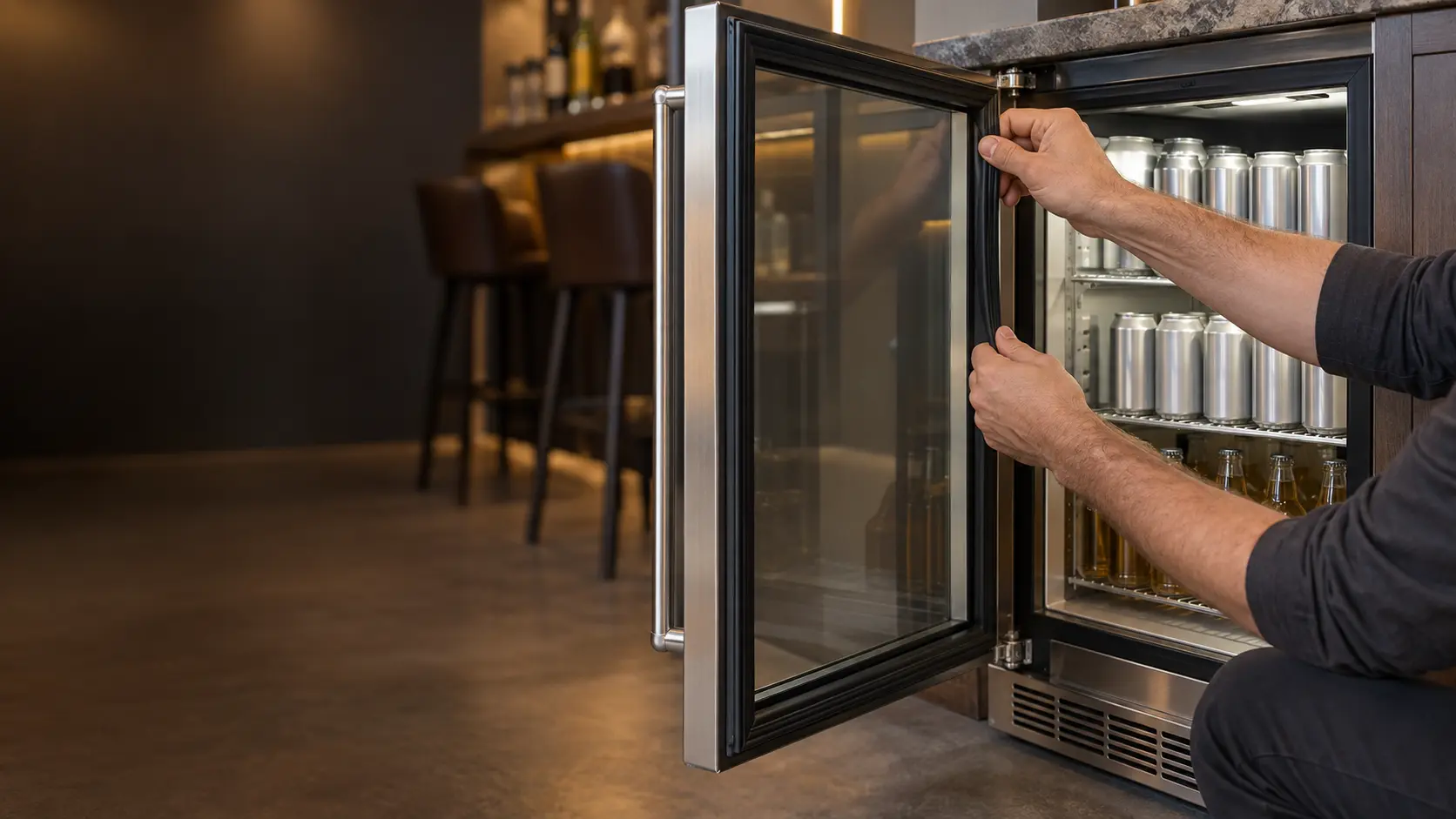
The beverage center door gasket is a hollow rubber profile with a magnetic strip inside, pressed against the cabinet face every time the door closes. U-Line's guide says that when it is properly aligned it should touch the cabinet all the way around with no gaps, and that a door that is not sealed can keep the unit from cooling properly or let excessive frost form inside.
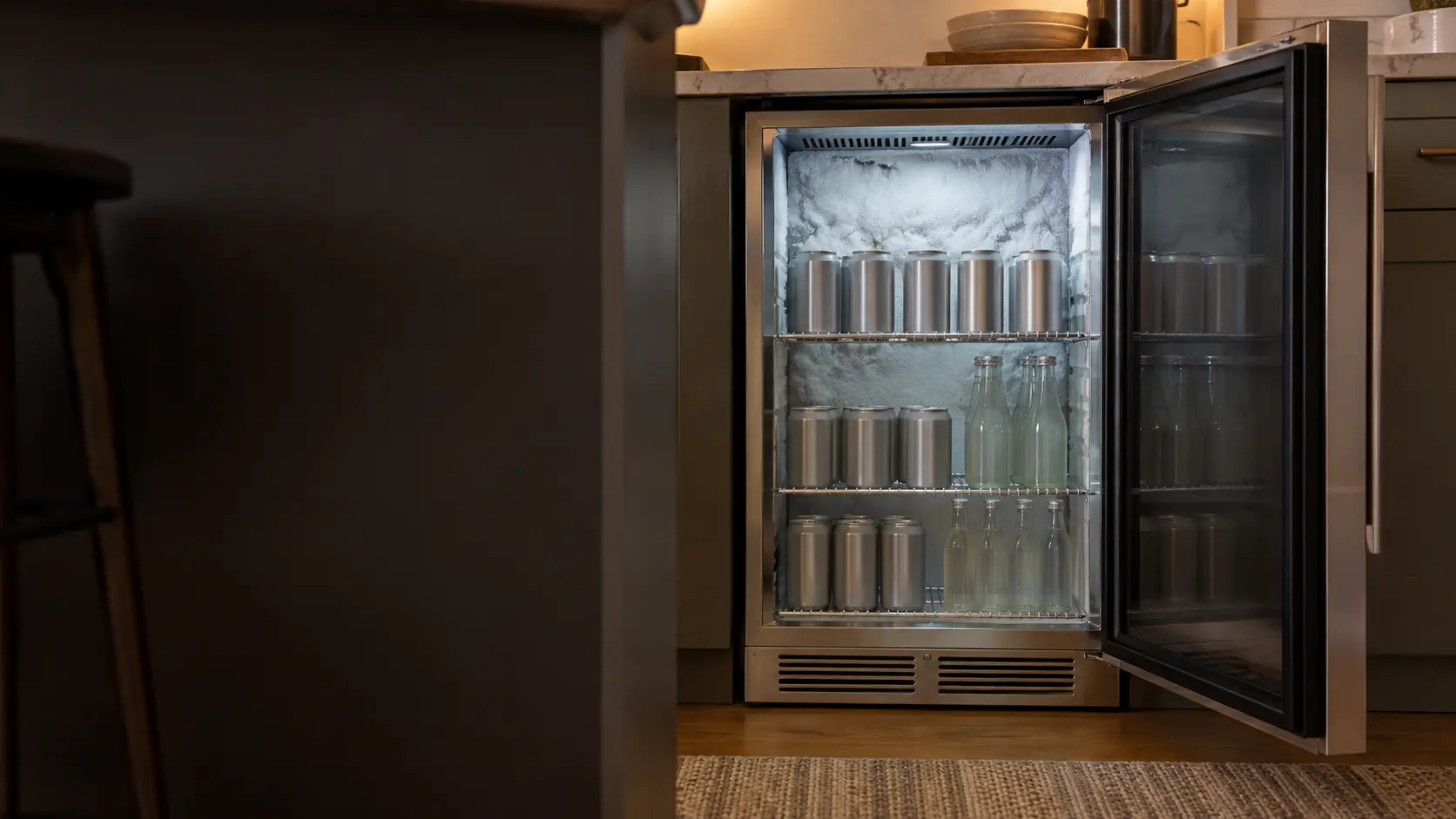
Frost is the tell. Warm room air carries moisture, and wherever it sneaks past a gap it freezes on the coldest surface it finds, usually the back wall or around the evaporator vents. A thin frost that melts each cycle is normal; a crust that keeps growing near one corner of the door points to that corner of the seal.
Source: U-Line — 24" beverage center user guide (UHBV124) — Gasket should contact the cabinet all around with no gaps and not be pinched on the hinge side; an unsealed door can cause poor cooling and frost; non-chlorine glass cleaner, no stainless cleaners on glass; outside condensation normal in humidity; door alignment by loosening hinge screws; door alert after 5 minutes
Cleaning the gasket without shortening its life
Soda, beer and juice drip down the inside of the glass and gather in the lower gasket fold, where the sugar dries sticky and holds grit. That grit wears the rubber and lifts the gasket off the cabinet in one spot. A monthly wipe during a busy season, and one after every party, stops it.
Zephyr's guide recommends a mild detergent or a solution of two tablespoons of baking soda to a quart of lukewarm water for the door and cabinet, rinsed with clean water and dried with a soft towel, and it rules out solvent-based and abrasive cleaners. The same gentle approach suits the gasket.
- Open each fold with a finger and wipe inside it with a soft cloth wrung almost dry.
- Pay attention to the bottom edge and the hinge-side corners, where spills settle.
- Rinse with clean water so no soap film is left to collect dust.
- Dry the gasket fully before closing the door.
- Skip bleach, solvents, alcohol wipes and oils; they swell or harden rubber over time.
The pinched hinge side
U-Line specifically asks owners to check that the gasket is not pinched on the hinge side. A fold of rubber trapped behind the door edge looks flat and dark, and a door that has been slammed or had a bottle wedged against it is the usual cause. Easing the fold back out with a fingertip while the door is open often ends a slow frost problem.
Source: Zephyr — Presrv beverage cooler use, care and installation guide (PRB24C01BG) — Clean the door and cabinet with mild detergent and lukewarm water or two tablespoons of baking soda per quart; no solvent-based or abrasive cleaners; rinse and dry with a soft towel

Caring for the glass front
The door glass is usually two or more panes sealed together, with an insulating space between them, set in a metal or plastic frame. U-Line asks for a non-chlorine glass cleaner on every glass surface and warns against using stainless steel cleaners or polishes on glass, which leave a streaky film that shows every fingerprint under the interior light.
Bottles are the glass's worst enemy. A bottle knocked against the inside pane, a door closed on a neck sticking past the shelf edge, or a can dropped from the top rack can chip the inner surface. Keep tall bottles on the lowest shelf and load from the back forward.
Fog outside, inside or between the panes
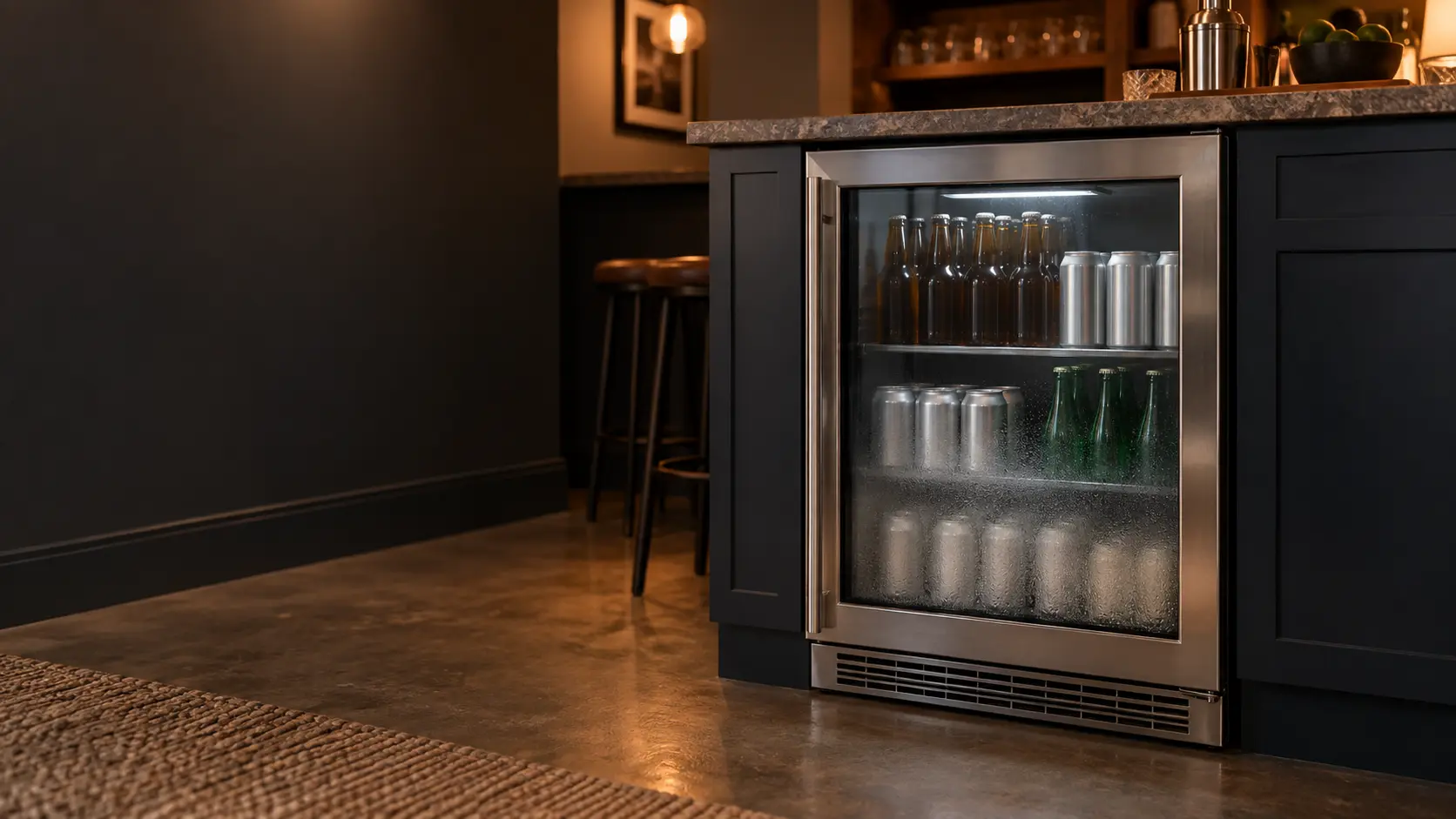
Where the moisture sits says what it means. Beads on the outside of the glass on a humid day are weather; U-Line calls condensation on outer surfaces normal in humid rooms. Fog on the inside that lingers usually means a seal or a busy door. Fog trapped between the panes, which no cloth can reach, means the sealed glass unit itself has failed.
The lock and its key
Many units have a keyed lock in the door frame. A drop of the maker's recommended lubricant on the key, never oil in the cylinder, keeps it turning, and it is worth taping a spare key inside a kitchen drawer, since a lost key turns a simple check into a service visit.
Source: U-Line — 24" beverage center user guide (UHBV124) — Gasket should contact the cabinet all around with no gaps and not be pinched on the hinge side; an unsealed door can cause poor cooling and frost; non-chlorine glass cleaner, no stainless cleaners on glass; outside condensation normal in humidity; door alignment by loosening hinge screws; door alert after 5 minutes
Checking the seal in five minutes
Close the door on a strip of thin card at several points around the frame and pull each one out; the drag should feel about the same everywhere. Then, in a dark room, leave a small flashlight switched on inside the cabinet and look for light escaping around the door edge.
If the door does not fall closed on its own or sits proud at one corner, the hinges may need realignment. U-Line's guide shows this is done by loosening the hinge screws, squaring the door and retightening them, but a glass door is heavy and can drop if both hinges are loosened at once, so this is a job to take slowly with a second person holding the door.
- Card pulls out freely at one spot: that section of gasket is flattened or torn.
- Card drags everywhere except the hinge side: look for a pinched fold there.
- Light leaks along the whole top edge: the door has dropped and needs alignment.
Source: U-Line — 24" beverage center user guide (UHBV124) — Gasket should contact the cabinet all around with no gaps and not be pinched on the hinge side; an unsealed door can cause poor cooling and frost; non-chlorine glass cleaner, no stainless cleaners on glass; outside condensation normal in humidity; door alignment by loosening hinge screws; door alert after 5 minutes
When cleaning is no longer enough
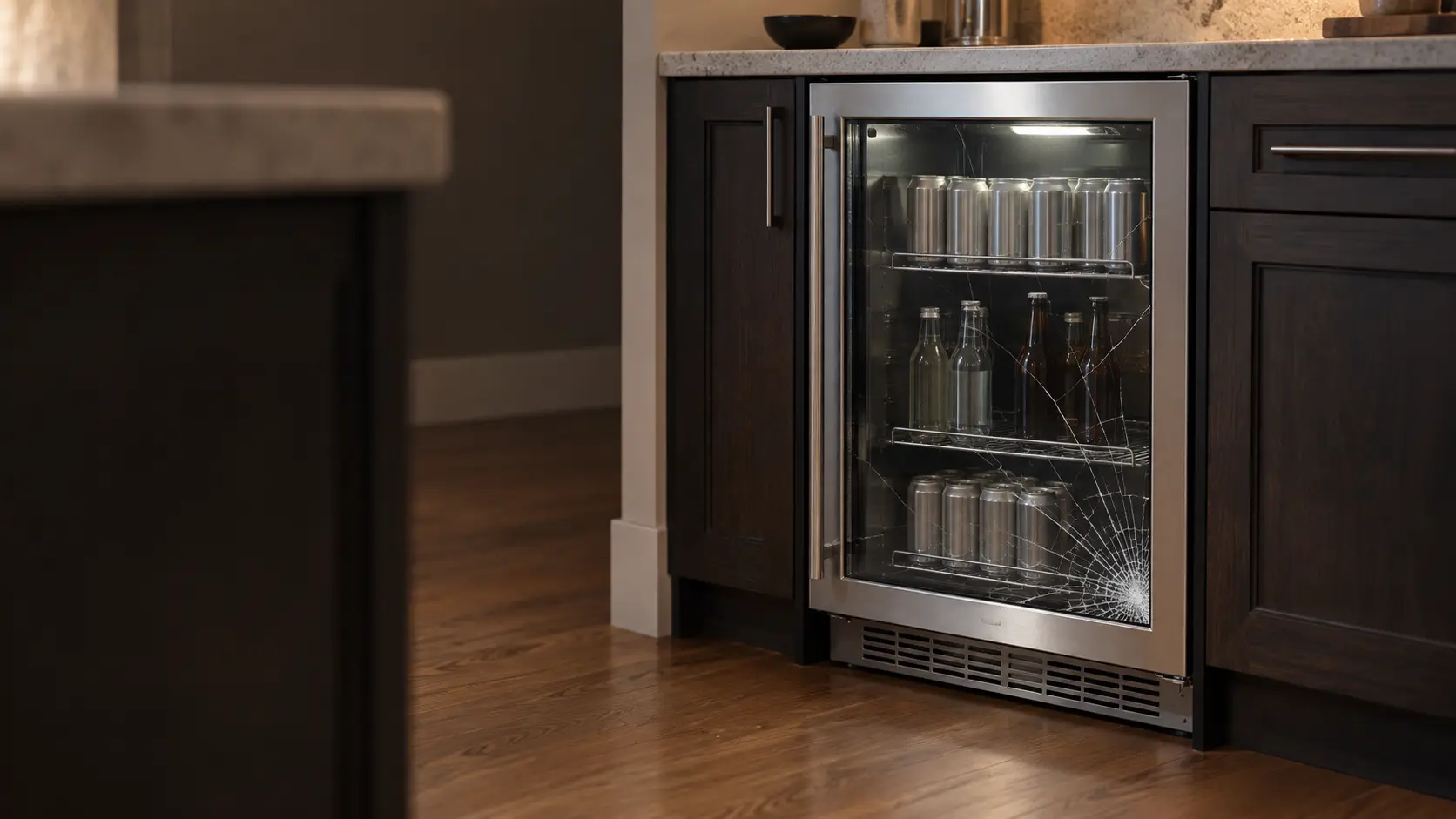
A gasket that has split, gone hard and shiny, or torn away from its track will not recover with cleaning. Replacement gaskets are specific to the model, so note the details from the model plate before ordering. A cracked or shattered pane, by contrast, is a safety matter rather than a care one, and the site's safety section has a guide on it.