The breaker comes before the mop
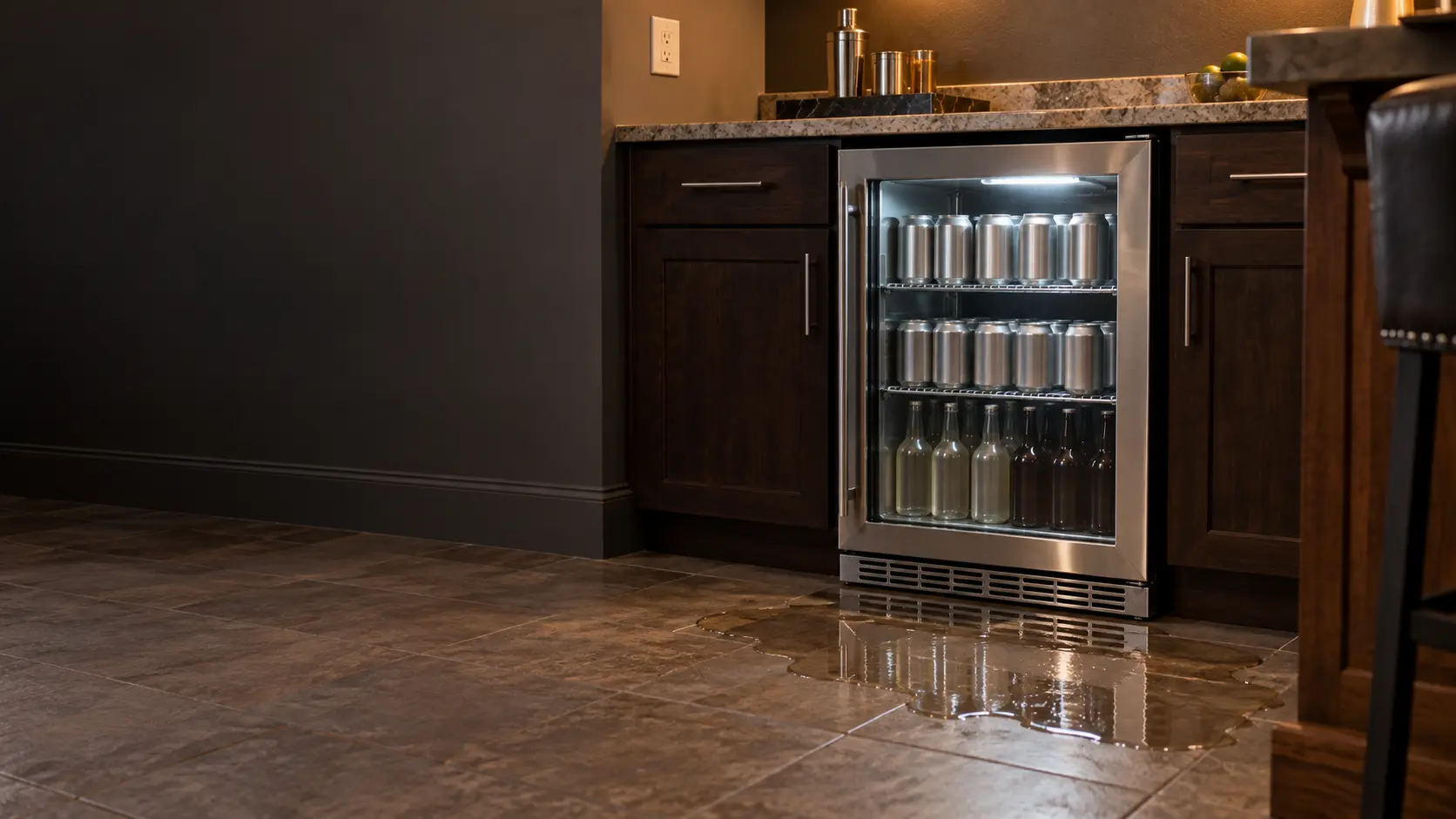
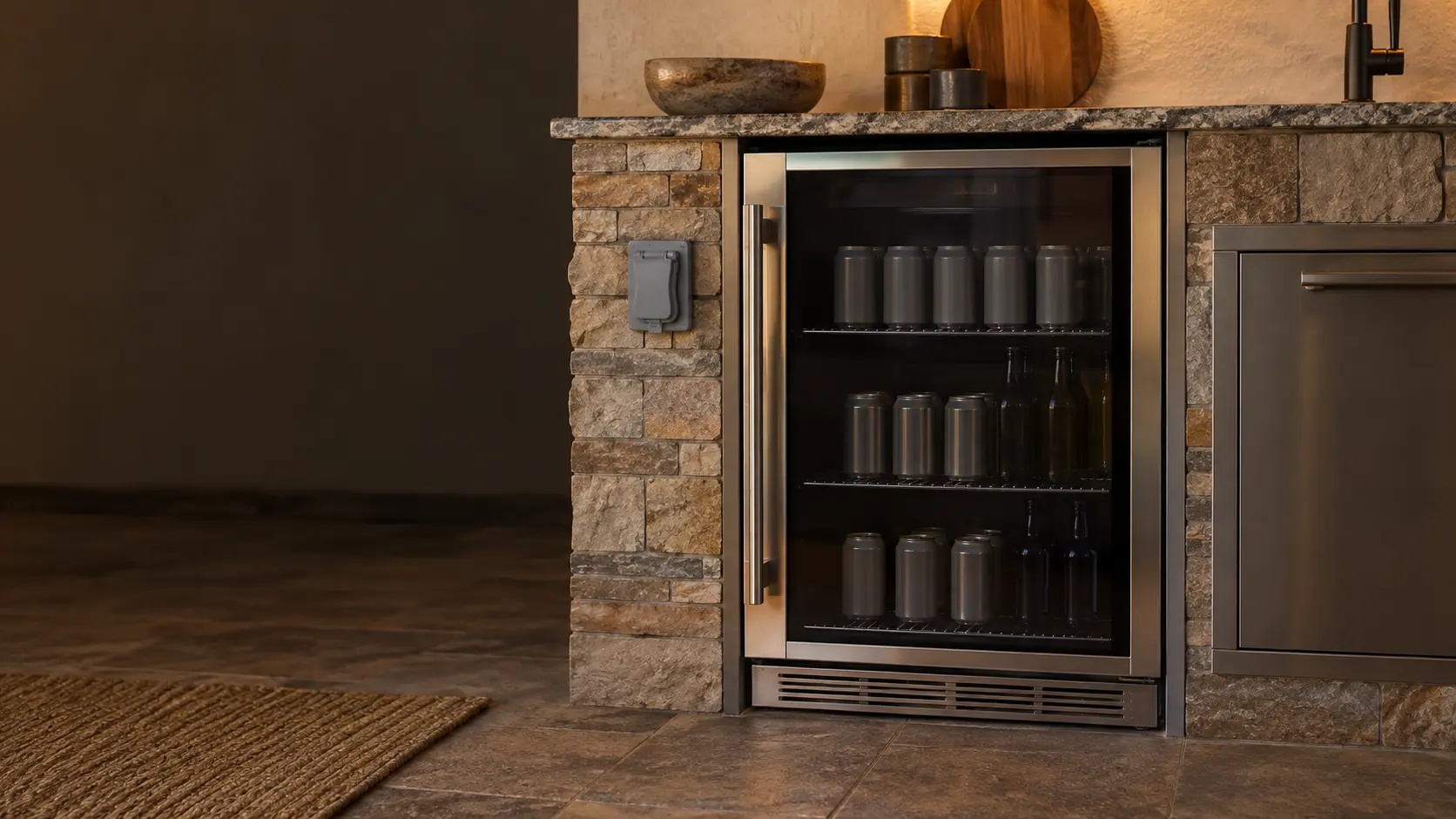
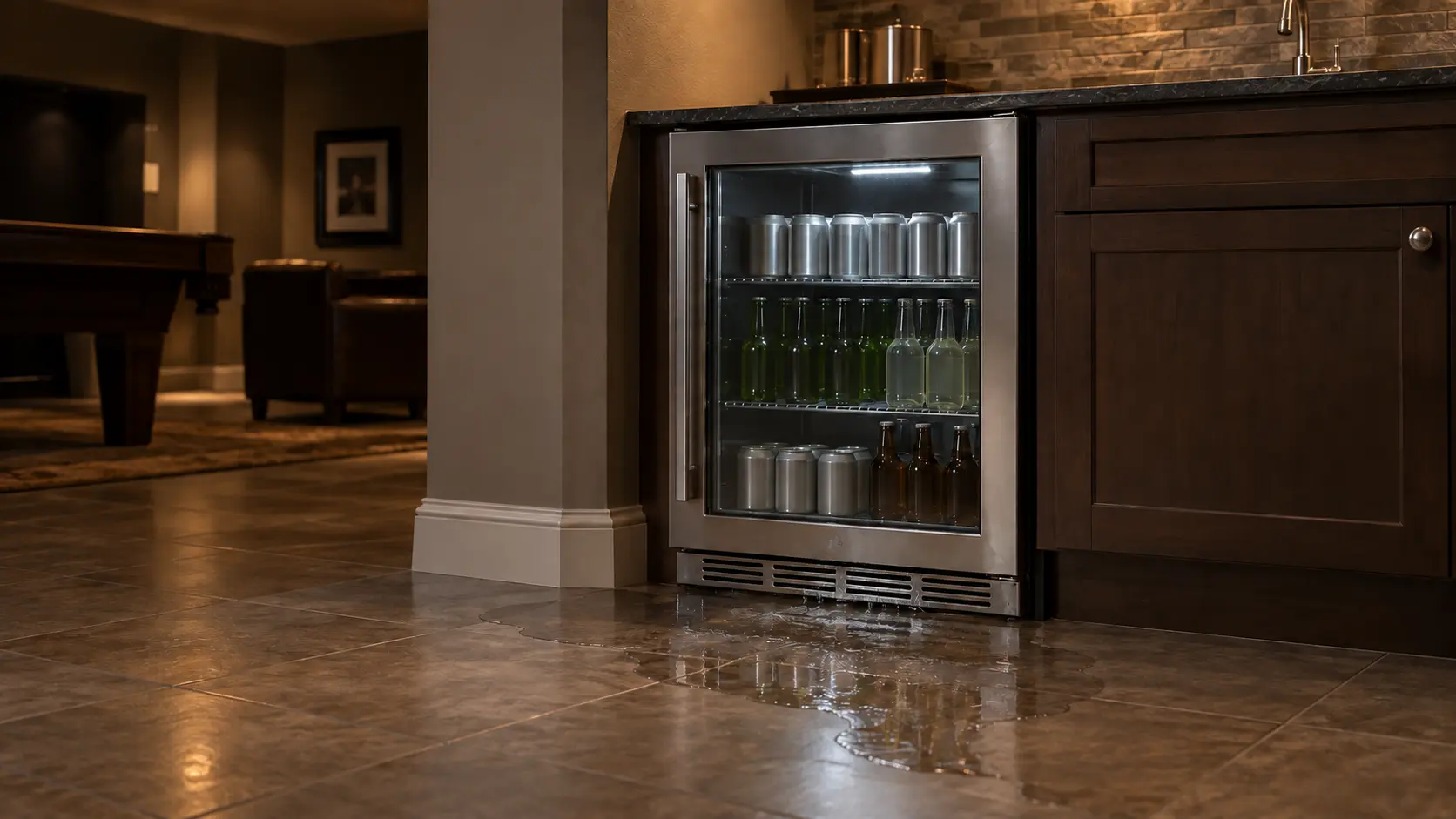
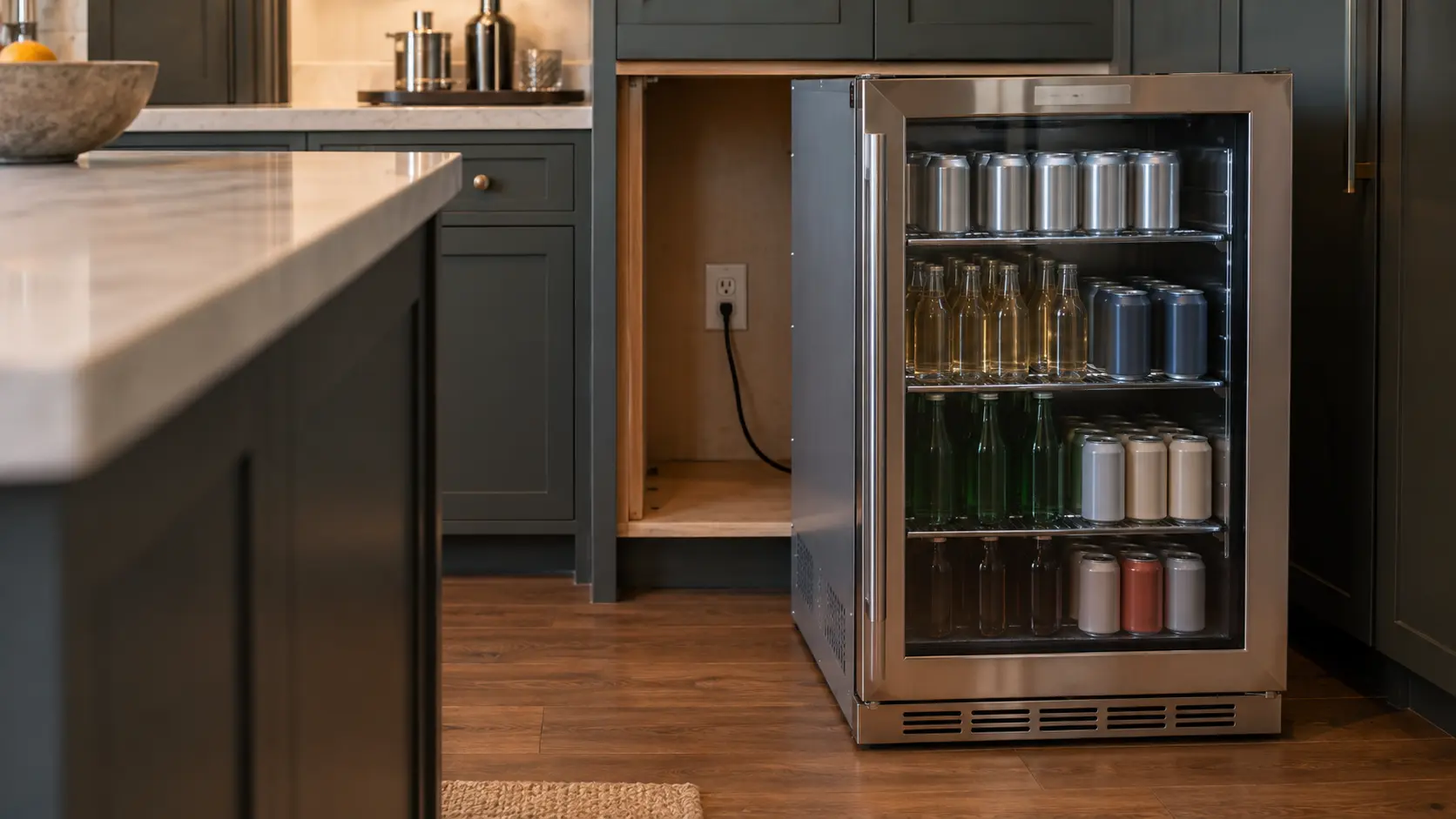
It feels natural to kneel down with a towel and look under the toe kick. Hold off. Ready.gov's flood guidance puts it plainly: do not touch electrical equipment if it is wet or if you are standing in water, and turn off the electricity only if it is safe to do so. A beverage center's cord runs to an outlet that is often lower than the counter, and sometimes lower than the top of the puddle's spread under the cabinets.
Walk to the breaker panel along a dry route and switch off the circuit that feeds the beverage center, if the panel and the floor in front of it are dry. If the panel is in a wet basement, or the only way there crosses the water, leave the power alone, keep everyone out of the room and call an electrician. Zephyr's manual adds a rule that matters here: never plug or unplug the unit with wet hands.
- Send kids and pets to another room until the floor is dry.
- Do not reach behind the unit or into the next cabinet for the plug while the floor is wet.
- Switch the circuit off at the panel only from dry footing.
- If a GFCI has tripped, leave it tripped for now; it has already cut the power.
Source: Ready.gov — Floods — Do not touch electrical equipment if it is wet or if you are standing in water; turn off the electricity only if it is safe to do so; CPSC — What Is a GFCI? (fact sheet) — National Electrical Code has required GFCI protection at wet bar sinks since 1993; Zephyr — Presrv Beverage Cooler Use, Care and Installation Guide (PRB24C01AG) — Never plug or unplug the unit with wet hands; an electrified cabinet means the grounding should be tested by an electrician; do not store perishable food
Reading the puddle once the power is off
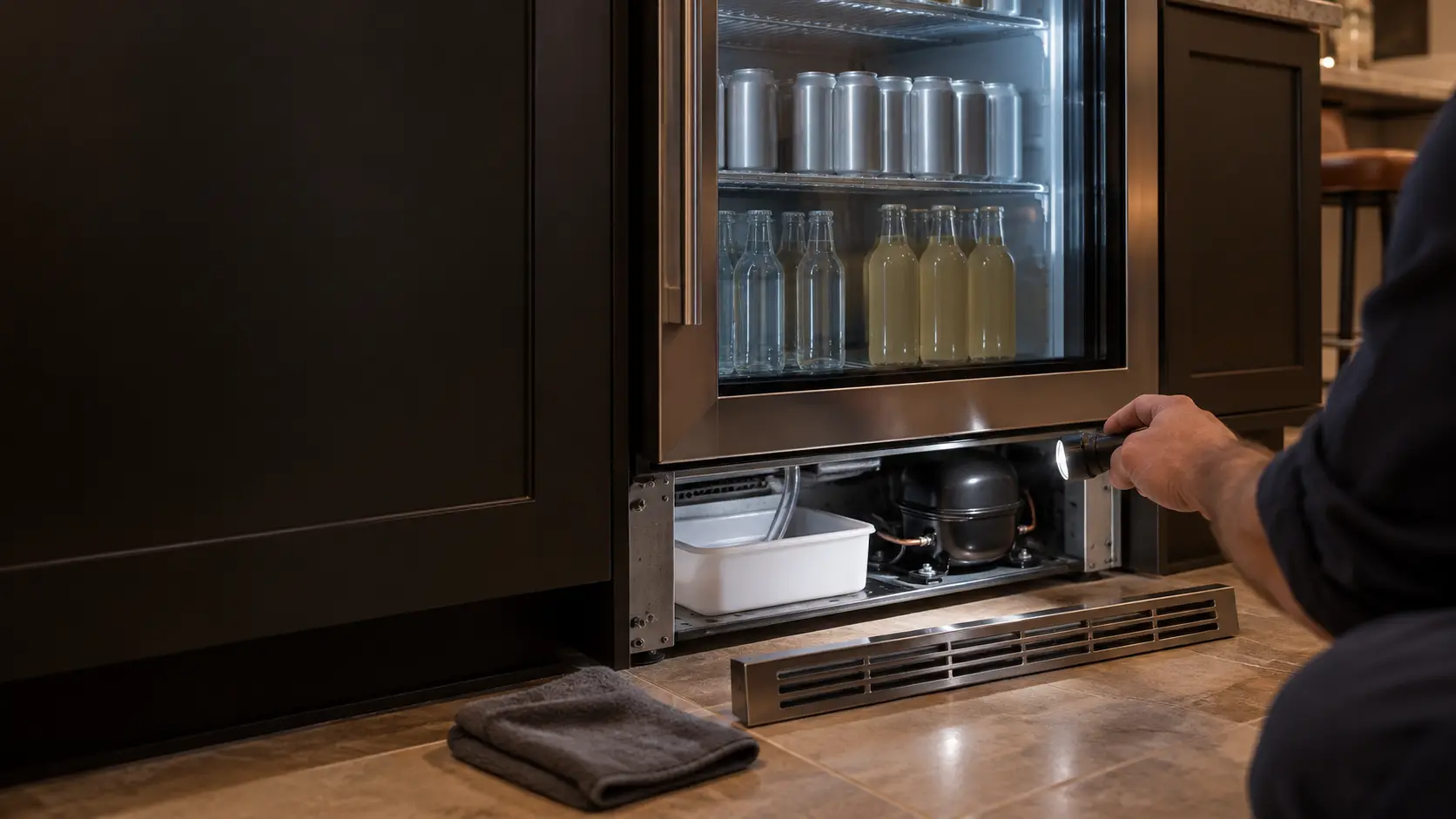
With the circuit off, the unit is just a box, and you can look properly. Mop up, lay dry paper towels along both sides and in front of the grille, and wait twenty minutes. The towel that darkens first points toward the source. Clear water spreading from behind the grille points at the unit's own pan; water that arrives from one side points at the neighbor.
Every compressor beverage center makes water as a matter of course. Moisture in the air freezes onto the cold coil inside the cabinet, melts during each off cycle, and runs out through a drain to a pan near the compressor where warm air evaporates it. Perlick says outright that no plumbing is needed because that pan handles the condensate on its own.
An evaporation pan that overflowed
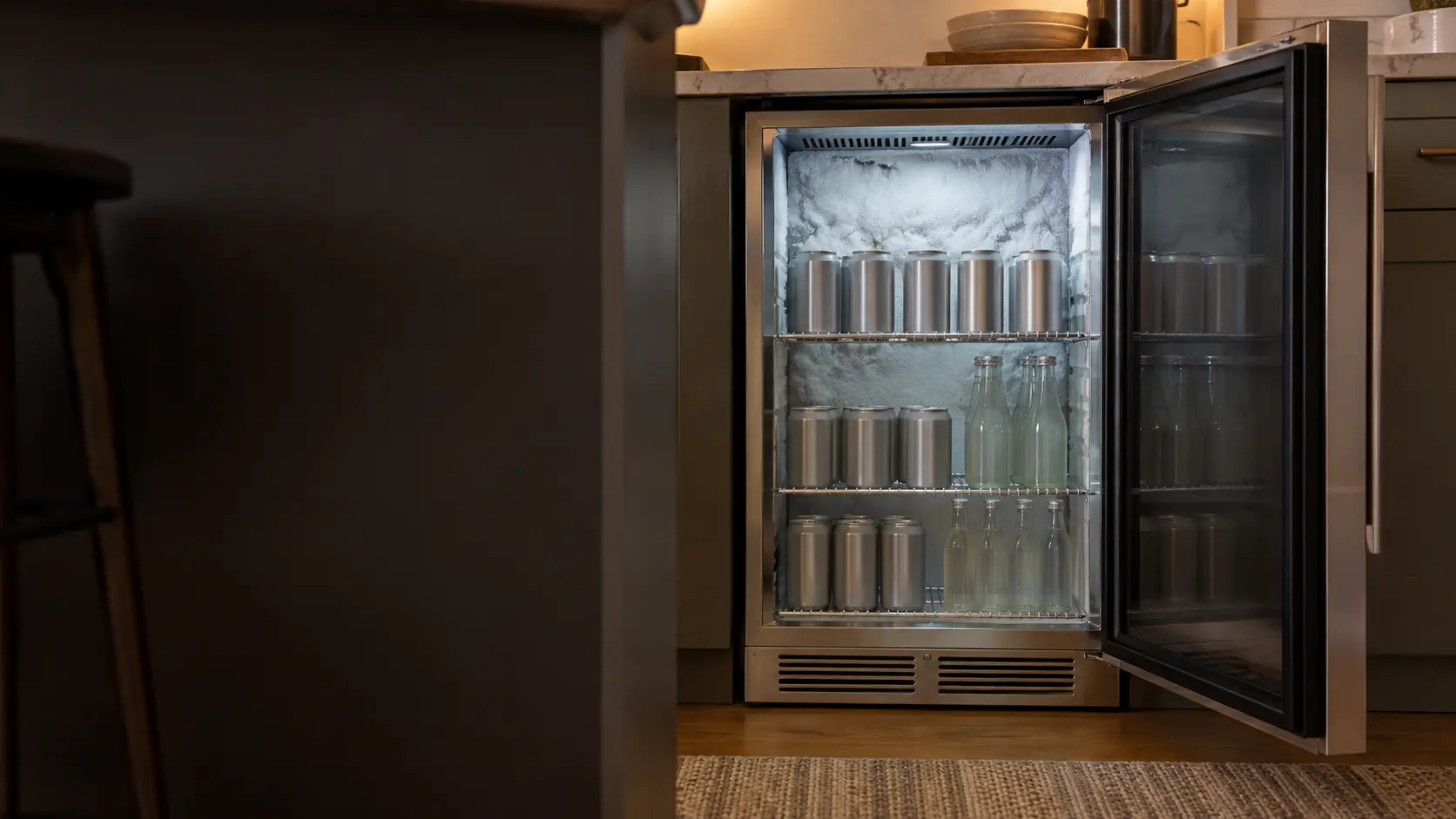
The pan copes with ordinary daily meltwater, not with a flood. U-Line notes that its drain pan was not designed to hold the water from a manual defrost, and tells owners to pull the unit out of the cabinetry first so the overflow does not reach water-sensitive flooring. If someone unplugged the unit to melt a thick coat of frost, that is very often the whole story.
A door that stayed open a crack
A door held off its gasket by a bottle neck or a shelf pulled slightly forward lets humid room air pour in all evening. The coil ices over, and when the door finally closes the ice melts faster than the pan can clear it. U-Line's rule of thumb is that frost a quarter inch thick or more calls for a manual defrost, never an ice pick or a heater.
Drops running down the outside of the glass
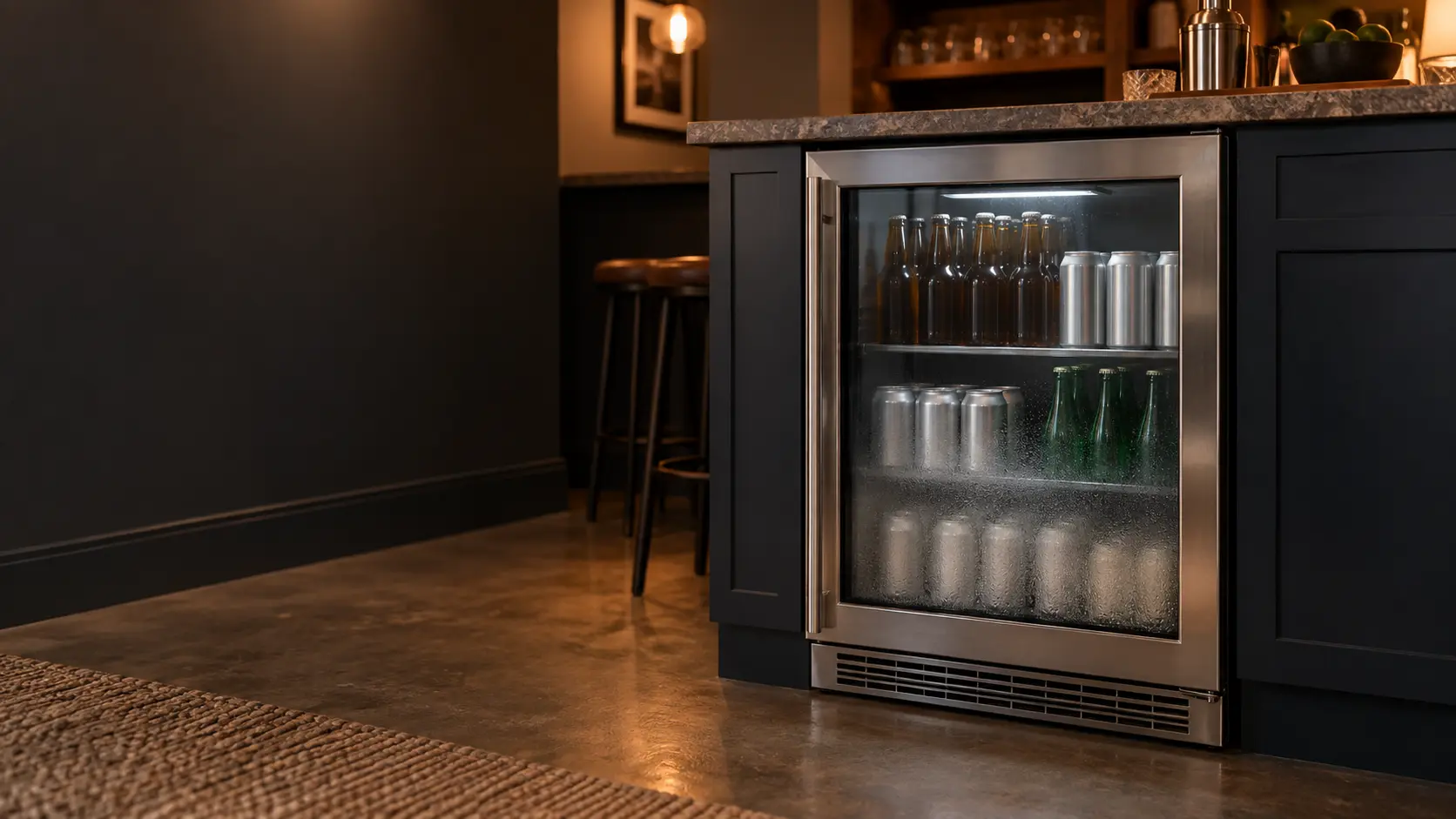
In a humid basement bar or on a summer evening with the patio door open, the cold glass front can bead with water that trickles onto the floor in front. Perlick notes that its glass doors may sweat when relative humidity passes 75 percent, and U-Line treats outside condensation in humid weather as normal. It is a small, clean puddle at the front edge, not under the unit.
Source: Perlick — G5 Installation and Operation Manual — No plumbing is required because condensate is evaporated in a pan in the condensing section; glass door units may sweat above 75 percent relative humidity

When the water was never the beverage center's
Beverage centers tend to live beside bar sinks, dishwasher runs and ice machines, and they sit on the floor at the lowest point of the cabinet line. A slow drip from a sink trap, a loose faucet supply line or a neighboring appliance's drain hose will travel along the floor and surface at the beverage center's toe kick, which then takes the blame.
Open the sink base next door with the power still off and run a dry hand along the trap and the supply lines. Look for a water stain on the cabinet floor, a swollen panel edge, or a supply valve with a bead of water on it. If the neighbor is wet and the space behind the beverage center is dry, the plumbing, not the cooler, needs attention.
- Wet sink cabinet floor, dry grille: the sink trap or supply line.
- Water only in front of the door: sweating glass or a door that sat open.
- Water behind the grille after a defrost: the pan overflowed.
- Water pooled inside, under the bottom shelf: a blocked drain opening at the back of the cabinet.
Deciding when the power can go back on
If the water stayed at the front and never reached the cord, the plug or the outlet, dry the floor, restore the breaker and watch the unit through its next cycle. If the outlet box, the plug or the base of the unit was sitting in water, leave the circuit off and have the outlet checked before anything is plugged back in.
A tingle from the stainless trim or the handle is a separate warning. Zephyr's troubleshooting table lists an electrified cabinet as a grounding problem for an electrician to test, not something to live with. The cans inside are in no hurry: a closed beverage center holds its chill for hours, and nothing in it should be perishable food in the first place.
Source: Zephyr — Presrv Beverage Cooler Use, Care and Installation Guide (PRB24C01AG) — Never plug or unplug the unit with wet hands; an electrified cabinet means the grounding should be tested by an electrician; do not store perishable food