Why a technician asks for it first
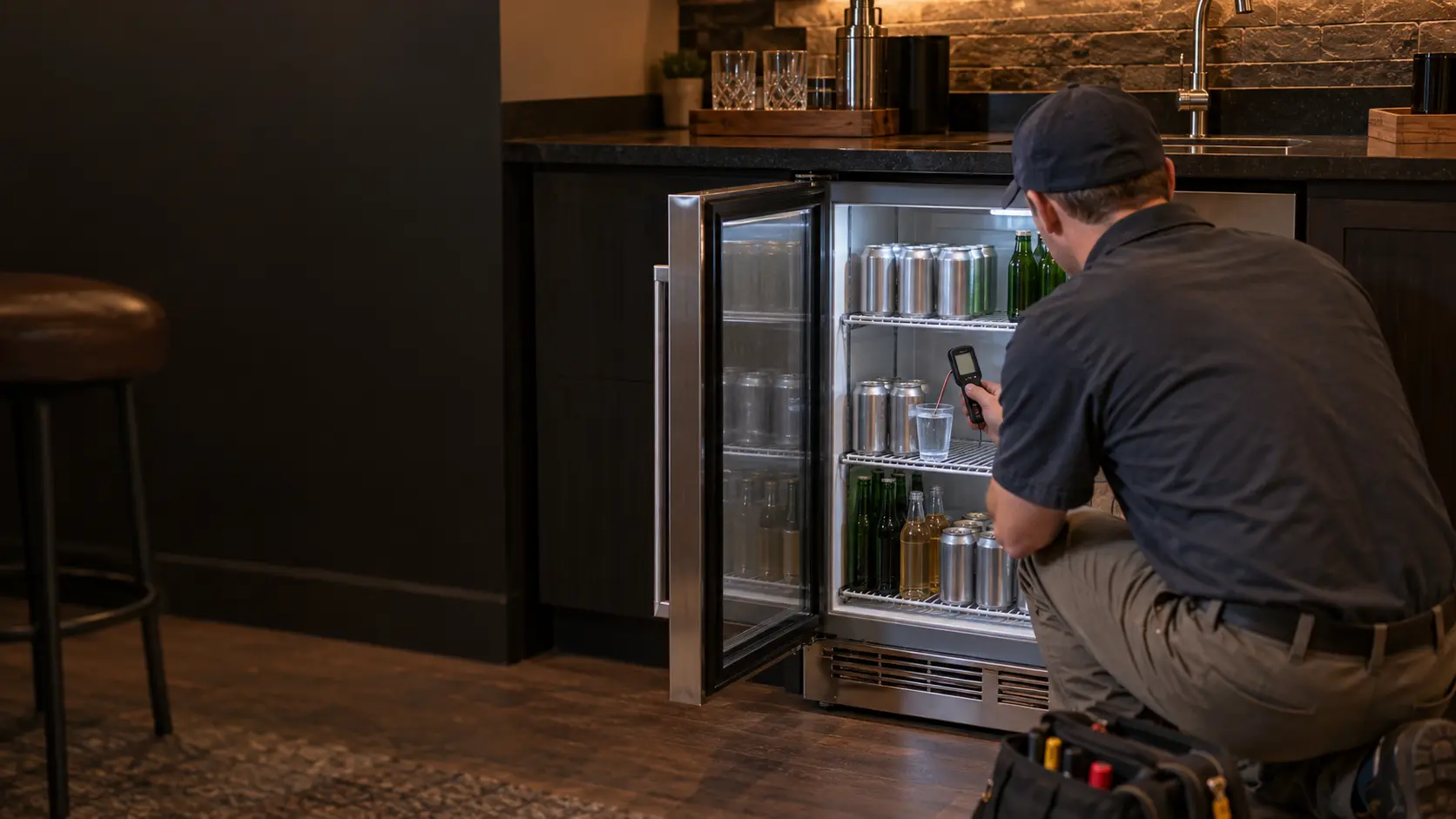
Two glass-door units bought five years apart can share a badge, a width and a handle and still use a different fan, sensor, control and door glass. The model number tells a parts desk which of those designs is standing in your bar; the serial number pins down the individual unit. Hand both over when booking and the visit can be planned around the parts that design is known to need, instead of starting with a look and ending with an order.
Those same characters open the right use and care guide, with the button presses for your exact panel and the list of sounds your unit is meant to make. They also settle whether a product safety recall applies: the Consumer Product Safety Commission lists recalled appliances on its site, and checking takes a couple of minutes.
- Shelves, gaskets and hinges ordered once, not twice.
- The manual that matches the buttons on your panel.
- A two-minute recall check before money is spent.
- A first visit planned around the likely part.
Source: CPSC — Recalls — The CPSC lists recalled products on its recalls page
Maker by maker, from their own manuals
Most makers follow one habit: the plate goes inside, near the top, where an open door exposes it. The exact wall differs, and the manuals below say which. For a make not listed, start high and work down.
U-Line
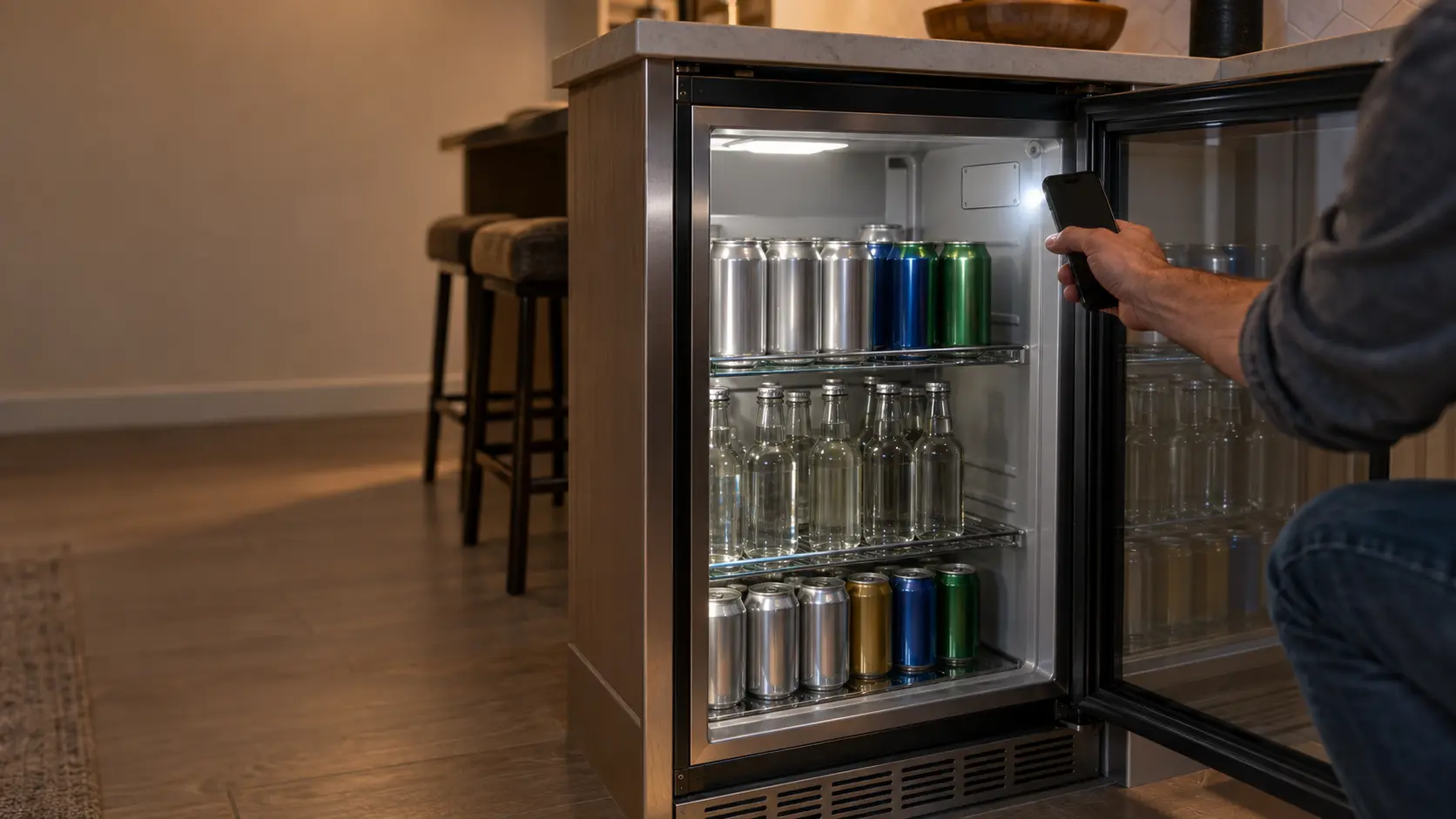
U-Line's 1100 series use and care guide sends owners to two spots inside the cabinet: high on the right-hand wall, or on the rear wall. When the cabinet is packed, slip a phone between the top row of cans and the ceiling and let its flashlight do the searching.
Marvel
The owner's guide for Marvel's 24-inch beverage center gives two answers in two chapters. Its welcome page puts the serial plate on the left wall close to the top; its troubleshooting chapter sends you to the right wall or the rear wall, high up. Sweep all three and you have followed both.
Perlick
Perlick's G5 undercounter manual puts its nameplate in the middle of the cabinet's inside ceiling, just back from the door frame on a glass-door unit. A separate data plate lists the electrical specifications, which is the one to read if the question concerns the circuit rather than a part.
Sub-Zero
Sub-Zero's own tag guide sends owners of its undercounter units to the upper left of the interior. Its Designer undercounter models carry the tag overhead, toward the left, and its Designer drawers carry it inside the cabinet beside the top drawer, on the left.

Start the search by the shape of the unit
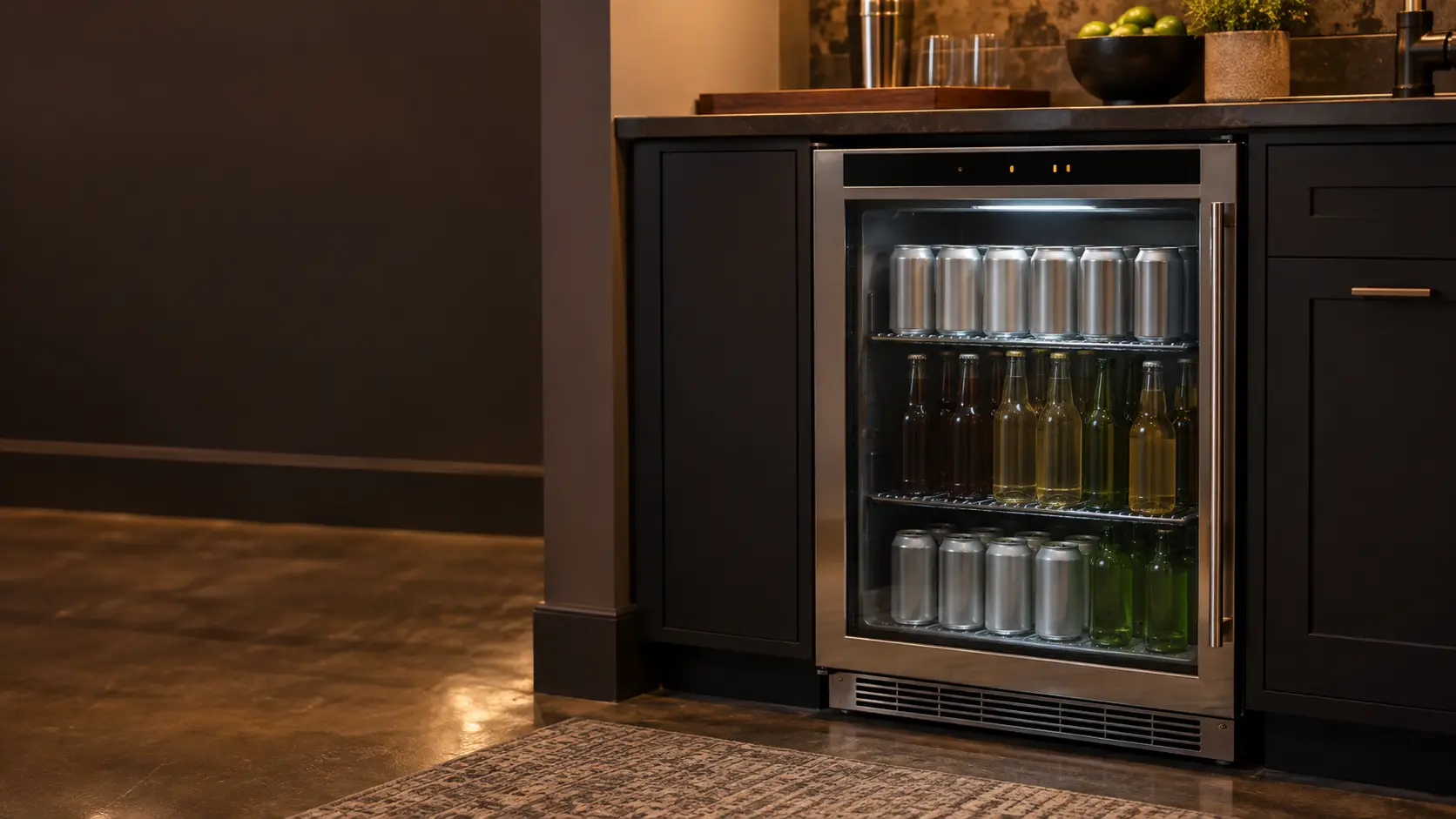
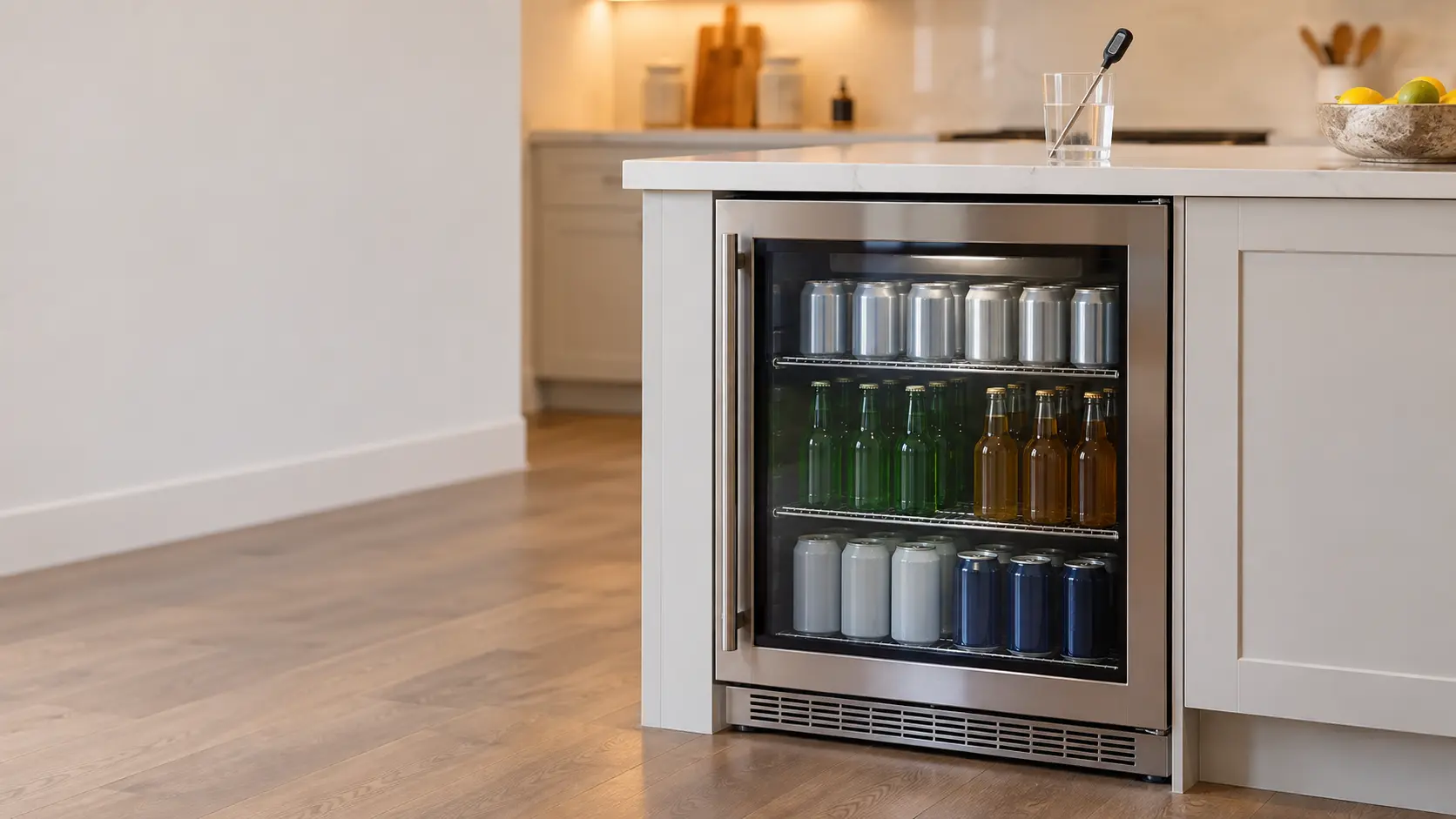
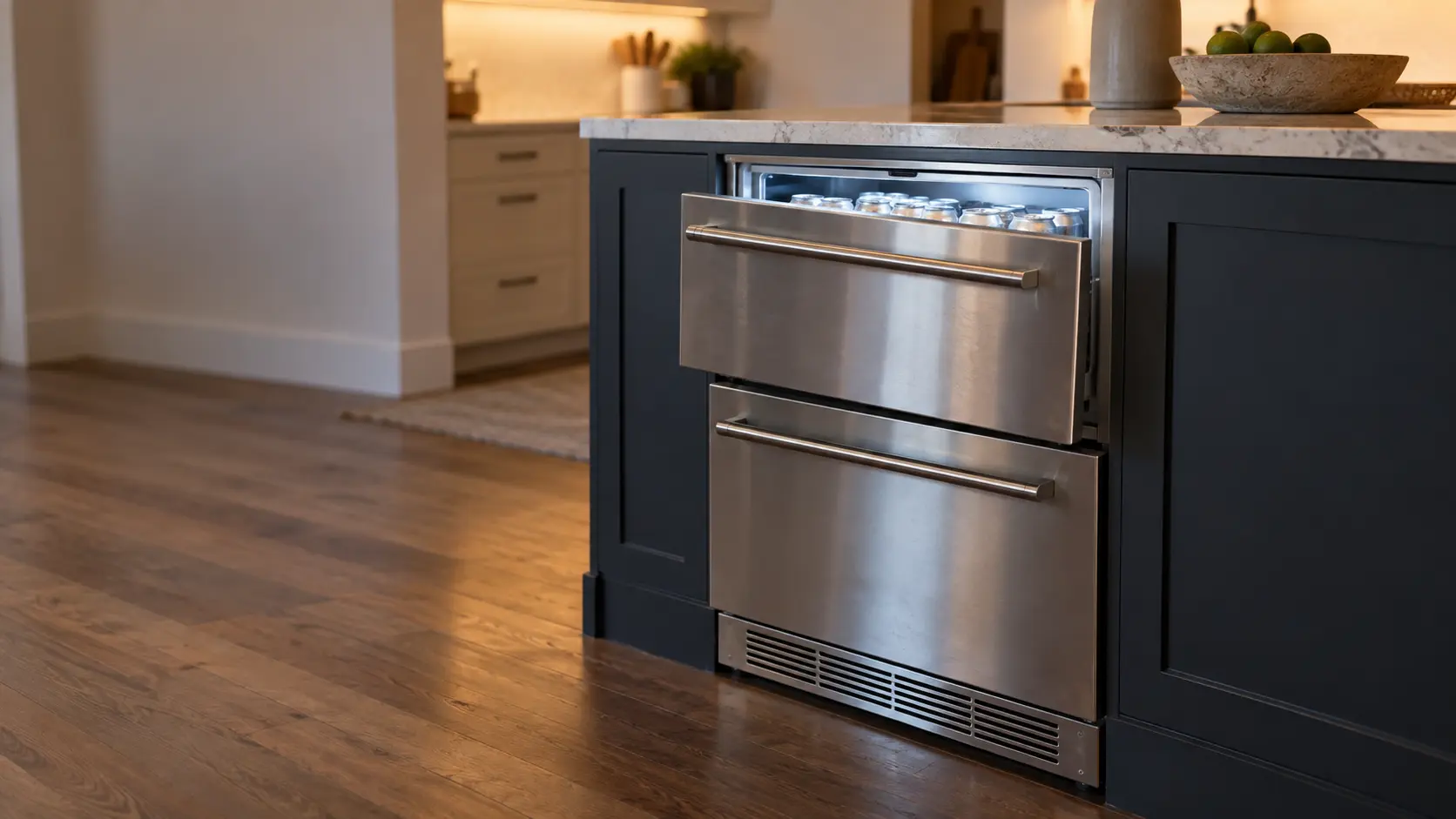
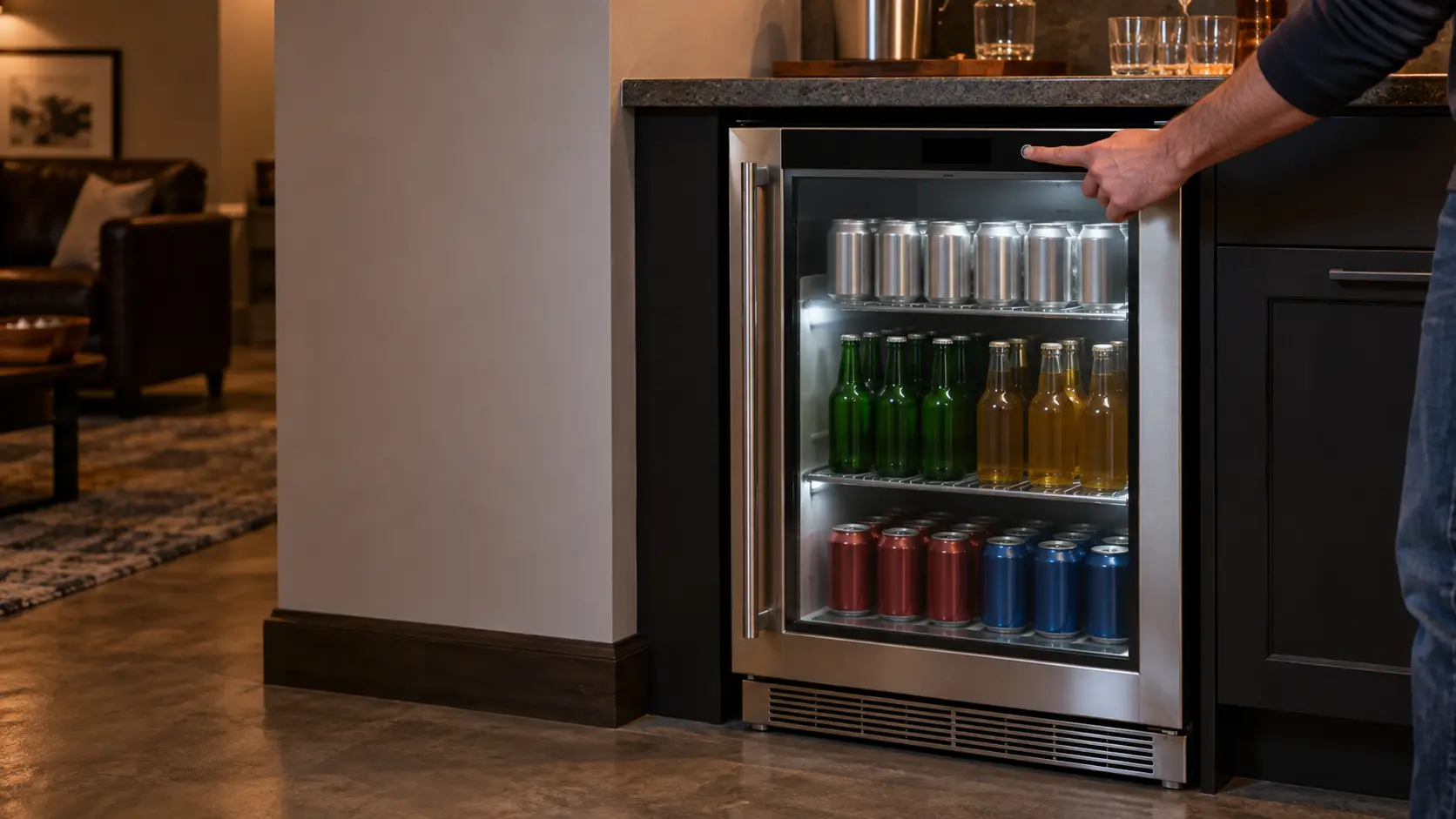
Glass-door undercounter units hide the plate above eye level for anyone standing, so crouch until the ceiling of the cabinet is in view and sweep it and the tops of both side walls with light. Drawer units put it around the top drawer: slide that drawer out to its stop and look along the frame and the walls beside it before opening the lower one. Outdoor-rated units use the same spots as indoor ones, but sun and damp age a plate quickly, so photograph it on installation day.
Countertop and freestanding beverage coolers are the least predictable. Inside first, then the back panel beside the power cord, where compact models sometimes place it. Take the drinks out before tilting one, tilt only enough to read, and keep fingers off the warm coil on the back.
Copying it correctly
Expect three things on the plate: a model number, a serial number and an electrical rating, sometimes each with its own barcode. The model number is the one people shorten, and the letters after a dash are the part most often dropped. Those endings can separate a stainless door from a panel-ready one or an indoor build from an outdoor one, and the parts are not interchangeable.
Shiny plates fight the camera. Tilt the phone so the flash glances off instead of bouncing back, or switch the flash off and hold a second light beside the plate. Take a close shot and a wider one that shows where the plate is, zoom in on both, and only close the door once every character reads cleanly.
- Model number: letters, digits and the suffix after any dash.
- Serial number: the one that identifies this exact unit.
- Electrical rating: volts and amps, useful if the question is the circuit.
- Anything handwritten nearby, such as an installer's date.
If the plate has worn off
Shelves scrape plates, cleaners lift their adhesive, and patio sun bleaches the print. The same characters often survive elsewhere: written inside the manual's cover by the installer, on the product registration or the delivery slip, or on the carton if it was kept.
With none of those, a technician can usually work out the design from the control, the compressor tag and the shape of the shelves and hinges. It takes longer, and the first visit is more likely to end with a part on order, so say when you book that the plate is gone.