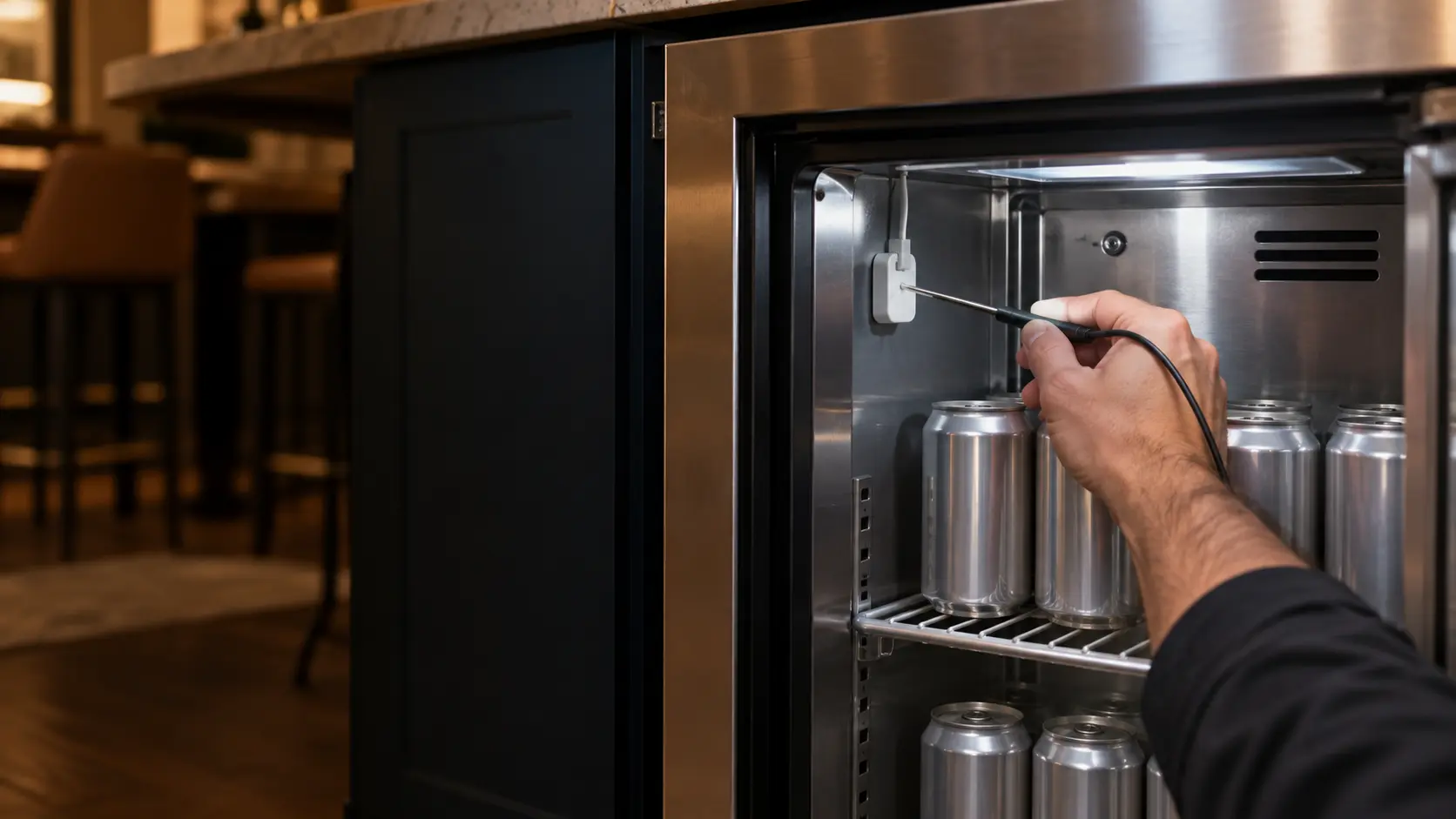
Which beverage cooler type fits your space?
The right type is the one whose airflow matches the spot: a countertop or freestanding cooler needs air around it, and a built-in needs a clear front grille. Pick by where the heat leaves the cabinet, because that is the rule that separates the three, and the rest follows.
| Type | Where the heat leaves | Where it can stand | Watch for |
|---|---|---|---|
| Countertop | Back or sides | On a strong counter with open air | Weight, a cord that is too short |
| Freestanding | Back or sides | On the floor with gaps around it | Being pushed into a tight niche |
| Built-in | Front grille | Under a counter, flush | A blocked or covered grille |
If you are weighing the built-in family in more detail, the undercounter, freestanding or drawers guide compares those forms. This guide stays with the choice between the shapes and with what separates any of them from a mini fridge.
What should you know about a countertop beverage cooler?
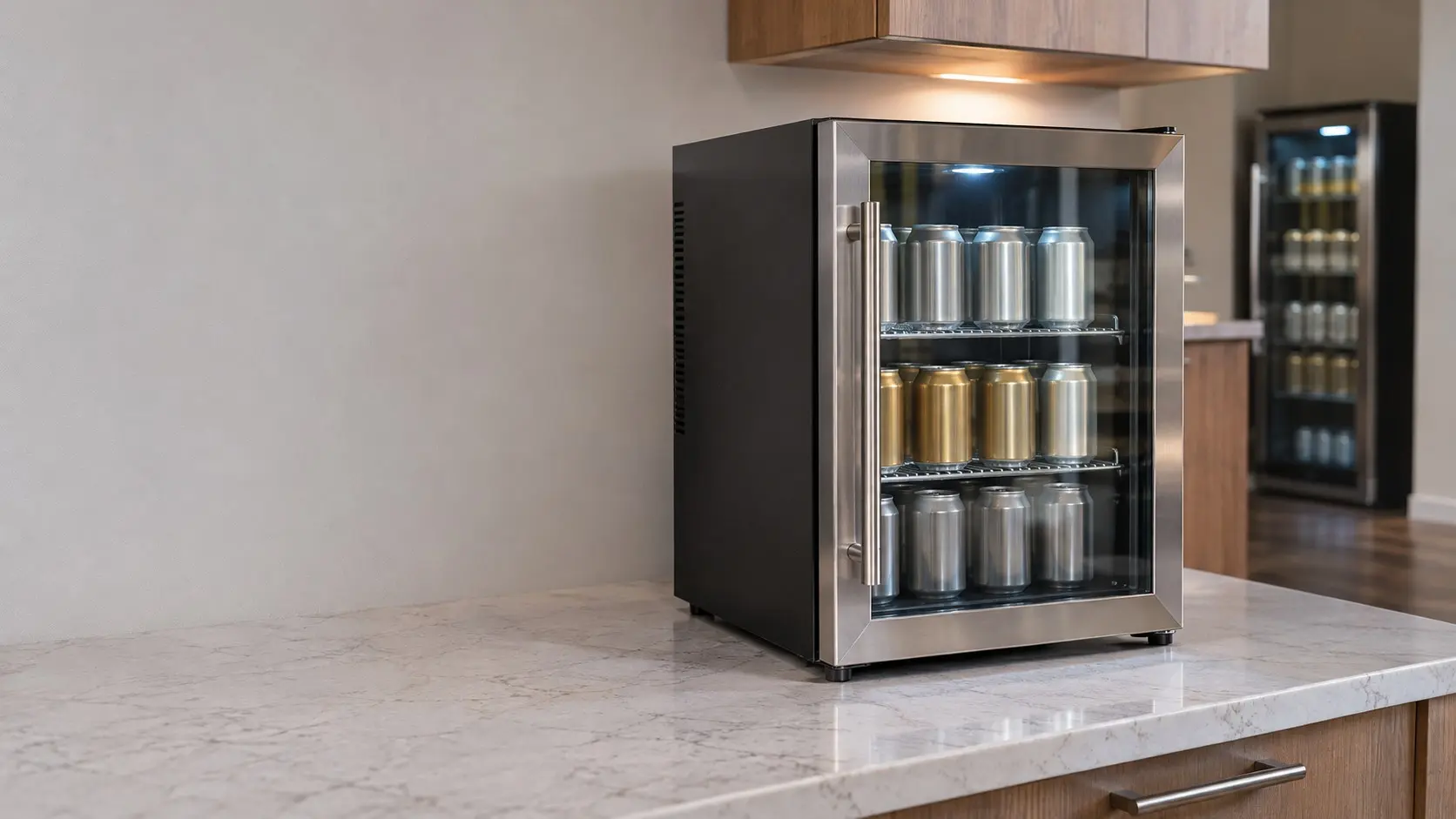
A countertop beverage cooler is a freestanding cooler small enough to lift onto a counter, and it behaves like one: it needs room to breathe. The owner's manual for many beverage coolers asks for an inch or two at the back when used freestanding or built in, and says never to block the front vent. Treat that as the least you give any small cooler and read your own manual for the exact figure.
The surface and the cord
A full cooler is heavier than it looks, so check that the counter and anything under it can carry the load. Many manuals say to use two or more people to move the cabinet. Keep the cord clear of the hot back and plug straight into a wall outlet, because manuals commonly say not to use extension cords or power strips and some want each unit on a dedicated circuit.
Heat and sun
A cooler on a sunny counter, or beside a range or toaster oven, works harder. Manuals ask owners to keep the cooler away from heat sources and direct sun, and give a room temperature range for the model. Higher ambient temperatures may reduce a unit's ability to reach low temperatures, and the same logic applies to any cooler in a hot room; the drinks are not cold guide lists what to check.
How is a freestanding cooler different from a built-in?
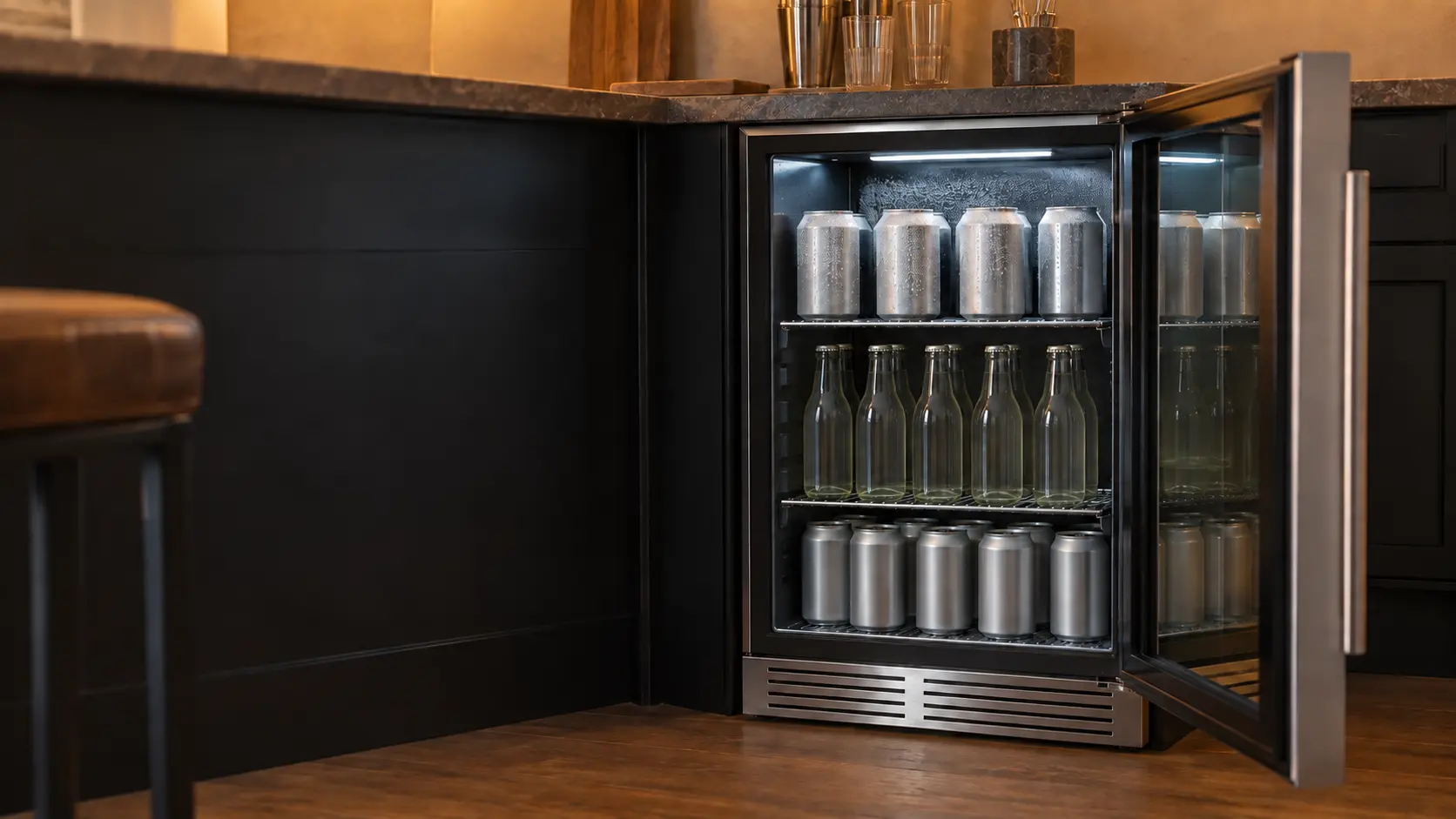
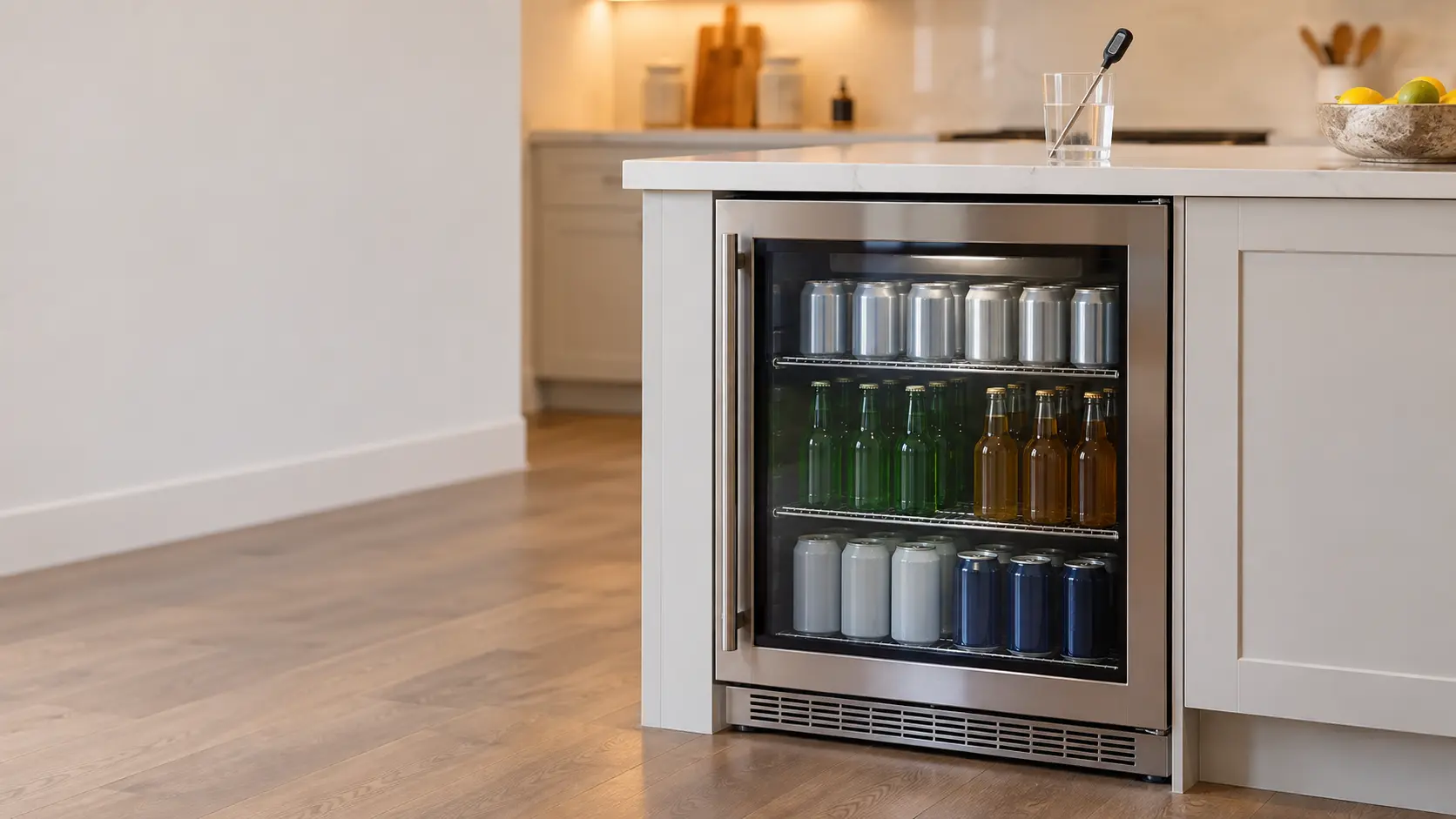
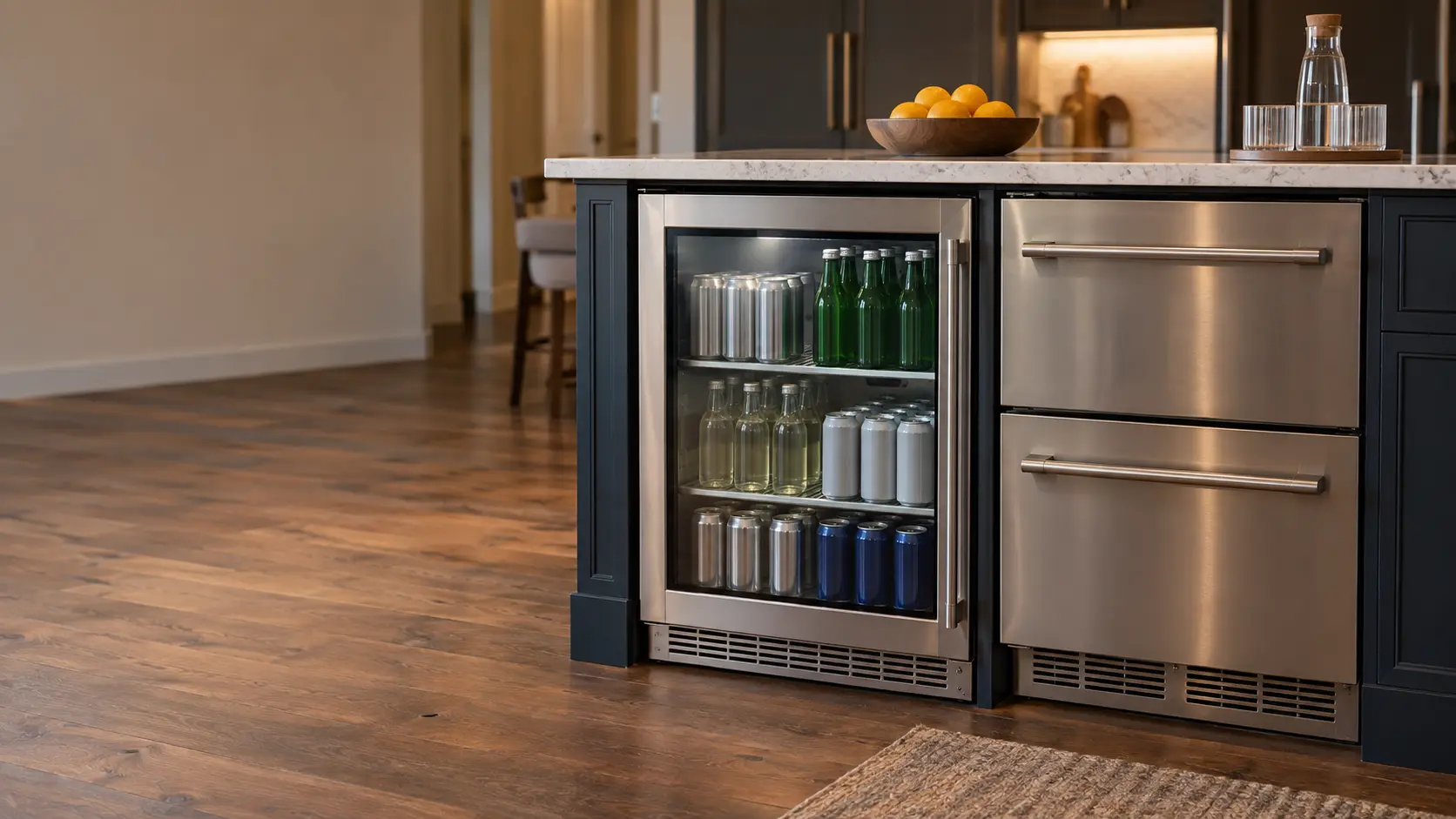
A built-in is designed to disappear into cabinetry, while a freestanding unit is designed to stand in the open. The manual for many built-in models says no additional clearance is needed at the sides, top or rear as long as the front grille is unobstructed, and that the unit should not be installed behind a closed door. The undercounter beverage center repair page covers that type. A freestanding cooler pushed into that same niche recirculates its own exhaust, runs longer and cools the top shelf last.
- Built-in: a front grille, flush fit, a grille that must never be covered by a kick plate or boxes.
- Freestanding: open air at the back and sides, usually a few inches.
- Both: a level cabinet, since manuals ask for a firm, level surface and adjustable feet to level the cooler.
The airflow guide for a built-in beverage center shows what to check behind the grille.
How does a beverage cooler differ from a unit made for food?
A beverage cooler is a drinks cabinet and a mini fridge is a small food refrigerator, so the two differ in range, doors and food use. A beverage cooler usually has a glass door and shelves that suit cans and bottles. Mini fridges vary by model, so check the manual of the one you own for its food rating, freezer compartment and temperature range.
Temperature range
Many beverage centers ship with a set point in the high 30s °F and can be set anywhere from the mid 30s to about 50°F. FDA says a refrigerator should be 40°F or below to keep food safe, so a cooler set at 45°F is fine for soda and not fine for leftovers.
Food use
The owner's manual for many beverage coolers states that they are not for perishable food. If you keep milk, creamer or lunches cold, a unit made for food is the better tool, and the beverage cooler stays for drinks.
Freezing risk
Cans against the back wall can freeze in either kind of cabinet. Some models fit the shelves with an edge strip toward the rear that keeps cans and bottles from freezing against the cold evaporator. If drinks freeze, see the freezing and bursting cans guide.
Can any of them go outdoors?
Only a unit the maker lists for outdoor use belongs on a porch or patio, whatever its shape. Many beverage coolers are for indoor use only and must be kept from rain and moisture; water inside an indoor unit is a job for outdoor beverage center weather repair. Outdoor-rated models exist, but their gaskets are not watertight, so the counter should overhang the door. The indoor or outdoor rated guide explains the rating, and the outdoor beverage center repair page covers weather-related problems.
Which one should you choose?
Choose by the spot first and the job second:
- A tight gap under a counter: a built-in with a front grille.
- A bare wall or a pantry corner: a freestanding cabinet with gaps around it.
- A kitchen counter or a bar top with a sturdy surface: a countertop cooler, kept clear of the sun and heat.
- A mix of food and drinks: a food refrigerator, with the beverage cooler for cans only.
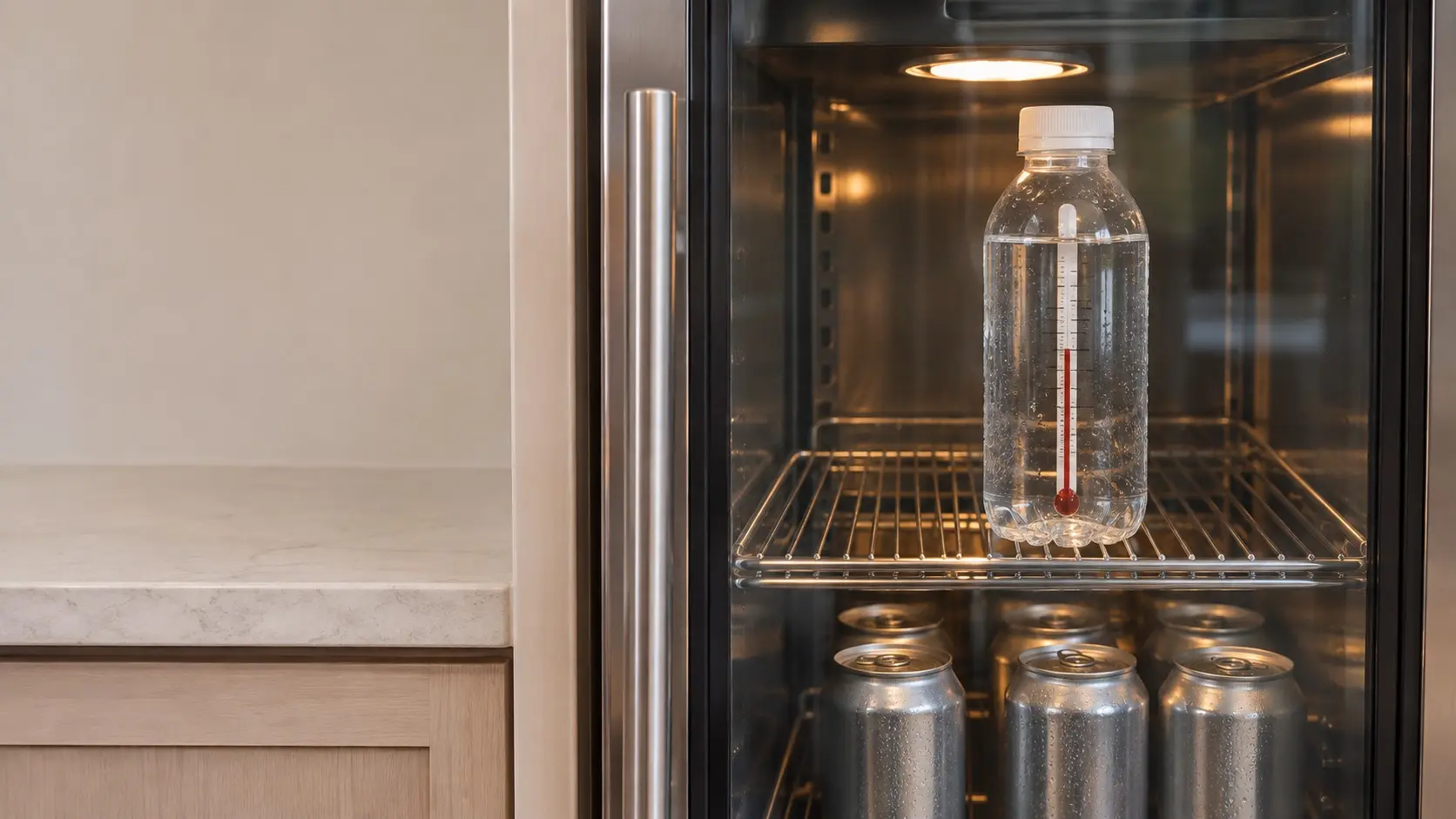
Test the choice after it is running. Manuals note that air temperature does not indicate drink temperature, and suggest a thermometer in a capped bottle of water for 24 hours; a reading that never matches the setting points to thermostat and sensor repair. If the cooler struggles even when placed correctly, see beverage center not cooling; the repair or replace a beverage center guide lays out the questions to ask.