How a front-breathing unit moves its heat
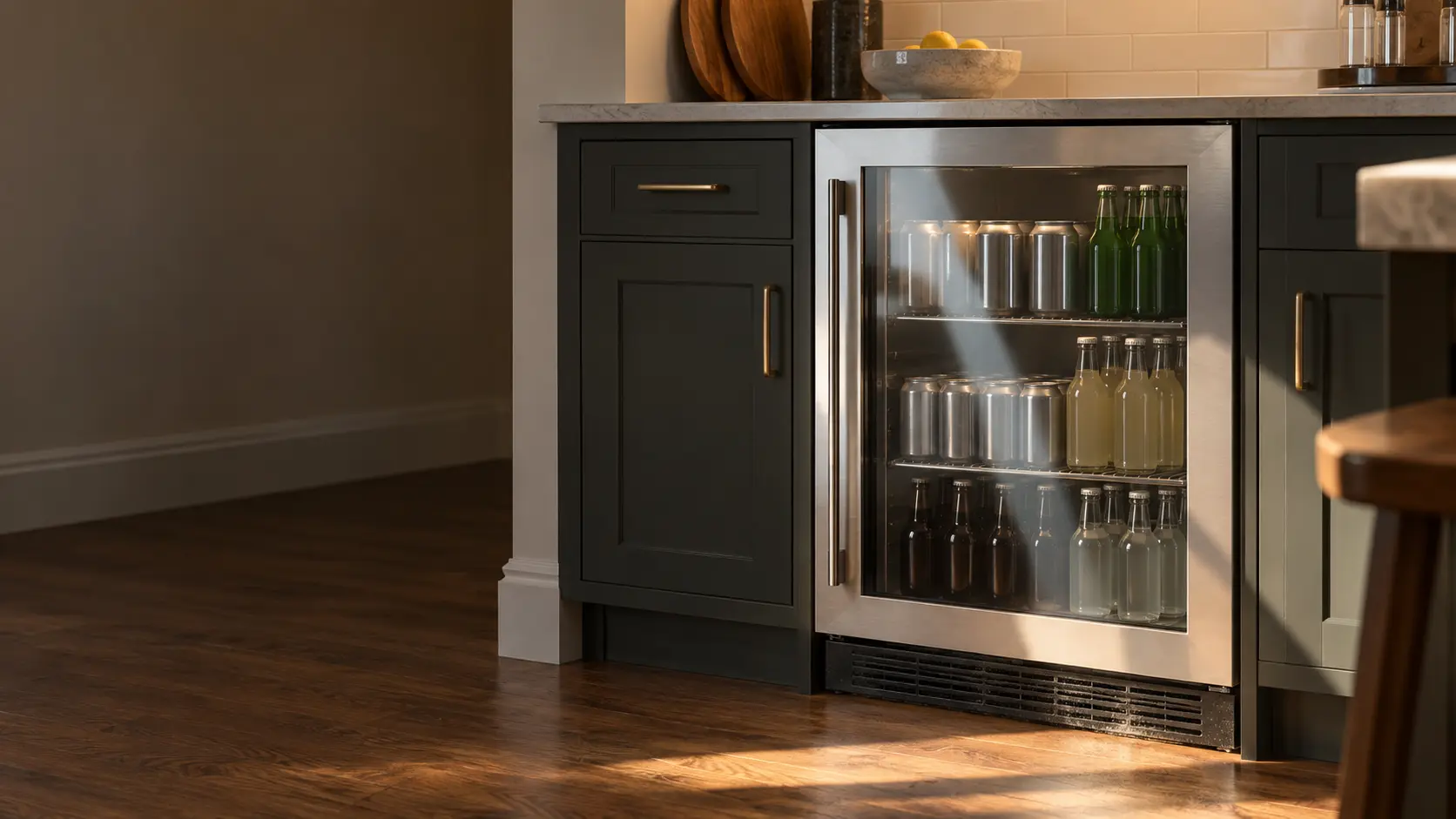
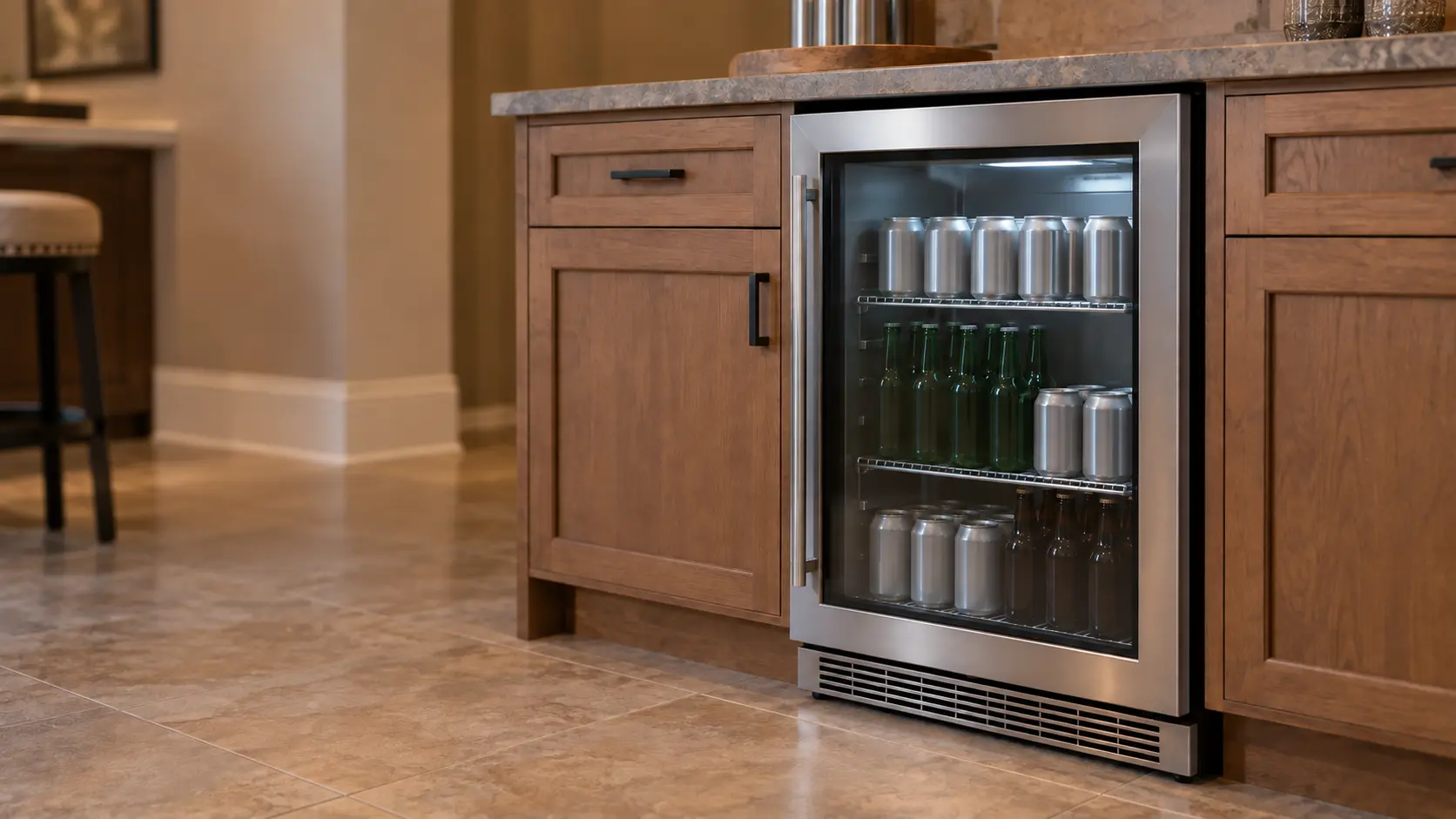
The compressor and condenser sit in a compartment at the bottom of the cabinet, behind the grille. A fan pulls room air in through one part of the louvers, pushes it across the hot condenser coil and sends it back out through another part. Because air comes and goes at the front, the unit can be boxed in by cabinets on three sides and a countertop on top without choking.
Marvel puts it as simply as anyone: ventilation is required from the bottom front, adjacent cabinets and a countertop can go around the unit as long as the front grille stays unobstructed. U-Line says the same for its built-ins, adding that no extra space is needed at the top, sides or rear, but room is needed behind the unit for the electrical connection. Perlick asks for fresh air through the machinery compartment and warns against a small unventilated room.
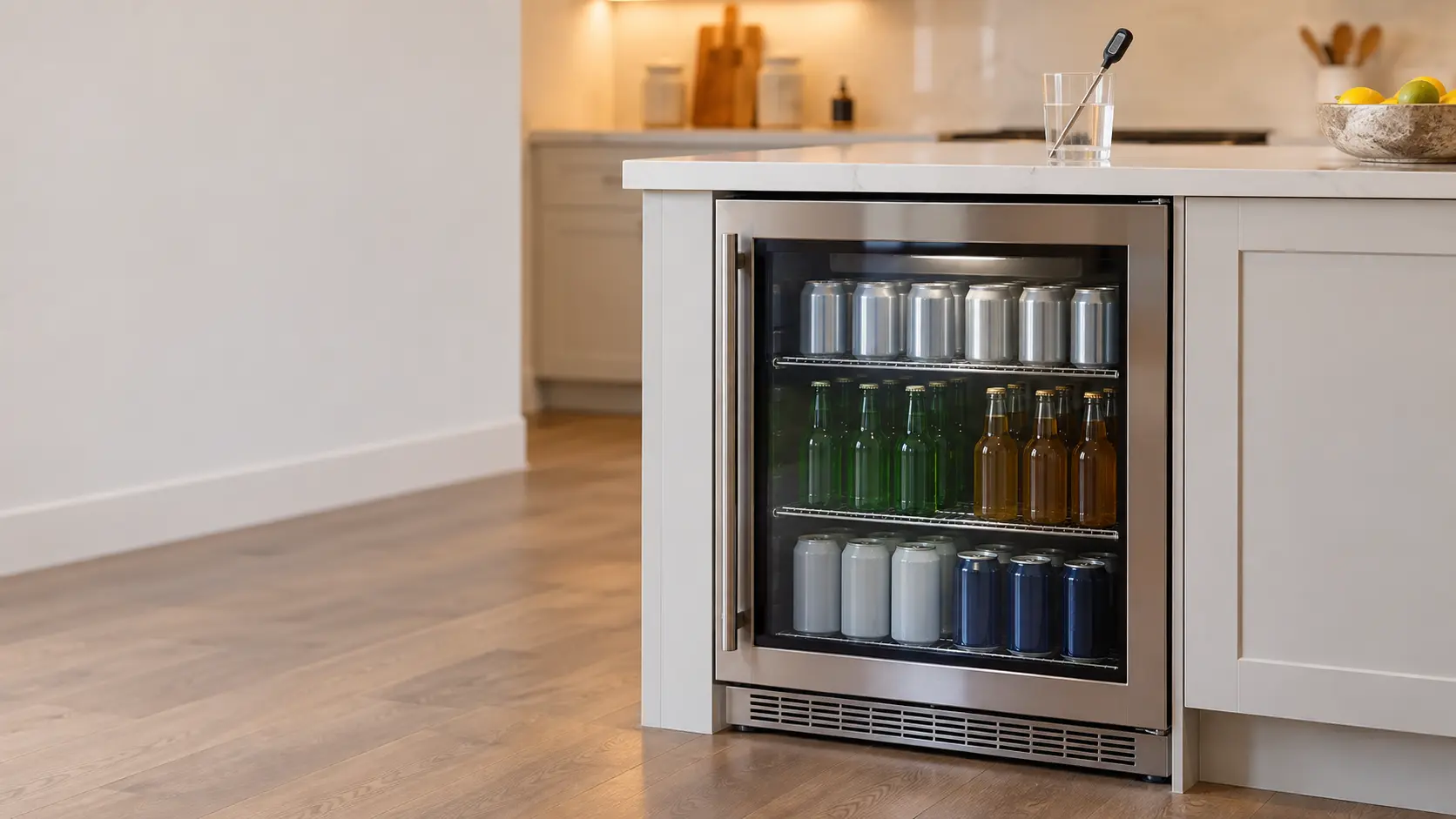
A freestanding cooler slid into an opening
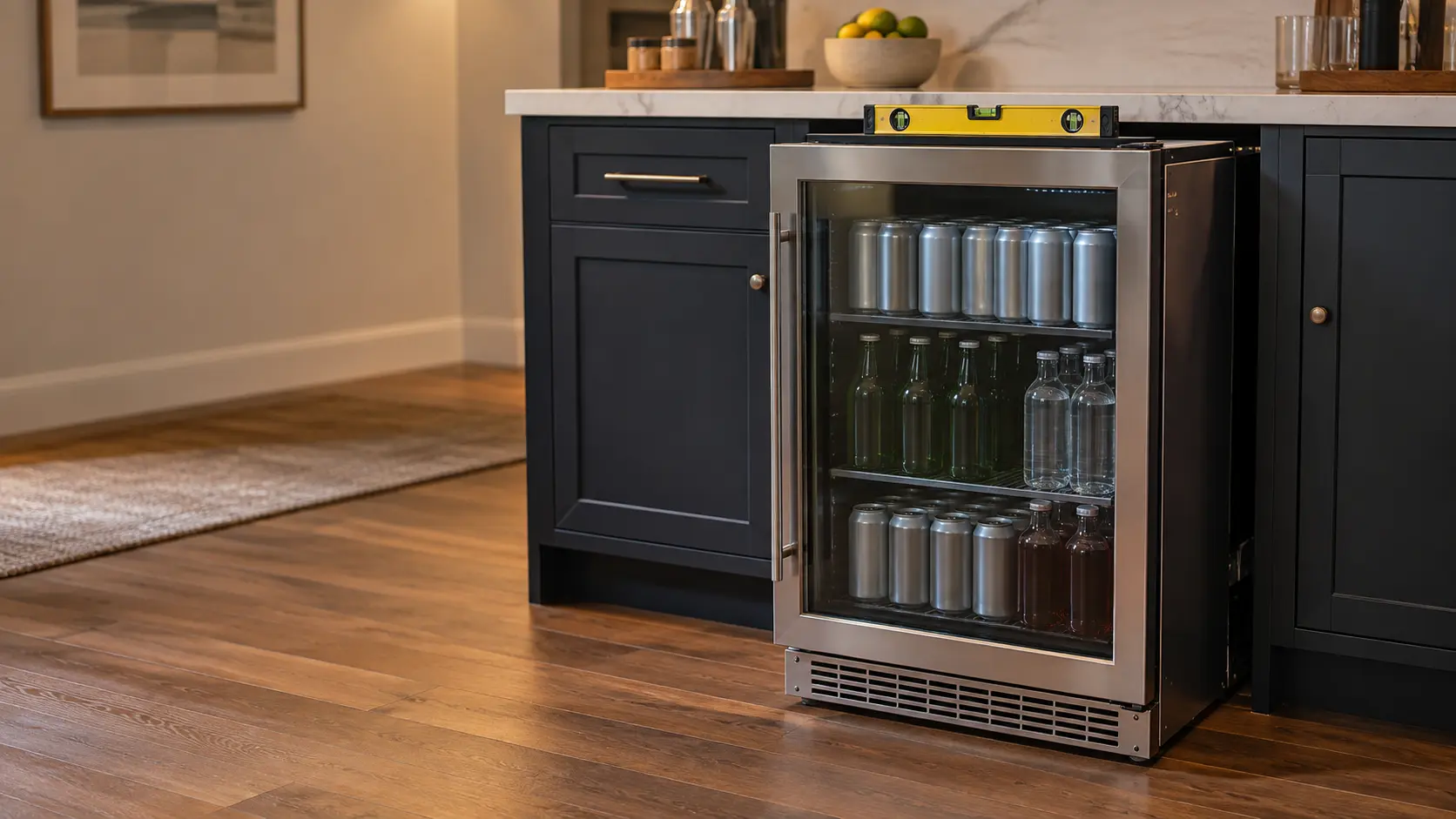
Not every glass-door cooler is built to be boxed in. Some freestanding models push heat out through coils on the back or the sides, and they need open air there. Zephyr's beverage cooler is designed for either use, but even so its manual wants one to two inches behind the unit when it goes under a counter. If a manual does not say built-in, treat it as freestanding and leave it in the open.
Source: Marvel — ML24BC Installation, Operation and Maintenance Instructions — Ventilation is required from the bottom front; cabinets and counter may surround the unit if the front grille is unobstructed; the front grille can be adjusted to height; U-Line — UHBV124 Beverage Center User Guide and Service Manual — No additional space at top, sides or rear when built in, but the front grille must not be obstructed and rear clearance is needed for the electrical connection; not behind a closed door; leave space between contents and internal fans, vents and side walls; restricted airflow can cause uneven temperatures and freeze contents; Perlick — G5 Installation and Operation Manual — Fresh air must circulate through the machinery compartment; do not obstruct the grille or install in a small unventilated room; floor under the unit level with the finished floor; do not place product in front of the evaporator fan and louvers
What ends up in front of the grille
Built-in beverage center airflow is rarely blocked on installation day. It gets blocked over the following months, one sensible-looking decision at a time, and the unit starts running longer without anyone connecting the two. A beverage center in a busy kitchen or a game room gets more of these than most appliances, because the floor in front of it is where people put things down.
Perlick's instruction is direct: do not place anything in front of the cabinet that would obstruct airflow at the grille. Anything that sits within a few inches of the louvers counts, even if it only covers part of them, because the warm outgoing air curls straight back into the intake.
- A kitchen runner or bar mat pushed up against the toe kick.
- A decorative toe-kick board added to match the cabinet run, covering the louvers.
- Cases of soda or water stacked on the floor in front of the door before a party.
- A dog bed, a recycling bin or a step stool parked in the corner.
- Lint, pet hair and dust packed into the louvers themselves.
Toe kick, flooring and the height of the opening
New flooring laid after the unit went in can raise the floor around it, leaving the bottom of the grille partly below the new surface. Perlick asks for the floor under the unit to be level with the surrounding finished floor for this kind of reason. Marvel's grille can be loosened and moved to the height you need, so it can be set to clear a thicker floor rather than cut.
Source: Perlick — G5 Installation and Operation Manual — Fresh air must circulate through the machinery compartment; do not obstruct the grille or install in a small unventilated room; floor under the unit level with the finished floor; do not place product in front of the evaporator fan and louvers

Behind the unit and around the opening
Even a front-breathing unit needs the space behind it that its manual asks for, because the cord, the plug and the outlet live there. A plug jammed against the back wall can push the unit forward so the door rubs the cabinet face, and a cord pinched between cabinet and wall is a hazard Zephyr specifically warns about.
Heat from neighbors counts as well. A dishwasher on one side venting steam, or a warming drawer on the other, raises the air the grille draws in. Zephyr asks for the unit to stay away from heat sources such as ovens and direct sun, and its room band of 50°F to 90°F is best judged by the air the grille actually breathes, not the thermostat on the wall across the room.
When the room is hotter than the manual expects
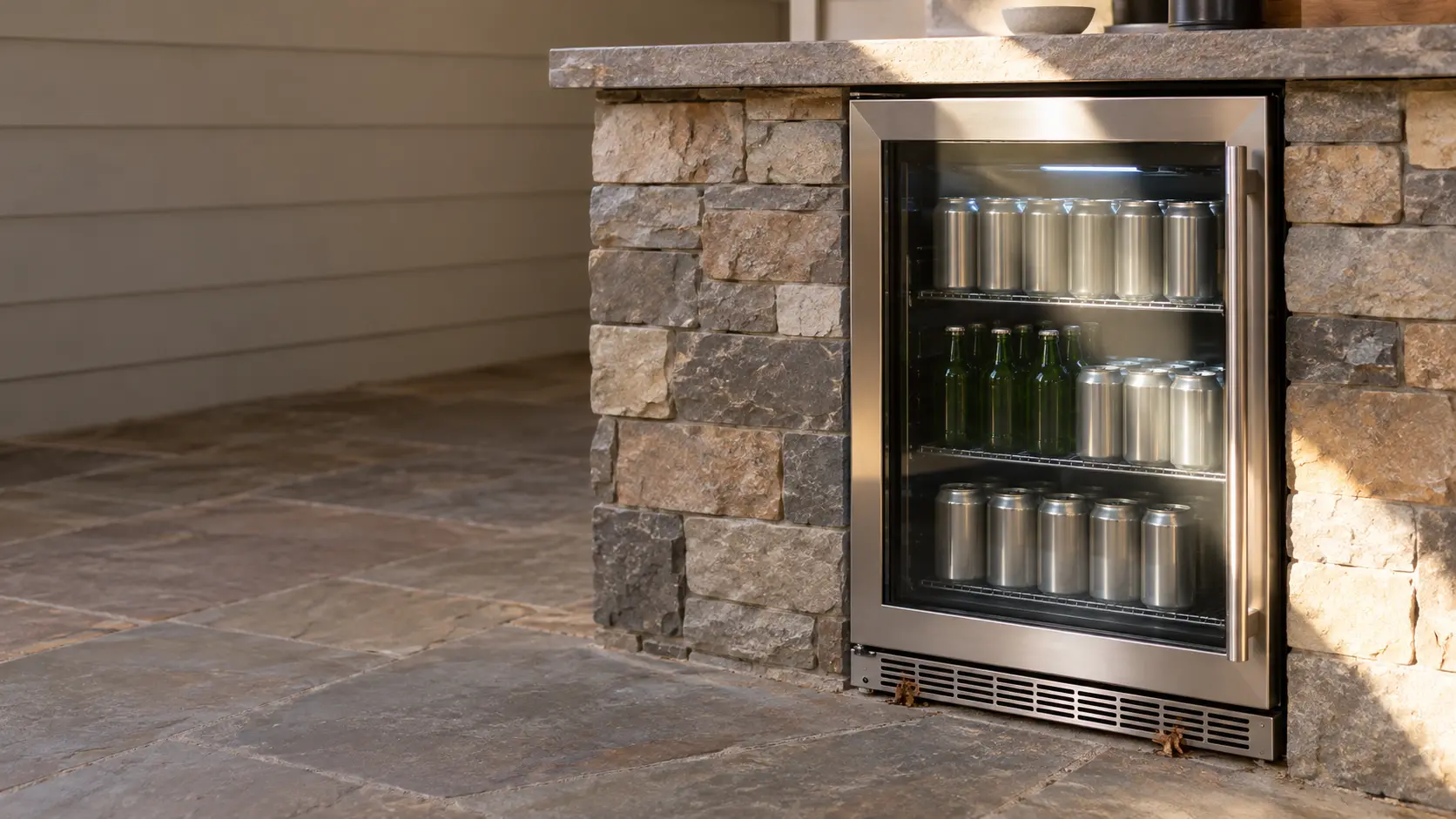
Outdoors and in unconditioned rooms the math changes. True recommends venting the rear of the rough opening, with a cutout of about 4 by 10 inches, wherever the surrounding air regularly goes above 95°F. That lets hot air escape behind the unit instead of pooling in the cabinet run.
Source: Zephyr — Presrv Beverage Cooler Use, Care and Installation Guide (PRB24C01AG) — Designed for freestanding or built-in use with 1 to 2 inches at the back; not behind a closed cabinet door; do not pinch the cord; keep away from heat sources and direct sun; room between 50°F and 90°F; a fully loaded cabinet can reduce cooling
Airflow inside the cabinet
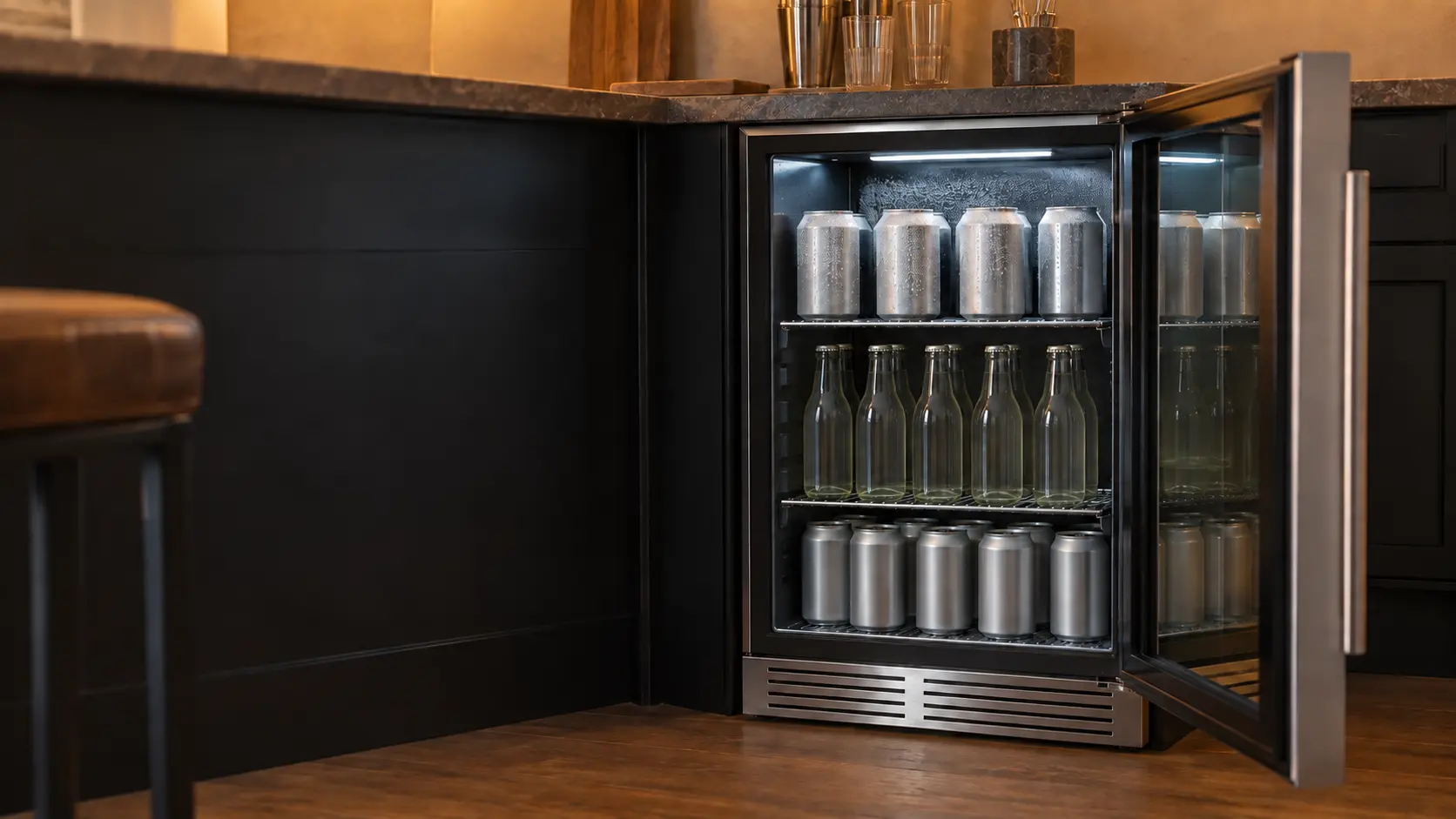
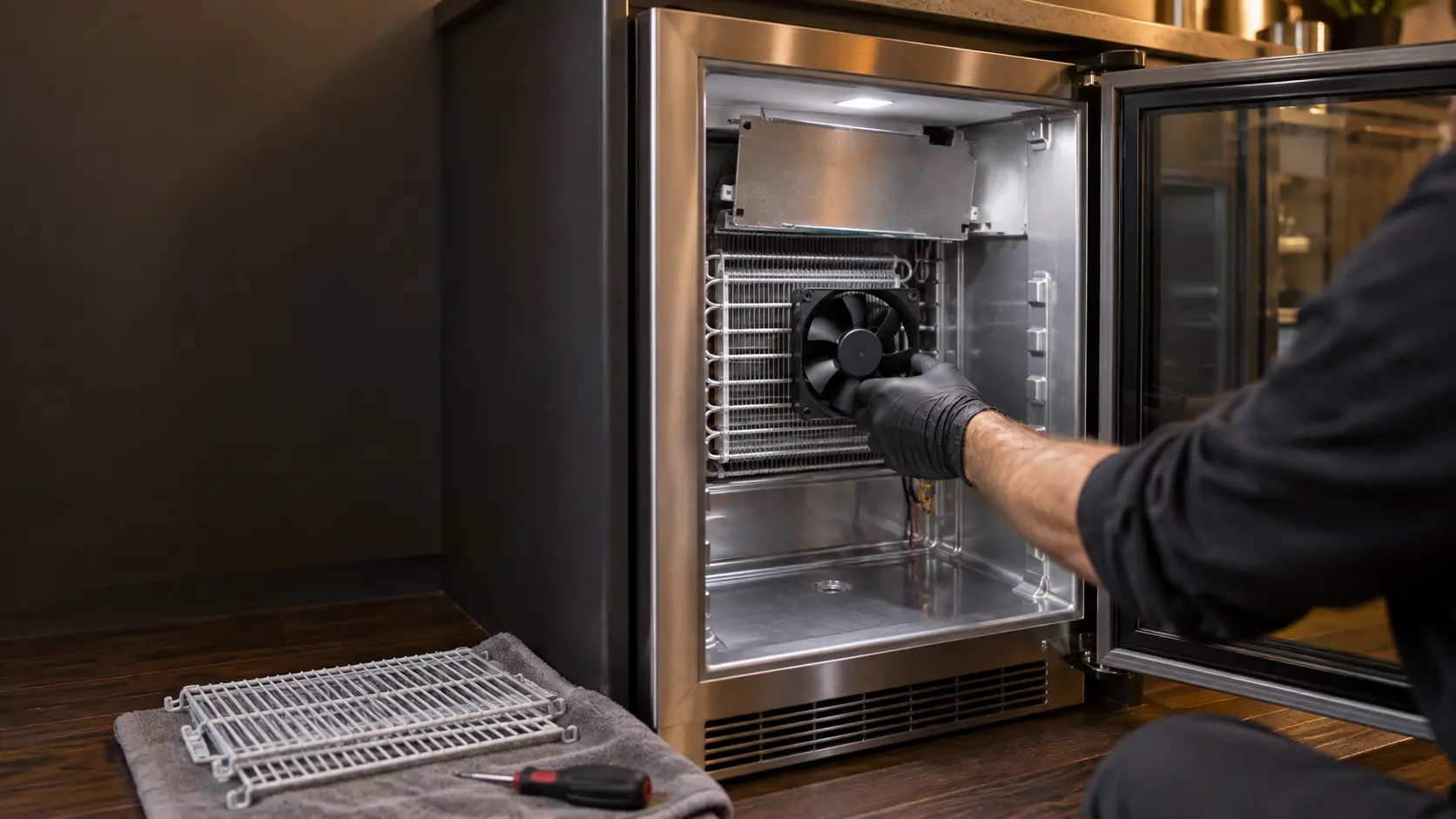
The second air path is the one people forget. A small fan inside the cabinet moves chilled air from the cold plate or coil across the shelves, and a cabinet crammed wall to wall with cans leaves it nowhere to go. U-Line asks for space between the drinks and the internal fans, vents and side walls, and warns that restricted airflow can mean uneven temperatures and even frozen contents.
Zephyr notes that cooling efficiency can drop when a fully loaded cabinet restricts airflow, and Perlick warns against placing product directly in front of the evaporator fan and its louvers. In practice that means leaving the fan cover at the back clear, and not pressing cases tight against it.
- Keep a finger's width between rows of cans and the side walls.
- Leave the fan cover and the vents at the back of the cabinet uncovered.
- Spread a new delivery across shelves instead of filling one shelf solid.
- Expect cans nearest the fan to run colder, and keep delicate drinks away from it.
Source: U-Line — UHBV124 Beverage Center User Guide and Service Manual — No additional space at top, sides or rear when built in, but the front grille must not be obstructed and rear clearance is needed for the electrical connection; not behind a closed door; leave space between contents and internal fans, vents and side walls; restricted airflow can cause uneven temperatures and freeze contents; Perlick — G5 Installation and Operation Manual — Fresh air must circulate through the machinery compartment; do not obstruct the grille or install in a small unventilated room; floor under the unit level with the finished floor; do not place product in front of the evaporator fan and louvers; Zephyr — Presrv Beverage Cooler Use, Care and Installation Guide (PRB24C01AG) — Designed for freestanding or built-in use with 1 to 2 inches at the back; not behind a closed cabinet door; do not pinch the cord; keep away from heat sources and direct sun; room between 50°F and 90°F; a fully loaded cabinet can reduce cooling
How a starved condenser shows itself
A beverage center that cannot shed heat runs almost without stopping, and the countertop above it or the cabinet beside it feels warm to the hand. The top shelf drifts warm on busy evenings and takes hours to recover. With a clogged or crowded interior the opposite shows up as well: cans near the fan freeze while the ones at the front stay cool.
Clear the grille first, then the interior, and give the unit a day to settle before judging it. If the compressor still runs nonstop with a clean, open grille and a sensibly loaded cabinet, the condenser, the fans or the sealed system need a technician's look.