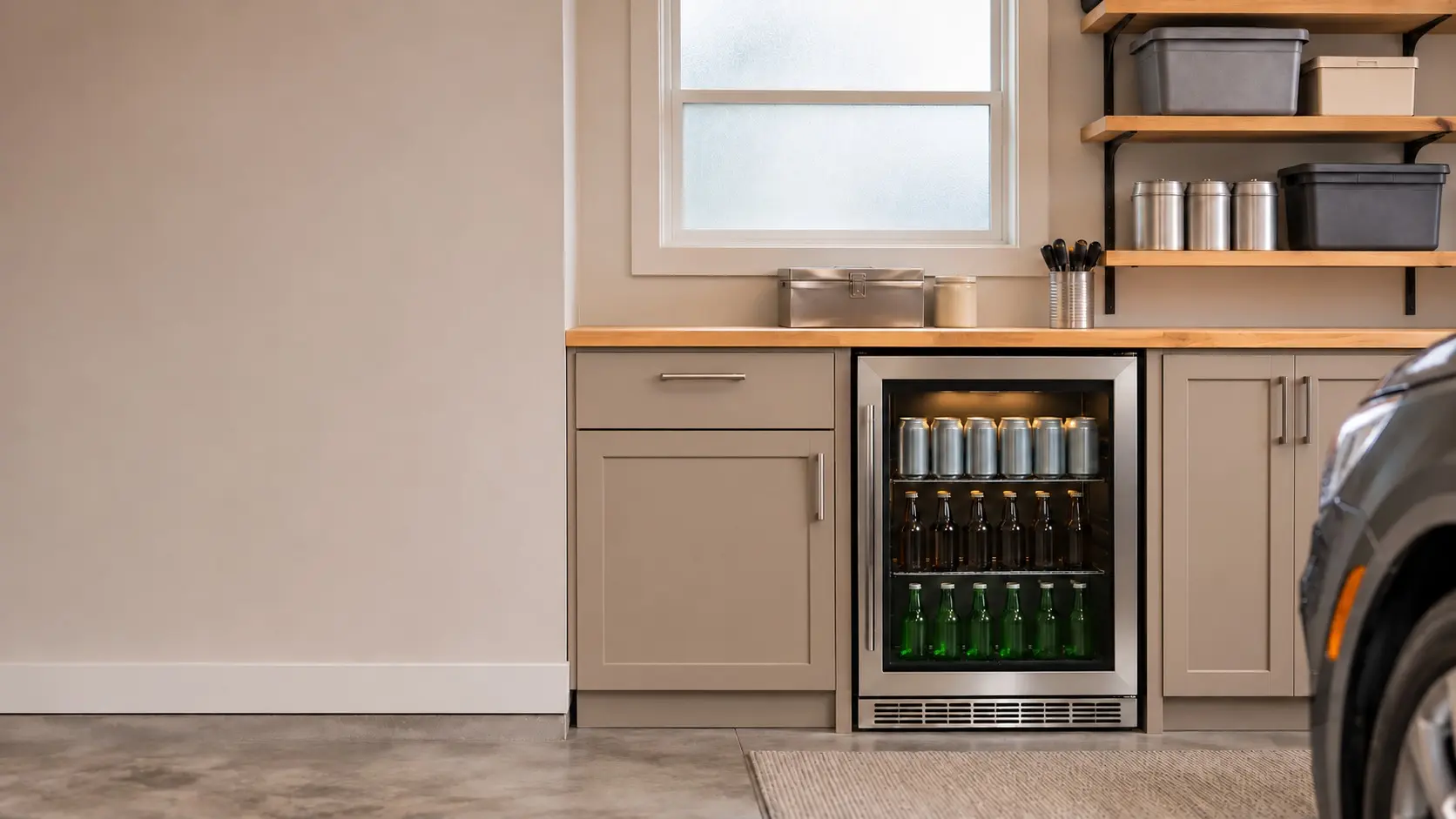
Can an indoor beverage center live in a garage?
Only if the garage stays inside the ambient temperature range the maker lists. An indoor beverage center is designed for a conditioned room, so a garage that gets very cold in winter or very hot in summer can fall outside what the unit was built for. The rating label or manual gives the range, and you should treat it as the rule.
Where to find the range
Look at the rating label on the inside wall or back of the cabinet, and at the temperature limits in the owner's manual. If neither lists a range, ask the maker with the model number from the plate. The model plate guide shows where to look. Do not assume that a unit sold for indoor use will tolerate a garage because it is cooler than a kitchen in summer.
Indoor, outdoor and in between
Some units are built and rated for outdoor use, with sealed electronics and a wider ambient range. Many indoor models are not. Indoor or outdoor rated explains the difference and why a garage sits in between.
What happens in a cold garage?
In a cold garage the cabinet may not need to run, so the compressor stops and the drinks slowly drift toward the temperature of the room. A beverage center is built to remove heat, not to add it: unless the manual says the model has a low-ambient heater, nothing inside will warm the cabinet when the garage is colder than the setting. The display can show the number you set while the drinks sit well below it.
The freeze risk
Cans and bottles of drinks with water in them can freeze when the cabinet falls below freezing, and a frozen can may burst. The guide on why cans freeze and burst explains why drinks that were cold enough one day are ruined the next. If the garage drops near freezing, take drinks out or bring the unit in for the winter.
Thermostat and sensor behavior
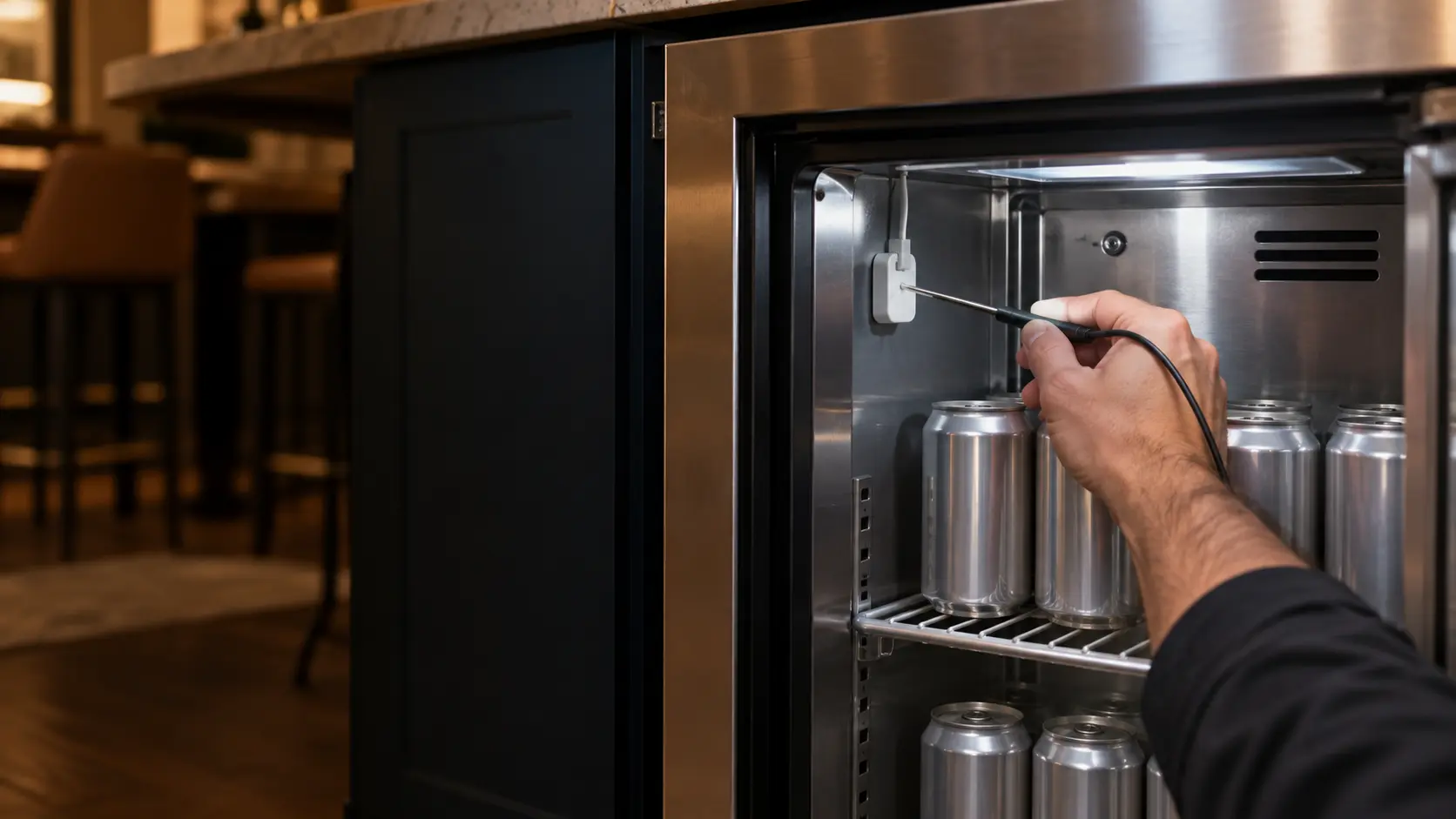
A thermostat or sensor working below its designed range can behave oddly: cycling in short bursts, staying off for hours or showing a reading that does not match a thermometer set among the drinks. A beverage center thermostat and sensor repair covers those parts, but the fix for a cold garage is usually a different location, not a part.
Table: What a garage does at the extremes
| Garage condition | What can happen | What to do |
|---|---|---|
| Very cold | Compressor idles, cabinet drifts toward room temperature, drinks freeze | Check the lower limit; bring drinks inside |
| Very hot | Compressor runs constantly, drinks stay warm | Check the upper limit; add shade and airflow |
| Humid | Condensation, rust on hinges and base | Wipe, keep off the floor, check the door seal |
| Dusty | Clogged grille and condenser | Clean the grille regularly |
What happens in a hot garage?
In a hot garage the unit works harder and can fall behind. A cabinet that is meant for room temperature has to push heat into a hotter space, and the condenser may not shed it fast enough. The result is a compressor that runs constantly, drinks that are not cold and shorter life for the cooling parts.
Help it breathe
Keep the grille clear and give the unit the clearances the manual lists, as covered in airflow for a built-in beverage center, even for a freestanding model. A garage collects dust that clogs the condenser, so cleaning the front grille and condenser matters more here than in a kitchen. If the unit still cannot keep up, see why the drinks are not cold.
Sun and heat sources
Do not place it in direct sun, beside a water heater or furnace, or against a hot wall. A shaded, ventilated corner is better, and it should be off the floor if the garage floods or is hosed down.
What outlet and cord does it need?
Plug it directly into a grounded outlet that can carry the load, with no extension cord or strip. A garage outlet may be shared with tools and a freezer, and a heavy shared load trips breakers.
Check the outlet
- A grounded, three-prong outlet in good condition.
- A circuit not overloaded by tools, a freezer or a garage door opener.
- GFCI protection, which current electrical codes generally call for on garage outlets; see GFCI outlets for outdoor units for how it behaves with a cooling unit.
- No cord running under a mat or through a doorway.
A new outlet or circuit is an electrician's job. If the breaker trips, see beverage center tripping breaker before resetting it again.
What fails first in a garage?
Usually the parts that deal with temperature extremes and dust: the thermostat or sensor, the fan, the condenser and the door seal. Sealed-system trouble is the expensive one, and it is more likely when the unit runs constantly in heat.
Warning signs
- Drinks freezing or staying warm in changing weather.
- A compressor that runs without stopping.
- Frost, water or rust at the base.
- A door that no longer seals, or a gasket that has hardened in the cold.
A diagnostic visit can sort out whether it is the location or the unit, and a compressor and sealed-system repair is the major job if the cooling circuit is damaged.