What a few degrees of tilt does
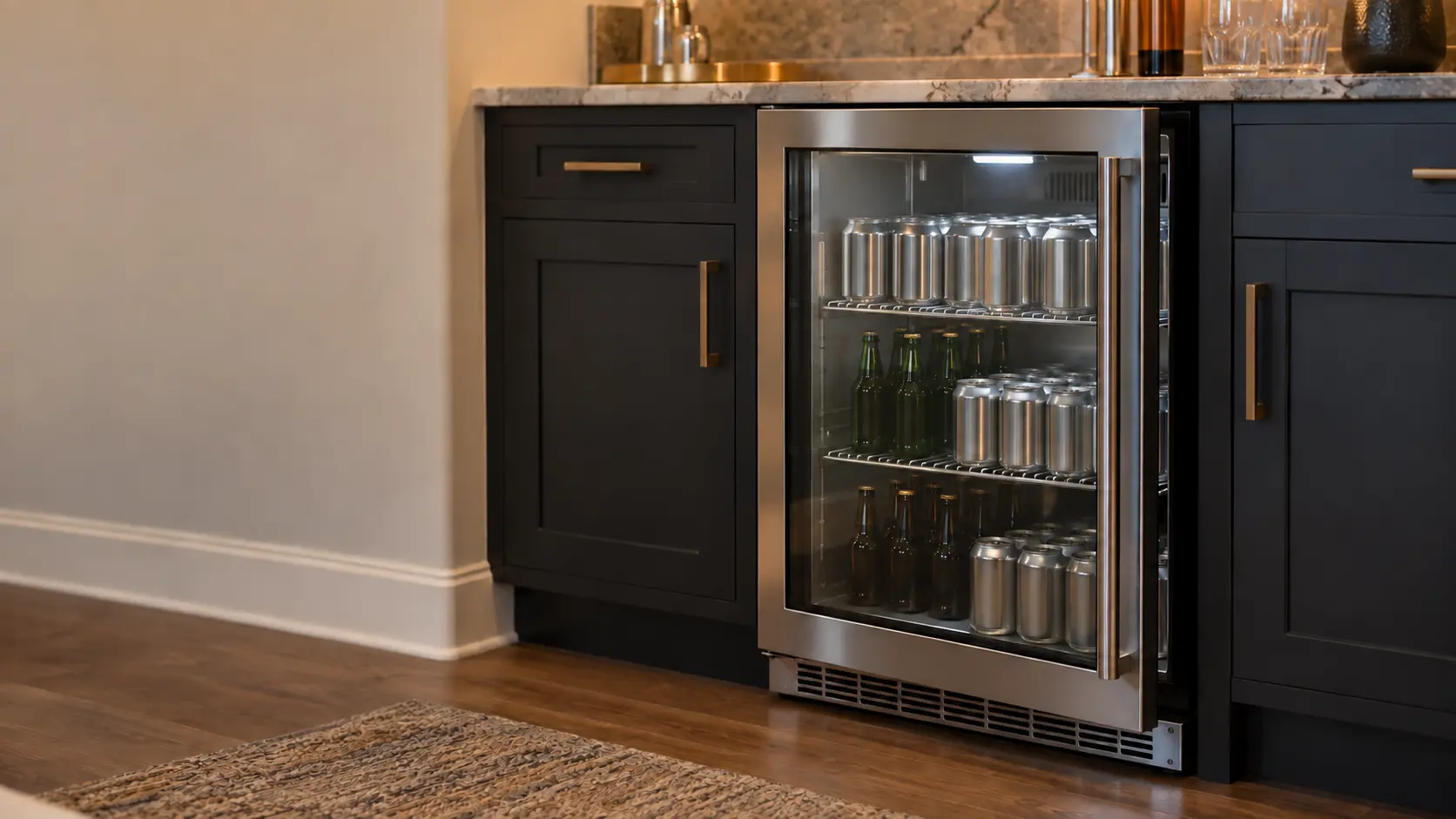
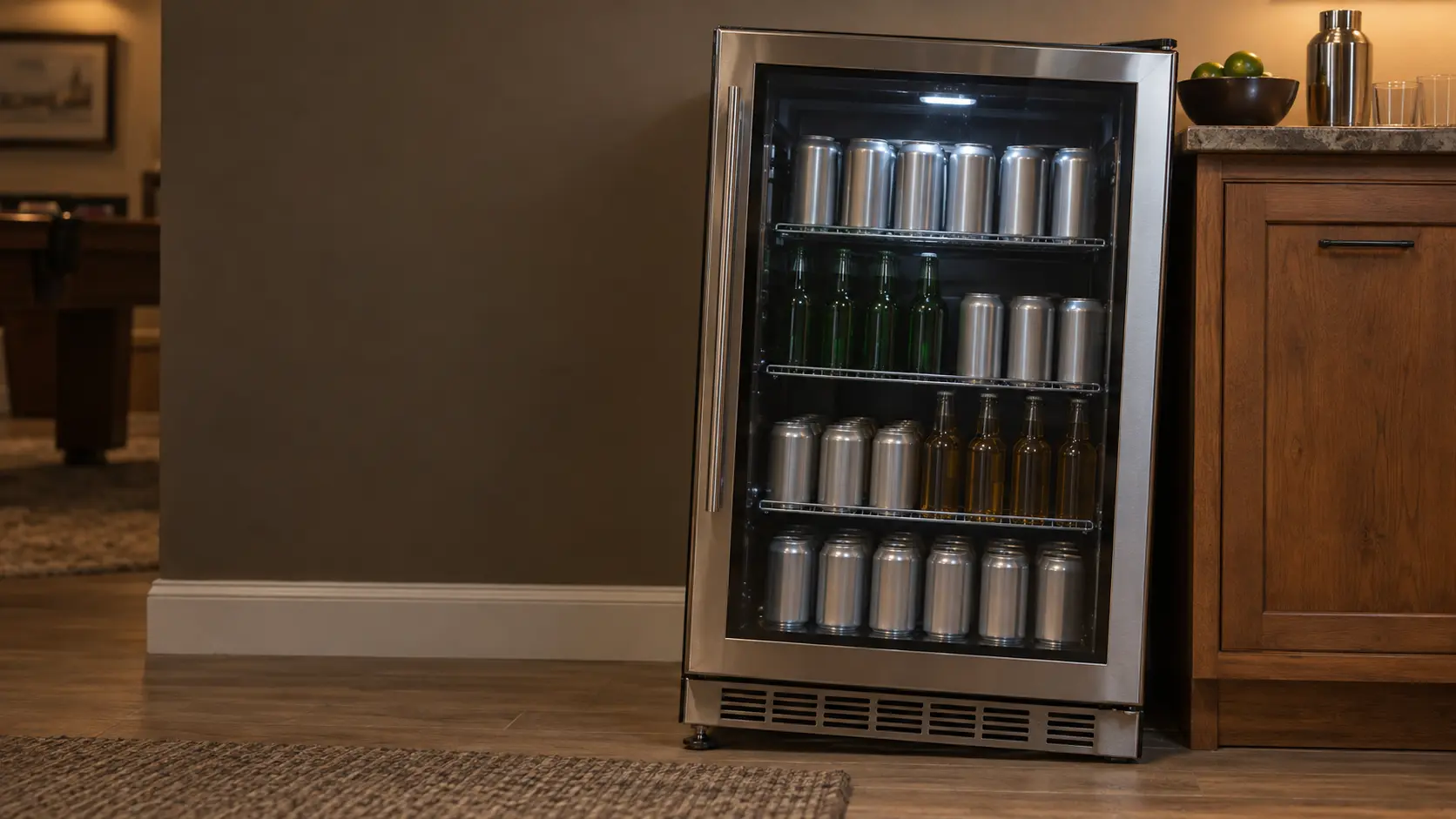
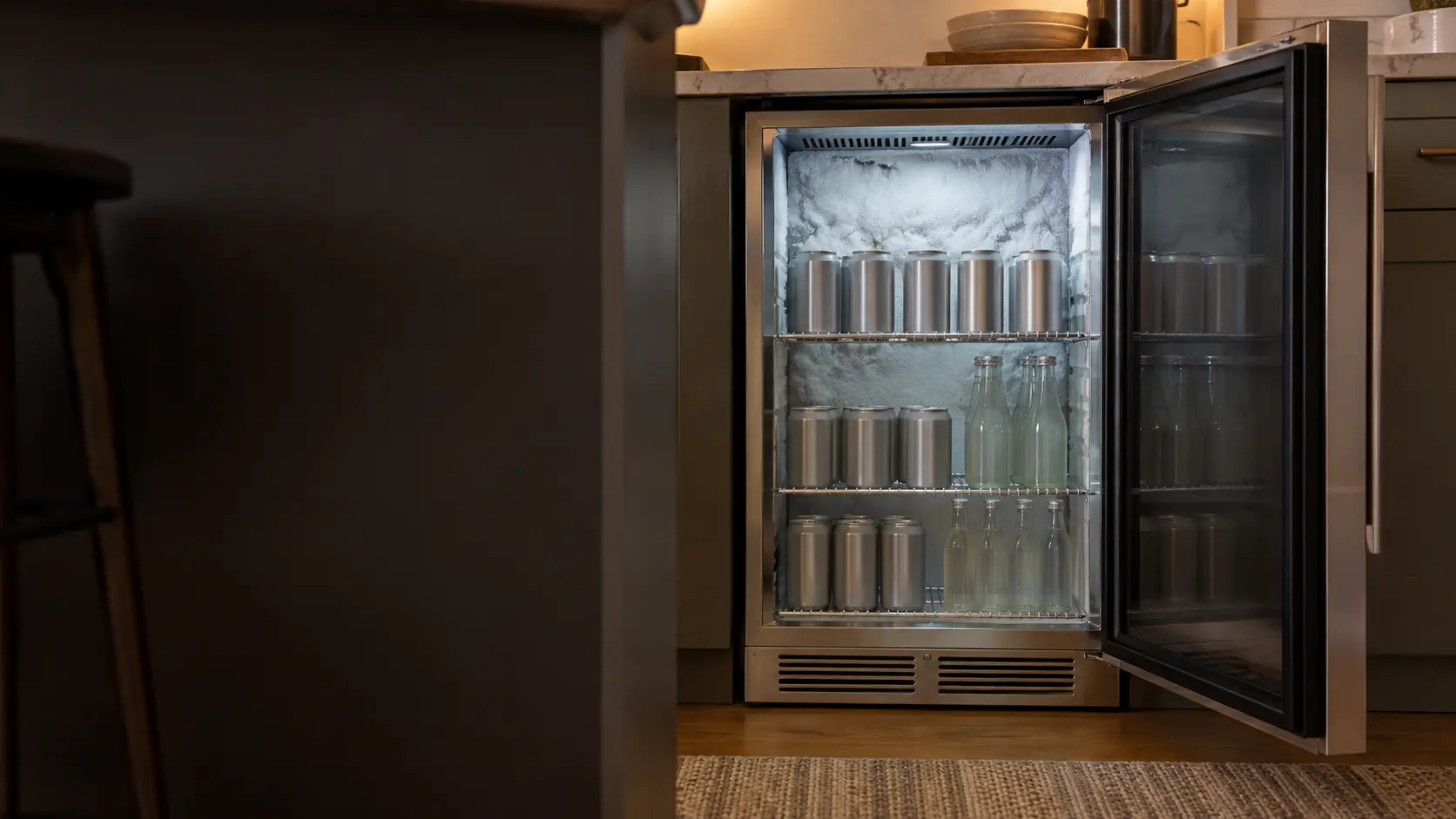
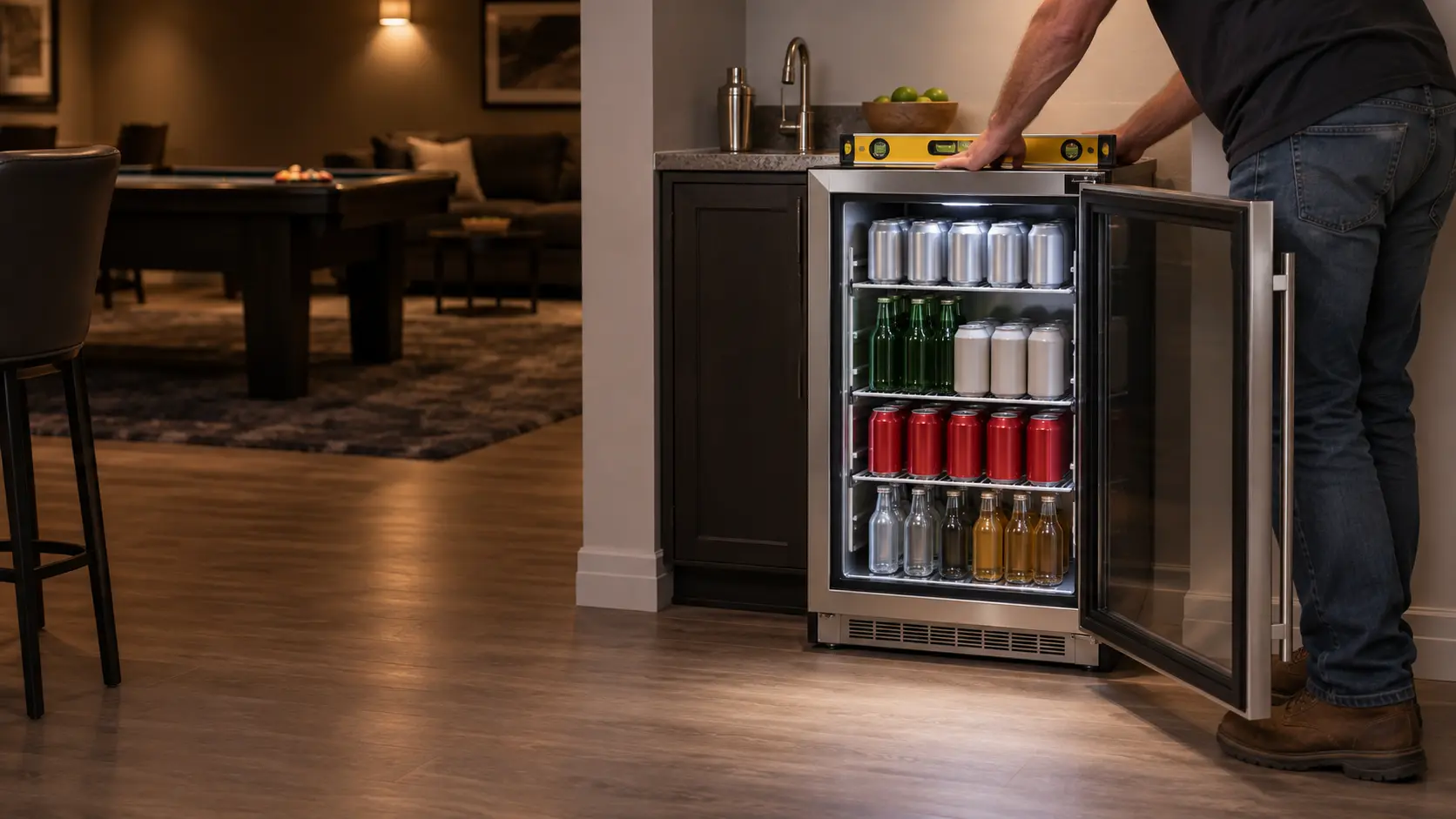
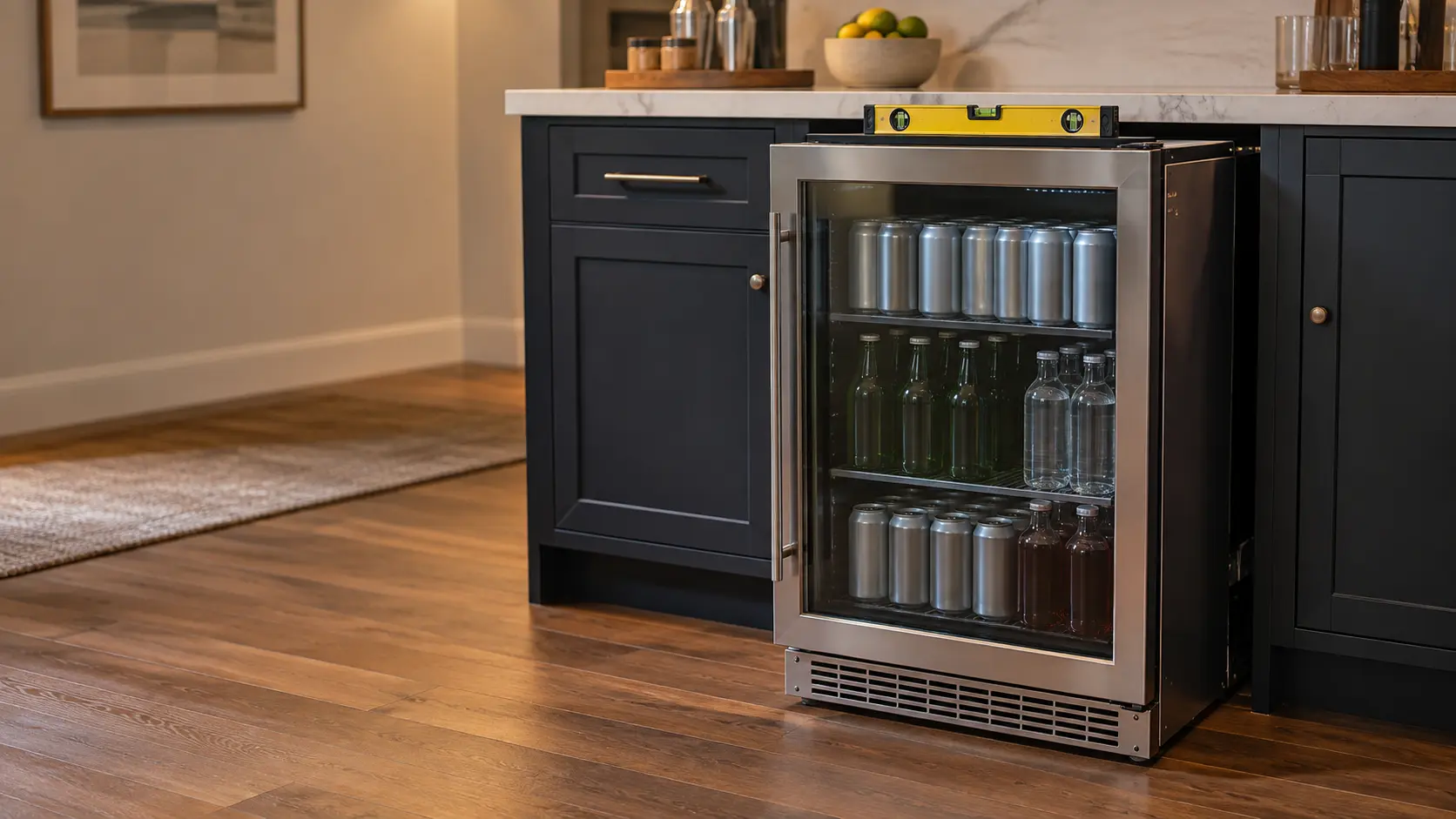
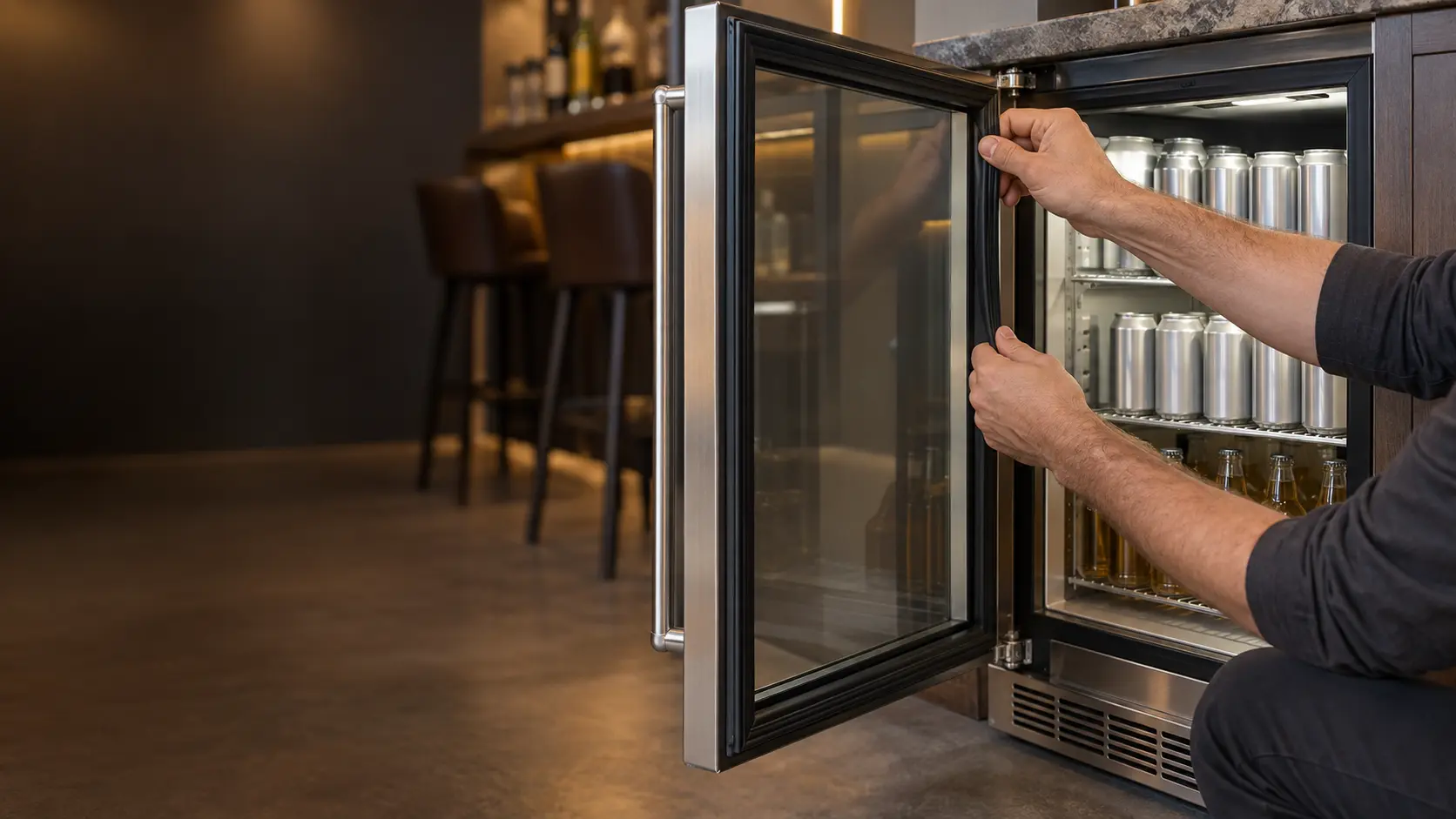
A beverage center door is hung to close by its own weight and seal against a magnetic gasket. When the cabinet leans forward, the door drifts open; when it leans back or sideways, the door may close but land unevenly, leaving a gap along one edge. Zephyr's troubleshooting table lists a unit that is not level as the first cause of a door that will not shut, and U-Line notes that an unsealed door can mean poor cooling and heavy frost.
The same tilt affects water and noise. True says leveling decides how well condensate is removed as well as how the door operates, because meltwater has to run downhill to its drain. And Zephyr ties strange noises to a unit that is either out of level or touching another appliance or a cabinet, which is common in a tight opening.
Source: Zephyr — Presrv Beverage Cooler Use, Care and Installation Guide (PRB24C01AG) — A unit that is not level causes a door that will not shut and noise; turn feet right to lower and left to raise; use a carpenter's level; 2-1/4 inch door clearance at a wall; disconnect power and use two people to reverse the door, moving the door switch; U-Line — UHBV124 Beverage Center User Guide and Service Manual — An unsealed door can cause poor cooling and frost; rear legs set 1/8 inch below the opening height before tipping the unit in; top about 1/8 inch below the countertop; zero clearance beside cabinets and 2-1/8 inches at a wall for the handle; 1/4 inch between side-by-side units; remove the grille and hold the door when reversing; True Residential — 15 and 24 inch Undercounter Installation Guide — Leveling affects condensate removal and door operation; level from the interior front to back and side to side; optional door stop limits opening to about 120 degrees
Finding the legs and learning which way they turn
There is no single rule for how to level a beverage center, which is why so many owners turn the wrong way first. The manual for your model is the only reliable guide, and the three below show how differently makers approach it.
Whatever the design, the goal is the same: all four legs in firm contact with the floor. Perlick's installer checklist asks that every leveler be extended down to touch the floor, because a unit rocking on three legs will shift each time the door is pulled.
Legs you turn by hand
Zephyr's beverage cooler stands on feet with plastic sheaths: turn a foot to the right to lower that side and to the left to raise it. Marvel's legs run the other way in effect: turning a leg out, counterclockwise, raises the unit and turning it in, clockwise, lowers it. Marvel asks for two people, tipping the unit back to reach the front legs and then forward for the rear ones, with the floor protected underneath.
Legs adjusted from the front
On built-in units, the rear legs are out of reach once the cabinet is in its opening. Perlick solves that by letting both front and rear legs be adjusted from the front with a hex driver through access holes behind the grille, turning clockwise to raise and counterclockwise to lower. U-Line suggests setting the rear legs before the unit goes in, so the back sits 1/8 inch lower than the opening, then lowering the front so the cabinet can be tipped gently into place and leveled afterward.
The small gap under the counter
Once level, U-Line wants the top of its unit about 1/8 inch below the countertop. That small gap keeps the counter from pressing on the cabinet and lets the door open without scraping the underside of the stone.
Source: Perlick — G5 Installation and Operation Manual — All levelers must touch the floor; front and rear legs adjust from the front with a hex driver, clockwise raises; 2-inch filler in corners; doors open to 115 degrees with a 90-degree hinge pin option; 25 inches in front for door swing and shelf pull-out

A leveling order that works
Level with the shelves in place and a normal load of drinks inside, because a full cabinet settles a little on its legs. Zephyr recommends a carpenter's level, and True asks for checks from the inside of the cabinet, front to back and side to side.
Side to side should read dead level. Front to back, the door must close on its own from a partly open position without slamming; if your manual calls for a slight backward lean, follow it rather than a bubble.
- Set the level across the top edge; adjust until side to side reads true.
- Set it along the side edge; adjust front to back.
- Recheck the first reading, because each leg moves both.
- Swing the door to half open and release it: a well-set cabinet pulls it shut against the gasket.
- Check that no side of the cabinet touches a neighbor, a panel or a pipe.
Source: Zephyr — Presrv Beverage Cooler Use, Care and Installation Guide (PRB24C01AG) — A unit that is not level causes a door that will not shut and noise; turn feet right to lower and left to raise; use a carpenter's level; 2-1/4 inch door clearance at a wall; disconnect power and use two people to reverse the door, moving the door switch; True Residential — 15 and 24 inch Undercounter Installation Guide — Leveling affects condensate removal and door operation; level from the interior front to back and side to side; optional door stop limits opening to about 120 degrees
Planning the door swing
A glass door that swings into a wall chips at the corner, and a handle that meets a wall stops the door short of fully open, which traps shelves. U-Line's units open to 90 degrees with zero clearance beside cabinets, but a stainless model next to a wall needs 2-1/8 inches for the handle; Zephyr asks for 2-1/4 inches in the same spot. Perlick suggests a filler of at least 2 inches in a corner so the door can reach 90 degrees.
The limit at the other end matters too. Perlick's doors open to 115 degrees and a 90-degree hinge pin is fitted when a wall or thick panel is close; True includes an optional stop that holds its door to about 120 degrees so it cannot strike the cabinets nearby. In front, Perlick asks for 25 inches of clear floor for the door and for pulling shelves or drawers out.
Changing the hinge side
Most glass doors can be moved to the other side, and the right time to decide is before the unit goes in. Zephyr's steps have the power disconnected first, two people on hand, and the small door switch moved to the new side so the light still turns off. U-Line has the grille removed and the door held while its top hinge comes off, and side-by-side U-Line units need a 1/4-inch gap between them for the doors to swing freely.
- Power disconnected at the plug or the breaker.
- Two people: one holds the door, one works the hinges.
- The door switch and any lock moved to match the new side.
- The door realigned so the gasket touches all the way around.
Source: Zephyr — Presrv Beverage Cooler Use, Care and Installation Guide (PRB24C01AG) — A unit that is not level causes a door that will not shut and noise; turn feet right to lower and left to raise; use a carpenter's level; 2-1/4 inch door clearance at a wall; disconnect power and use two people to reverse the door, moving the door switch; Perlick — G5 Installation and Operation Manual — All levelers must touch the floor; front and rear legs adjust from the front with a hex driver, clockwise raises; 2-inch filler in corners; doors open to 115 degrees with a 90-degree hinge pin option; 25 inches in front for door swing and shelf pull-out; U-Line — UHBV124 Beverage Center User Guide and Service Manual — An unsealed door can cause poor cooling and frost; rear legs set 1/8 inch below the opening height before tipping the unit in; top about 1/8 inch below the countertop; zero clearance beside cabinets and 2-1/8 inches at a wall for the handle; 1/4 inch between side-by-side units; remove the grille and hold the door when reversing; True Residential — 15 and 24 inch Undercounter Installation Guide — Leveling affects condensate removal and door operation; level from the interior front to back and side to side; optional door stop limits opening to about 120 degrees