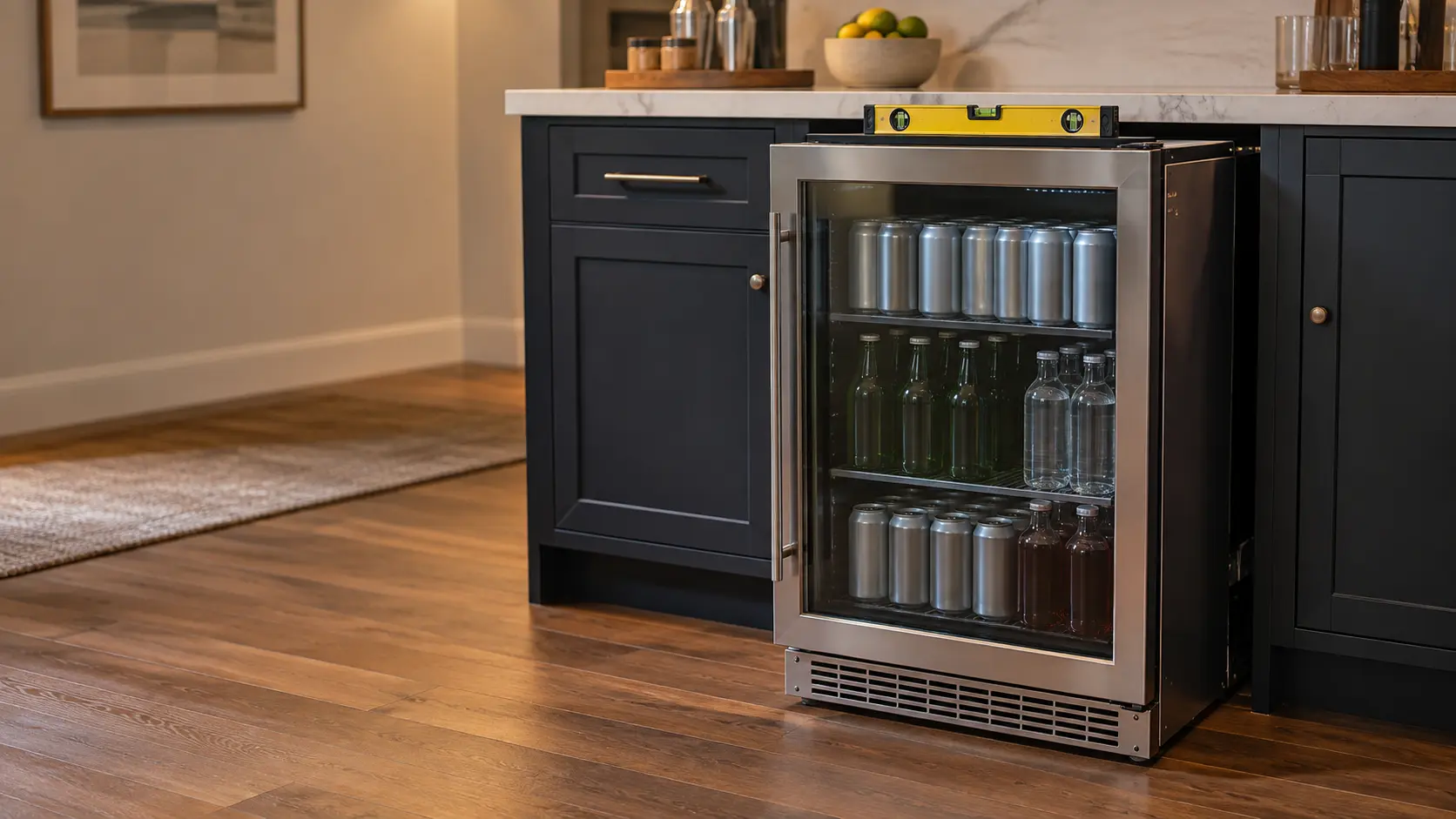
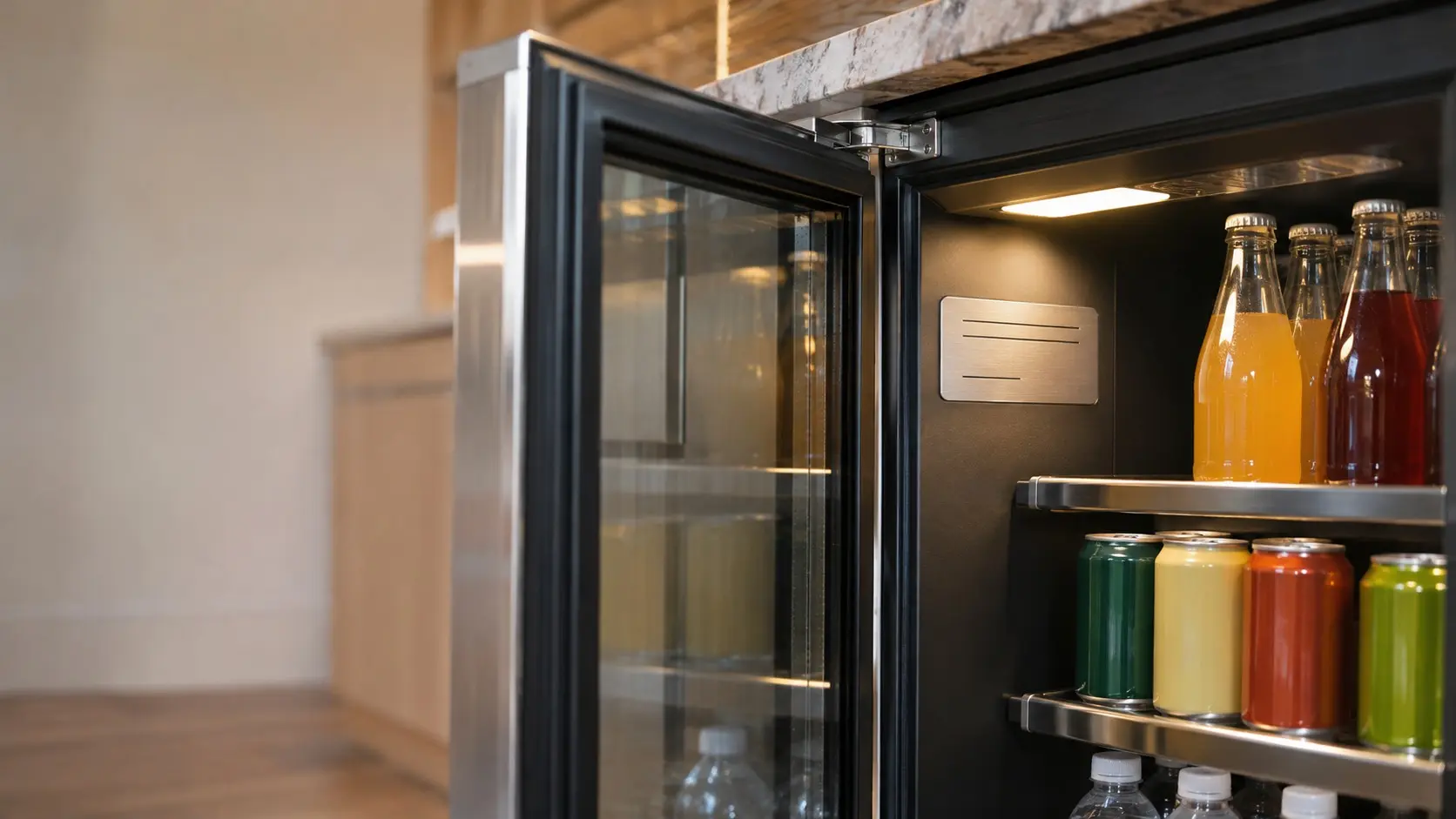

Where it goes, how it breathes, what it plugs into
Installation and setup
guides.
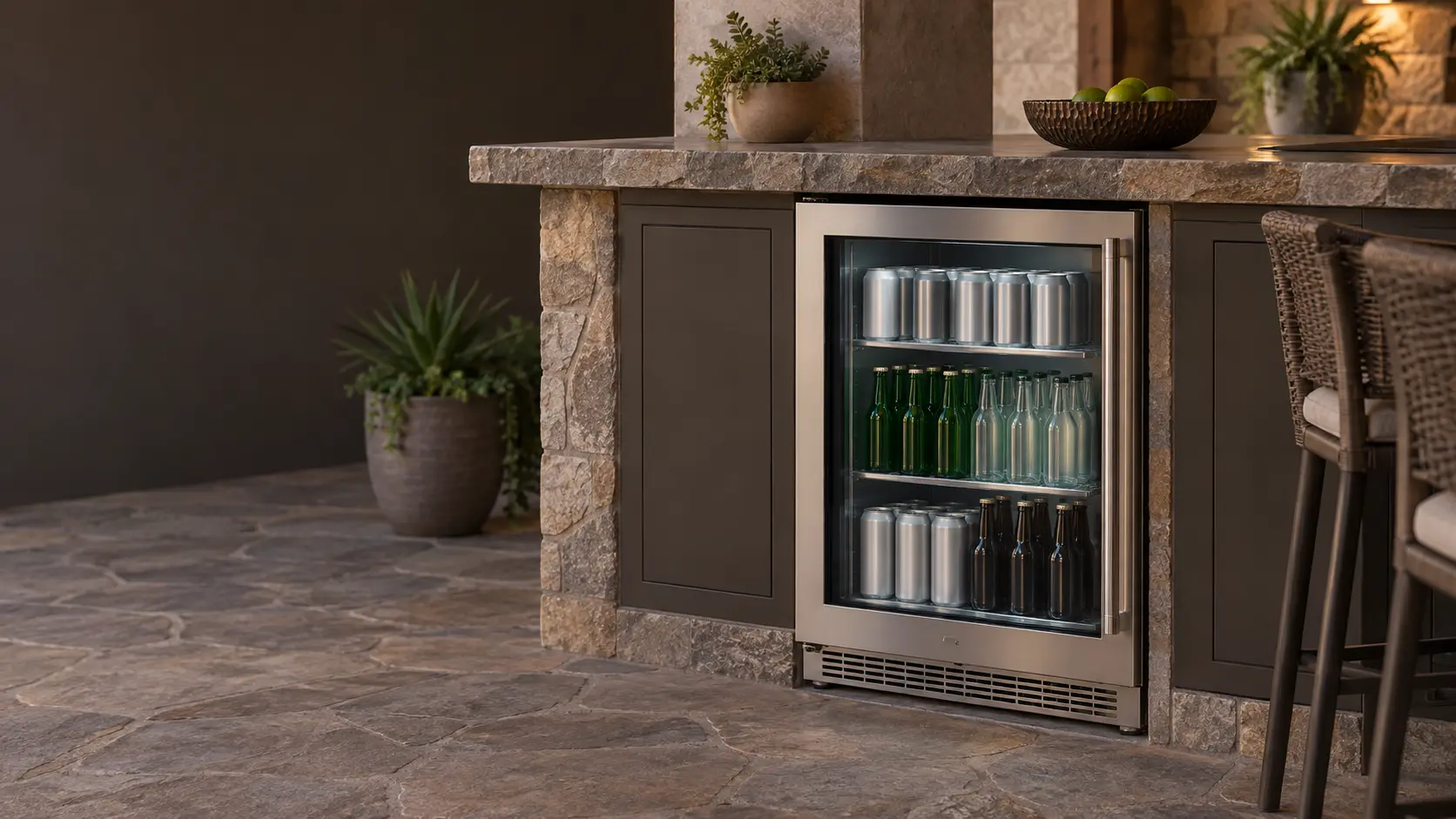
Where a beverage center can stand and where it struggles, the air a built-in unit needs at its front grille, setting up an outdoor unit, and leveling so the door swings shut on its own.
Mon–Sat, 8am–8pm
- Four guides
- Read before you book
- Says where to stop
Book a visit
Three short steps, about a minute.
or call (844) 456-5057
Loading appointment form…
The appointment form couldn’t load. Please try again.
Installation and setup,
guide by guide.
A beverage center that runs hot, drips, rattles or will not keep its door shut is very often a sound machine placed badly. The grille at the toe kick is covered, the cabinet leans, the door swings into a wall, or an indoor model is sitting on a patio. These guides are about the choices made on installation day, and about putting them right in a kitchen that already has one.
All 23 guides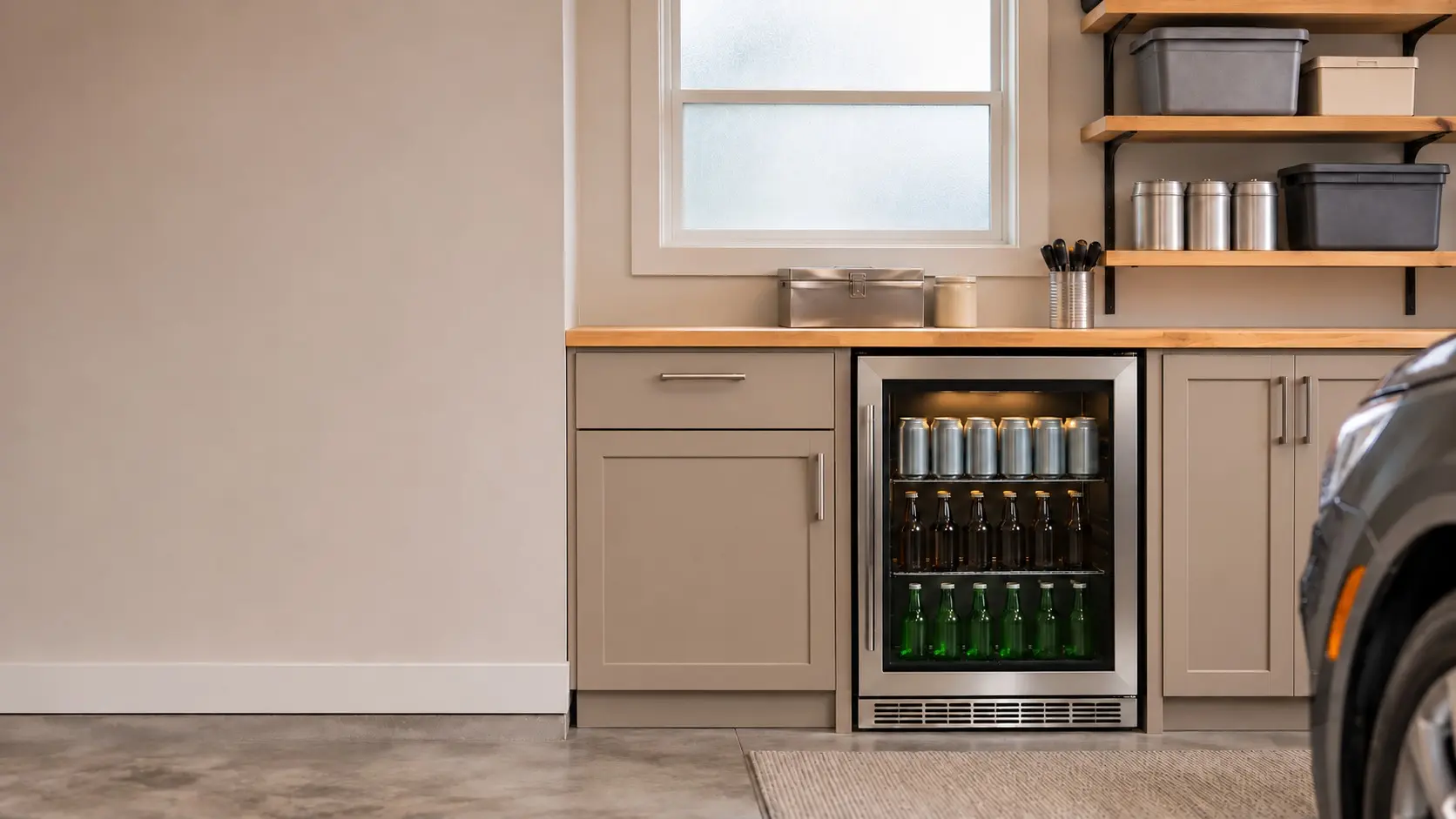
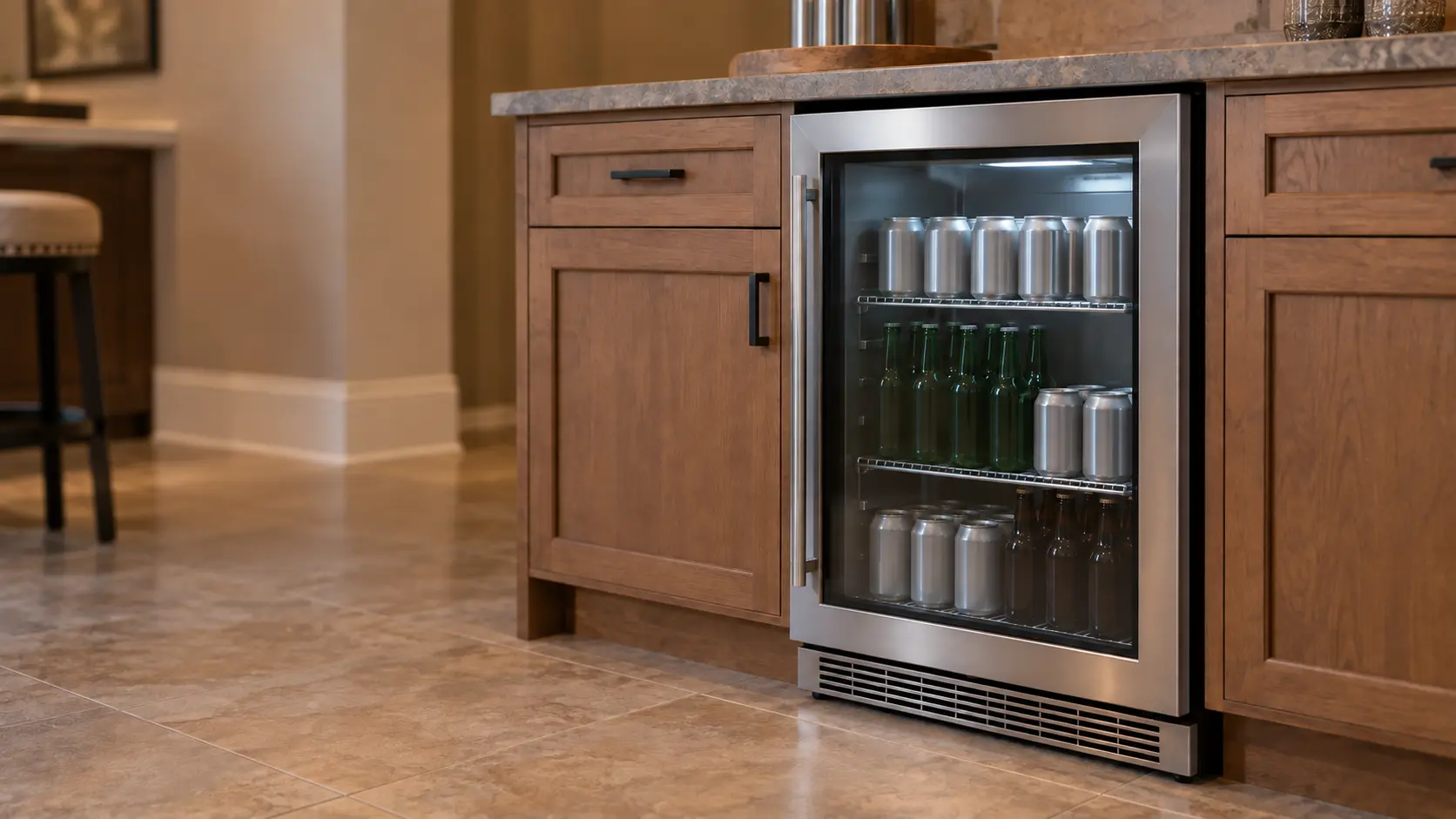
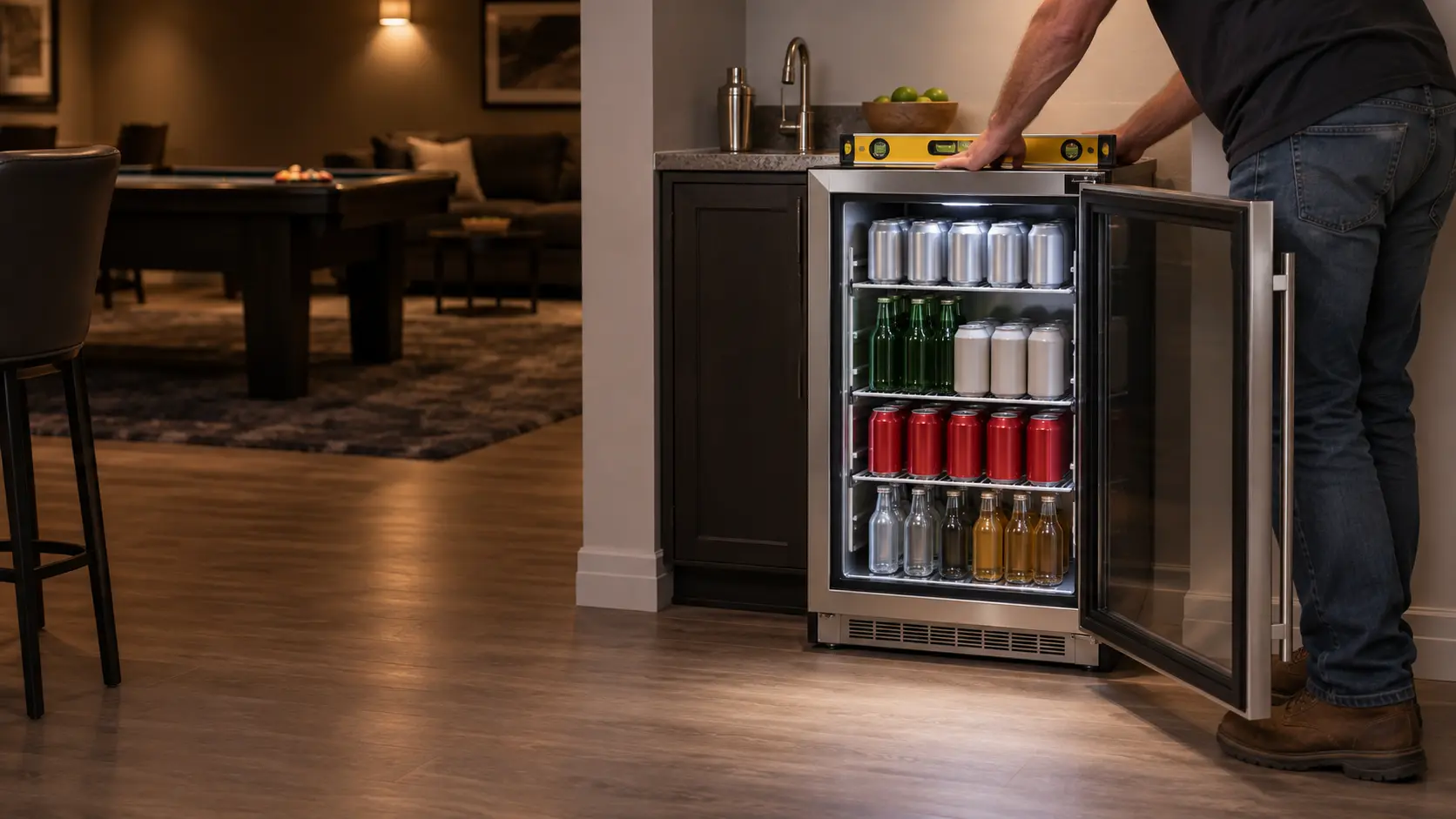
Leveling a Beverage Center and Planning the Door Swing
Where it goes, how it breathes, what it plugs into.
They work from the makers' installation manuals, and the makers do not always agree. One turns its leveling feet the opposite way from another, one wants a cover over an outdoor unit in winter while another forbids it, and the room temperatures each unit tolerates differ by several degrees. Where a figure is quoted, the manual it comes from is printed under that part of the guide, and your own model's manual always wins.
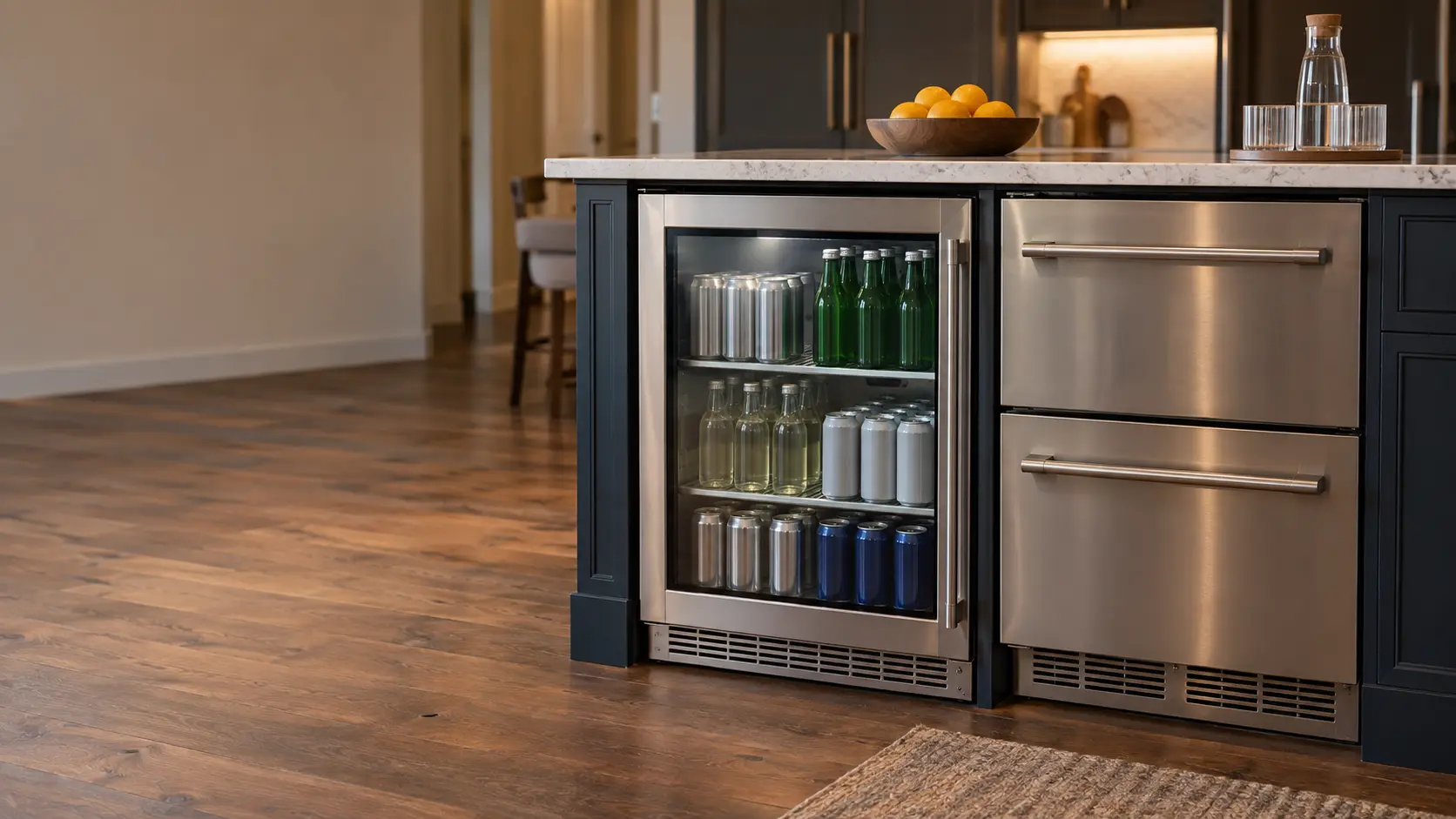
The guides cover every kind of beverage center this site repairs: the undercounter glass-door unit built into a kitchen, a wet bar or a basement bar, the freestanding cooler in a game room, the outdoor-rated unit under a patio counter, and refrigerated drawers for drinks. Where the advice differs between them, the guide says so.
Read them before the cabinetmaker cuts the opening and the electrician places the outlet, when a unit moves to a new spot, or when one that ran well for years starts to struggle after new flooring or a remodel. Each one ends at the point where an owner should hand over: new circuits and outlets to an electrician, heavy lifting and stone islands to an installer, and anything behind the grille to a technician.
Not sure where to start?The short answerBeverage center in a garage: temperature limits and what to check
A beverage center in a garage works only if the garage stays inside the ambient range on the unit's rating label or in its manual.
The short answerAirflow for a Built-In Beverage Center: The Toe-Kick Grille Does the Breathing
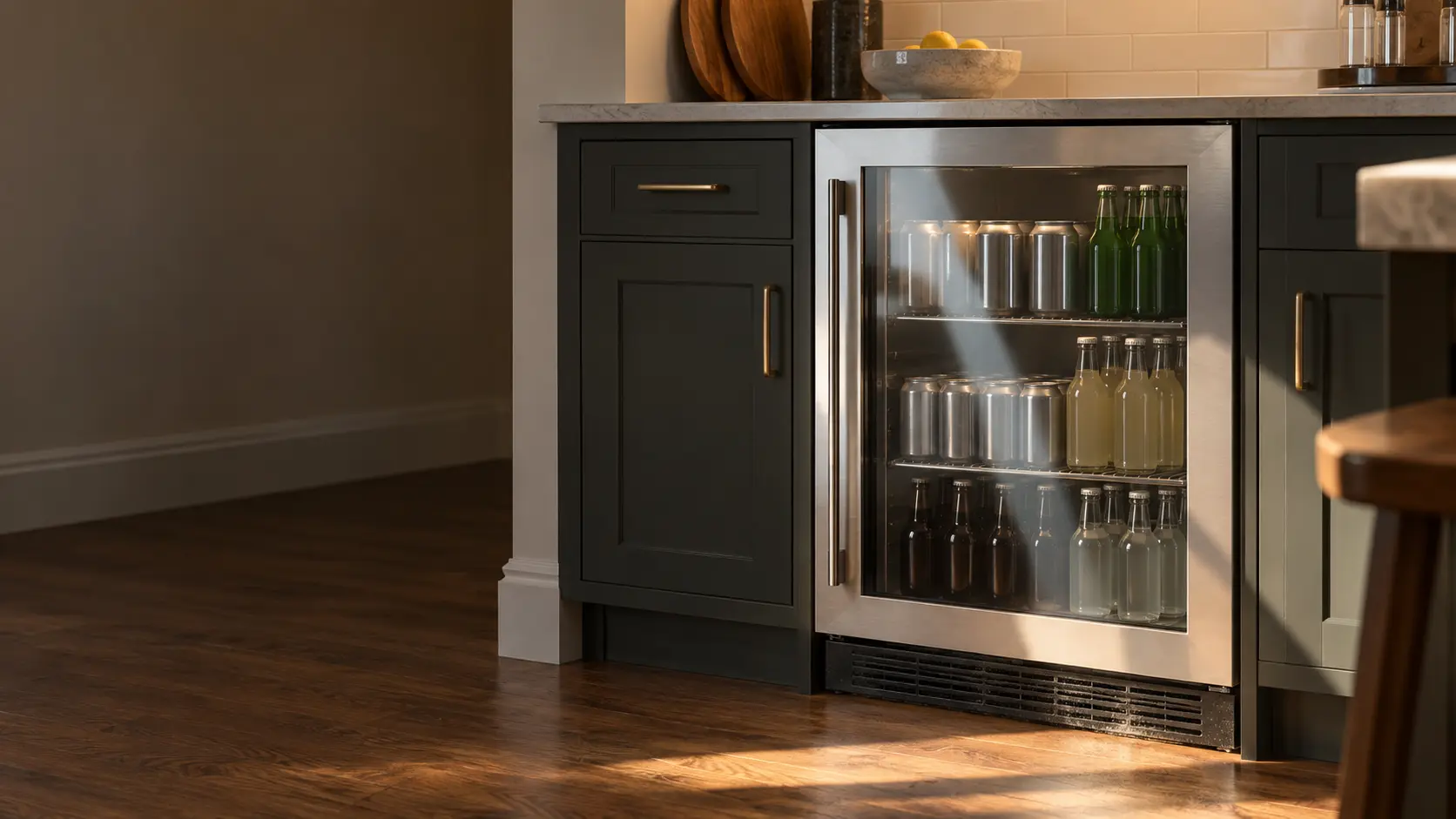
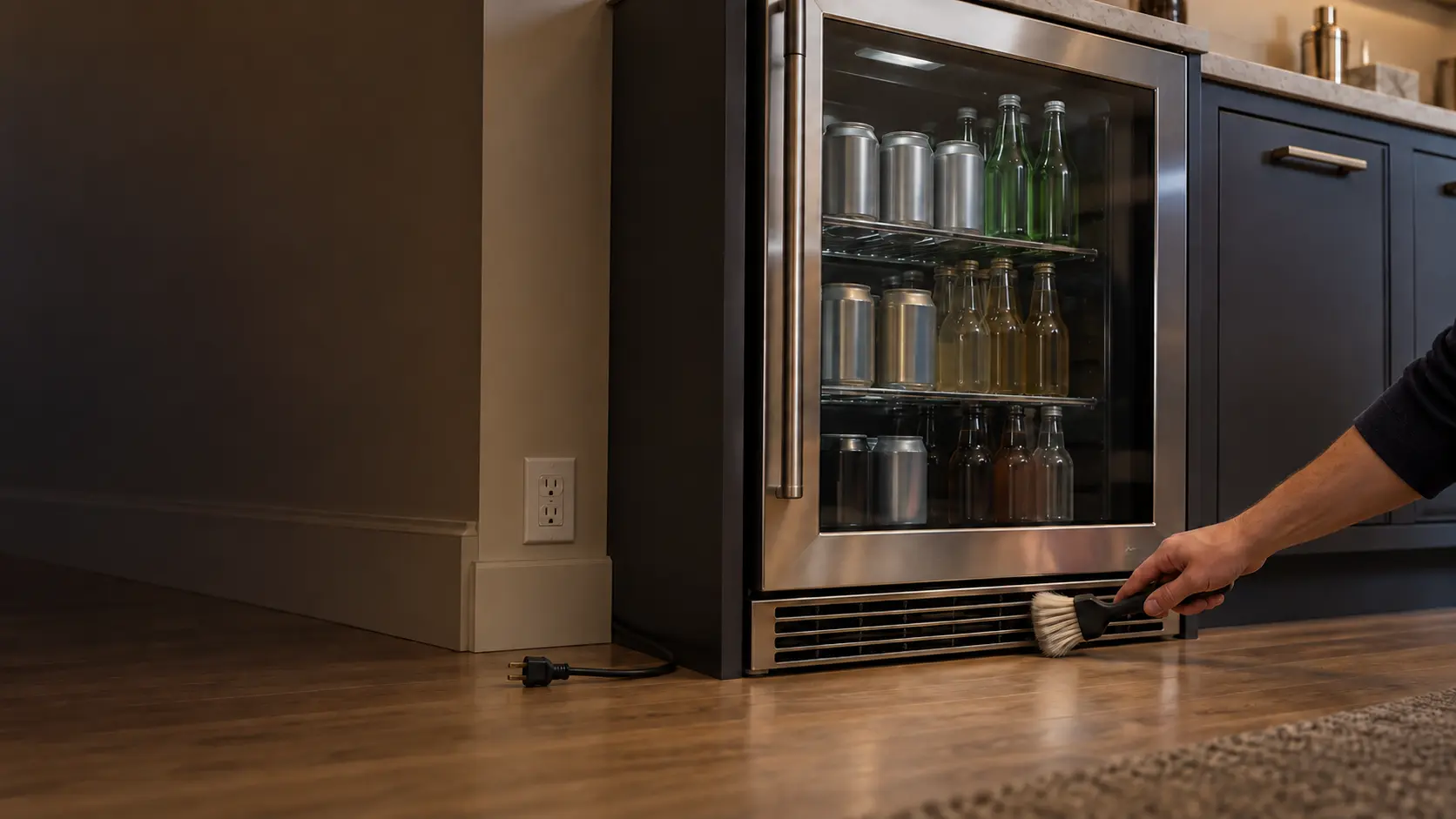
Built-in beverage center airflow runs through the front grille at the toe kick: cool room air in, warm air out.
The short answerSetting Up an Outdoor Beverage Center: Shade, Overhang, Coast Air and Winter
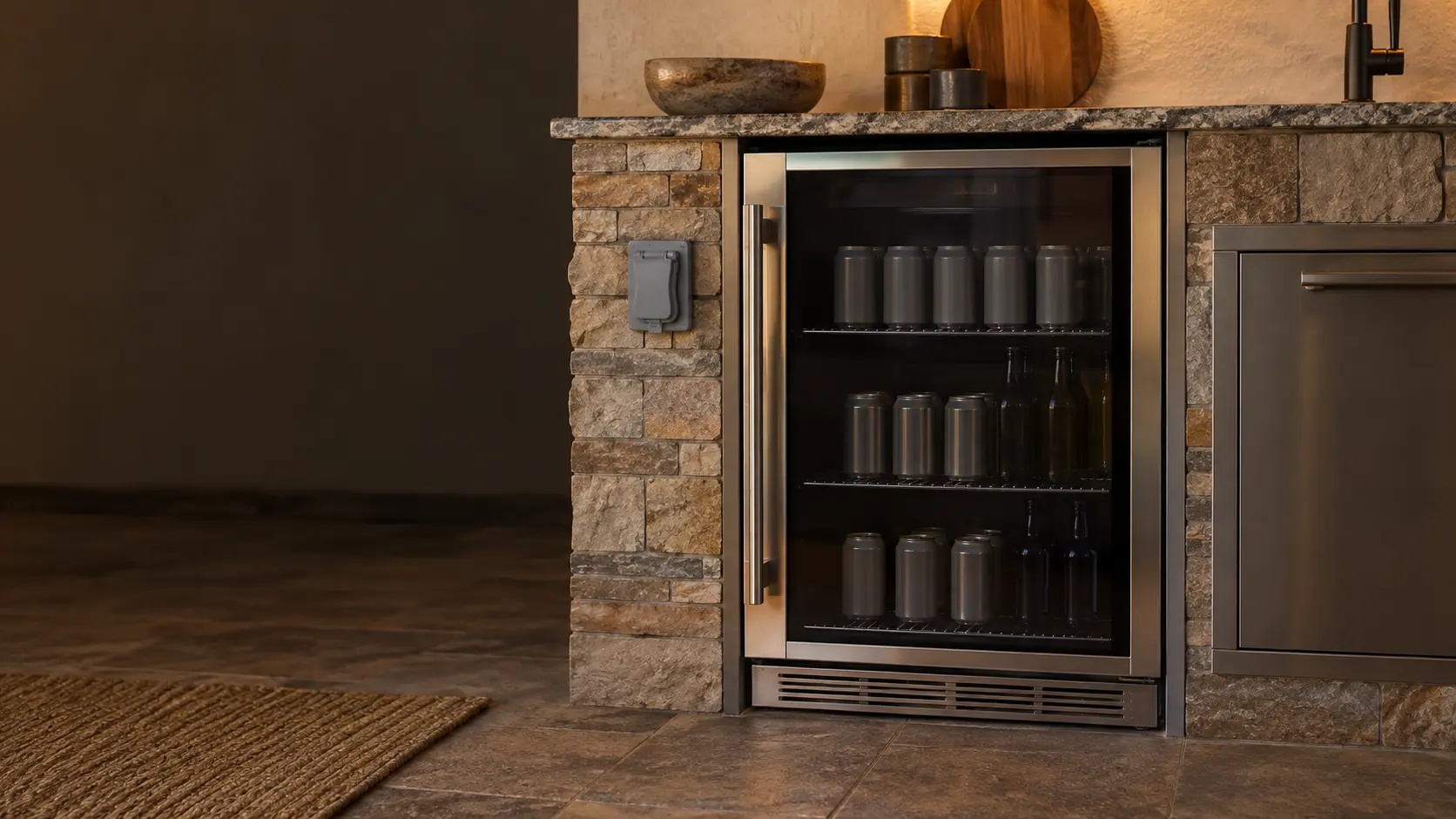
A sound outdoor beverage center installation starts with a unit rated for outdoor use by model, a shaded spot under a counter that overhangs the door gasket, a dedicated grounded circuit with the protection local code requires, and a level base with the anti-tip bracket fastened.
The short answerLeveling a Beverage Center and Planning the Door Swing
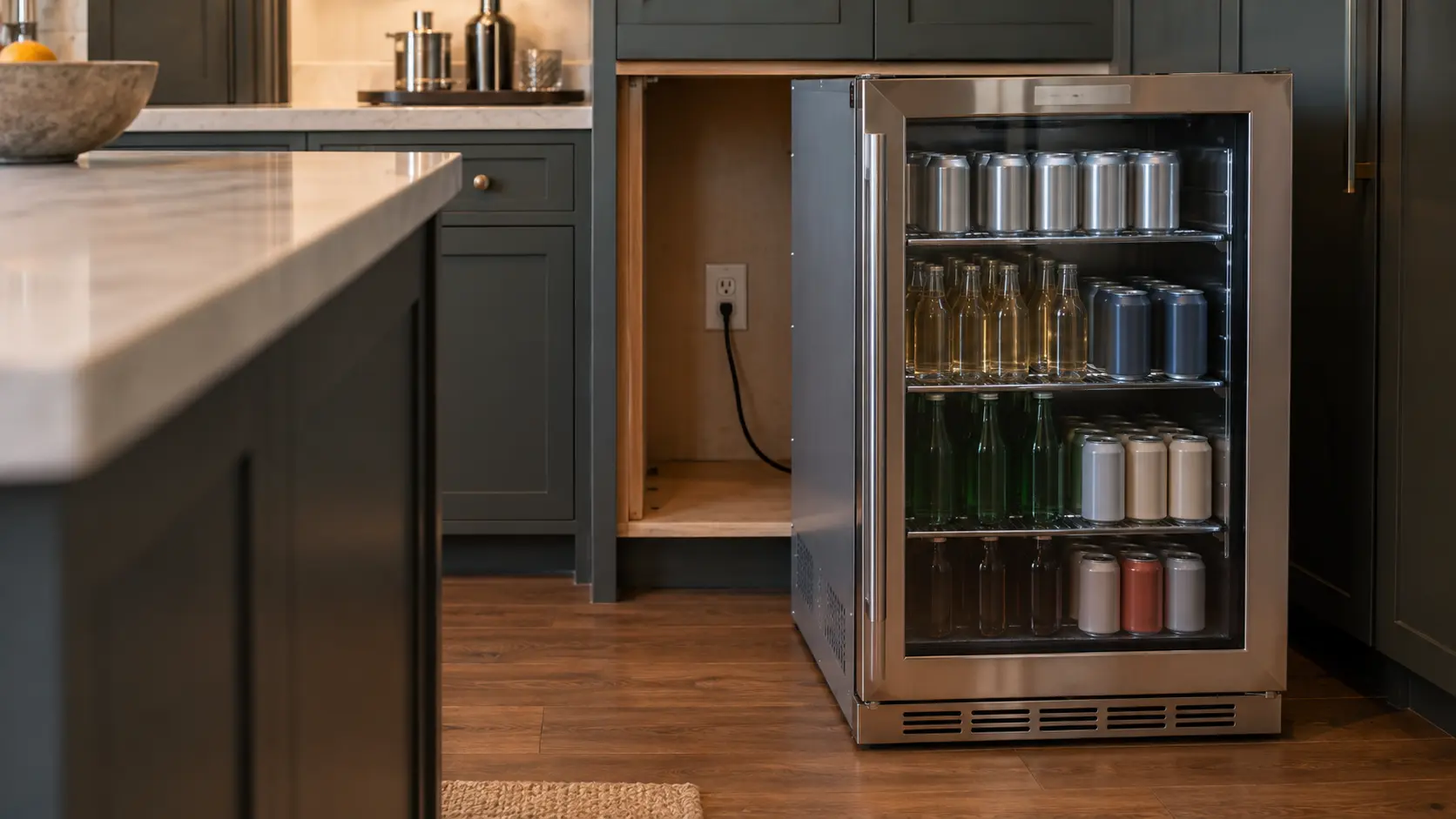
To level a beverage center, set a carpenter's level across the top and along the side, then turn the legs until both read true with all four legs on the floor; the direction differs by maker.
When reading
is not enough.
If the checks in these guides did not settle it, the visit picks up from there, stop by stop.
What repairs cost- 01Temperatures read at the shelves
- 02The price before the work
- 03Common parts in the van
- 04Cold again before we go
The problems
these answer.
Each has a page of its own, with the causes in the order worth checking.
All 17 problems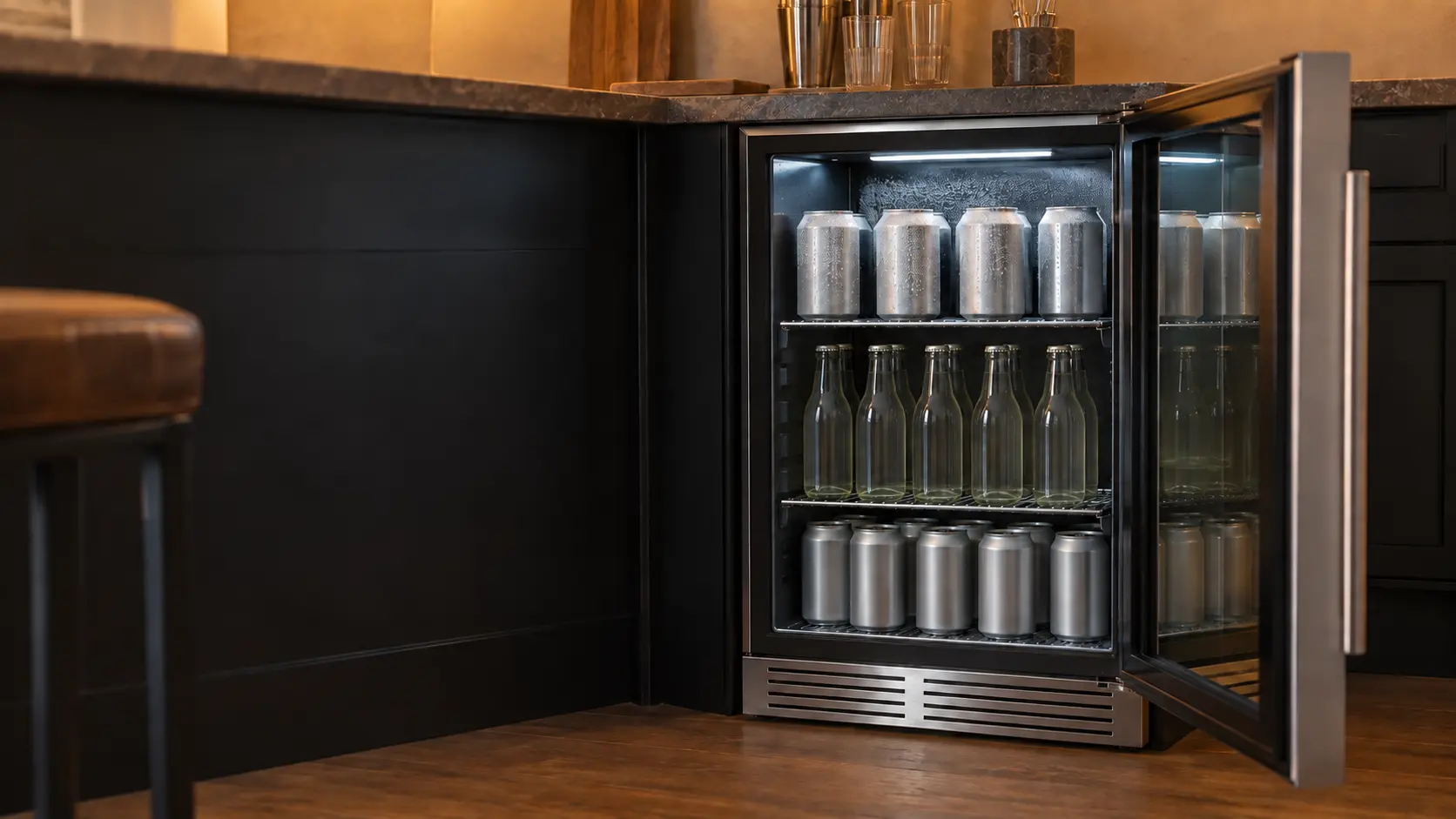

Questions about
installation and setup.
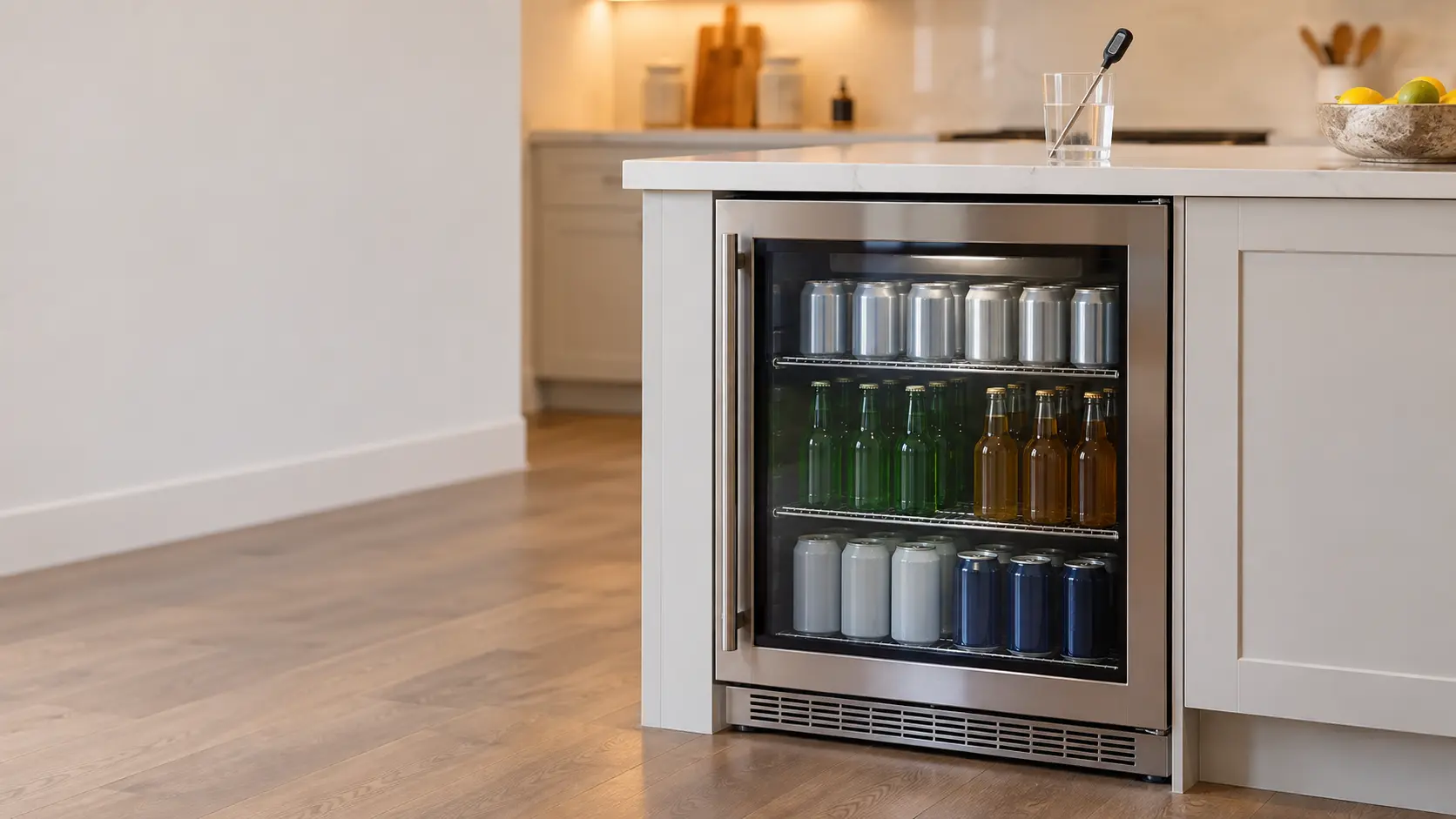
Can any beverage center be built in under a counter?
Does a beverage center need its own circuit?
Can an indoor model go on a covered patio?
Why does my new beverage center door not stay shut?
The other
sections.
Split by what you are trying to find out rather than by which part of the appliance it concerns.
All guides
Back to your everyday
Let’s get your beverage center working again.
Three short steps online, or one call. Tell us what you are seeing and pick a window that works.