Empty it, then decide without hurry
A warm beverage center is an inconvenience rather than an emergency, with one exception. If milk, juice, mixers or anything perishable was stored with the drinks, move it to the kitchen, and treat it by the food-safety rules for a failed appliance rather than by how cold it feels.
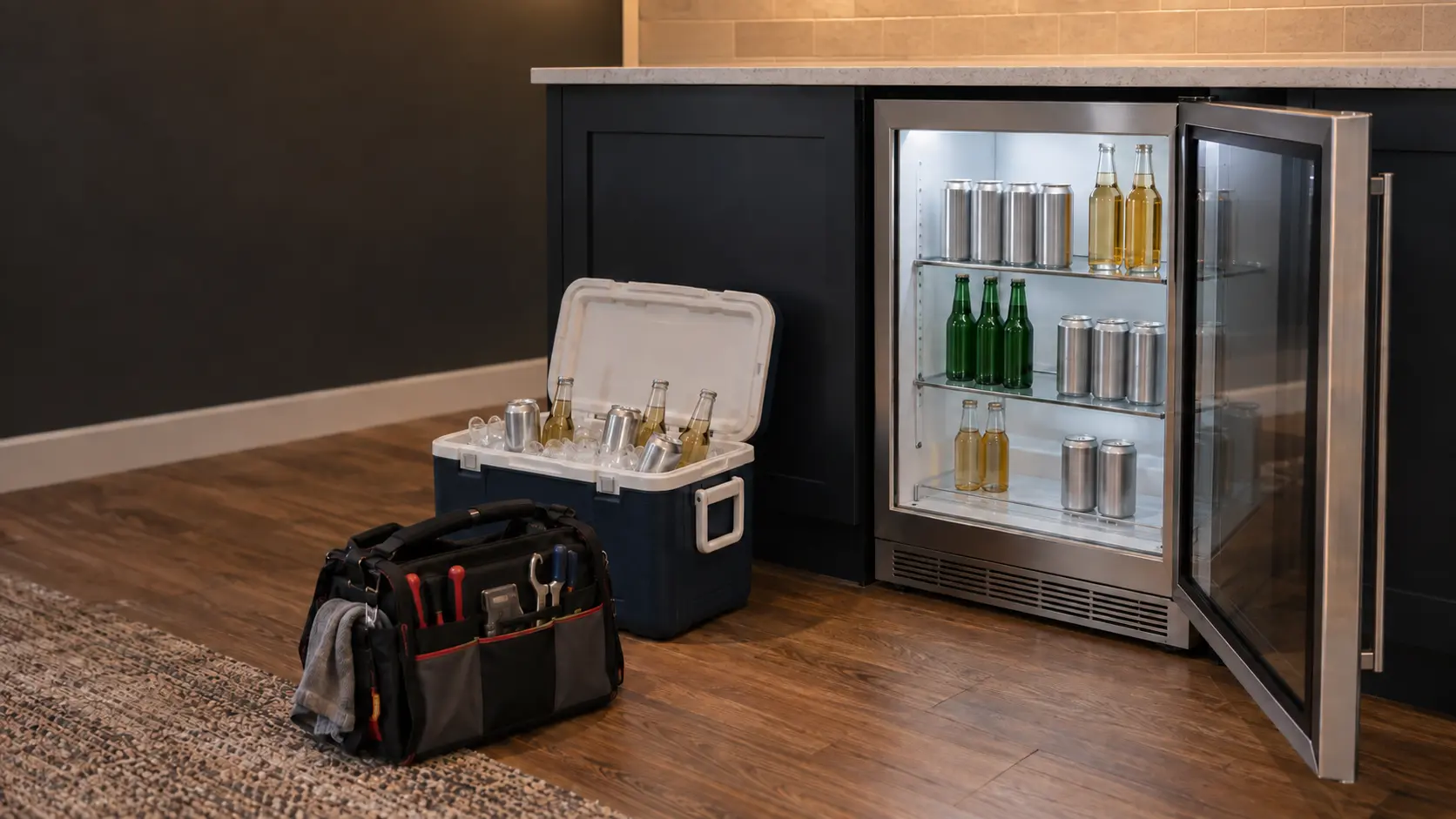
Cans and bottled water can sit in a cooler of ice or on a basement shelf for as long as the decision takes. Leave the door of a stopped unit propped slightly open so the interior dries, and note what you saw before it stopped: a noise, a smell, frost, a blank display. That short record often tells the technician more than a test does.
If the unit still hums and the cans are only a little warmer than usual, it can keep running while you wait for a diagnosis. If it smells hot, trips its breaker or has water around the outlet, switch it off at the breaker from a dry spot and leave it off; those are safety calls, and the section on glass, power and water covers them.
Which part failed, from small to large
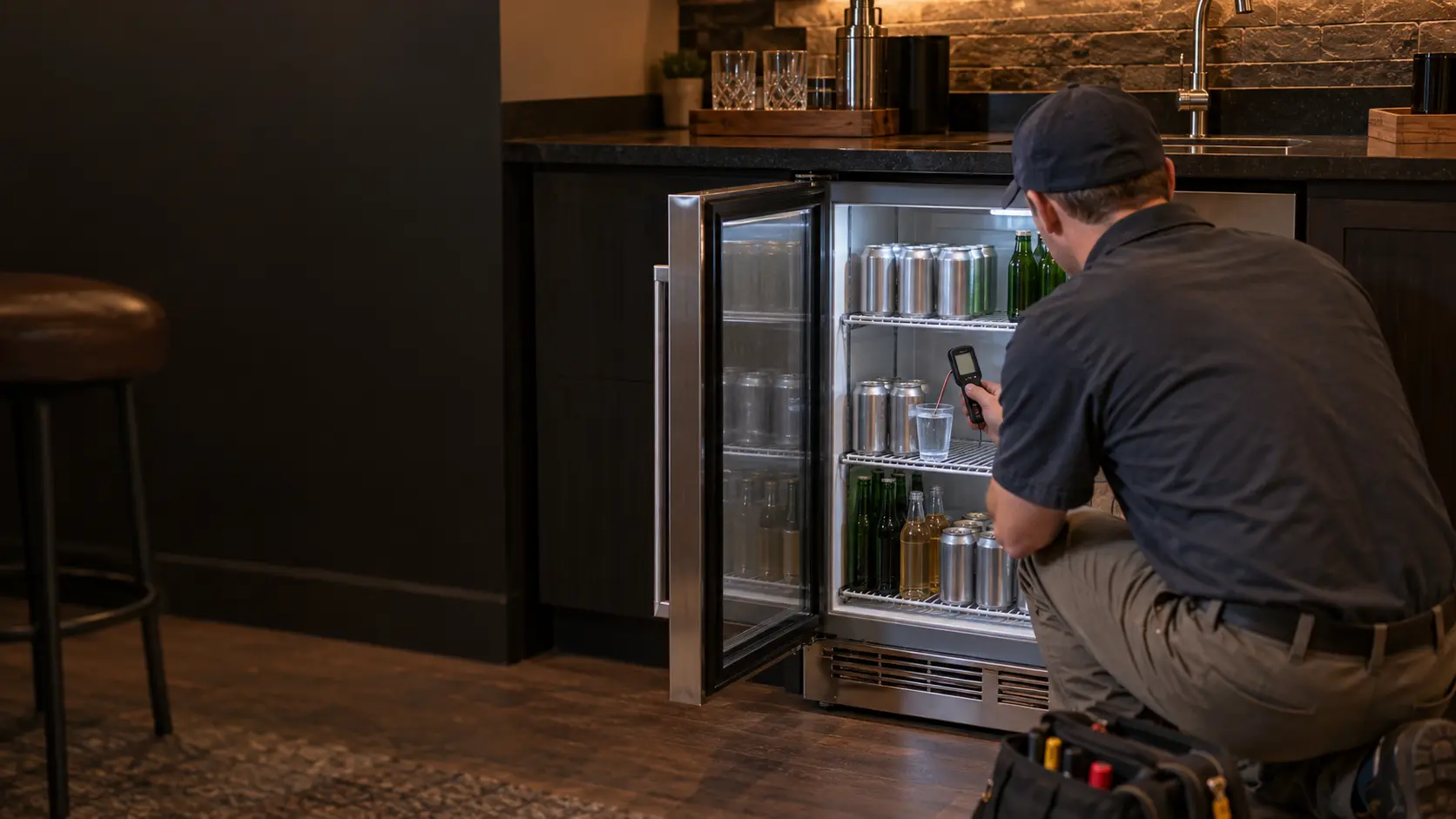
The same complaint, cans at 55°F on a Friday night, comes from parts at every point on the cost ladder. A fan that stopped, a sensor reading high, a door that no longer seals and a compressor that will not start all feel alike from the outside, which is why any sensible answer to whether to repair or replace a beverage center starts with a diagnosis.
- Smaller: door gasket, hinge or door alignment, lock, interior lighting, a fan motor, a temperature sensor, a drawer slide.
- Middle: the control board or display, a defrost or drain heater, a door heater on a glass front.
- Largest: the compressor, a leak in the evaporator or tubing, or a blocked capillary, all sealed-system work.
A compressor that only clicks
A click every few minutes and no hum is often the start device or overload protector giving up, a small part clipped to the side of the compressor. Before accepting a sealed-system quote, ask whether that part was tested, and whether the condenser fan was running.
Units charged with flammable refrigerant
Many current beverage centers use isobutane, labeled R-600a on the serial plate. True's installation guide warns that this refrigerant is flammable and that such units are to be repaired only by trained service personnel. That changes nothing about the decision, only about who may open the system.

How the kind of unit changes the math
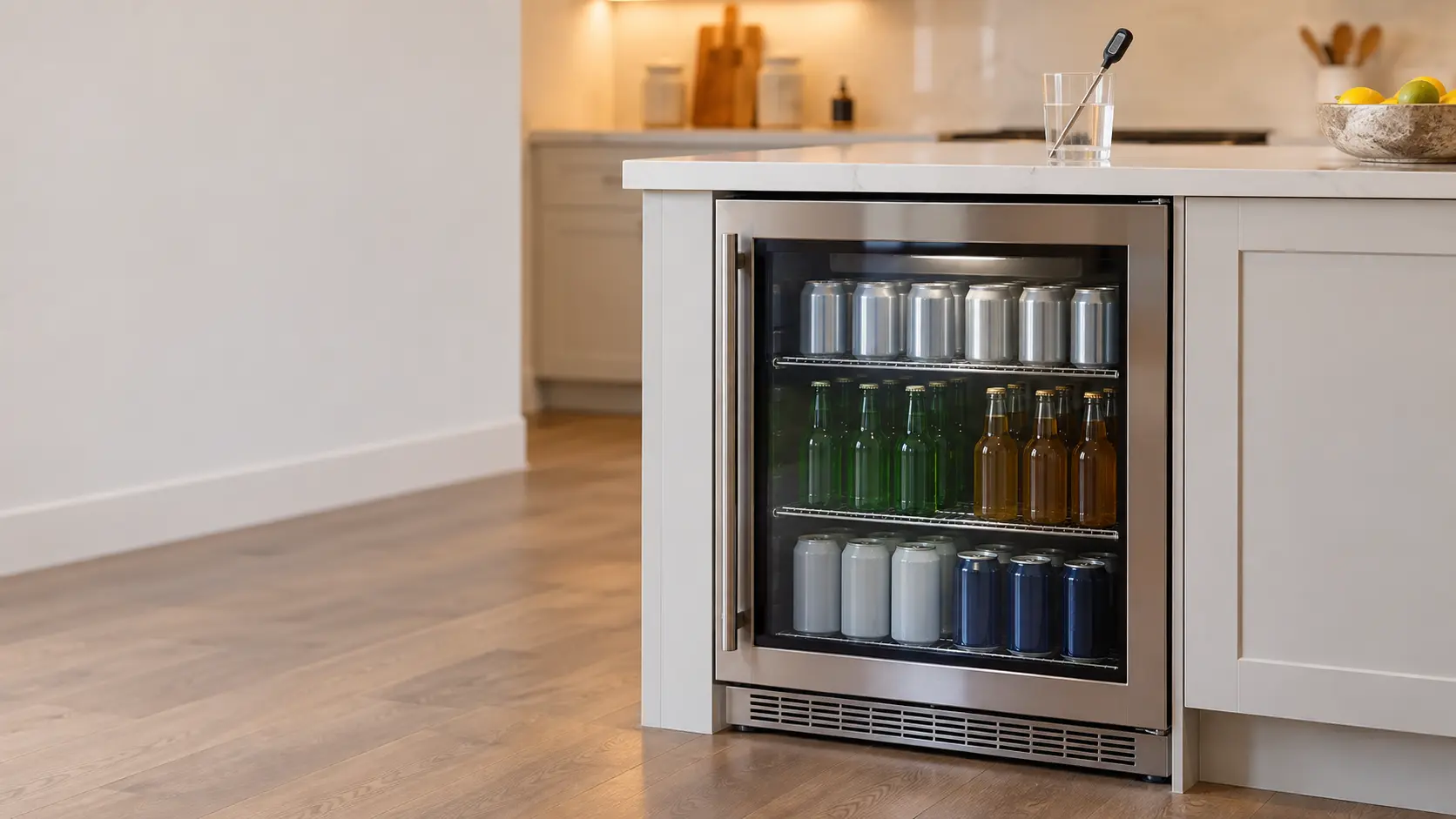
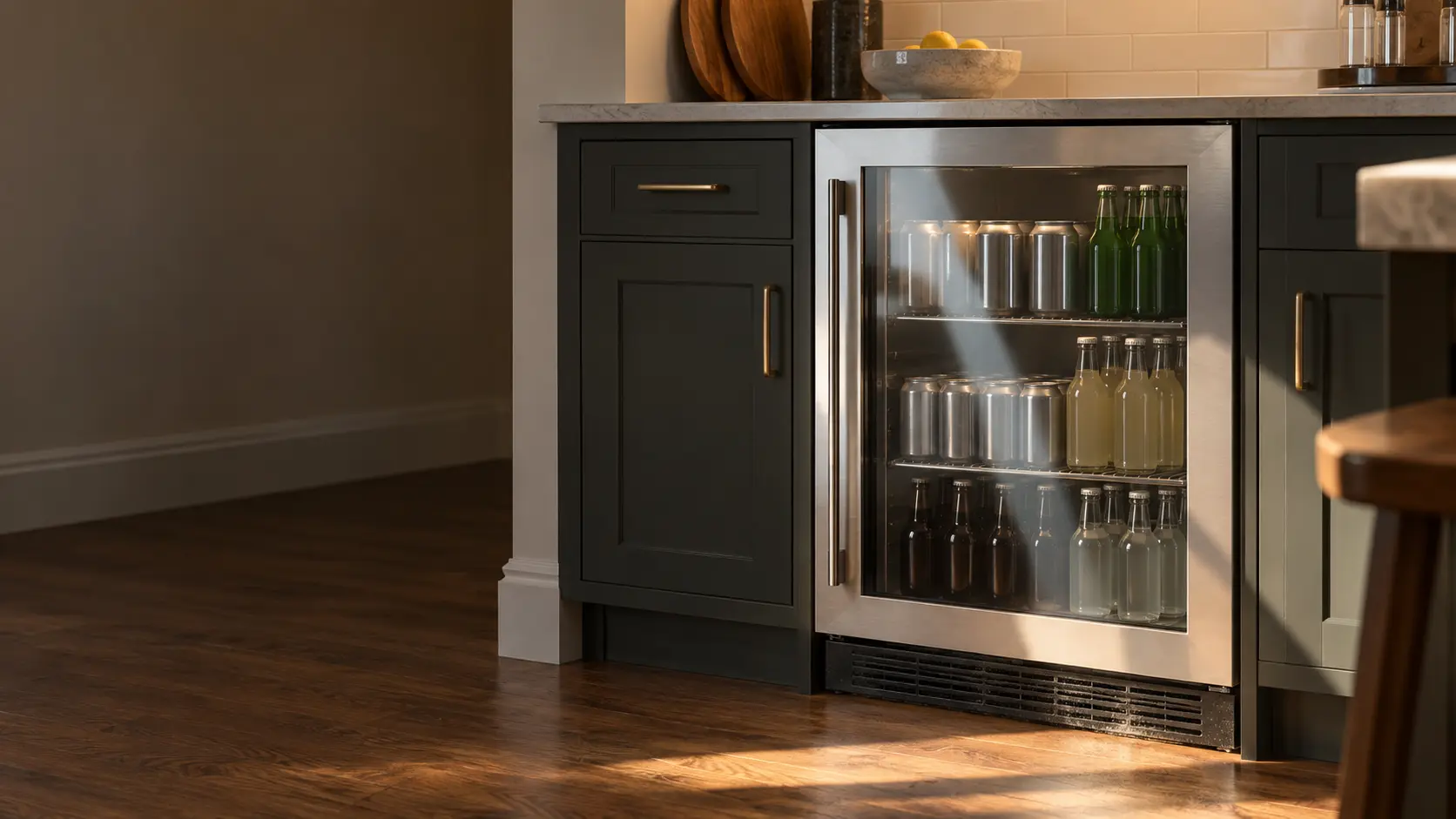
A freestanding cooler that plugs into any wall outlet is easy to replace, so a sealed-system repair on it rarely makes sense after its first few years. A built-in cabinet is the reverse. It fits an opening measured to the fraction of an inch, it may carry a panel that matches the kitchen, and a new model with a different grille or door swing can mean trim work or a new panel.
Outdoor-rated units lean hardest toward repair, because the rated replacement is the costliest kind and the cutout, vent and outlet were all built around the old one. Drawers sit in between: slides and seals are ordinary repairs, but a replacement pair has to match the panel fronts.
An indoor unit that failed on a patio
When an indoor model has died on a porch or in an unheated garage, repairing it usually buys another short season. The location wore it out, and the same location will wear out the new part. Replacing it with an outdoor-rated model, or moving it indoors, is the repair that lasts.
Costs that are not on the new unit's tag
A beverage center with a compressor cannot go to the curb as trash. Under EPA disposal rules, the final party in the chain, typically the scrap recycler or landfill, must make sure the refrigerant is recovered before the appliance is destroyed, and may ask for proof it was done. Use a retailer haul-away or a recycler that handles refrigerant, and never cut the tubing to lighten the cabinet.
- Removal of the old unit by someone who recovers the refrigerant.
- Trim, a new panel or cabinet work if the replacement differs in size or door swing.
- An electrician if the new model needs a different outlet location or a dedicated circuit.
- A day for the new unit to reach its set point before it is stocked.
Source: US EPA — Stationary refrigeration safe disposal requirements — For household appliances that enter the waste stream with refrigerant inside, the final person in the disposal chain must ensure the refrigerant is recovered and may keep a signed statement
Four questions that settle most cases
Is the failed part in the smaller half of the ladder above? Is the unit built into a cabinet run, paneled, or rated for outdoor use? Is it the right unit for where it stands? Are parts for the model still sold? Two or more answers pointing to repair usually mean repair. A small freestanding cooler with a sealed-system failure, or an indoor unit that failed outside, usually means replacement.
Age is the weakest of the signals. A ten-year-old built-in unit with a failed fan is a good repair; a two-year-old countertop cooler with a leak in its evaporator is not.
Ask the technician to name the part and say whether it is in stock. A clear answer to both makes the choice between repair and replacement a short conversation rather than a guess.