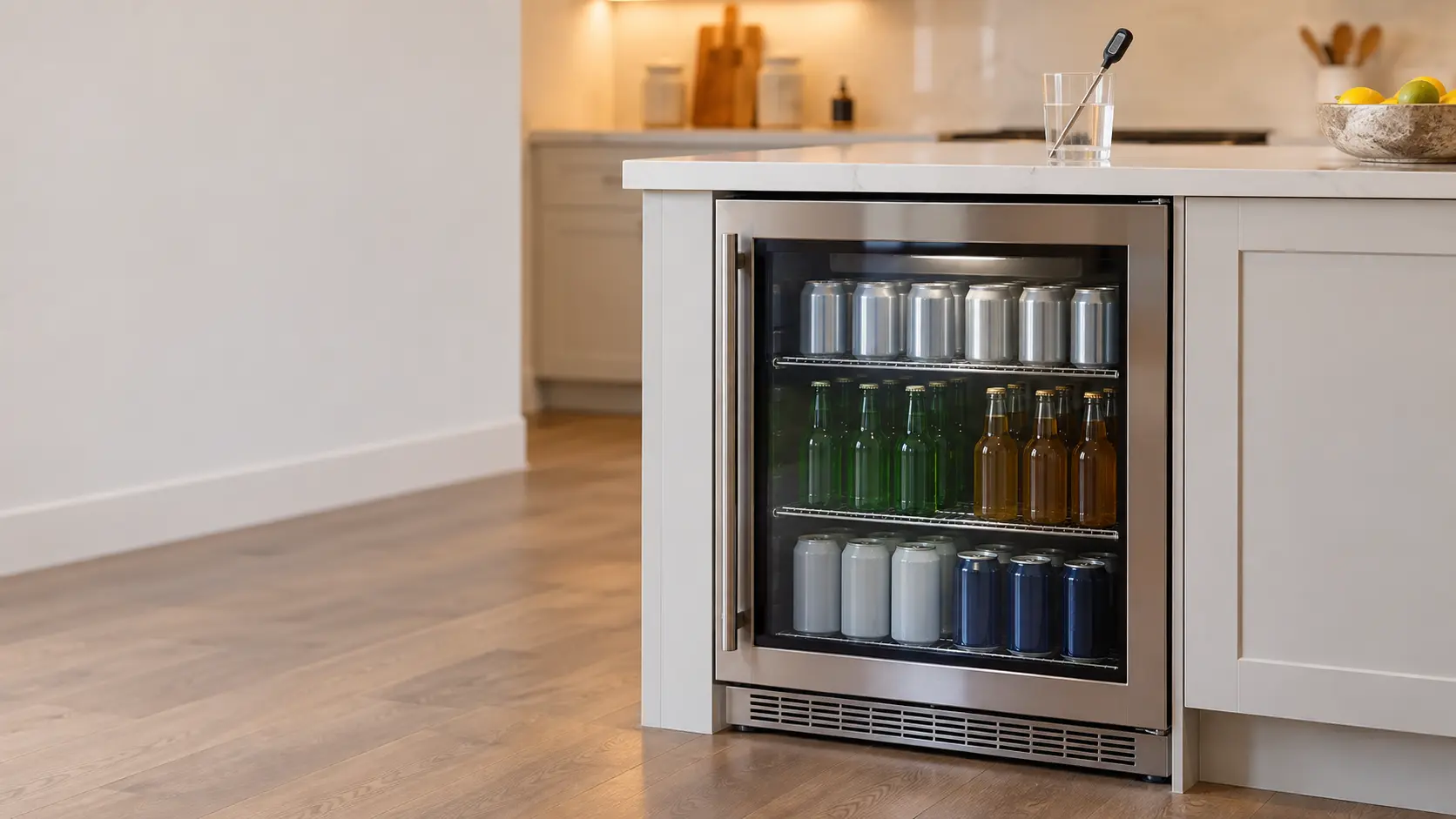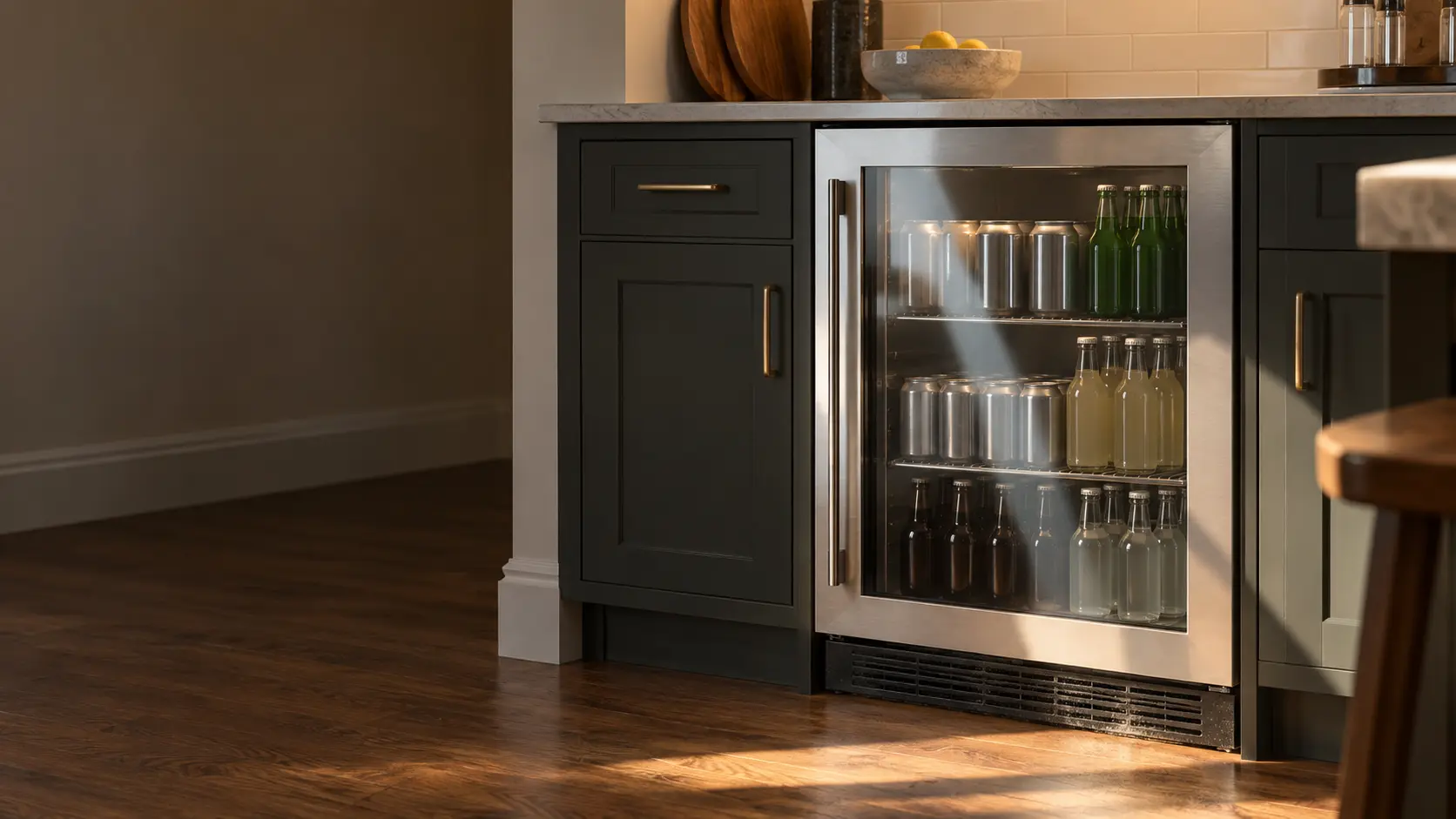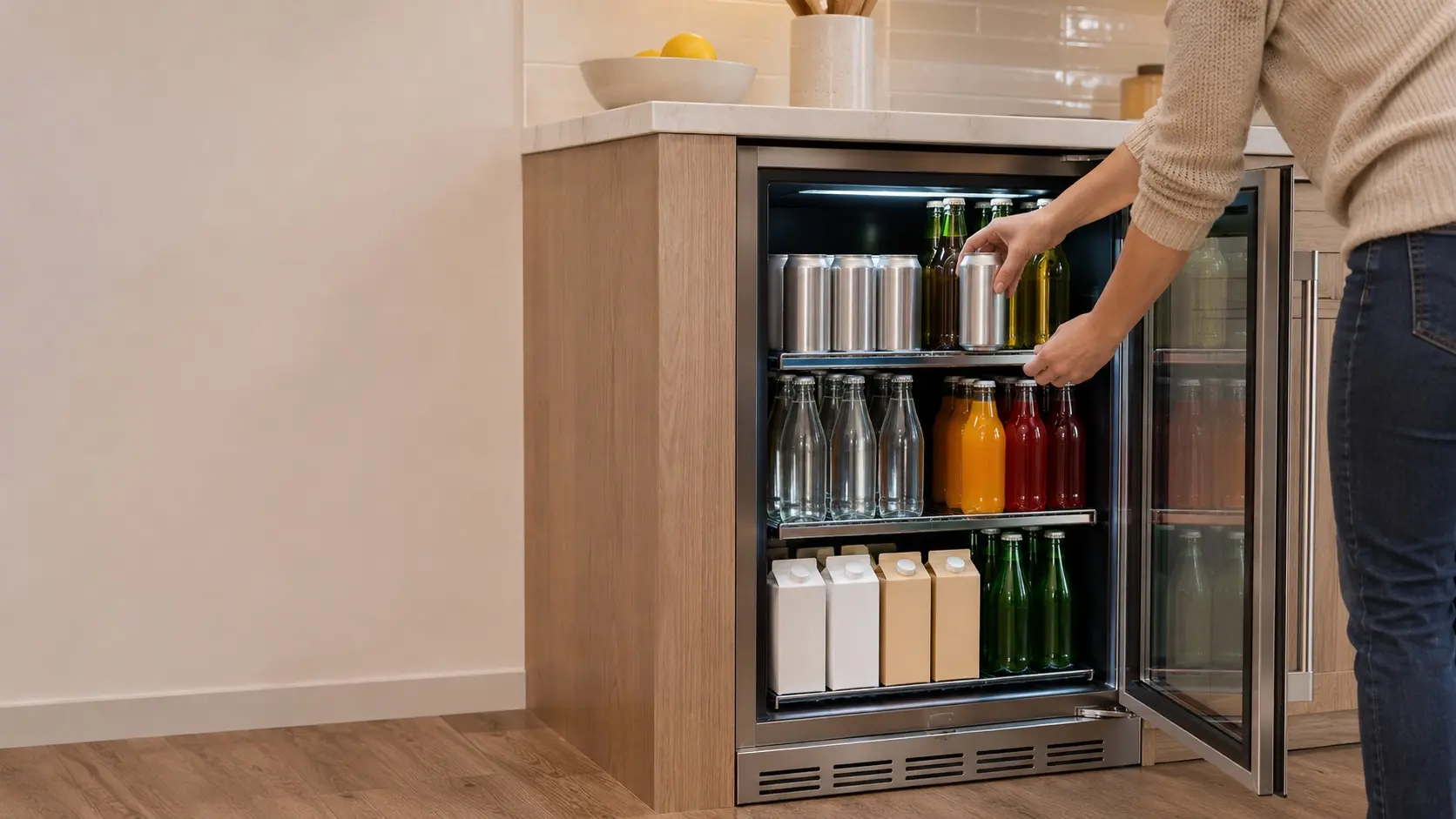
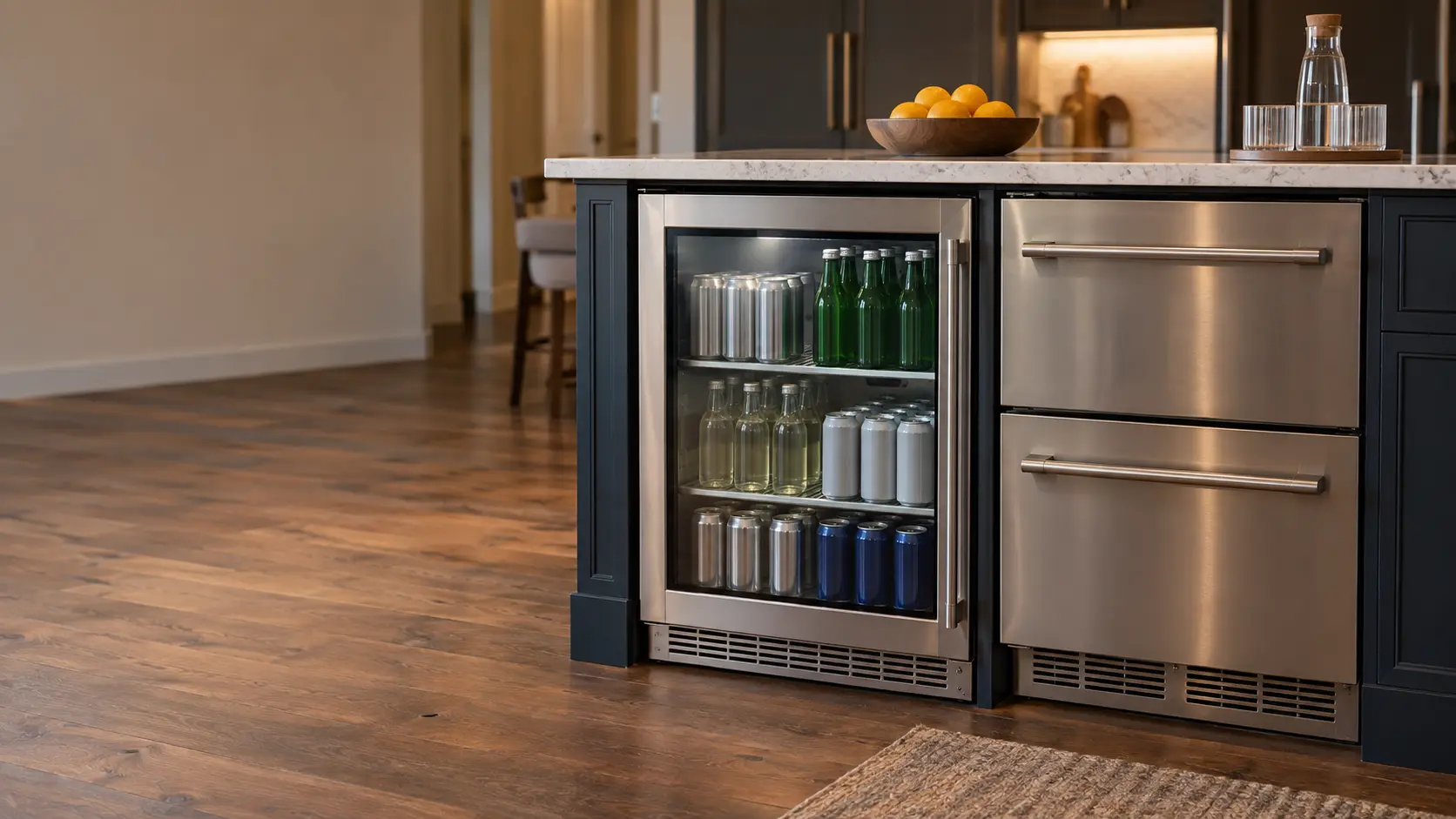
How is a beverage center's can capacity measured?
A stated can capacity is usually a count of standard 12-ounce cans laid out on the stock shelves in the best arrangement, with every shelf in its standard position. There is no common test behind it, so it is a marketing figure for comparing models, not a promise for your mix of drinks, so treat it as a ceiling.
What the number assumes
The number assumes cans only, standing or laid in rows, with no bottles, no cartons and no extra space for airflow. It also assumes the shelf layout the maker designed, which sometimes means removing a shelf you would like to keep. A unit that says it holds a certain number of cans may hold far fewer with wine bottles or two-liter drinks.
Why real loads hold less
- Tall cans and bottles need the shelf spacing to be opened up, which removes a row.
- Glass bottles stand up and leave dead space above them.
- Cartons and packs do not interlock like loose cans.
- Cold air has to circulate between items, so a tight packing slows cooling.
The guide on why the drinks are not cold explains how an overloaded cabinet behaves.
What do 15 and 24 inch widths really hold?
A 15 inch unit is a compact cabinet for light use, and a 24 inch unit is the common household size. Neither holds the stated can count in real life if you mix in bottles, but the difference between them is large.
Table: How width fits the way you drink
| Width | Suits | Watch for |
|---|---|---|
| 15 inch | A couple, a bar corner, light use | Fills quickly when you add bottles or a party |
| 24 inch | A household, regular guests | Needs a wider opening and more airflow room |
| Dual-zone or drawer models | Mixed cans and wine, or separate temperatures | Fewer cans per inch of width |
Check the shelves
Look at how many shelves the model has, how far they adjust and whether they are wire or glass. Fewer, fixed shelves leave less room for tall bottles. If you drink tall cans and bottles, choose a unit with adjustable or removable shelves. See undercounter, freestanding or drawers for how each style uses its space.
Measure your drinks
Take your most common drinks to the store, or measure them: a tall can, a bottle with a wide base and a carton. Compare those with the shelf height and depth on the specification sheet.
A rough count per shelf is easy to work out. A standard 12-ounce can is about 2.6 inches across and just under 5 inches tall; a 16-ounce tall can is the same width but over 6 inches tall. Divide the usable shelf width by the can width, do the same for the depth and multiply, then subtract a row at the back and the sides for air. Repeat for each shelf at the height you will actually set it, and you have a number for your drinks rather than the box's.

How should you size for a household or for hosting?
Size for your normal week first, then decide whether a second cooler or a short-term cooler for a party is a better answer to hosting. A unit sized for a party is a lot of cabinet to cool all year for a few evenings.
A simple way to estimate
- Count what you drink in a normal week.
- Add what you want ready for guests on a typical weekend.
- Leave gaps between rows and keep drinks off the back wall, so cold air can move and there is room to restock.
- Think about bottles and tall cans, not only standard cans.
When a bigger unit makes sense
A larger unit makes sense when the beverage center is the main cold storage for drinks, when you entertain regularly or when you stock cases to save trips. If you only host a few times a year, a cooler with ice for the event costs nothing in floor space the rest of the year. If you are deciding between a countertop and a freestanding unit, see countertop or freestanding beverage cooler.
What space does the cabinet need around it?
A beverage center needs open space for its cooling system as well as for drinks. A built-in front-vented model is designed to sit under a counter; a freestanding model usually needs gaps at the back and sides.
Read the clearances
The manual lists the clearances. A unit squeezed into a tight opening runs warm and works harder, a point covered in airflow for a built-in beverage center. Find the model number on the plate to look up the exact figures; the model plate guide shows where it is.
Door swing and floor
Check the door swing against walls and islands, and check that the floor is level and strong enough for a fully loaded unit. A full cabinet is heavy, and a sagging shelf or leaning door usually starts with a floor that is not level.
What does a bigger unit mean for upkeep?
More width means more door, more seal and more shelf, and each one wears with use. A loaded drawer pulls on its slides, and a heavy glass door pulls on its hinges.
Parts that take the strain
- Door seals on a big glass door.
- Shelf supports and drawer slides under full loads.
- The condenser and fan, which work harder in a warm or crowded cabinet.
A beverage drawer slide and seal repair is a common service on drawer units, and a diagnostic visit is a good first step if a loaded unit is not holding temperature. If an older unit keeps struggling, repair or replace a beverage center compares the options.