Decide how warm is actually too warm
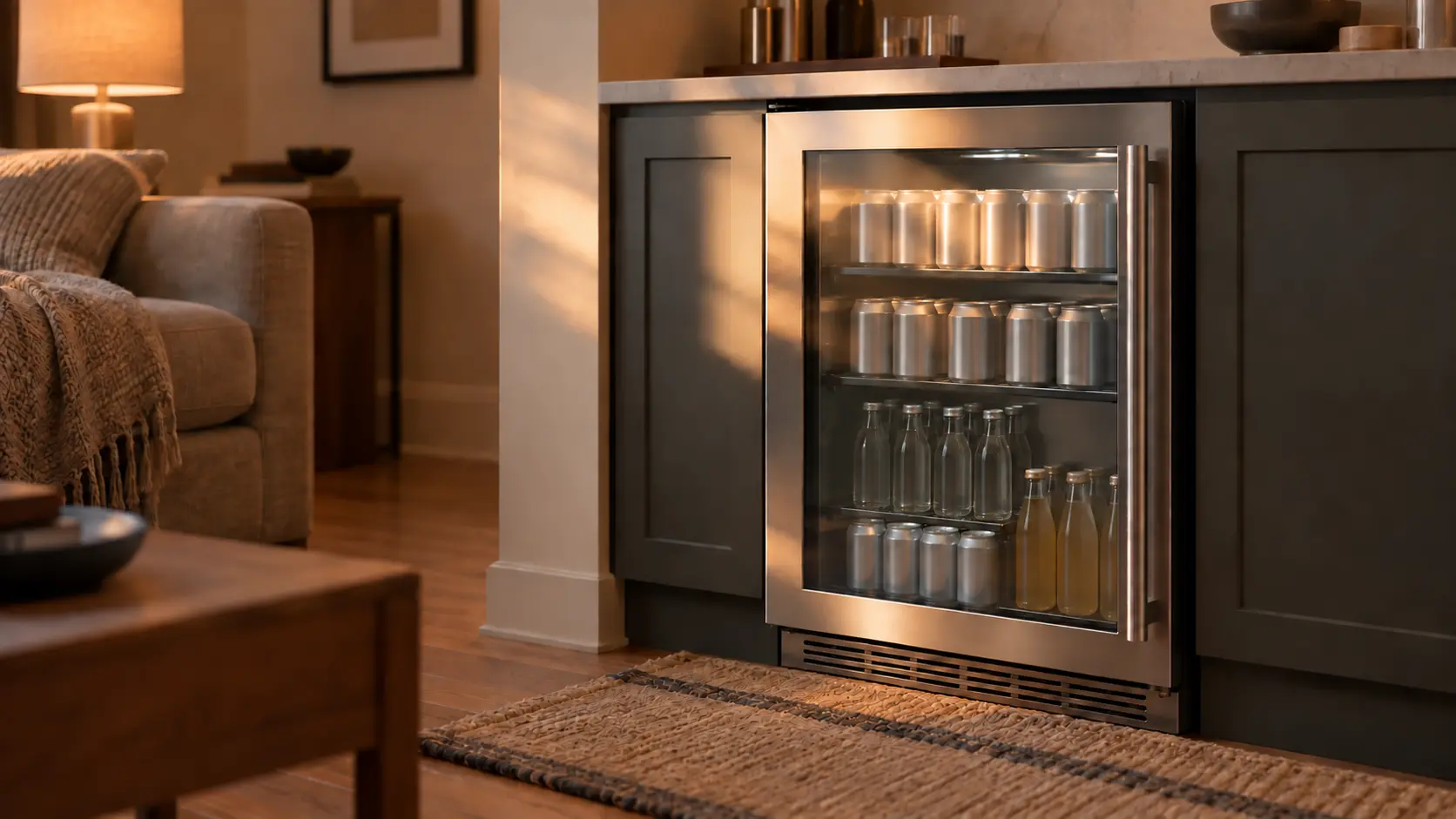
Most people want cans served somewhere in the upper 30s, and 38°F is where U-Line sets its beverage centers at the factory. The display, though, reports air, and air inside a glass-door cabinet jumps by several degrees every time the door opens. A panel showing 44°F an hour into a party says the cabinet is busy, not that it has failed.
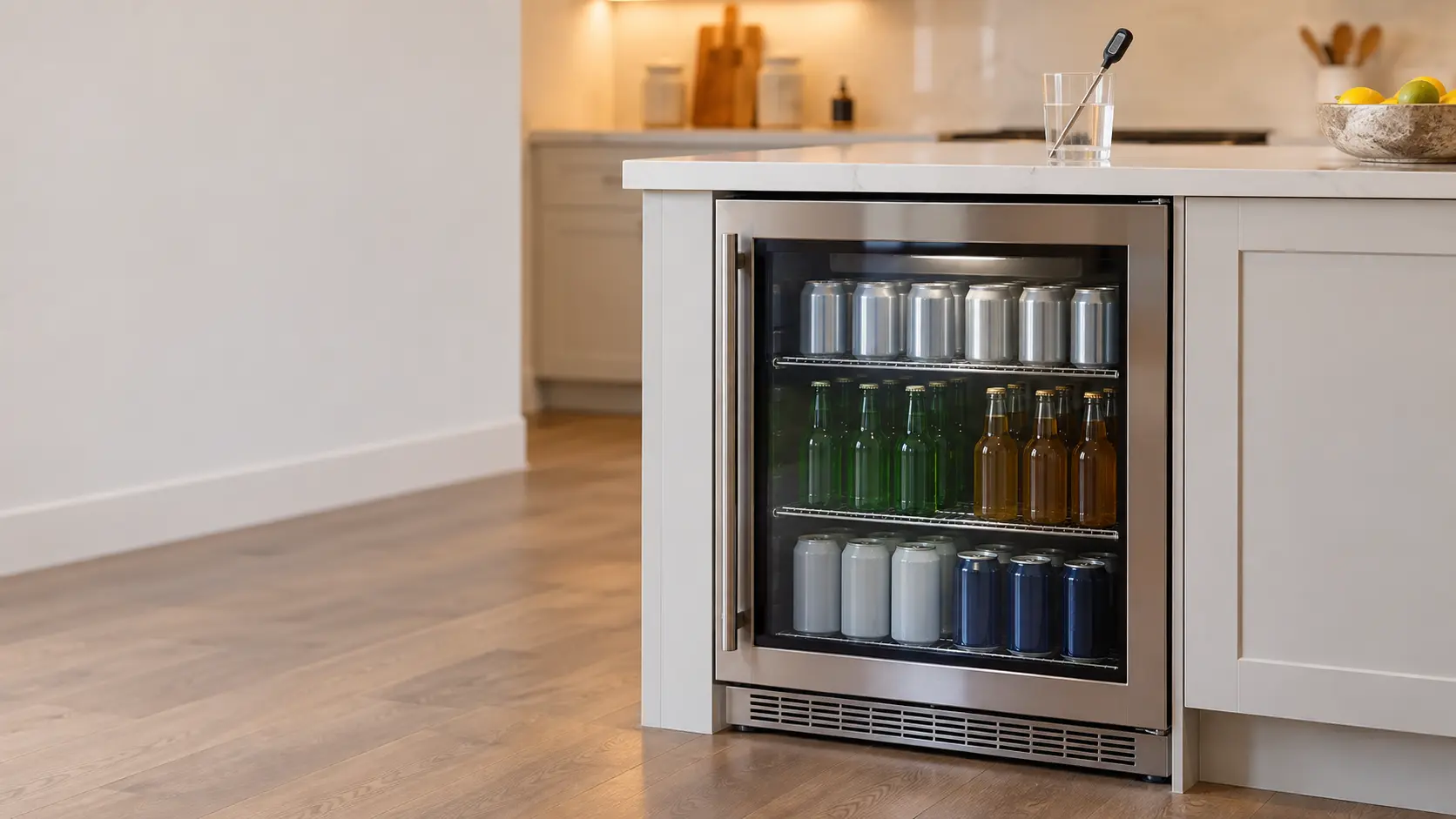
The fair test is a drink-sized mass measured over a quiet day. Drop a thermometer into a small bottle of water, cap it, set it mid-cabinet and keep the door closed until the following evening. The reading that matters is that one, not the number glimpsed while someone is reaching past you for a seltzer.
- Bottle reads 36 to 40°F: the cabinet is keeping up; the complaint is about recovery speed.
- Bottle reads in the mid 40s: something on this page is working against it.
- Bottle reads near room temperature: skip ahead to the signs that a part has given up.
Source: U-Line — 1100 and ADA series use and care guide (beverage centers) — Beverage center default set point of 38°F; keep the front grille free of dust and lint and clean the condenser every three months; a working display on a unit that does not cool may mean showroom mode; run a new unit overnight before loading
A cabinet full of warm cans needs time
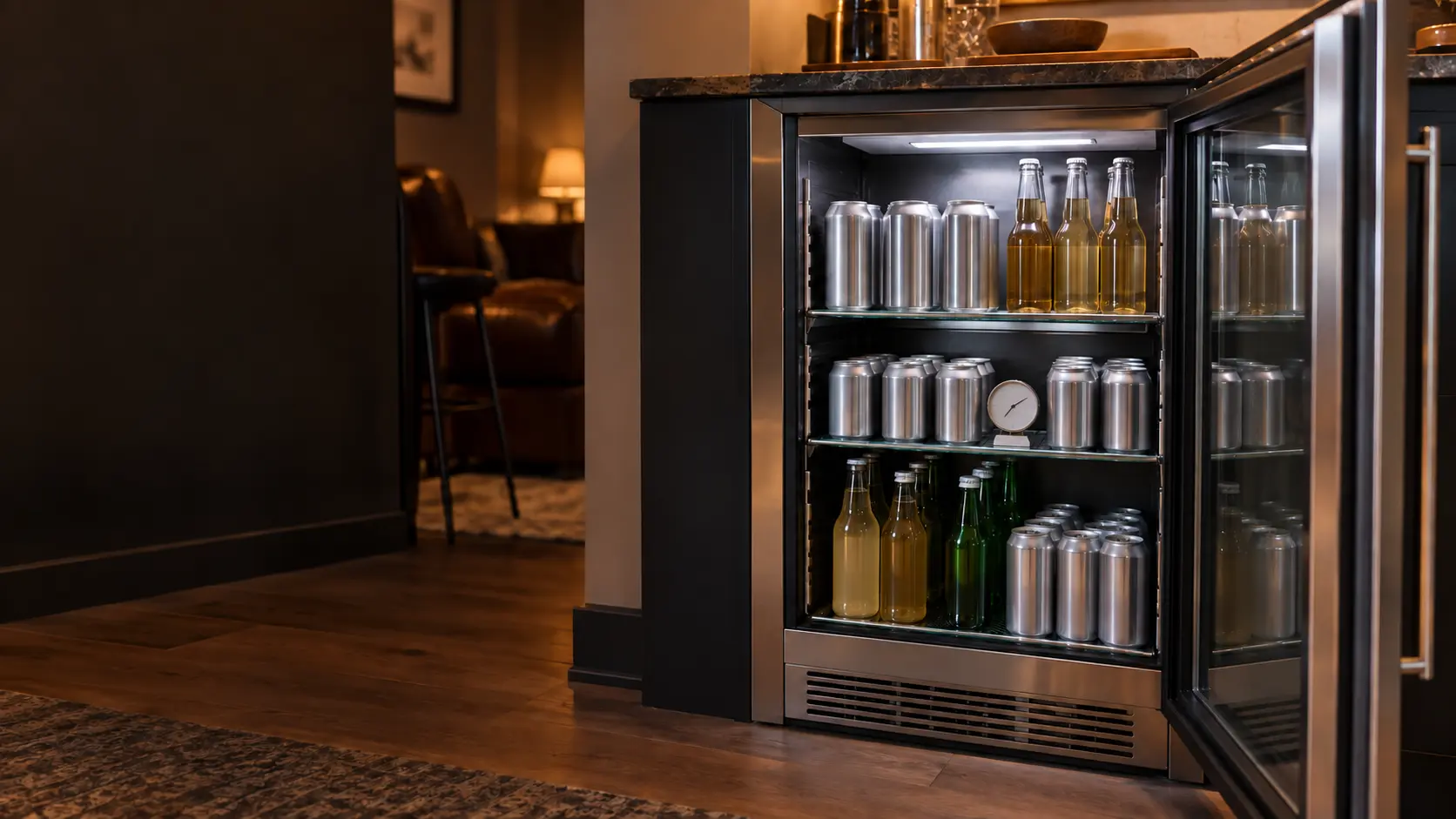
Loading two cases straight from a hot car asks the unit to remove a lot of heat at once. Marvel's guide says to keep door openings to a minimum for the next 12 hours after a large warm load, and Perlick's high-temperature alarm entry says to wait 24 hours for new product to chill before rechecking. Judging the unit the same evening sets it up to look broken.
The fix is timing. Restock the morning before a gathering rather than an hour ahead, put the warm cans on the lower shelves where the cold settles, and keep a cooler of ice for the first round. A fuller cabinet also holds its cold better once it is down to temperature, a point Marvel makes about run time.
Source: Marvel — Owner's guide and service manual, 24-inch beverage center (MLBV224) — Minimize door openings for 12 hours after a large warm load; a full compartment needs less run time; install between 55°F and 100°F out of direct sunlight; ventilation from the bottom front, grille unobstructed; interior light time affects the top shelf; a door open over 5 minutes triggers an error code and a tone; showroom mode leaves the compressor and fans off; Perlick — G5 undercounter user, installation and operation manual — Upper room limit of 105°F; for a high zone temperature alarm check the gasket, the condenser and the grille, wait 24 hours after loading warm product, and call for service if it repeats within a week

The room, the sun and the season
A beverage center moves heat from the cabinet into the room, so the room sets the ceiling on how well it can work. Marvel recommends a location between 55°F and 100°F, away from direct sunlight and heat sources, and Perlick lists 105°F as the upper room limit for its G5 units.
Heat the cabinet cannot get rid of
An undercounter unit next to a dishwasher vent, beneath a coffee station or beside a warming drawer is breathing hot air all day. A basement bar with a projector and a crowd can be ten degrees warmer on game night than on a quiet Tuesday. Measure the air in front of the grille while the unit runs; if it is well above the rest of the room, the neighborhood is the problem.
Afternoon sun on a glass door
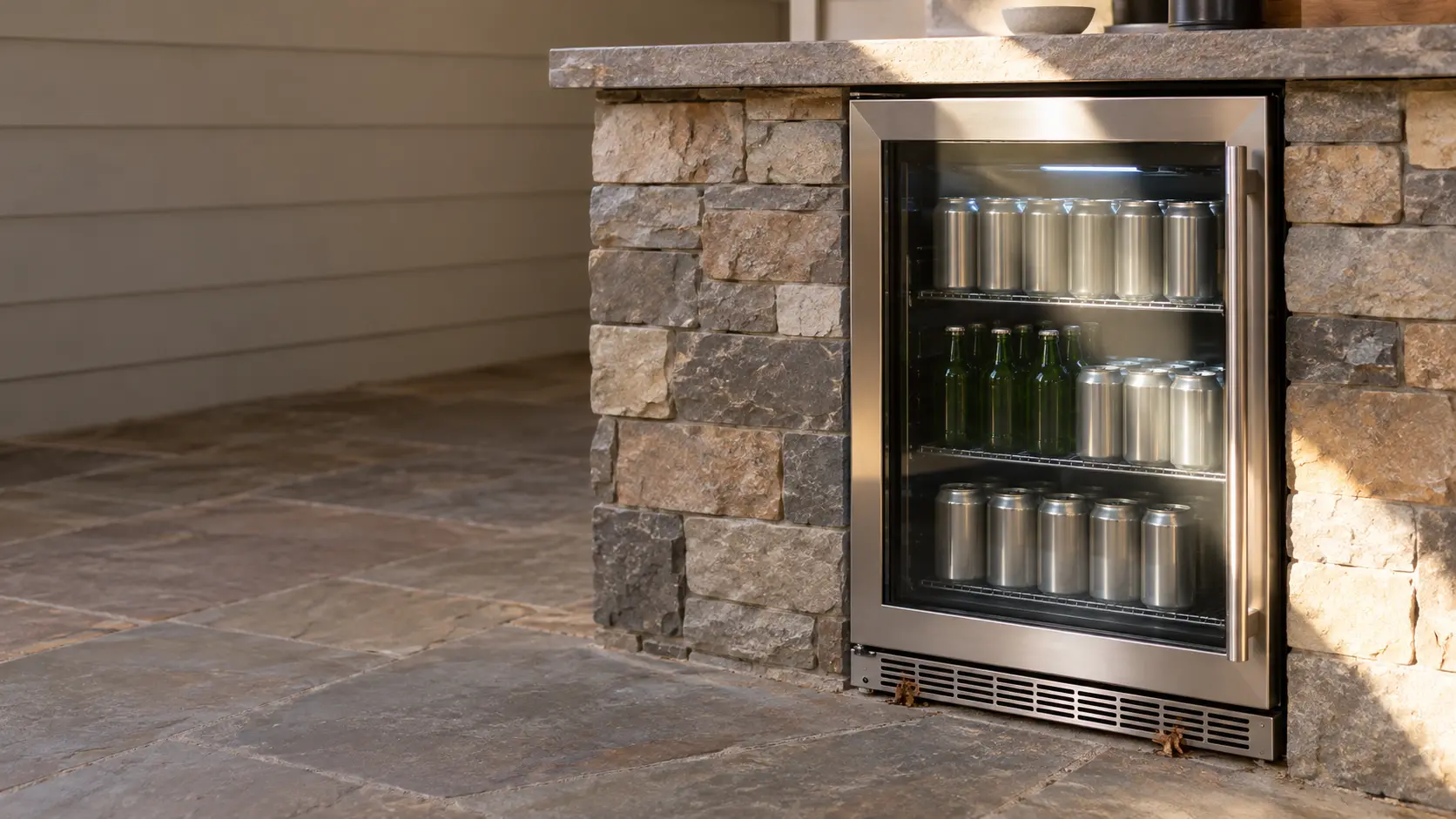
Glass lets sunlight straight onto the top shelves, and the cans there warm faster than the air sensor notices. A beverage center that is fine every morning and warm by five o'clock often sits in a patch of western light. A blind, a moved chair or a different shelf for the drinks served first usually settles it, and a unit on a covered patio belongs with the guide to outdoor-rated models.
Source: Marvel — Owner's guide and service manual, 24-inch beverage center (MLBV224) — Minimize door openings for 12 hours after a large warm load; a full compartment needs less run time; install between 55°F and 100°F out of direct sunlight; ventilation from the bottom front, grille unobstructed; interior light time affects the top shelf; a door open over 5 minutes triggers an error code and a tone; showroom mode leaves the compressor and fans off; Perlick — G5 undercounter user, installation and operation manual — Upper room limit of 105°F; for a high zone temperature alarm check the gasket, the condenser and the grille, wait 24 hours after loading warm product, and call for service if it repeats within a week
The front grille is where the heat leaves
Built-in units breathe through the toe-kick grille below the door. Marvel's installation section requires ventilation from the bottom front and allows cabinets and a countertop around the unit only as long as that grille stays clear. U-Line asks owners to keep the grille free of dust and lint and to clean the condenser behind it every three months, more often in a dusty or pet-filled home.
What ends up in front of it
The usual culprits are ordinary: a runner rug pushed up against the kick plate, a new toe-kick trim fitted during a remodel, a dog bed, a case of water parked on the floor, or a thick mat of pet hair across the slots. Any one of them sends hot air back into the intake, and the compressor runs longer to achieve less.
- Kneel and look: every slot should show daylight into the machine space.
- Hold a hand in front while the unit runs; warm air should flow outward.
- Unplug before vacuuming the grille, and leave the fins behind it to a technician if they are bent.
Source: Marvel — Owner's guide and service manual, 24-inch beverage center (MLBV224) — Minimize door openings for 12 hours after a large warm load; a full compartment needs less run time; install between 55°F and 100°F out of direct sunlight; ventilation from the bottom front, grille unobstructed; interior light time affects the top shelf; a door open over 5 minutes triggers an error code and a tone; showroom mode leaves the compressor and fans off; U-Line — 1100 and ADA series use and care guide (beverage centers) — Beverage center default set point of 38°F; keep the front grille free of dust and lint and clean the condenser every three months; a working display on a unit that does not cool may mean showroom mode; run a new unit overnight before loading
A door that stays a fraction open
A glass door that rests a quarter inch shy of the cabinet leaks cold air all night without anyone noticing. Bottles standing proud of a shelf, a can wedged against the door rack, a unit tilted forward on an uneven floor or a gasket sticky with spilled soda are the common reasons. Marvel's list of things that warm a cabinet also includes an interior light left on too long, which mostly affects the top shelf.
Close the door slowly and watch the last inch. It should pull itself shut and stay there with no bounce. On some controls a door left open trips an alert: Marvel's door switch starts beeping and posts a code once the door has stood open for five minutes, which is a useful clue that the door has not been closing on its own.
Source: Marvel — Owner's guide and service manual, 24-inch beverage center (MLBV224) — Minimize door openings for 12 hours after a large warm load; a full compartment needs less run time; install between 55°F and 100°F out of direct sunlight; ventilation from the bottom front, grille unobstructed; interior light time affects the top shelf; a door open over 5 minutes triggers an error code and a tone; showroom mode leaves the compressor and fans off
Signs that a part has given up
If the room is reasonable, the grille is clear, the door seals and the setting is sensible, and the bottle still reads warm, look and listen before booking. Showroom mode deserves one check first: on Marvel's control it leaves the light and display running with no compressor or fans, and U-Line's table suggests it whenever the panel works but the cabinet stays warm.
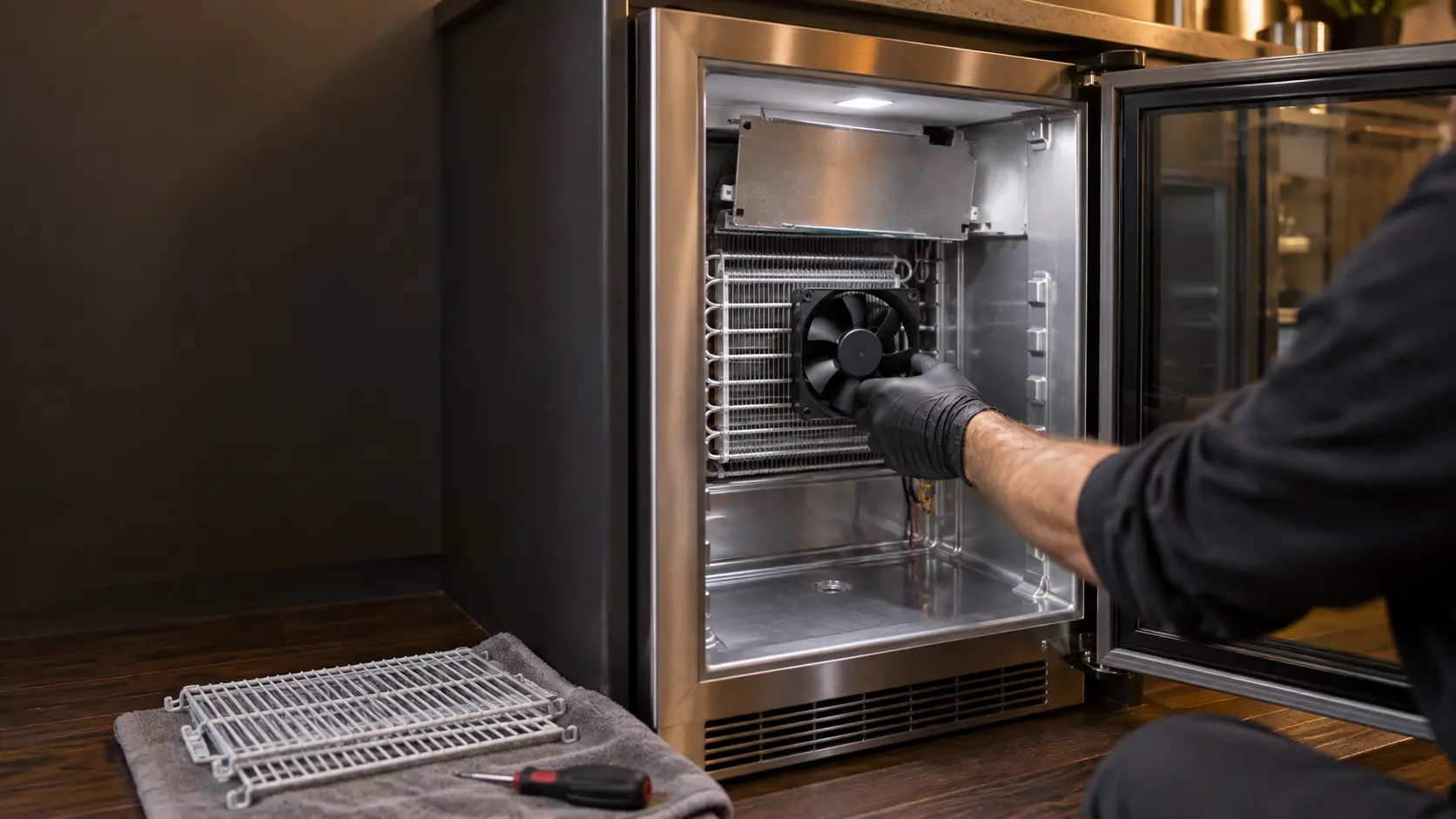
After that, the behavior points toward the part. A compressor humming while the inside stays warm and the fan behind the rear panel is silent suggests the evaporator fan. A cabinet that is quiet, warm and clicking every few minutes suggests the compressor is failing to start. A thick white frost covering the rear panel means airflow across the evaporator is blocked. KitchenAid's beverage centers raise an over-temperature alarm when the cabinet stays above 70°F for four hours, and Perlick's high-temperature entry tells owners to call for service if its alarm repeats within a week once the simple checks are done.
Source: Marvel — Owner's guide and service manual, 24-inch beverage center (MLBV224) — Minimize door openings for 12 hours after a large warm load; a full compartment needs less run time; install between 55°F and 100°F out of direct sunlight; ventilation from the bottom front, grille unobstructed; interior light time affects the top shelf; a door open over 5 minutes triggers an error code and a tone; showroom mode leaves the compressor and fans off; U-Line — 1100 and ADA series use and care guide (beverage centers) — Beverage center default set point of 38°F; keep the front grille free of dust and lint and clean the condenser every three months; a working display on a unit that does not cool may mean showroom mode; run a new unit overnight before loading; Perlick — G5 undercounter user, installation and operation manual — Upper room limit of 105°F; for a high zone temperature alarm check the gasket, the condenser and the grille, wait 24 hours after loading warm product, and call for service if it repeats within a week; KitchenAid — Over temperature alarm, beverage center — The alarm sounds when the cabinet stays above 70°F for 4 hours or longer, and the indicator flashes until reset