Fog that follows a busy evening
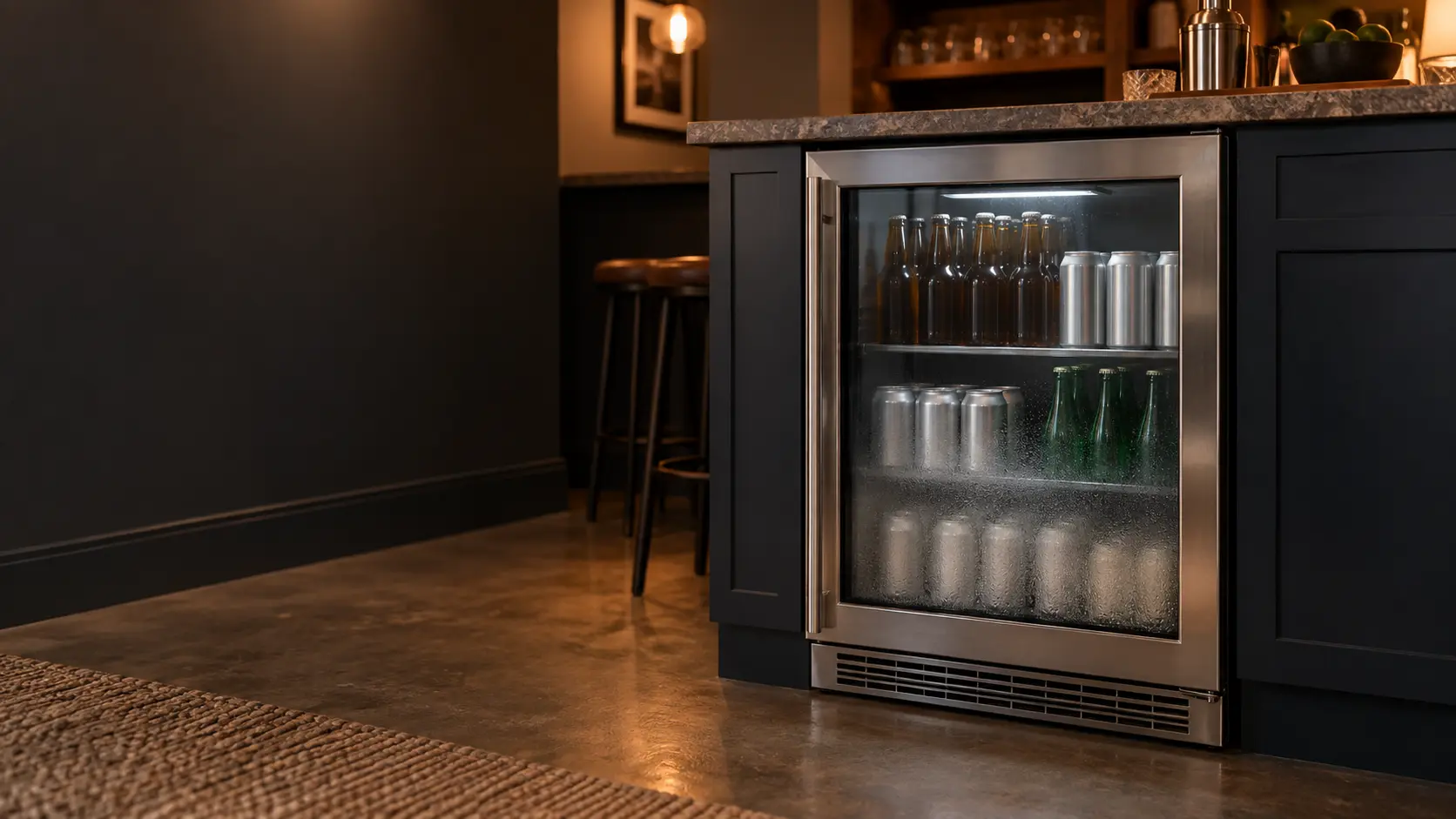
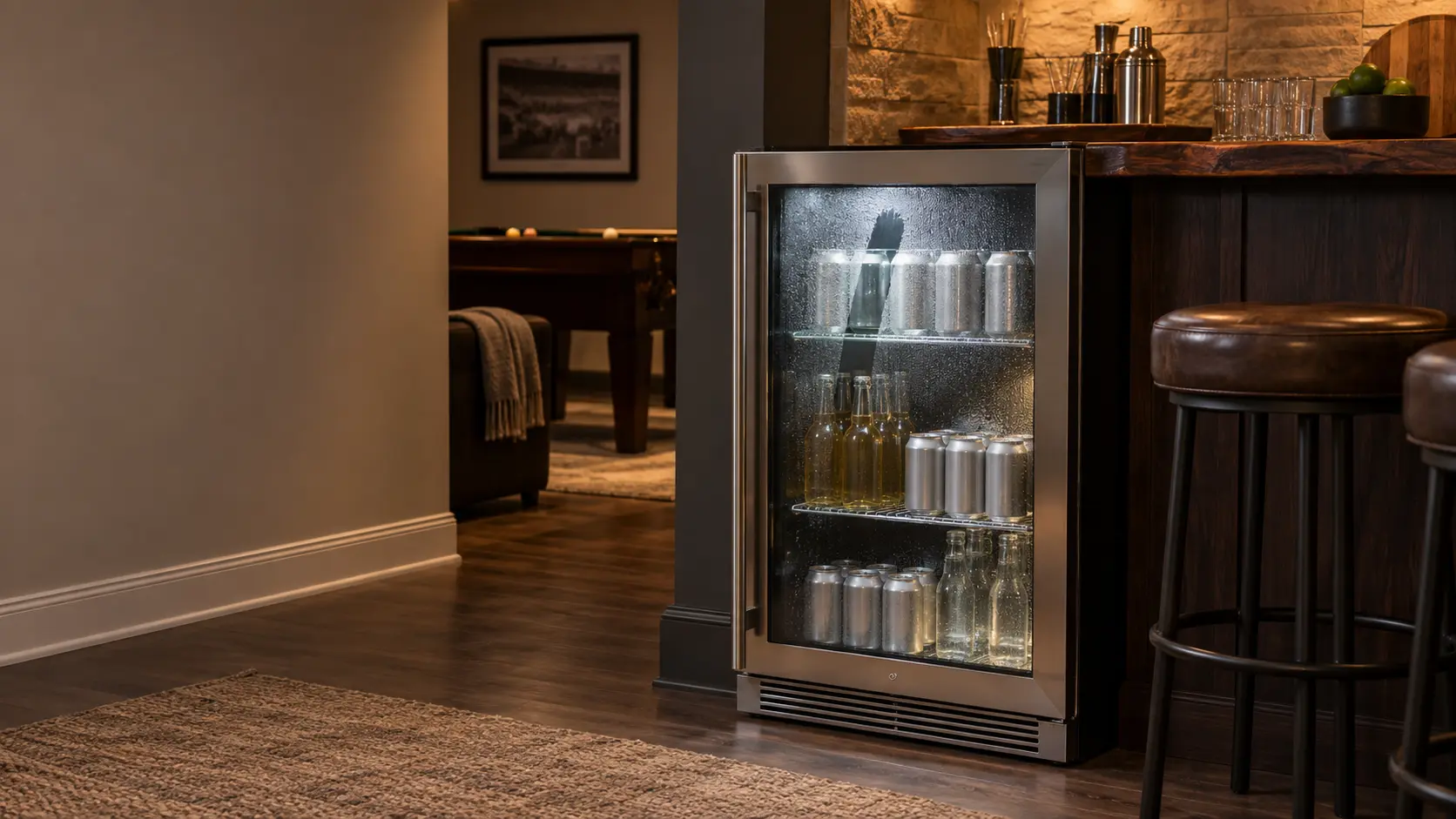
Each opening lets a slab of warm room air swaps places with the cold air inside. On a night when the door opens every few minutes, the inner face of the glass can mist over and the cans come out beaded with water. That is the moisture in the room air landing on the first cold surfaces it meets, and on a sound unit it clears on its own once the door has stayed shut for a while.
Time it. Close the door, note the clock and look again after twenty minutes without opening it. Clear glass means nothing needs doing. Fog that has not thinned at all, or that returns while nobody has touched the door, belongs to one of the sections below.
Beads on the room side of the glass
Draw a knuckle down the misted glass from the room. Water that smears away under it was on your side of the door, and the door is doing its job: the outer pane is simply cooler than the point at which the room's moisture turns to droplets. Perlick's G5 manual warns that its glass door units may sweat once relative humidity climbs past 75%, and the troubleshooting tables from Marvel and U-Line both blame outside condensation on humid air that clears as the room dries.
- Clear stripe from the outside: humidity, and harmless to the unit.
- Water running down to the floor: dry it, and protect wood nearby.
- Worse only on party nights: the crowd itself is adding moisture.
Basement bars and humid summers
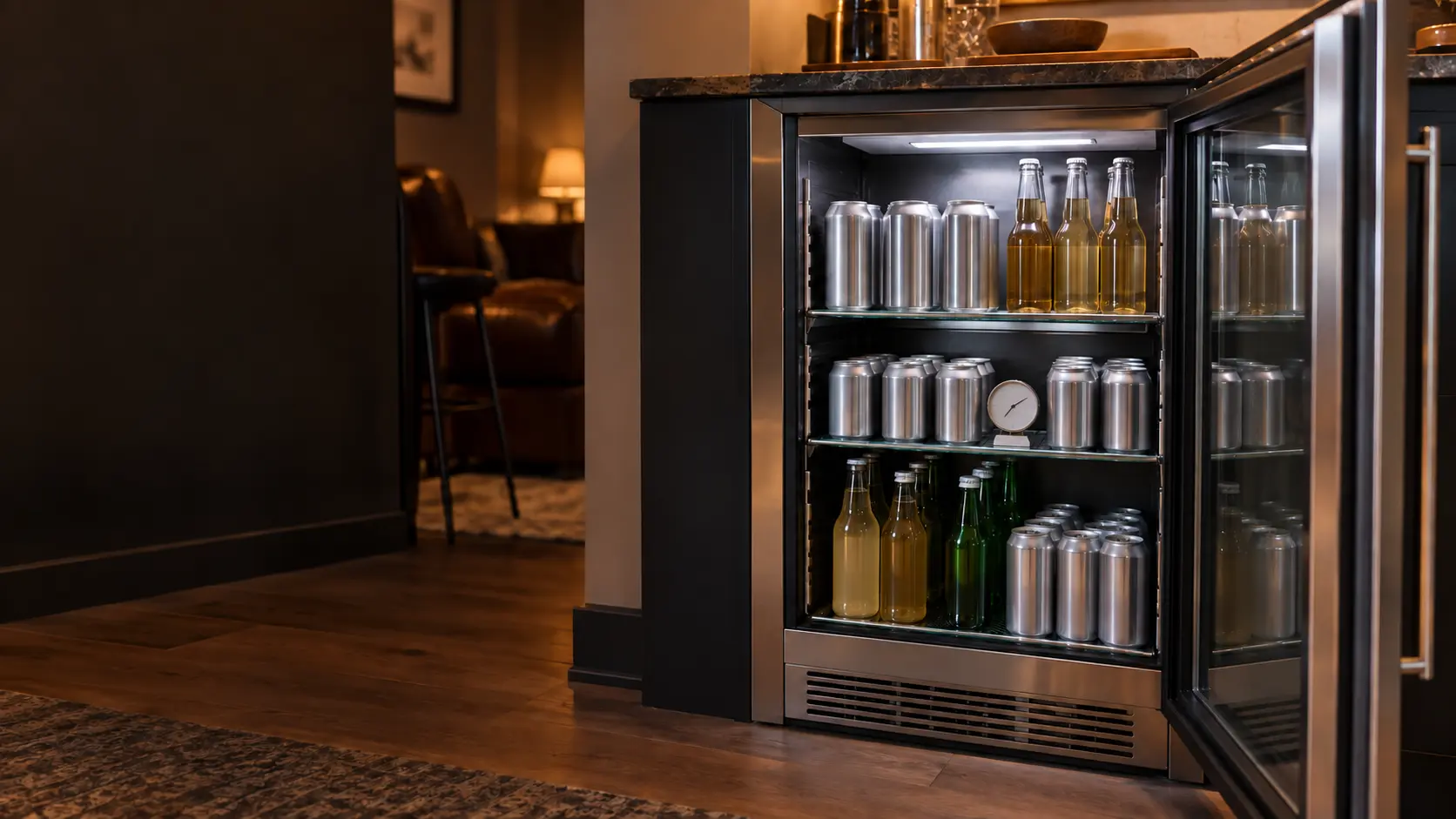
A basement bar is often the dampest room in the house, and in July it can sit well above the level where glass starts to sweat. An inexpensive humidity gauge on the bar top settles the question in a day. Running a dehumidifier, or keeping the basement door closed to damp outdoor air, clears the glass without any change to the unit.
Beside a pool, a spa or a bar sink
Water close by makes everything worse. Perlick recommends its coastal-grade units near a pool and says they are needed beside an indoor pool, where warm damp air never lets up. Indoors, a bar sink running hot water a foot from the door or an ice bucket sweating on the counter above can be enough to keep the glass beaded all evening.
Source: Perlick — G5 undercounter user, installation and operation manual — Glass door units may sweat above 75% relative humidity; coastal-grade units are recommended near a pool and needed beside an indoor pool; Marvel — Owner's guide and service manual, 24-inch beverage center (MLBV224) — Outside condensation is put down to high humidity and fades as the air dries; frost on inside surfaces calls for checking that the door closes and seals; U-Line — 1100 and ADA series use and care guide (beverage centers) — External condensation is caused by excessive humidity; no solvent-based or abrasive cleaners, and glass cleaned with a non-chlorine glass cleaner

Water that sits on the inside face
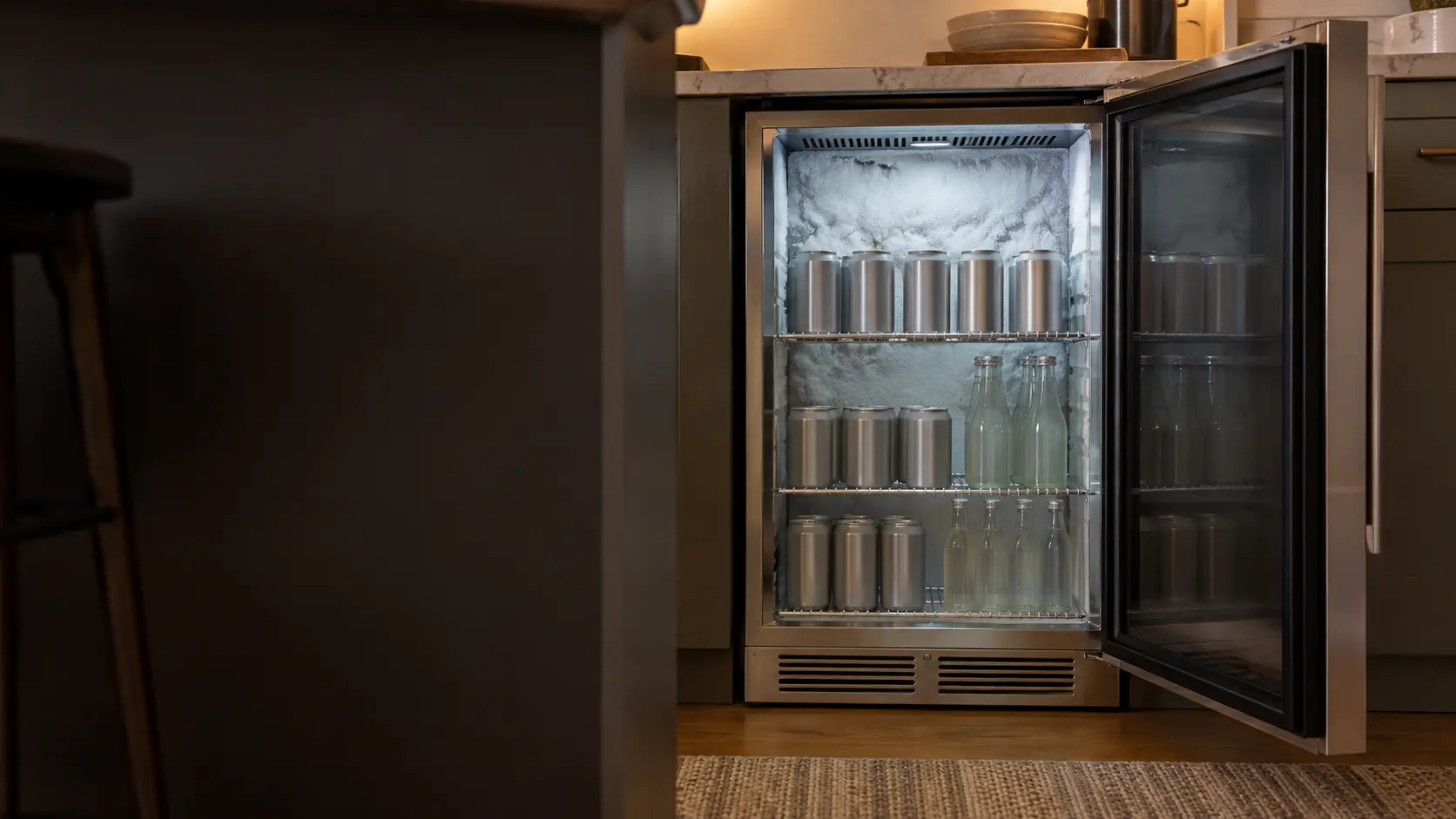
If nothing smears from outside, swing the door open and run the knuckle down the cabinet side of the glass instead. Moisture that hangs on there, pools along the lower rail or sets into a narrow strip of frost says that room air is leaking in around the door. Marvel's troubleshooting table ties frost on inside surfaces to a door that is not closing and sealing, and that same leak is what keeps the inner glass wet.
Finding the gap with a flashlight
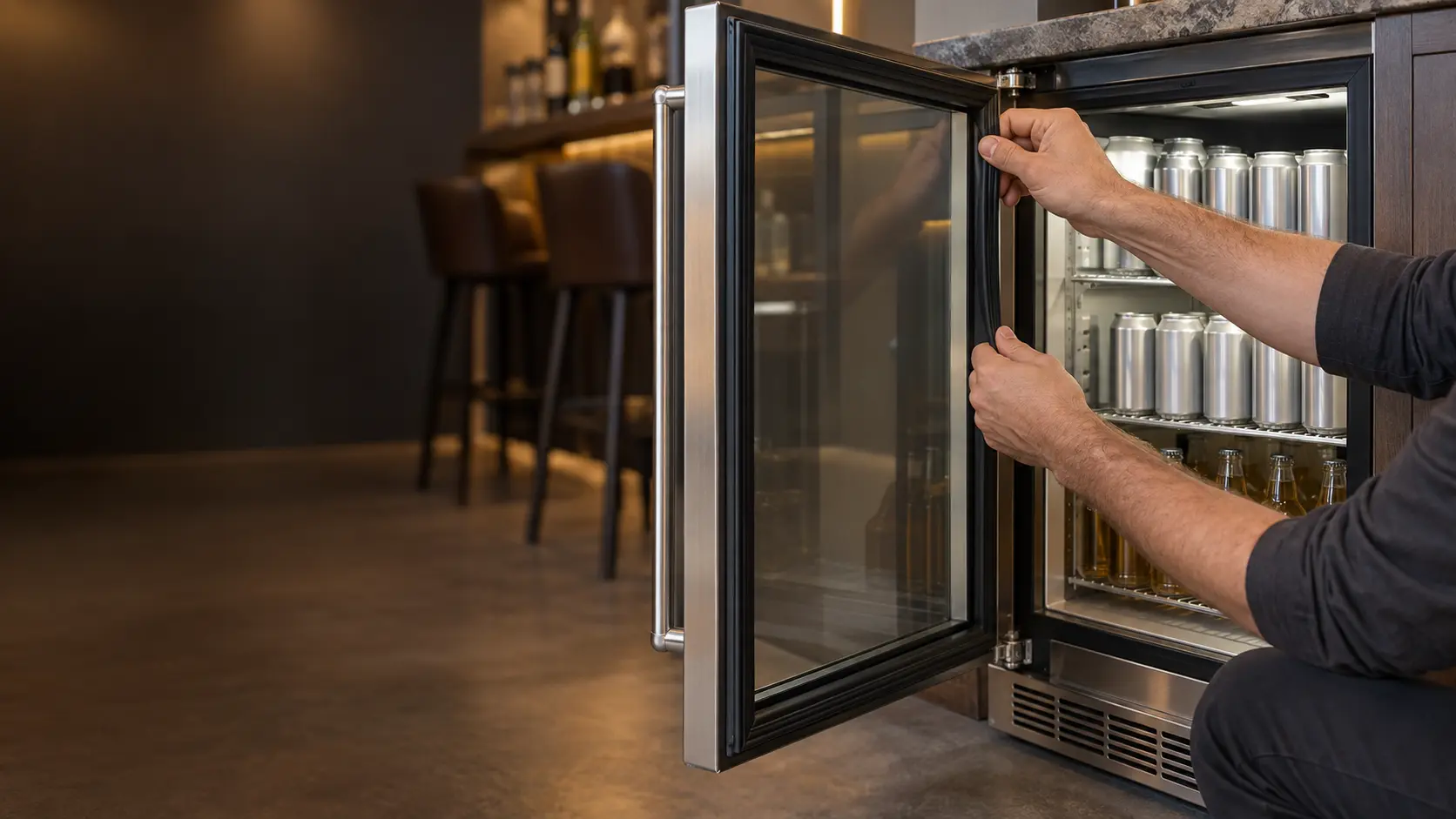
In a dark room, switch on a small flashlight, set it on a middle shelf pointing at the door edge, and close the door. Walk slowly around the outside of the door. A line of light escaping along one side or at a corner marks the stretch of gasket that is not touching the cabinet. Move the flashlight to each shelf so all four edges get checked.
What holds a glass door open
Beverage centers collect small obstructions: a bottle neck sticking past the shelf front, a torn carton flap, a can resting against the door rack, a dried drip of soda gluing the gasket to itself in a fold. Level matters as well. A cabinet tipped toward you lets gravity pull the door off its seal, and a frame racked by a sloping floor lifts one corner of the gasket clear. Set a level on the top edge, then turn the front legs until the door closes on its own from half open.
Source: Marvel — Owner's guide and service manual, 24-inch beverage center (MLBV224) — Outside condensation is put down to high humidity and fades as the air dries; frost on inside surfaces calls for checking that the door closes and seals
A haze sealed between the panes
Most beverage center doors are built as a sealed sandwich of two or three panes with a dry gap in the middle. Once the seal around the edge of that sandwich fails, moist air works its way in and settles as a milky band near the bottom or a ring of dried spots that no cloth reaches from either face. No gasket or setting touches it; the fix is replacement glass or a replacement door, matched to the model number, and a technician can confirm the diagnosis before anything is ordered.
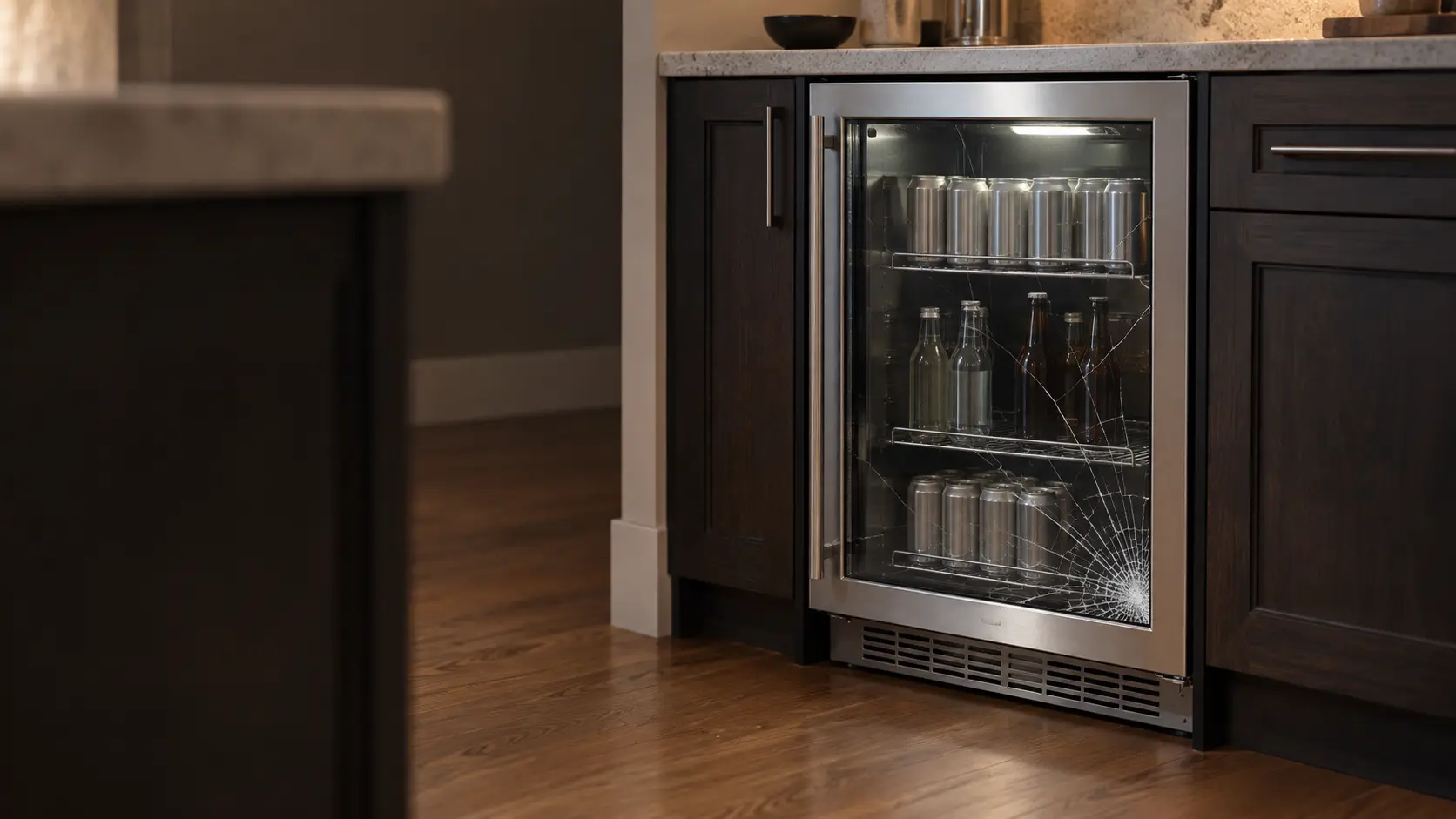
A crack is a different matter. Fog can gather along a crack that runs through one pane, and a tempered pane that has cracked can break apart when the door is next closed. Keep children and bare feet away, stop opening the door, and call it in the same day.
Habits that make it worse
A few well-meant fixes create new problems. Turning the setting colder to chill drinks faster makes the glass colder too, and a colder pane sweats sooner. Draping a towel over the lower door or the grille to catch drips blocks the air the unit needs to shed heat.
- Harsh cleaners: U-Line rules out solvent-based and abrasive products and asks for a non-chlorine glass cleaner.
- Heat guns or hair dryers on the glass, which can stress a tempered pane.
- Silicone sprays on the gasket, which attract dust and harden the rubber.
- Ignoring water that reaches a floor-level outlet behind the unit.
Source: U-Line — 1100 and ADA series use and care guide (beverage centers) — External condensation is caused by excessive humidity; no solvent-based or abrasive cleaners, and glass cleaned with a non-chlorine glass cleaner