
What the unit is telling you
Common problems
guides.
What a beverage center means when the sodas come out barely cool, a can freezes and splits, the glass door clouds over, or the compressor never seems to rest.
Mon–Sat, 8am–8pm
- Four guides
- Read before you book
- Says where to stop
Book a visit
Three short steps, about a minute.
or call (844) 456-5057
Loading appointment form…
The appointment form couldn’t load. Please try again.
Common problems,
guide by guide.
A beverage center tends to go wrong in three visible ways: the drinks freeze, the drinks are not cold, or the glass door runs with water. The guides in this section take one each and work from what you can see toward what is causing it, across undercounter units, freestanding coolers, outdoor-rated models and refrigerated drawers.
All 23 guides
Beverage center noise at night: what each sound means
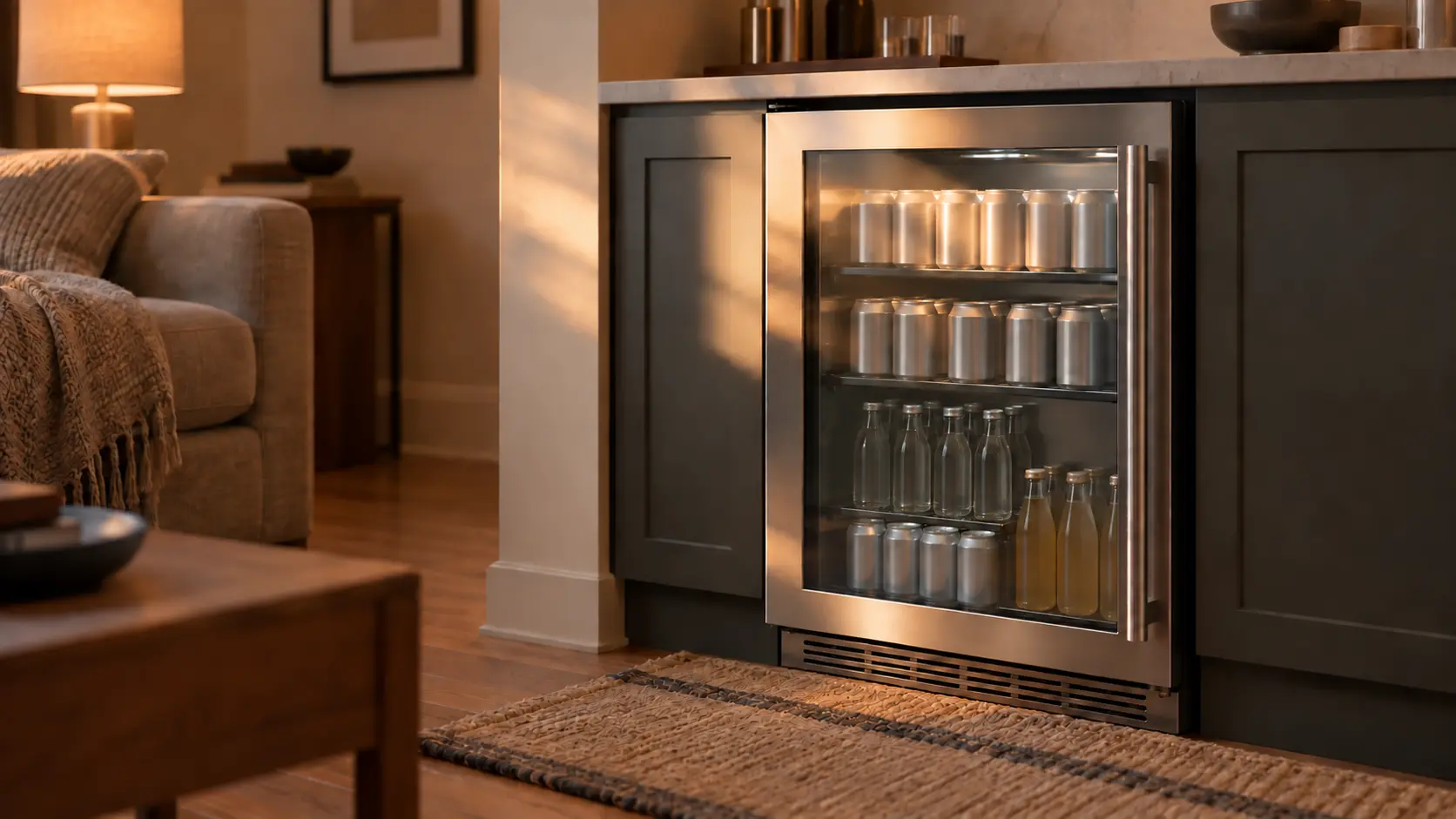
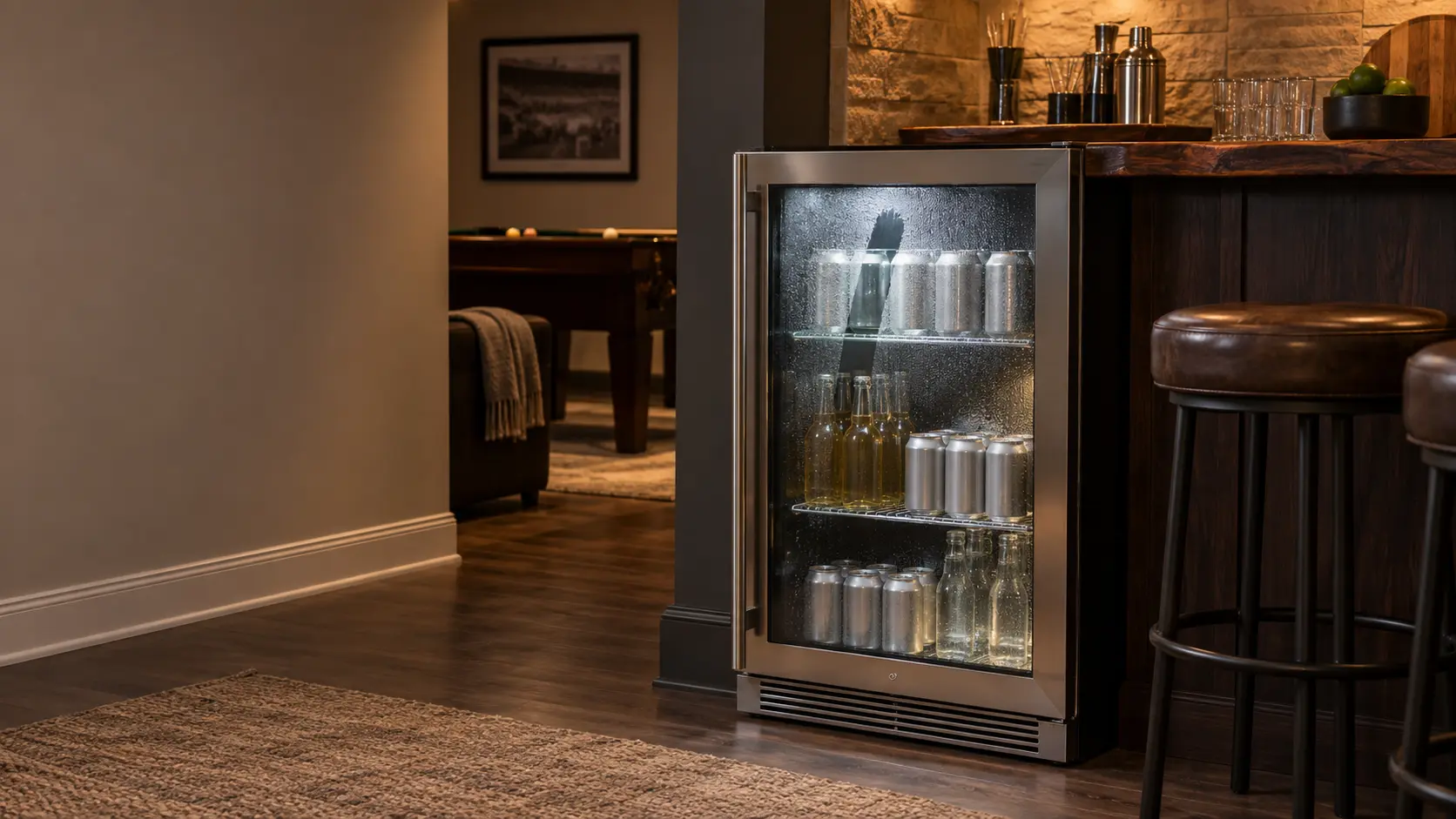
What the unit is telling you.
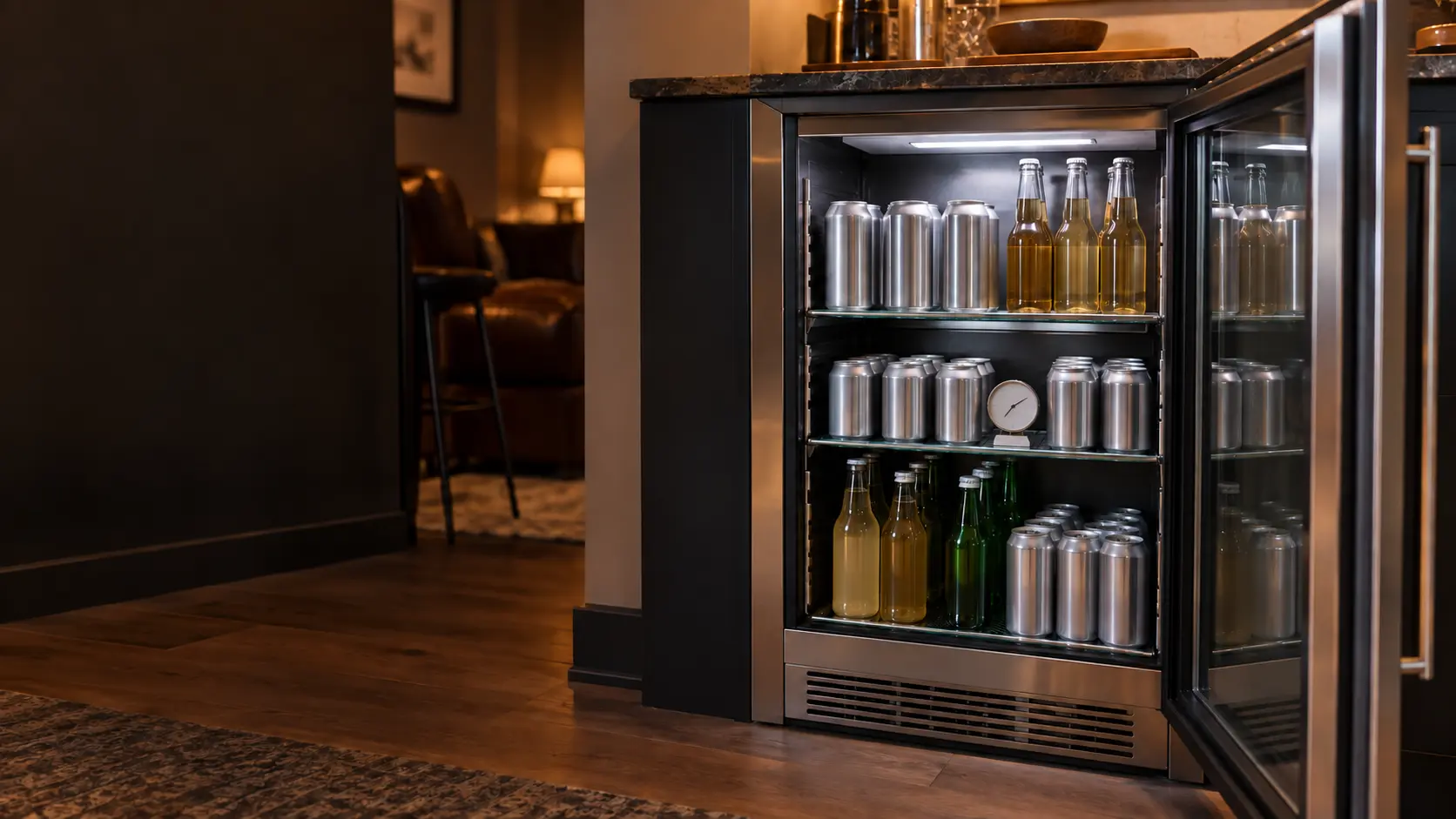
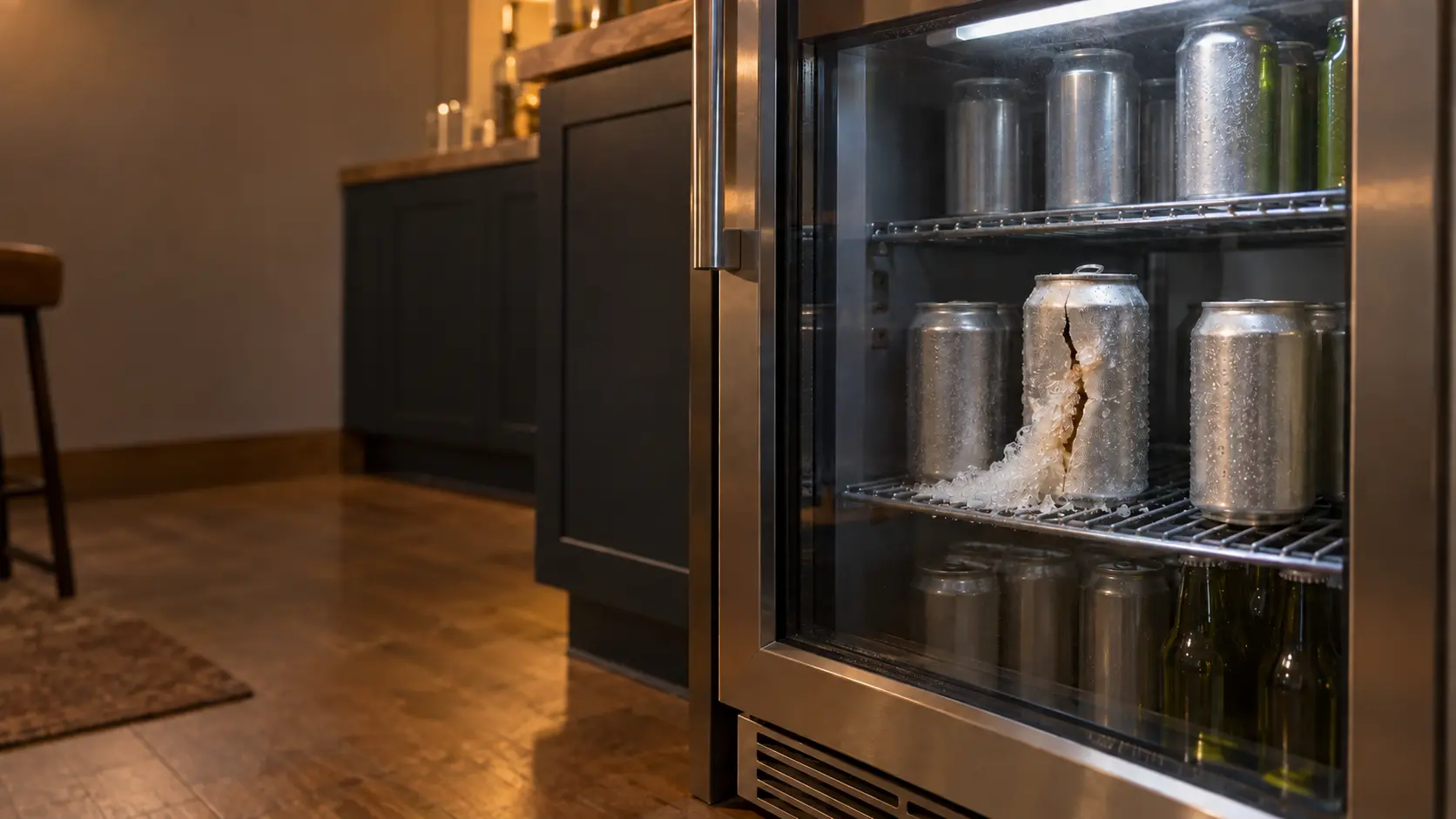
The stakes are different from a kitchen appliance that holds food. Warm cans cost a slower second round; a night a few degrees too cold can split every seltzer on the bottom shelf and glue it there with syrup. That is why the freezing guide sits first, and why each guide ties its temperatures to figures the makers print in their own manuals rather than to rules of thumb.
Surprisingly often the cause sits outside the cabinet. A damp basement in July, a porch that falls into the 30s in January, a rug that has crept against the toe-kick grille, sun through a west window, a crowd opening the door every two minutes: none of these is a broken part, and each one changes how the unit behaves. The guides sort those out before they send you to a booking.
One habit runs through all three: trust a drink-sized sample over the number on the panel. A thermometer in a capped bottle of water, left on the shelf that worries you through a quiet day, gives the reading every guide here builds on. Note the room and the setting beside it, and anything that changed in the week before the trouble began.
Not sure where to start?The short answerWhy cans freeze and burst: the set point, the back wall and a cold room
Cans freezing in a beverage center usually mean the set point sits too close to 32°F, cans are touching the cold rear wall, or the room has dropped below what the unit is built for.
The short answerBeverage center noise at night: what each sound means
Beverage center noise is normal when it is a steady low hum, a soft fan whoosh, an occasional click at start-up or a short gurgle after the compressor stops.
The short answerWhy the drinks are not cold: warm restocks, hot rooms and a buried grille
A beverage center not cold enough is most often up against its surroundings: a hot room or direct sun, a blocked front grille, a dusty condenser, a door that is not sealing, a big load of warm cans, or showroom mode left on.
The short answerWhy the glass door fogs over after a party, in a damp basement or for good
Beverage center glass door condensation on the outer pane is usually room humidity, and Perlick notes its glass doors may sweat above 75% relative humidity.
When reading
is not enough.
If the checks in these guides did not settle it, the visit picks up from there, stop by stop.
What repairs cost- 01Temperatures read at the shelves
- 02The price before the work
- 03Common parts in the van
- 04Cold again before we go
The problems
these answer.
Each has a page of its own, with the causes in the order worth checking.
All 17 problems

Questions about
common problems.
Frozen cans and warm cans in the same week. How is that possible?
Do these guides cover units that live outdoors?
What about a unit that keeps wine in one zone?
At what point should I stop reading and book?
The other
sections.
Split by what you are trying to find out rather than by which part of the appliance it concerns.
All guides
Back to your everyday
Let’s get your beverage center working again.
Three short steps online, or one call. Tell us what you are seeing and pick a window that works.